FinancialSega Sammy Holdings
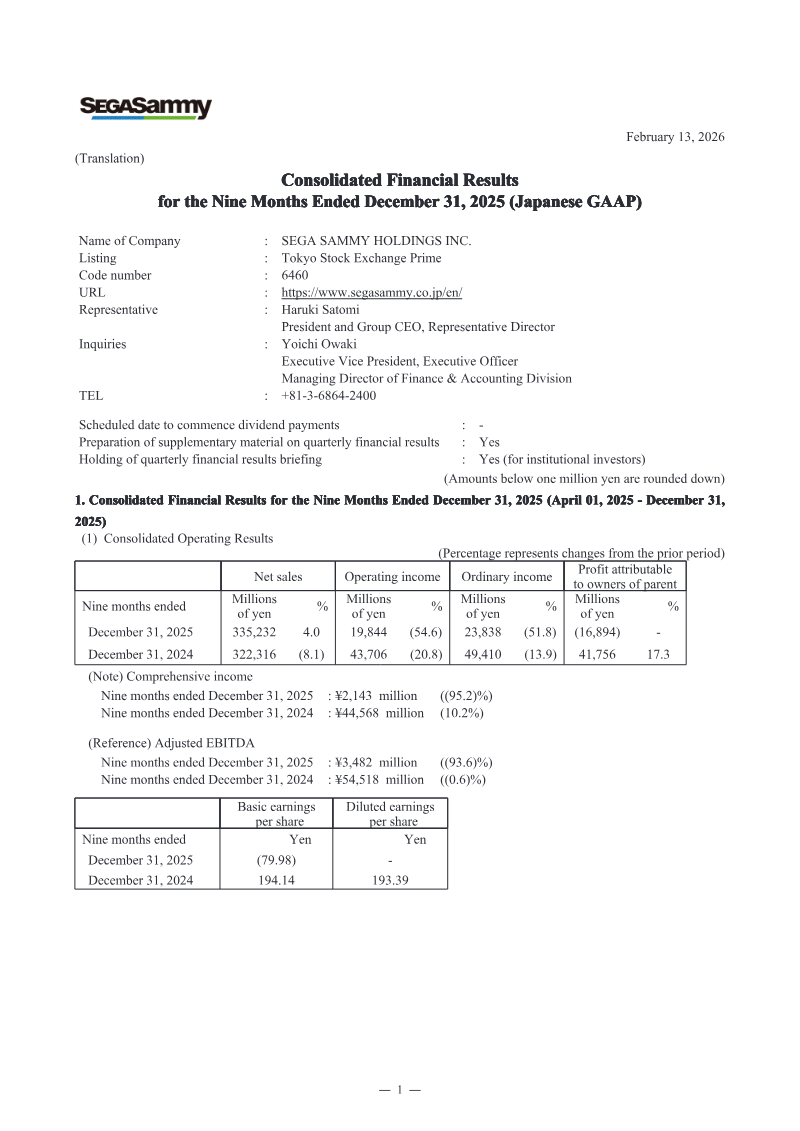
Consolidated Financial Results for the Nine Months Ended December 31, 2025
1 Feb 202616 pages~40 min full read
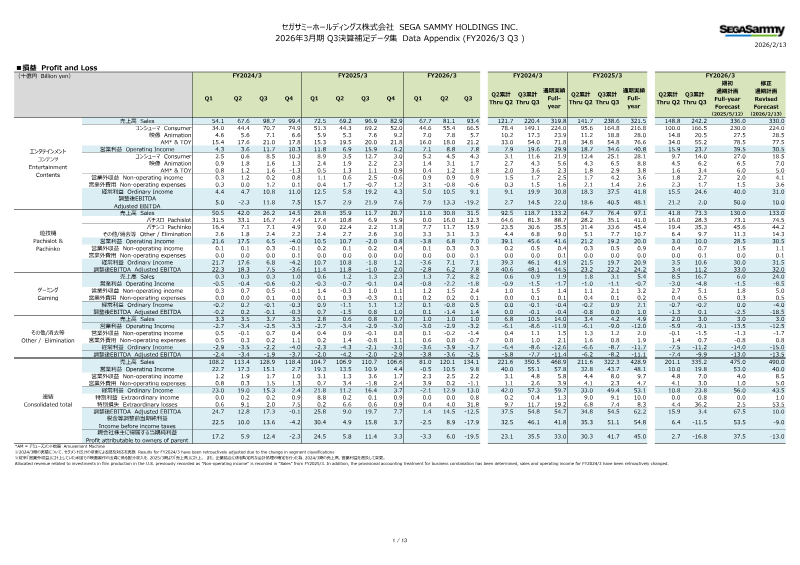
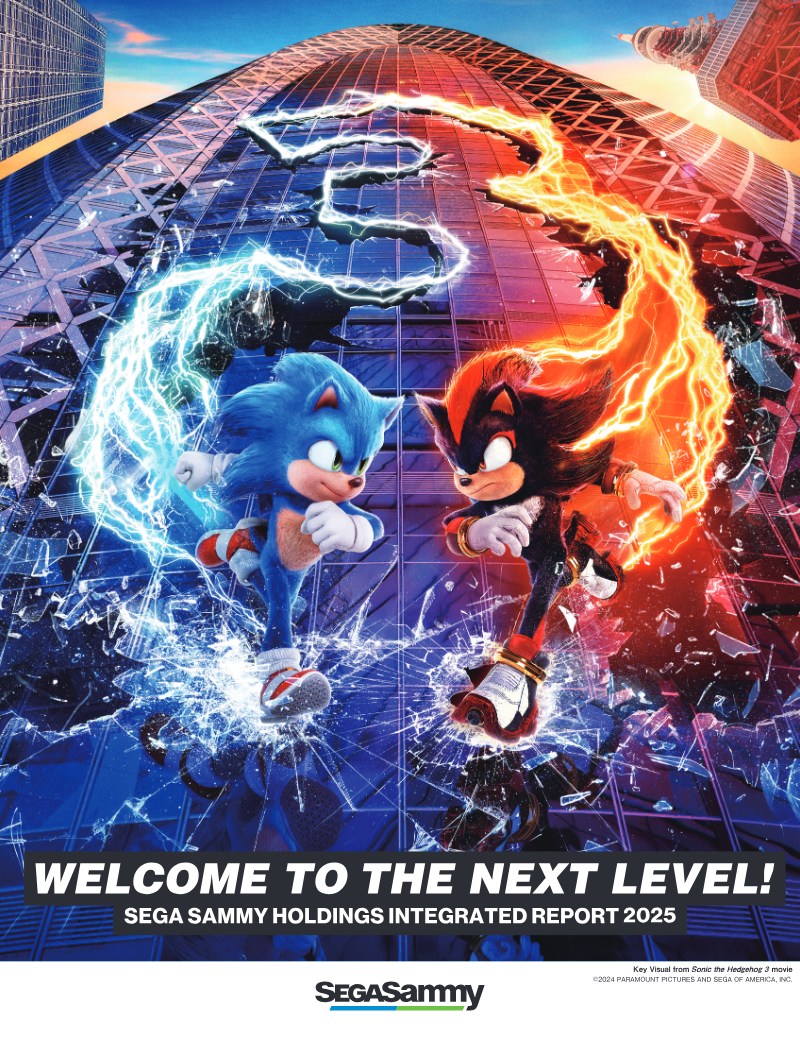
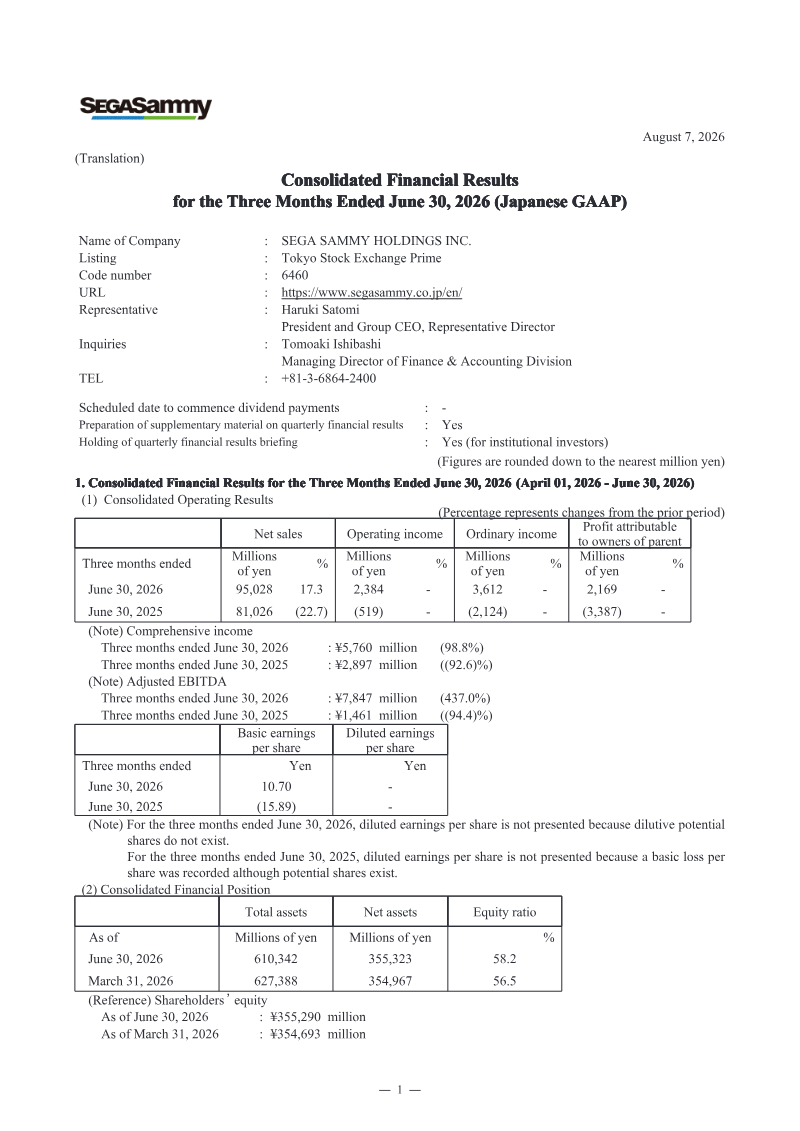
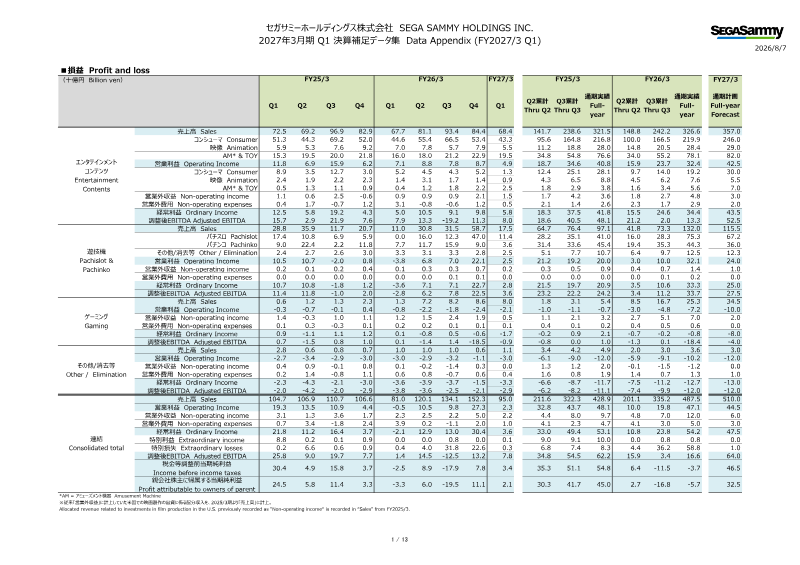
Sega Sammy Holdings experienced a period of financial transition during the first nine months of the fiscal year ending March 31, 2026, characterized by modest revenue growth alongside significant bottom-line volatility. Net sales increased by 4.0% to ¥335.2 billion, supported by the successful execution of the Sonic the Hedgehog transmedia strategy and record profits from the Paradise City integrated resort in South Korea. However, the company recorded a net loss of ¥16.9 billion, a sharp reversal from the prior year’s profitability. This downturn was primarily driven by a ¥31.4 billion impairment loss on goodwill and intangible assets associated with the acquisition of Rovio Entertainment, which contributed to a 54.6% decline in operating income.
Performance across core business segments remained mixed as the company integrated recent acquisitions. While the Gaming segment saw a 441.6% surge in third-party sales following the consolidation of Stakelogic and GAN, it ultimately recorded an ordinary loss. Meanwhile, ordinary income fell by 34.3% in the Entertainment Contents division and 46% in the Pachislot and Pachinko segment. These operational headwinds, combined with dividend payments and treasury stock acquisitions, led to a reduction in total net assets to ¥360.6 billion.
In response to these financial pressures and the impact of the Rovio impairment, a strategic shift in capital allocation has been implemented. The company has formally suspended large-scale M&A activities to prioritize shareholder returns and balance sheet stability. This pivot includes a ¥20 billion treasury stock buyback program scheduled between February and July 2026, intended to acquire and retire up to 5.71% of outstanding shares. By reallocating capital previously reserved for aggressive growth investments, the focus has moved toward optimizing existing assets and enhancing shareholder value through disciplined financial management.
Sega Sammy Holdings · 2026
Sega Sammy Holdings · 2026
Sega Sammy Holdings · 2026
Sega Sammy Holdings · 2025
Sega Sammy Holdings · 2025
Sega Sammy Holdings · 2025
Sega Sammy Holdings · 2024
Sega Sammy Holdings · 2024
Sega Sammy Holdings
Sega Sammy Holdings
Sega Sammy Holdings
Sega Sammy Holdings
Kadokawa Corporation · 2026
Akatsuki · 2026
Akatsuki · 2026
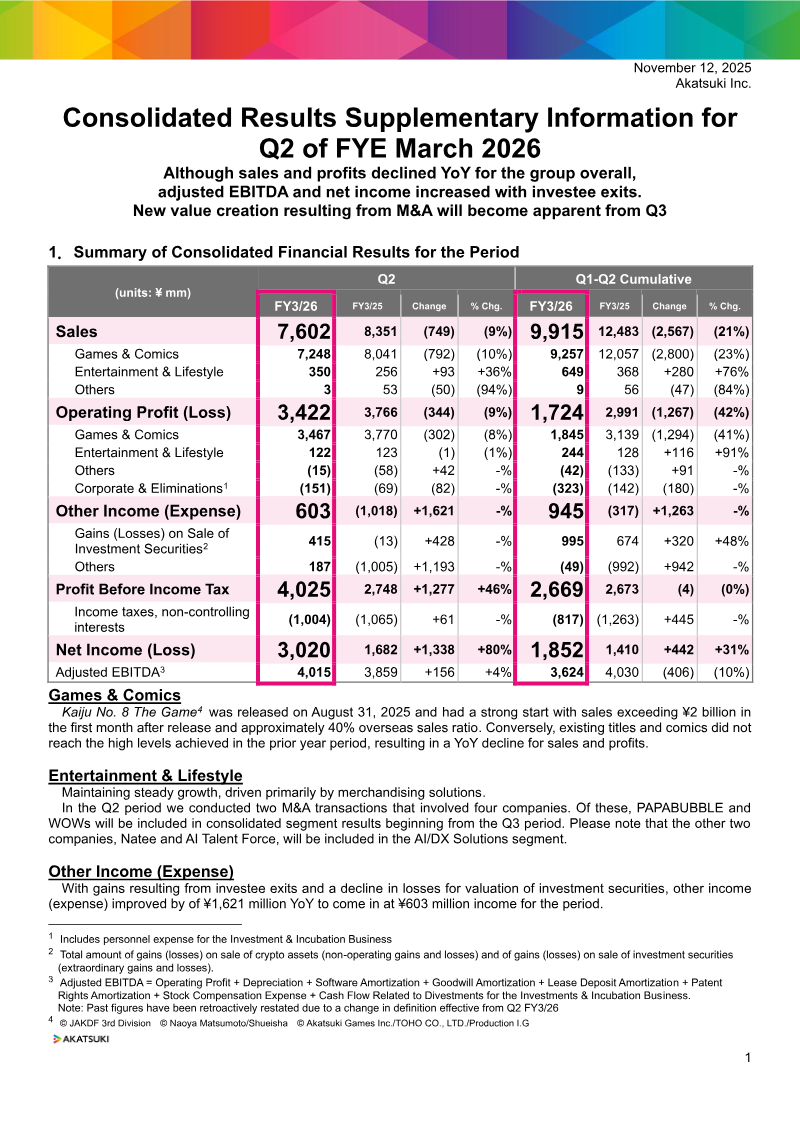
Akatsuki · 2025
Akatsuki · 2025
Koei Tecmo · 2025
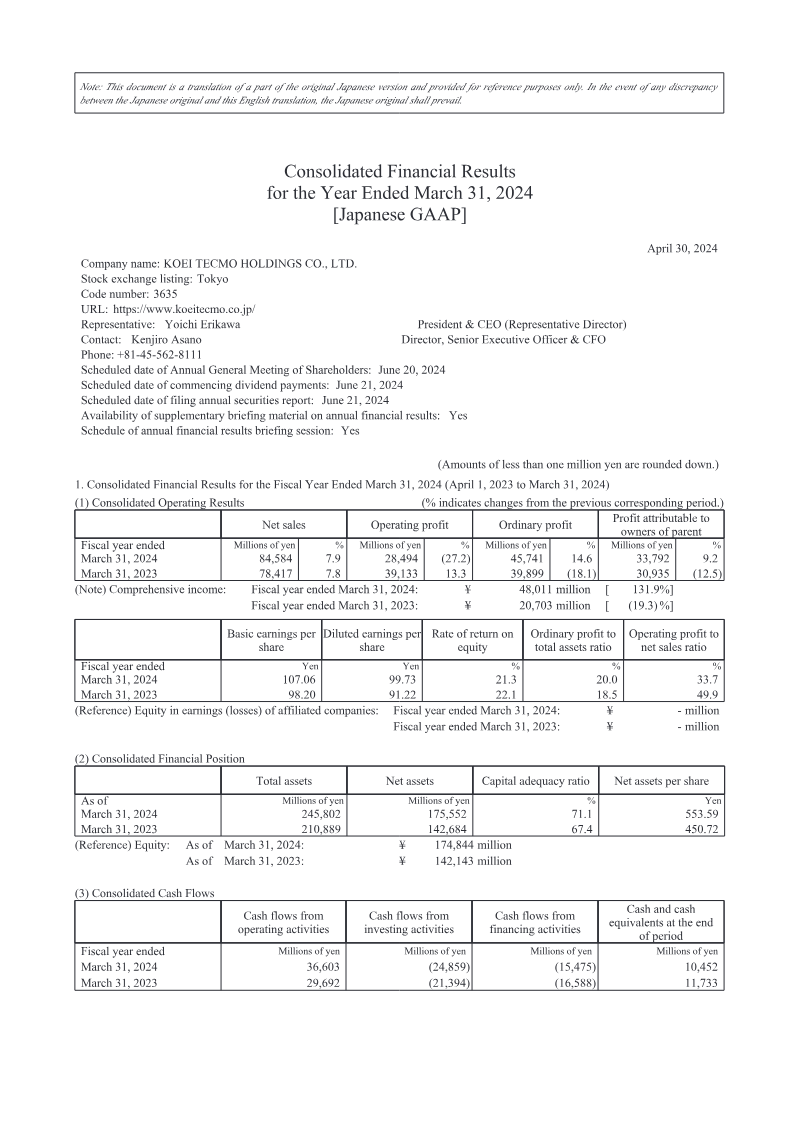
Koei Tecmo · 2024
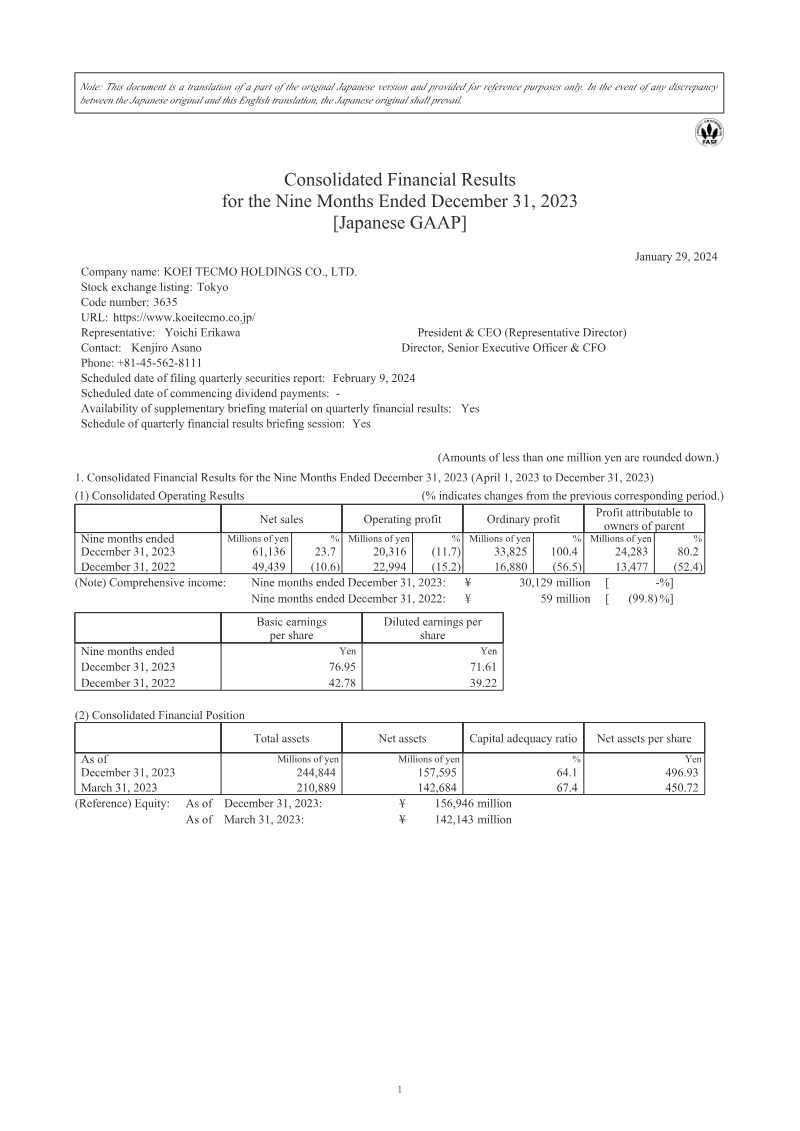
Koei Tecmo · 2024
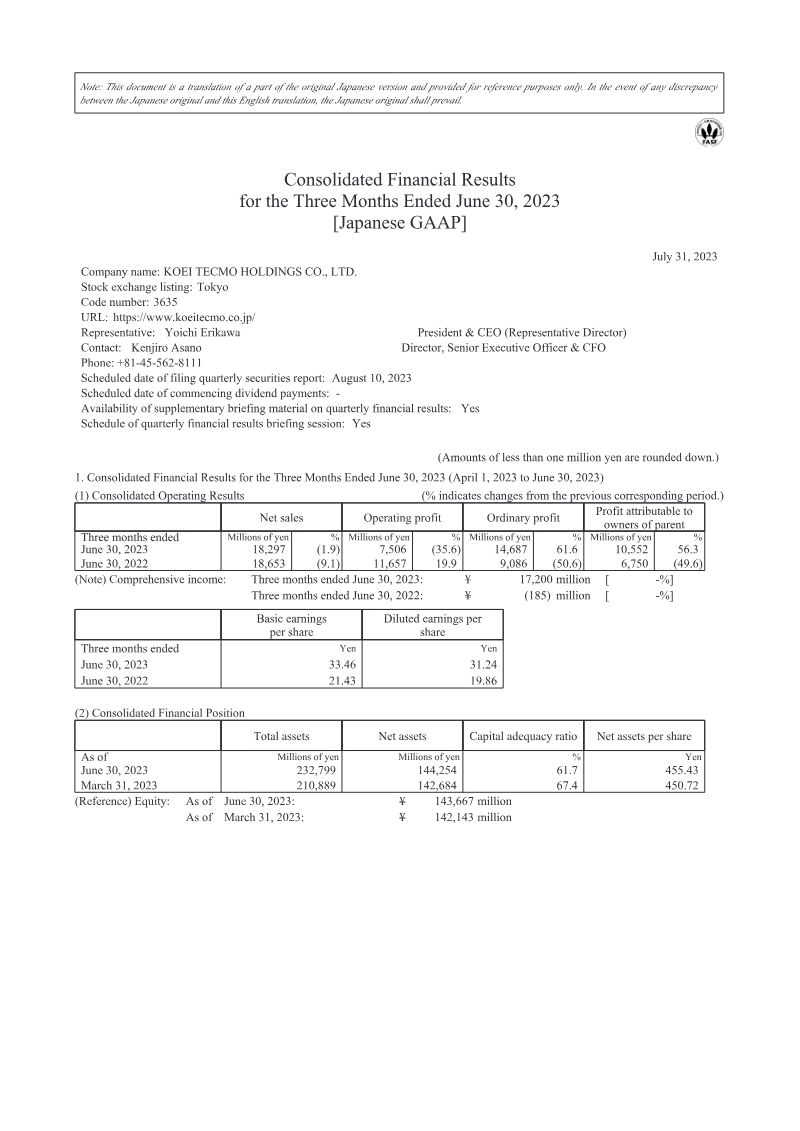
Koei Tecmo · 2023
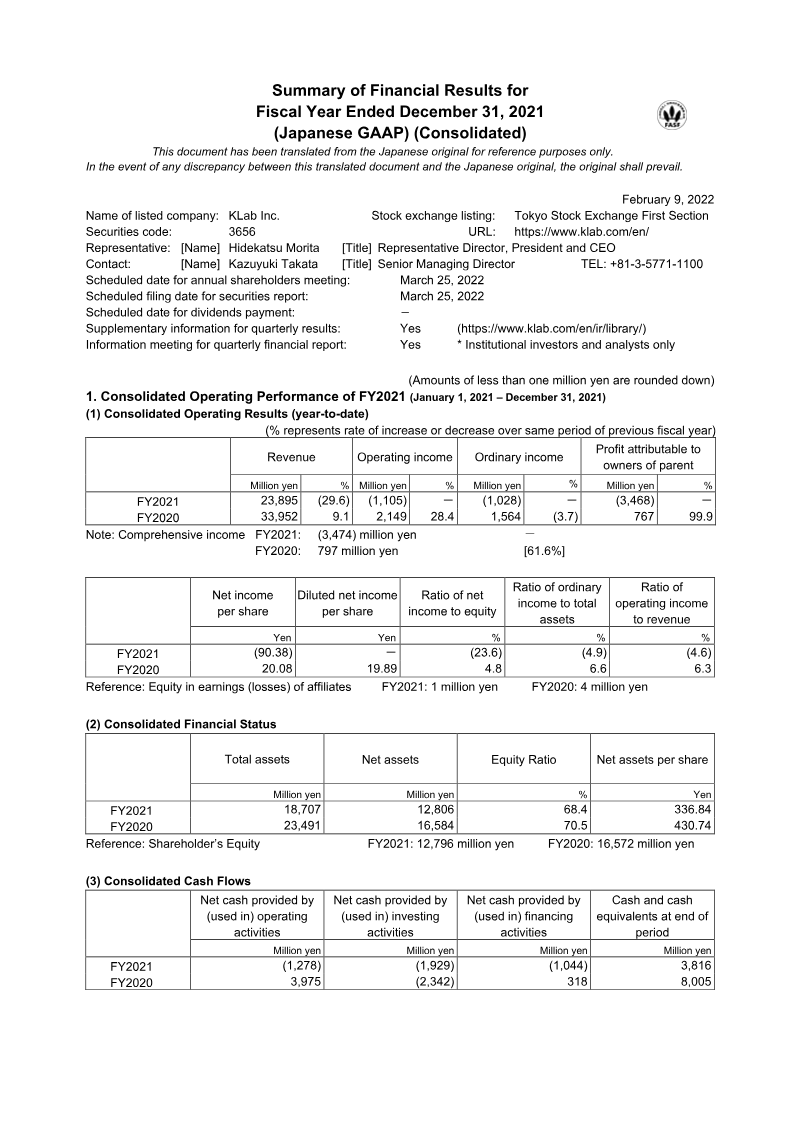
KLab · 2022
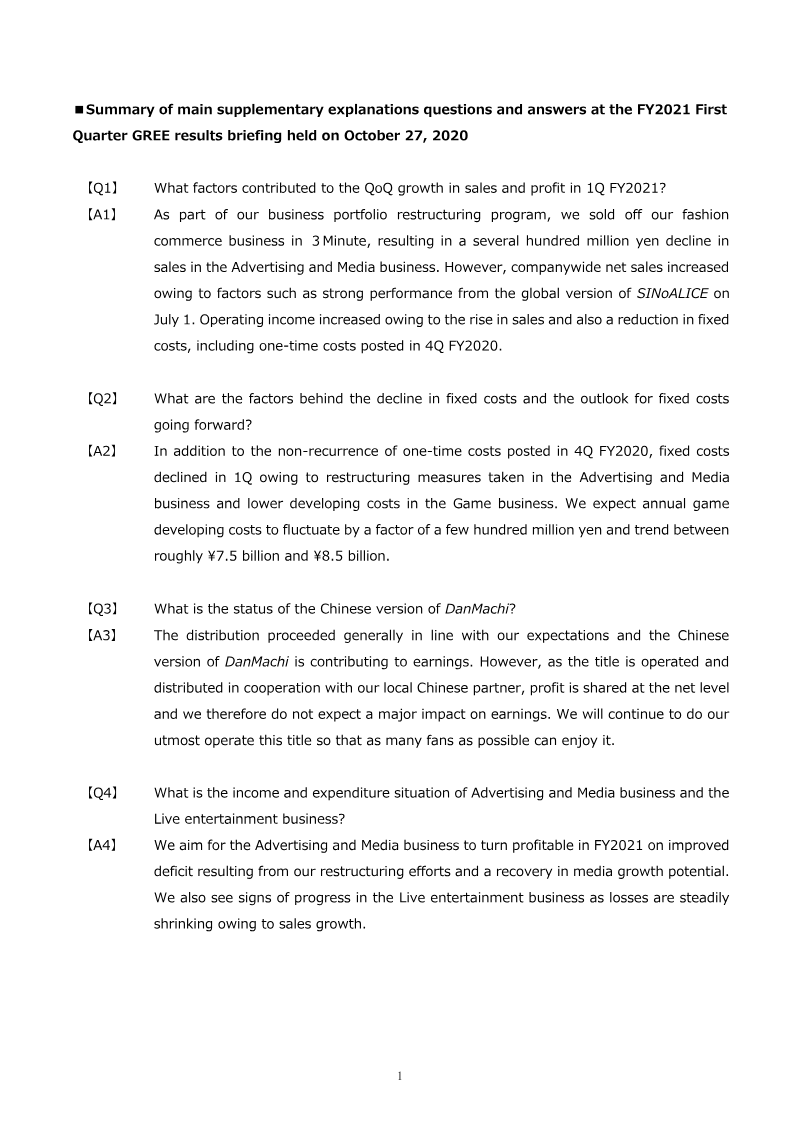
GREE · 2020
mixi · 2020