Loading the document
Key insights
5 slides
Broad appeal
Digital simulations can effectively introduce environmental education to a wide audience.
FloodSim engaged over 25,000 users, proving its capacity to reach a broad audience. It communicates fundamental financial and logistical constraints in flood management.
1 / 5
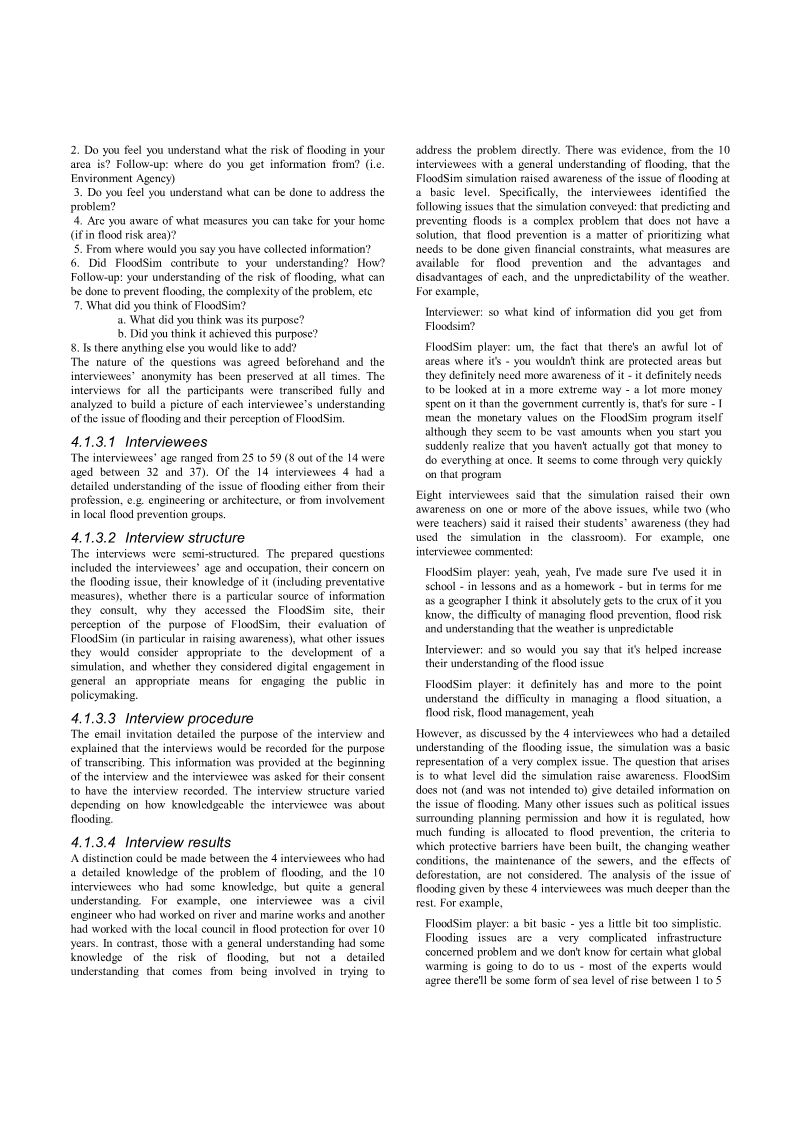
- 01FloodSim successfully engaged over 25,000 users, demonstrating that digital simulations can serve as effective, accessible entry points for public environmental education.See it on page 6
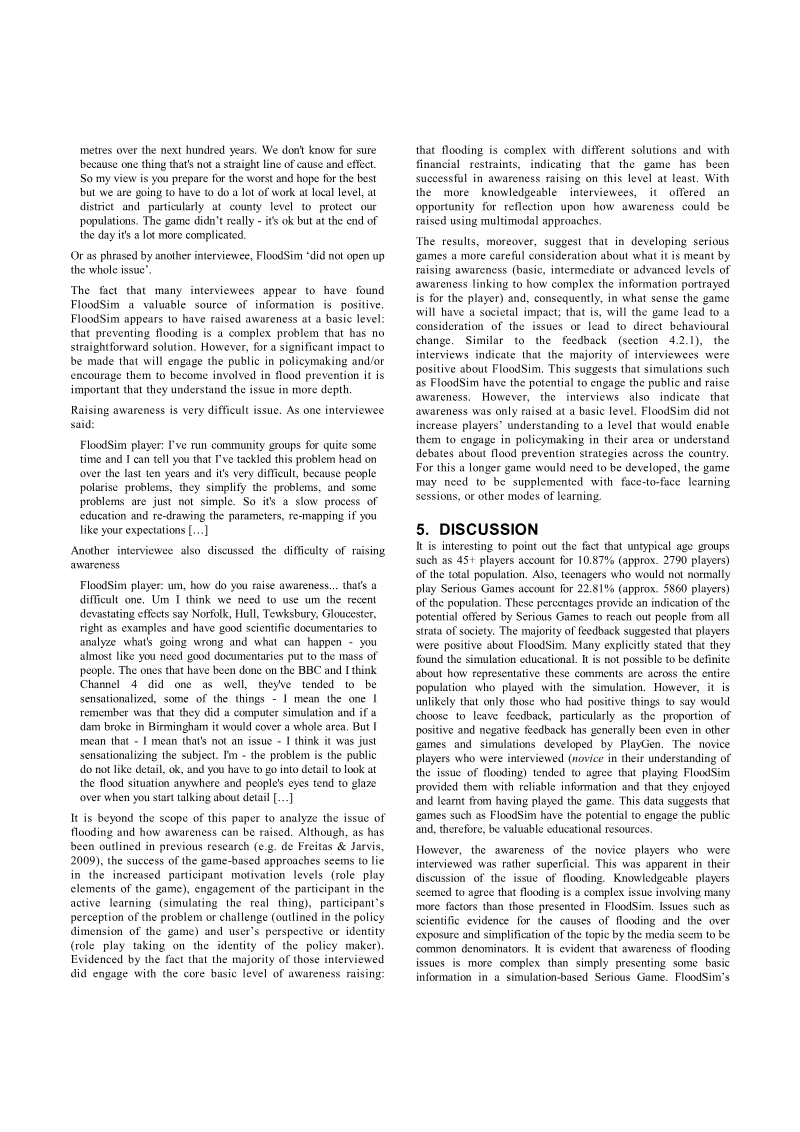
- 02While the game effectively frames flooding as a complex societal challenge, there is a critical tension between high user engagement and the lack of pedagogical depth required for informed policy discourse.See it on page 7
- 03Subject matter experts identified that the simulation lacks the nuance necessary for high-level policy decision-making, limiting its utility beyond superficial awareness-raising.See it on page 7
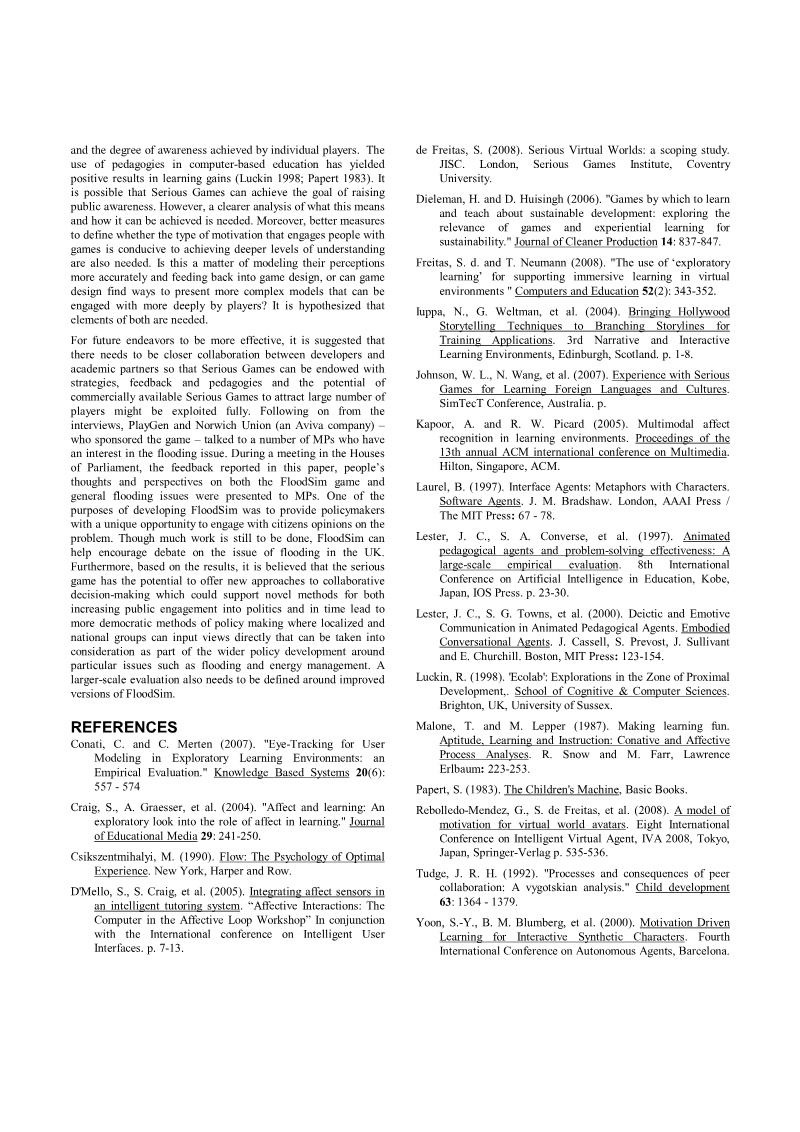
- 04Future development of serious games must prioritize the integration of structured learning strategies and analytical frameworks to move beyond simple engagement.See it on page 9
- 05Effective evolution of these tools requires closer collaboration between game developers and academic partners to ensure simulations are grounded in complex, accurate data.See it on page 9
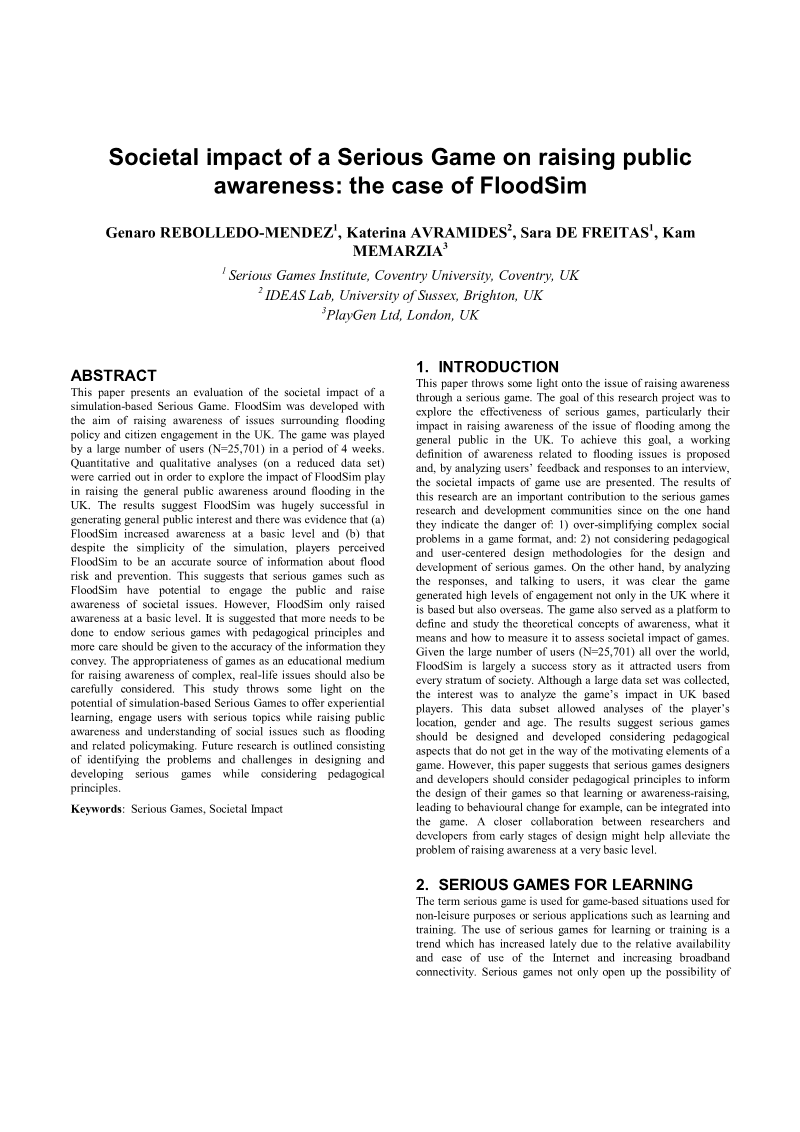
- 06Embedding robust pedagogical design into core game mechanics is essential to transform serious games into platforms for evidence-based policy-making.See it on page 2
Ask AI about this report
Summary
FloodSim serves as a primary case study for evaluating the efficacy of serious games in fostering public awareness regarding complex environmental policy. By engaging over 25,000 users, the simulation demonstrates a significant capacity to reach a broad audience and communicate the fundamental financial and logistical constraints inherent in flood management. The project highlights the potential for digital simulations to serve as accessible entry points for public education, successfully framing flooding as a multifaceted societal challenge rather than a singular technical issue.
Despite this reach, the simulation reveals a critical tension between user engagement and pedagogical depth. While novice players report high levels of motivation and perceive the game as an accurate educational tool, subject matter experts identify a lack of nuance that limits the game’s utility for high-level policy discourse. The current iteration succeeds in raising superficial awareness but falls short of equipping participants with the sophisticated understanding required for informed decision-making or active involvement in democratic policy debates.
To bridge this gap, future development must prioritize a more rigorous integration of structured learning strategies. The findings suggest that the next generation of serious games should move beyond simple engagement to incorporate deeper analytical frameworks. Achieving this evolution requires closer collaboration between game developers and academic partners to ensure that simulations are grounded in accurate, complex data. By embedding robust pedagogical design into the core mechanics of these tools, developers can transform serious games from mere awareness-raising instruments into effective platforms for collaborative, evidence-based policy-making.