1 free read left. Create a free account for unlimited reading + AI research.
Create free accountArticle Singular
1 free read left. Create a free account for unlimited reading + AI research.
Create free accountArticleSingular
This marks a significant shift in adoption by the industry's largest ad network, three years after Apple's initial release.
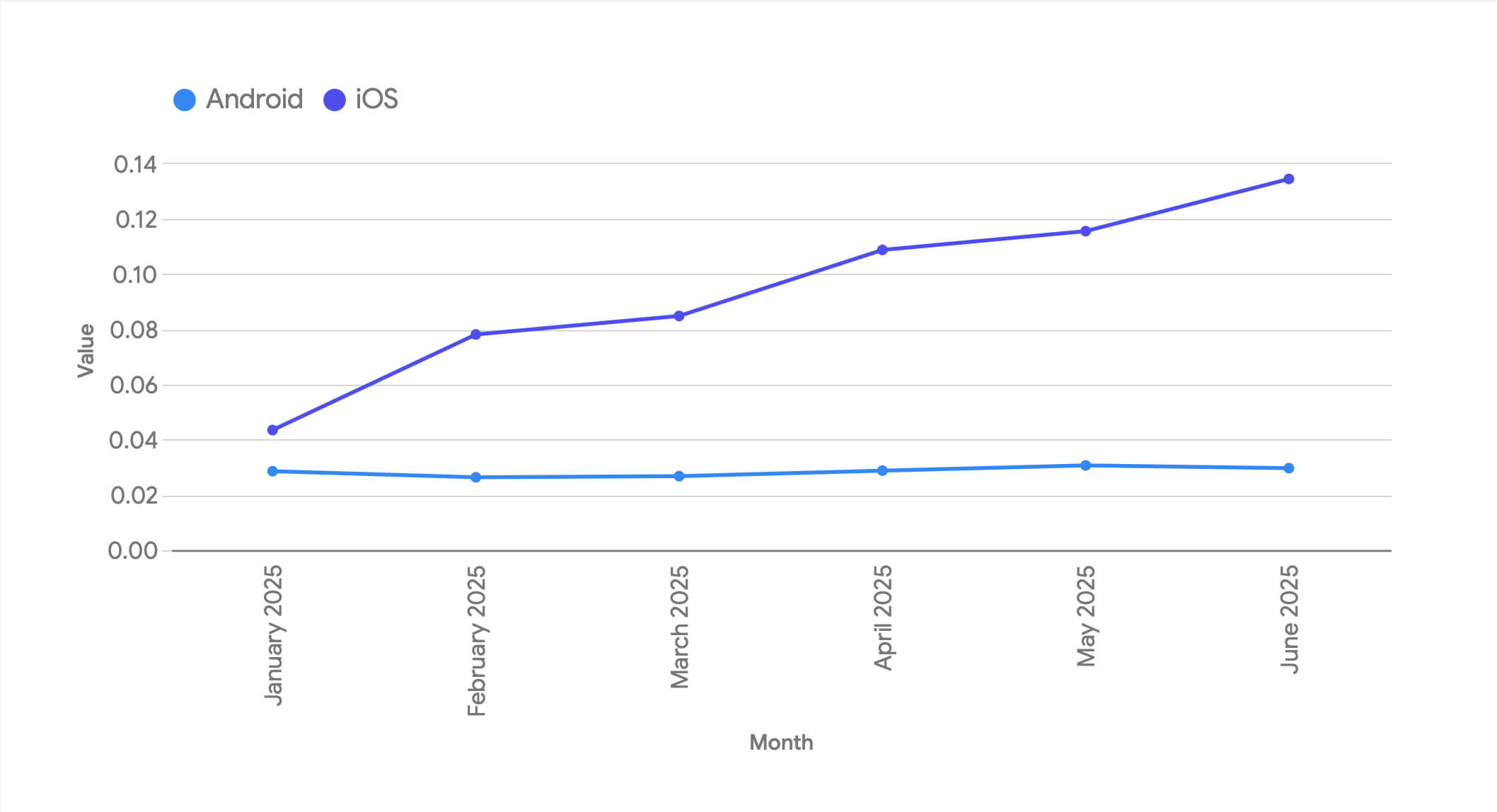
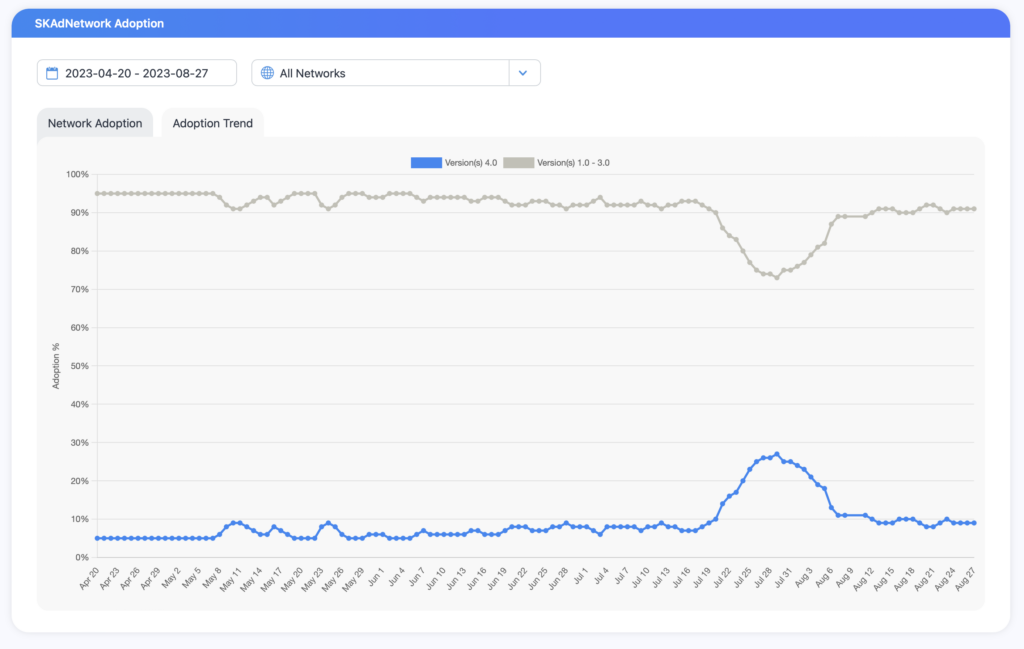
The mobile advertising industry has reached a significant milestone in 2025 as Meta has begun a substantial transition to SKAdNetwork (SKAN) 4. Data indicates that 44% of SKAN postbacks originating from Meta are now utilizing the SKAN 4 framework, marking the first time that SKAN 4 postbacks have sustainably become the majority within the ecosystem. This shift represents the most notable development in SKAN adoption in over a year, leaving Google as the primary major ad network yet to fully transition.
The primary thesis of this analysis is that while the increased adoption of SKAN 4 is a positive technical advancement, its overall impact on the industry is less transformative than previously anticipated. SKAN 4 offers clear functional improvements over its predecessor, including the mitigation of volume limitations, extended attribution windows of up to 35 days, more granular source identifiers for creative optimization, and improved reporting capabilities for subscription-based and low-volume applications.
Despite these benefits, the industry has already largely adapted to the constraints imposed by Apple’s App Tracking Transparency (ATT) and earlier SKAN iterations. Through the widespread implementation of unified measurement techniques—which triangulate multiple data signals to maintain attribution accuracy—marketers have successfully engineered workarounds to previous measurement challenges. Consequently, while SKAN 4 provides additional data points that enhance existing attribution and optimization engines, it is no longer viewed as the critical "salvation" for mobile measurement that it was considered to be in early 2024. The findings suggest that while more data is inherently beneficial, the current digital marketing landscape has already achieved a level of stability that diminishes the relative importance of this specific protocol upgrade.
2026
Singular · 2026
Singular · 2025
Singular · 2025
Singular · 2024
Singular · 2024
Singular · 2024
Singular · 2024
Singular · 2023
Singular · 2022

Singular · 2022

Singular · 2021