1 free read left. Create a free account for unlimited reading + AI research.
Create free accountWhitepaper DiGRA
1 free read left. Create a free account for unlimited reading + AI research.
Create free accountWhitepaperDiGRA
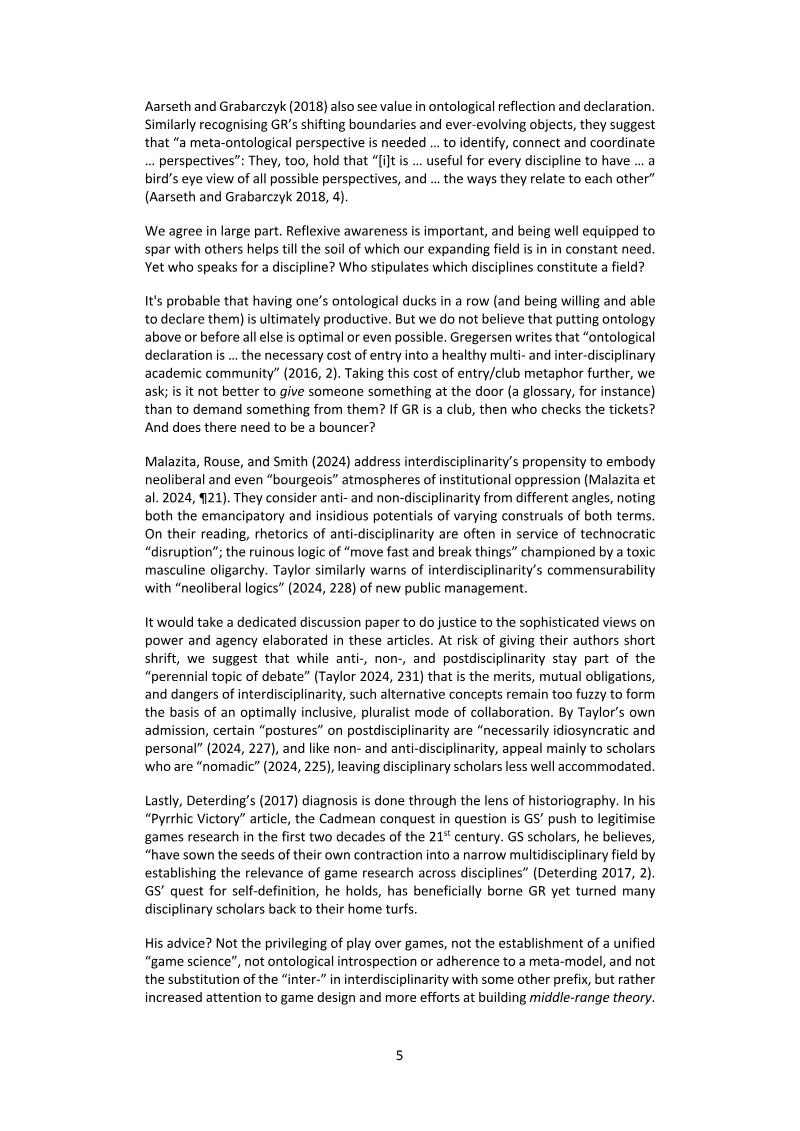
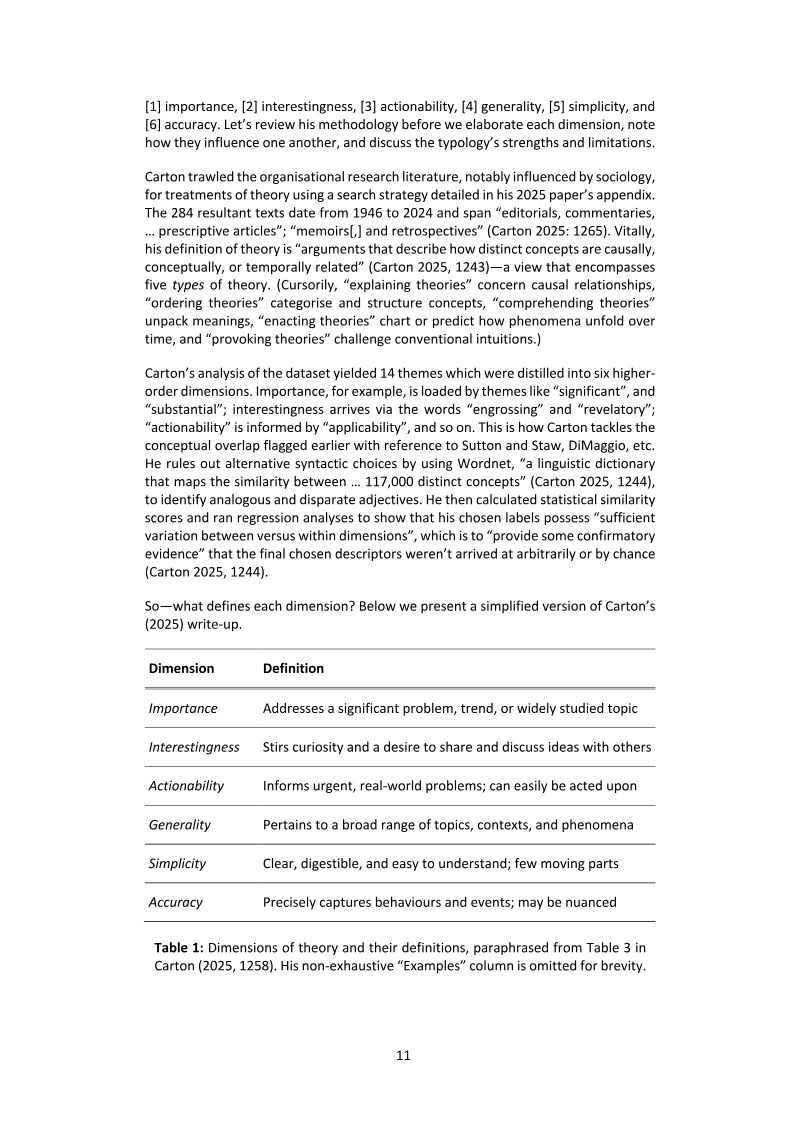
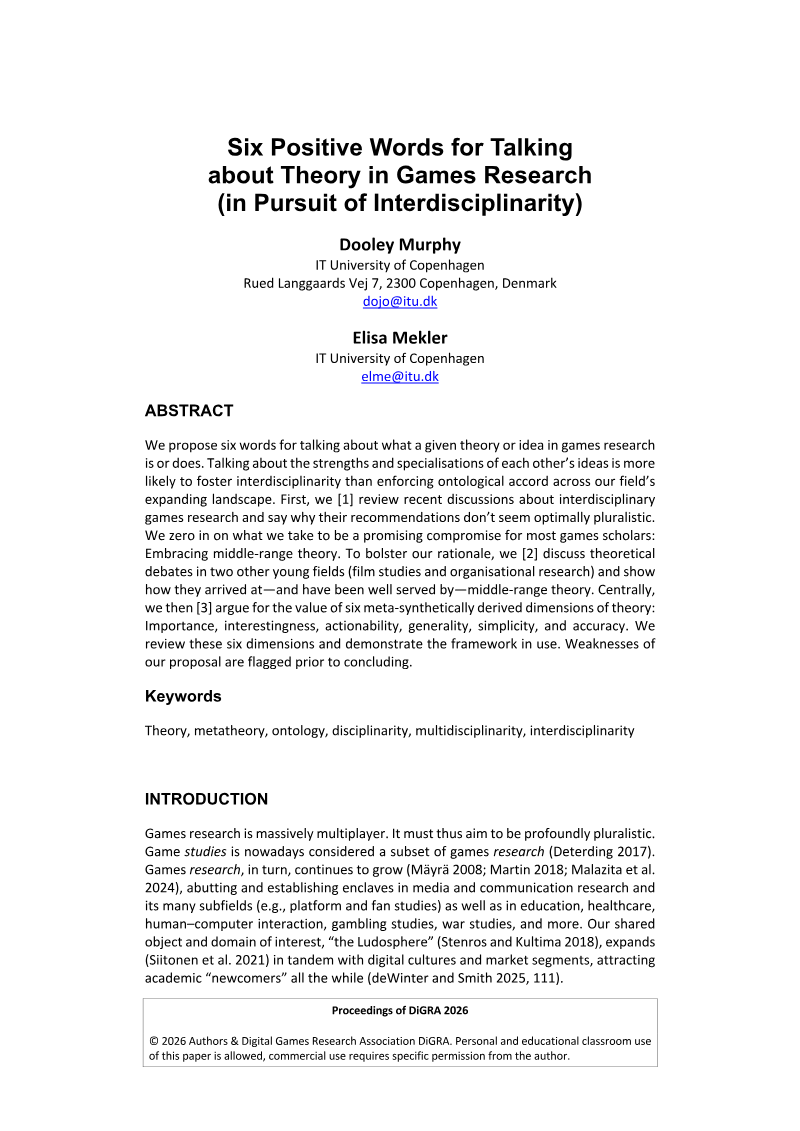
The paper proposes importance, interestingness, actionability, generality, simplicity, and accuracy as descriptors for discussing theory in games research.
The document proposes a framework of six positive words—importance, interestingness, actionability, generality, simplicity, and accuracy—to facilitate interdisciplinary dialogue and evaluation of theories within games research. The central thesis is that adopting this common language can bridge theoretical divides and foster collaboration without requiring ontological agreement among scholars. This approach is particularly advocated for "middle-range theory," which focuses on discrete, quantifiable phenomena, as a pragmatic compromise between abstract "grand theory" and empirical observations.
The framework draws inspiration from Carton's (2025) metasynthesis of theory commentaries, adapting these empirically-derived dimensions for the specific context of games research. The aim is to provide intuitive criteria applicable across both academic scholarship and industry practice, thereby enhancing the practical relevance and evaluative rigor of theoretical discussions. The document highlights parallels with film studies and organizational research, fields that have successfully navigated similar theoretical tensions by embracing pragmatic evaluative frameworks.
While advocating for the widespread adoption of these six dimensions, the document acknowledges potential limitations. These include possible Anglocentrism in the underlying metatheory, masculinist biases inherent in some theoretical traditions, and the inherent challenge of applying these terms to non-textual theoretical artifacts. Despite these caveats, the framework is presented as a valuable tool for fostering interdisciplinary cooperation and advancing the theoretical foundations of game studies. The bibliography underscores the breadth of existing research and ongoing theoretical debates within the field, emphasizing the need for such a unifying evaluative language.

DiGRA · 2026

DiGRA · 2026



DiGRA · 2026



DiGRA · 2026



DiGRA · 2026



DiGRA · 2026



DiGRA · 2026



DiGRA · 2026



DiGRA · 2026

DiGRA · 2026



DiGRA · 2026



DiGRA · 2026















Comments