1 free read left. Create a free account for unlimited reading + AI research.
Create free accountArticleInternational Journal of Role-Playing
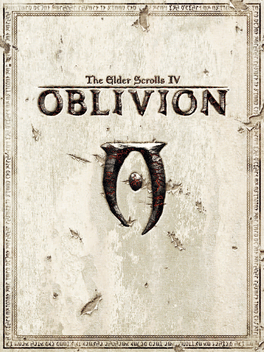
Erik Champion's analysis argues that single-player role-playing games such as The Elder Scrolls IV: Oblivion can convey a sense of social and cultural worlds, but that the notion of "world" in commercial games remains poorly defined. The central contention is that environmental, social, and cultural dimensions of virtual worlds are routinely conflated in research, and that they should be distinguished. Oblivion emerges as a strong social world and a convincing environmental simulation, yet a comparatively weak cultural one. Its role-playing largely functions as game-balance attributes rather than as meaningful cultural practices, and its curatorial and interpretive dimensions are underdeveloped.
The strongest evidence for this assessment lies in the game's environmental presence, which is credited with wildlife behaviour, weather, seasonal flora, physical hazards, and independently running ecological processes. Social presence is judged weaker. Non-player characters follow hard-coded behaviours, gossip is delivered in monologue form, artefacts respond poorly to handling, and the player's appearance and actions have limited consequences for the wider world. Cultural presence, the analysis argues, depends less on the presence of other live participants than on "hermeneutic richness": the density of interpretable artefacts and traces of past social activity that invite the player to read a lived-in culture. Books, for instance, are described as offering entertainment rather than insight into cultural values.
The author proposes concrete remedies, including dynamic NPC reactions, biofeedback-driven behaviour, artefacts that record their use and popularity, more expressive hero autonomy, adaptive hints, and staggered multiplayer quests. These are framed as steps toward a richer sense of social agency and cultural emergence. The broader conclusion treats Oblivion as a test case for a general theory of virtual worlds rather than as a conventional review, and suggests that role-playing games and their editors could serve as more effective educational tools for history and heritage studies.
Jason Schreier · 2026