The filing presents Roblox’s financial and operational status for the six months ended June 30, 2022, with a focus on revenue growth, cost dynamics, and risk exposure. Revenue rose 30 % to $591 million from $454 million a year earlier, driven by higher bookings recognition and an extended paying‑user lifetime estimate of 25 months. Operating expenses surged, particularly infrastructure (up 45 %), trust & safety, and research & development (70 % increase for the quarter), resulting in a net loss of $178 million or $4.30 per share. Cash reserves improved to $1.78 billion, largely from preferred‑stock and equity issuances, offsetting significant operating outflows.
Capital structure details show 545 million Class A and 51 million Class B shares outstanding, with a $4.5 million non‑controlling interest and total stockholders’ equity of $551.6 million against an accumulated deficit of $1.32 billion. Lease commitments total $455.5 million, including a new San Mateo office lease of $212.5 million beginning in 2023. Acquisitions of Hamul and Guilded added modest goodwill ($70 million combined) and intangible assets, deemed immaterial to the period’s financials.
Risk disclosures emphasize regulatory, security, and market uncertainties. Dependence on third‑party platforms (Apple, Google, AWS) exposes Roblox to fee increases, policy changes, and potential outages. International expansion introduces compliance costs under GDPR, COPPA, and emerging digital‑services legislation, while foreign‑currency volatility could erode revenue from the 77 % of daily active users outside the U.S./Canada. Cyber‑security, fraud, and intellectual‑property liabilities remain significant threats that could impair user trust and financial performance. The company’s dual‑class structure concentrates voting power, potentially limiting shareholder influence and affecting valuation.
Overall, the report underscores robust revenue growth tempered by escalating costs and a sizable operating loss, while highlighting a broad geographic footprint (global user base) and a time frame covering the first half of fiscal year 2022. The analysis indicates that continued investment in infrastructure, talent, and security is essential to sustain growth, yet these expenditures may delay profitability as the company navigates regulatory and competitive pressures.
Roblox · 2026

Roblox · 2026
Roblox · 2026
Roblox · 2025
Roblox · 2025
Roblox · 2025
Roblox · 2025
Roblox · 2024
Roblox · 2024
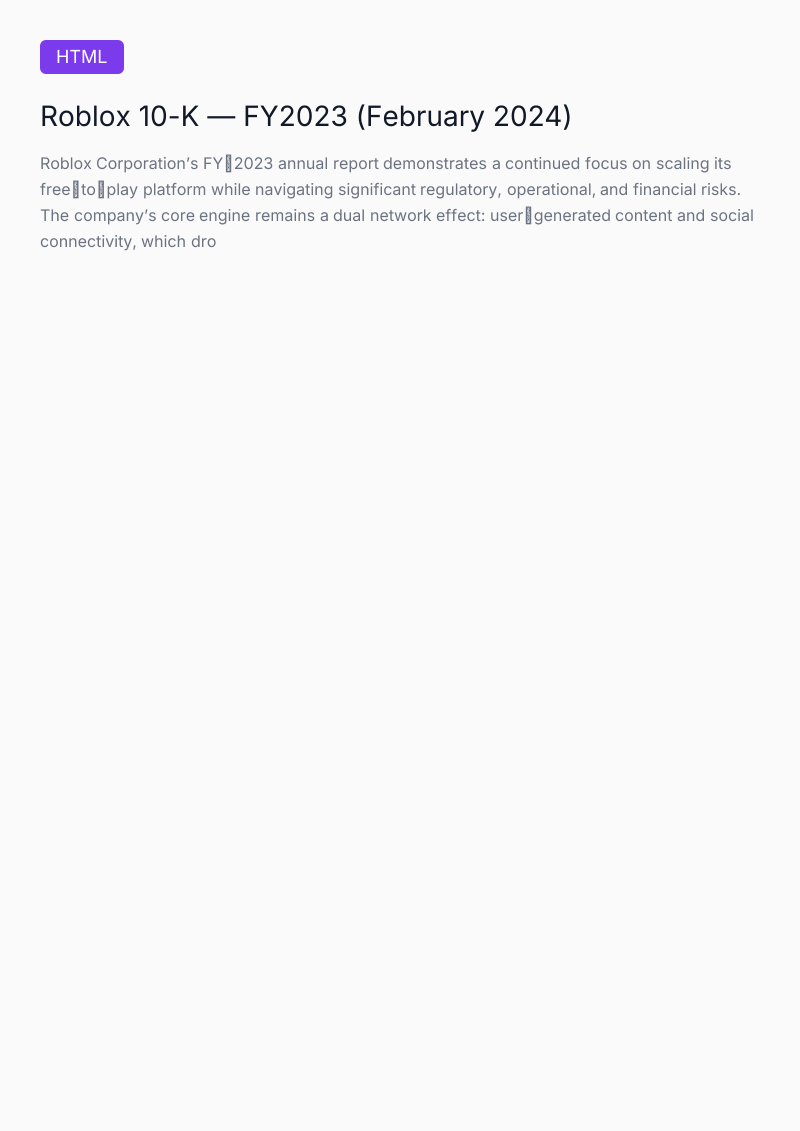
Roblox · 2024
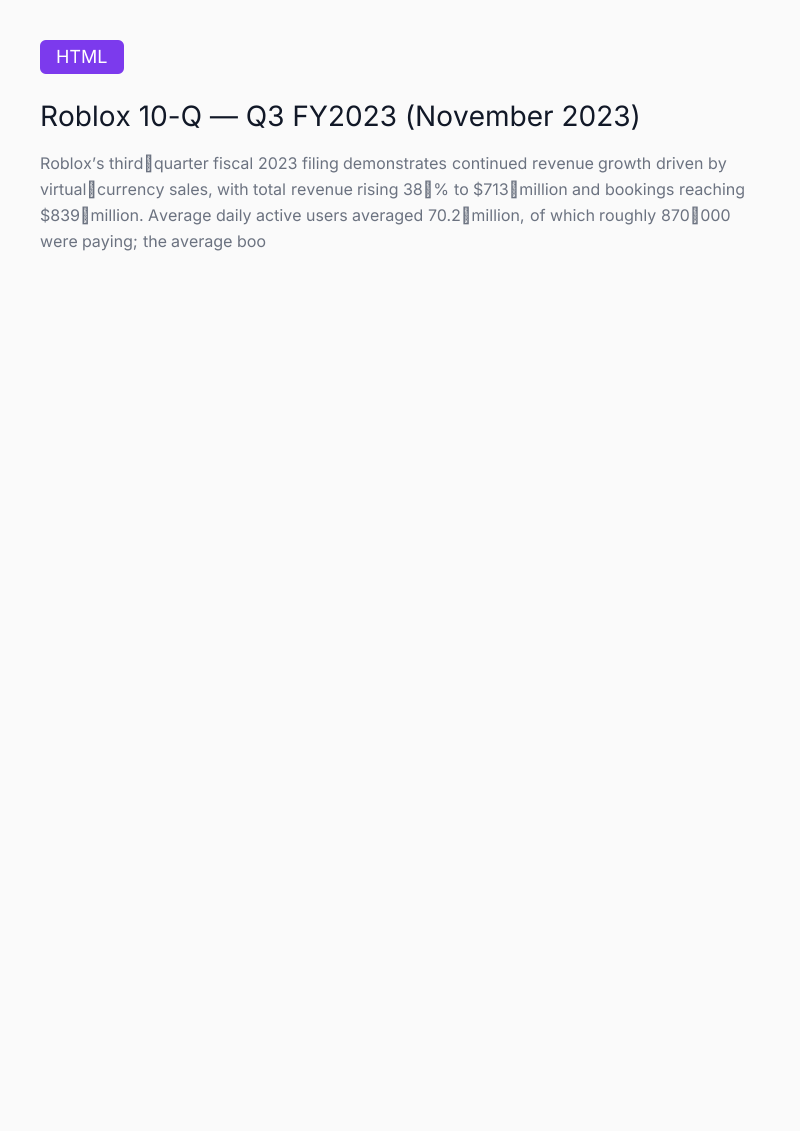
Roblox · 2023
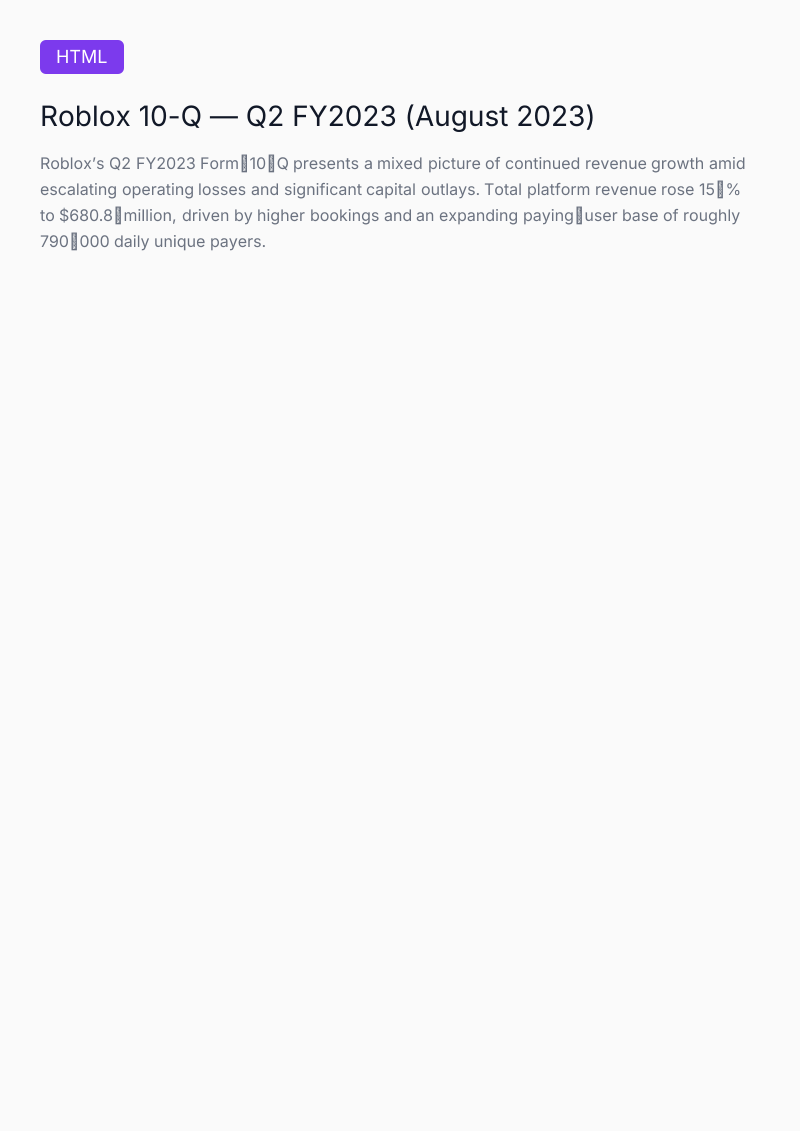
Roblox · 2023
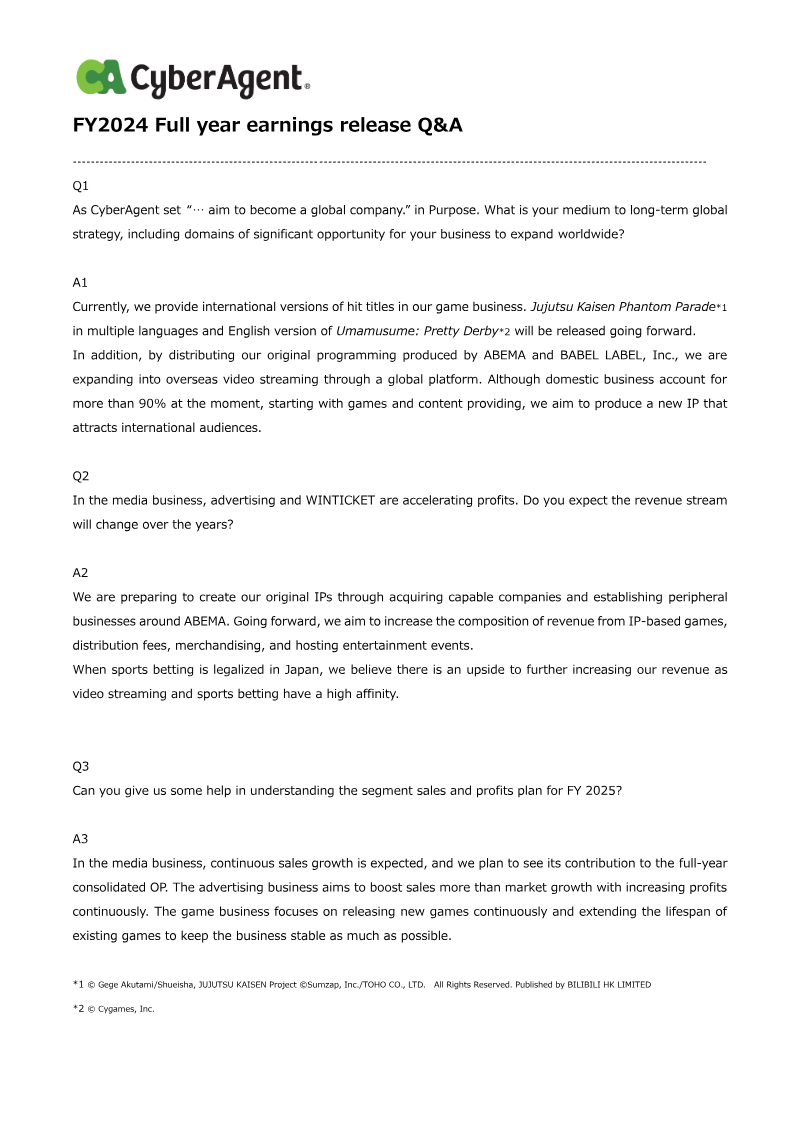
CyberAgent · 2026
Take-Two Interactive · 2026
CyberAgent · 2023
GREE · 2012
Roblox Corporation · 2026
Square Enix · 2026
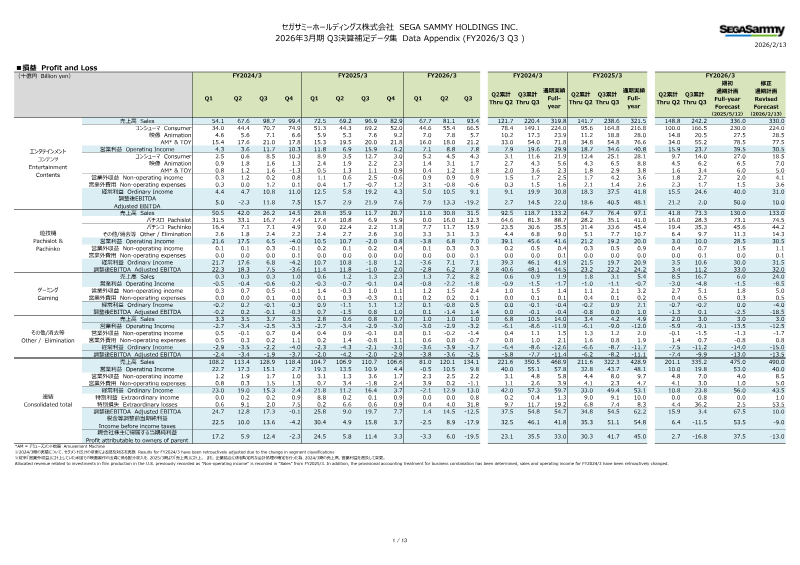
Sega Sammy Holdings · 2026

Kadokawa Corporation · 2026
Newzoo · 2026
Aream & Co · 2026
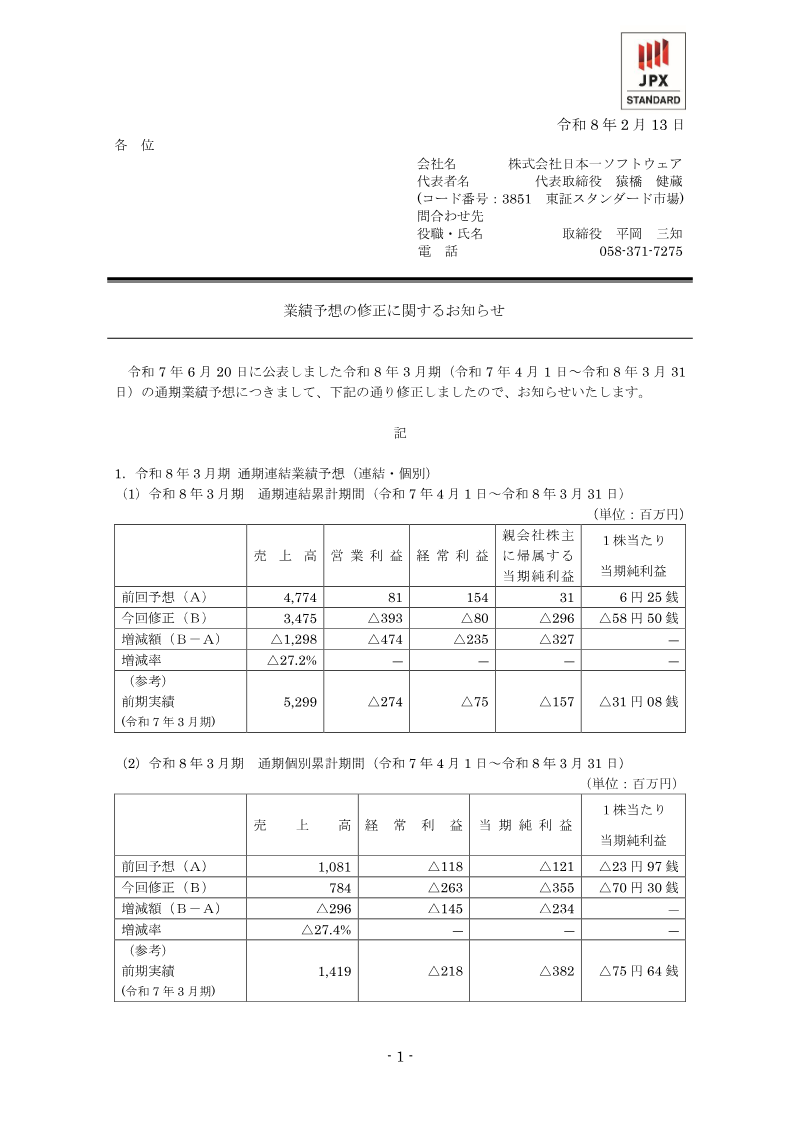
Nippon Ichi Software · 2026
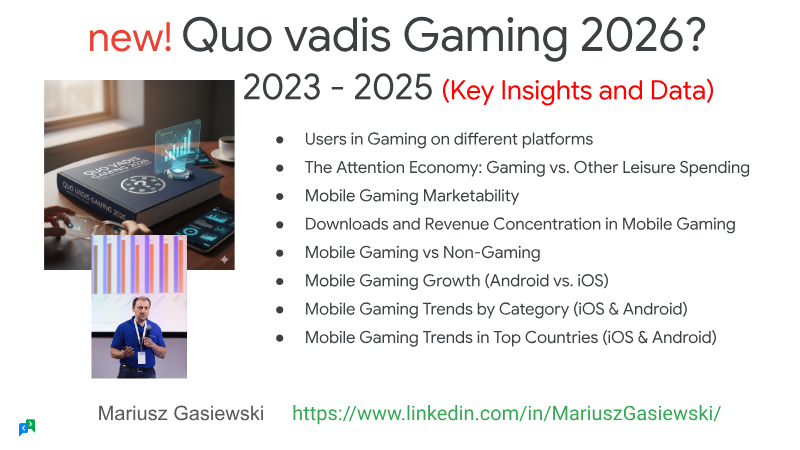
InvestGame · 2026