The filing presents Roblox Corporation’s first‑quarter 2025 financial results and operational overview, focusing on revenue growth, user engagement metrics, and the company’s risk profile. Revenue rose 29 % to $1.04 billion, driven by a larger base of daily paying users (≈1.22 million versus 0.91 million in Q1 2024) and higher virtual‑currency bookings of $1.21 billion. Operating costs expanded proportionally, with developer exchange fees up 39 % and cost of revenue up 26 %, resulting in a consolidated net loss of $216 million—an improvement over the $272 million loss reported a year earlier. Adjusted EBITDA turned positive at $58 million, and free cash flow surged to $427 million from $191 million, reflecting stronger operating cash generation despite increased capital expenditures.
Key performance indicators include daily active users (DAUs) measured as unique registered accounts logged in on a calendar day, hours engaged aggregated across devices, and bookings per DAU (ABPDAU) as a non‑GAAP monetization metric. The company’s equity base grew to $296 million, supported by the issuance of 4.6 million common shares and a 1 million‑share employee‑stock purchase plan, while the accumulated deficit widened to $4.21 billion.
Geographically, approximately 80 % of DAUs and 37 % of revenue originate outside the United States and Canada, exposing Roblox to diverse regulatory, tax, trade, and operational risks. The report highlights significant compliance challenges—including privacy, child‑safety, virtual‑currency, and emerging AI regulations—alongside cybersecurity threats, infrastructure reliability concerns, and potential litigation over intellectual property. These risks could materially affect user trust, developer engagement, and financial performance.
Overall, the filing underscores that Roblox’s path to profitability hinges on sustaining user growth while managing escalating operating expenses, regulatory compliance costs, and capital investment in infrastructure and security. The company’s dual‑class share structure concentrates voting power, potentially limiting shareholder influence over strategic decisions and debt management.
Roblox · 2026

Roblox · 2026

Roblox · 2026
Roblox · 2025

Roblox · 2025

Roblox · 2025

Roblox · 2024
Roblox · 2024
Roblox · 2024
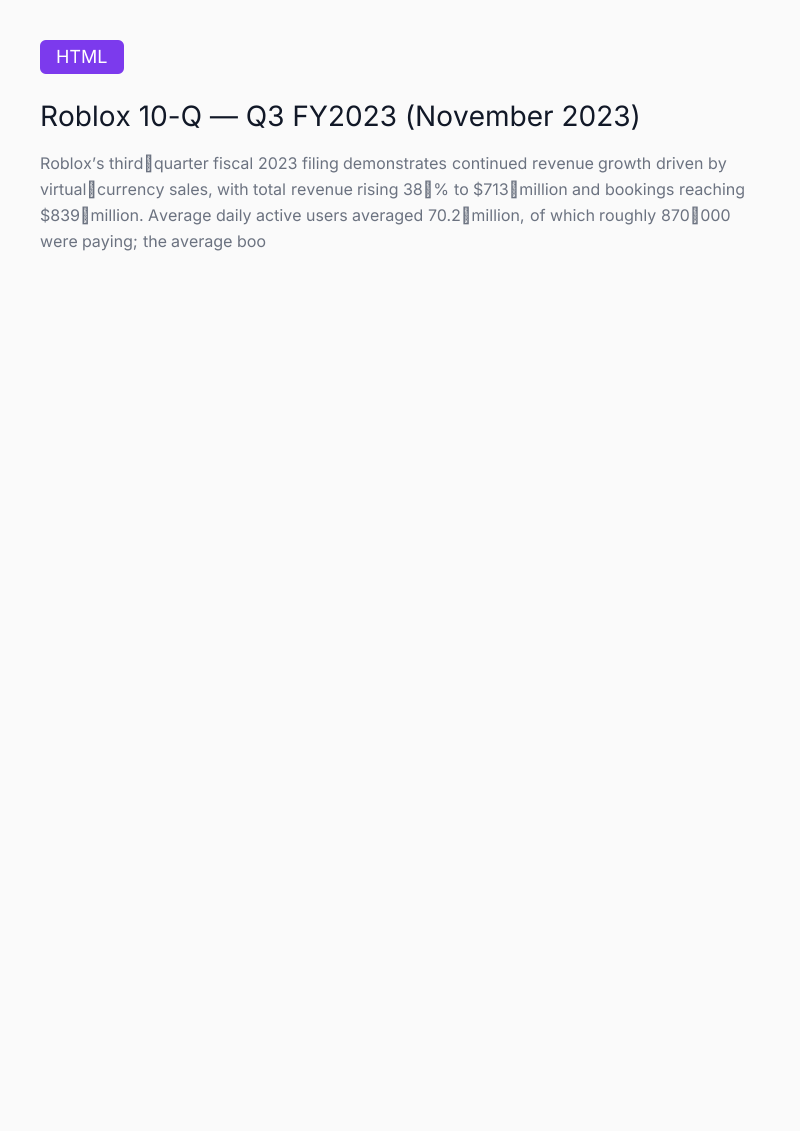
Roblox · 2023
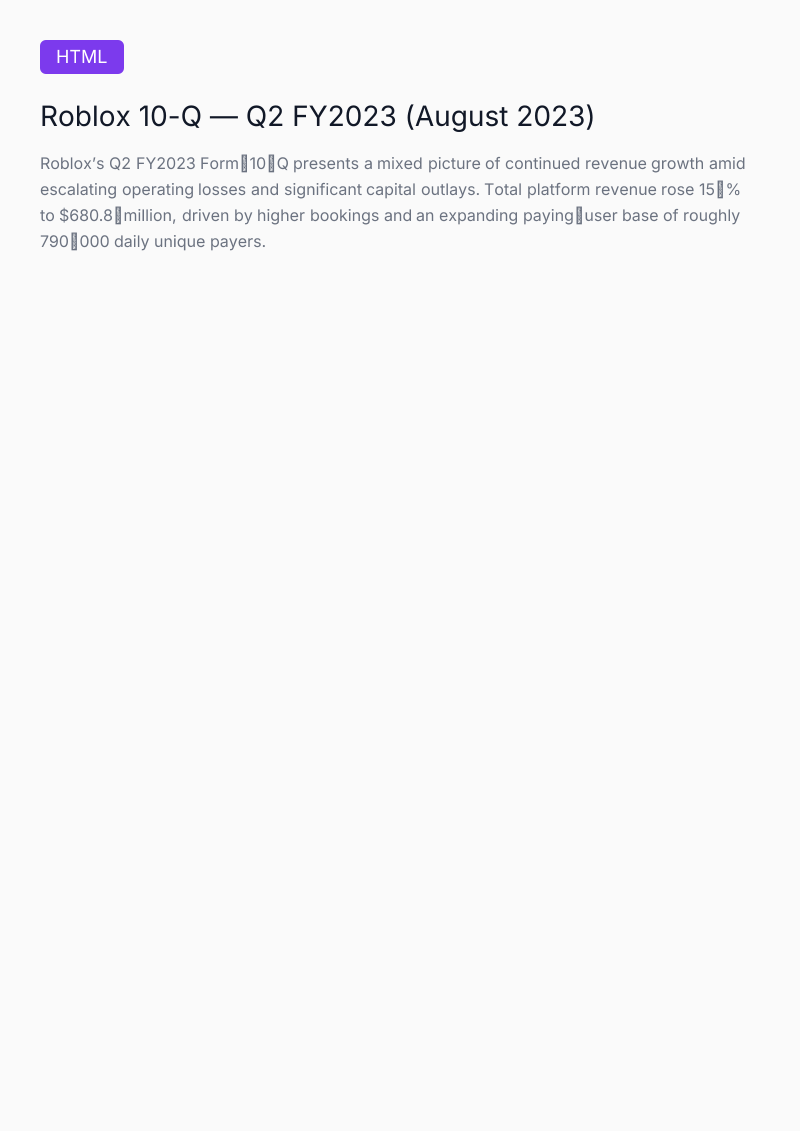
Roblox · 2023

Roblox · 2023
Ubisoft · 2026
Sony Group Corporation · 2026
Enthusiast Gaming Holdings · 2026
Drake Star Partners · 2026

Aream & Co · 2026
Capcom · 2026

Modern Times Group · 2026
Bandai Namco · 2026
Aream & Co · 2026
Take-Two Interactive · 2026
Take-Two Interactive · 2026
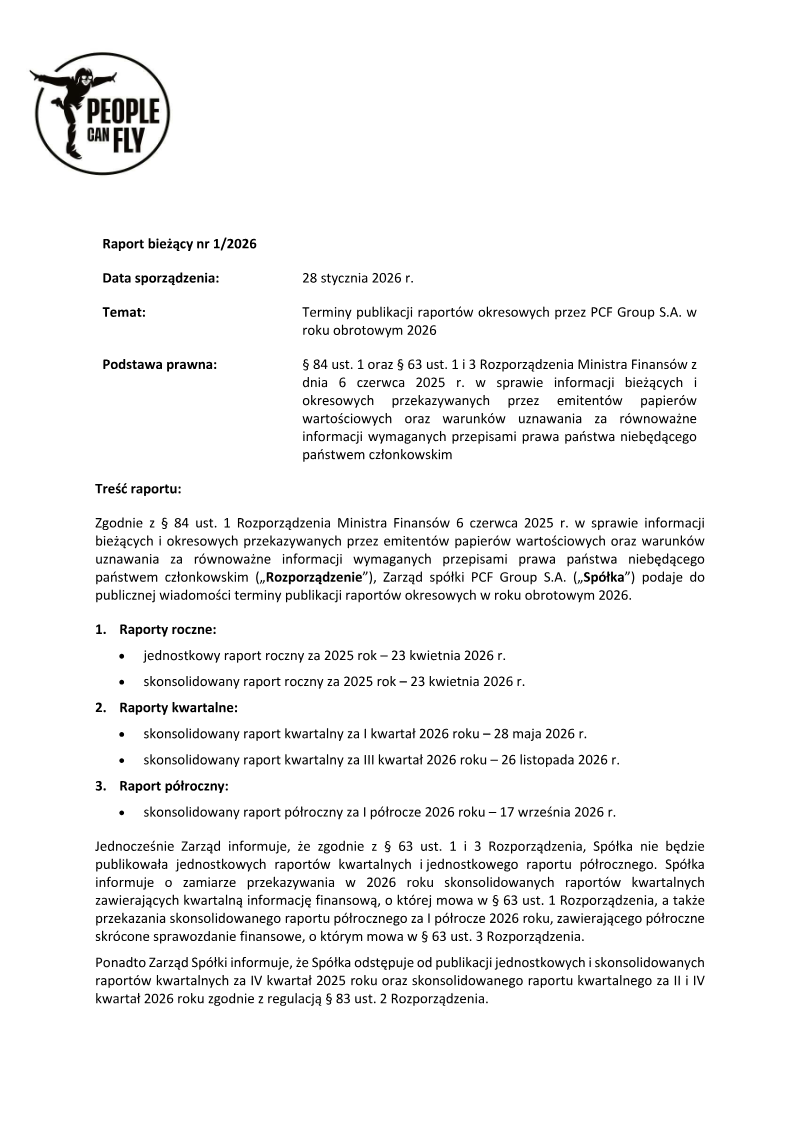
PCF Group · 2026