1 free read left. Create a free account for unlimited reading + AI research.
Create free accountFinancial report Roblox
1 free read left. Create a free account for unlimited reading + AI research.
Create free accountFinancial reportRoblox
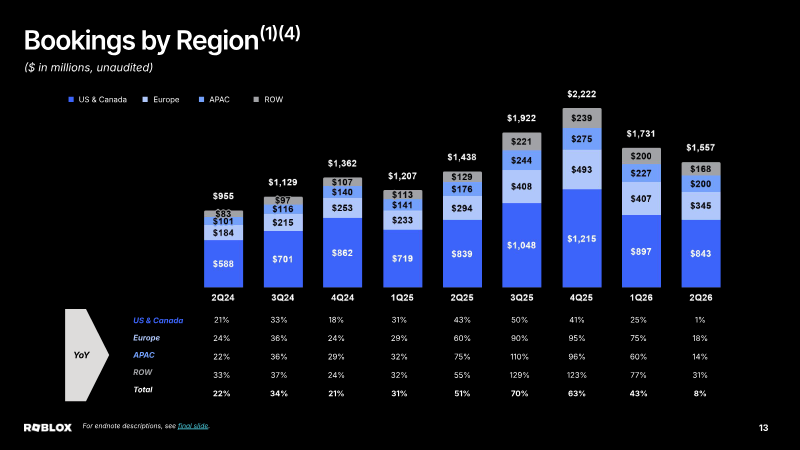
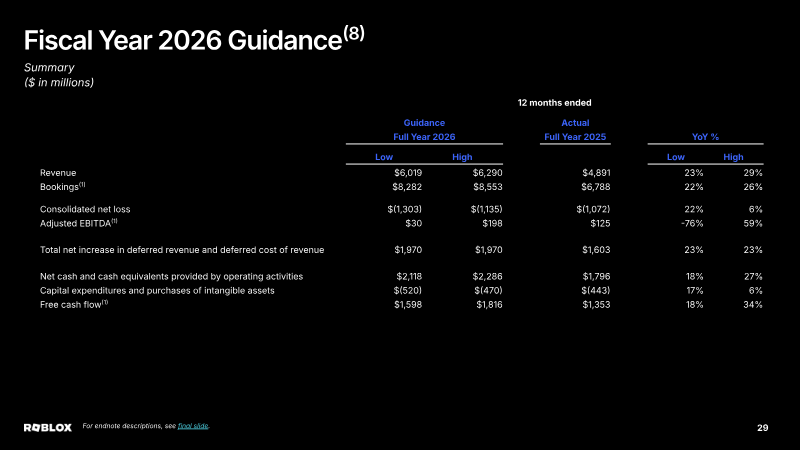
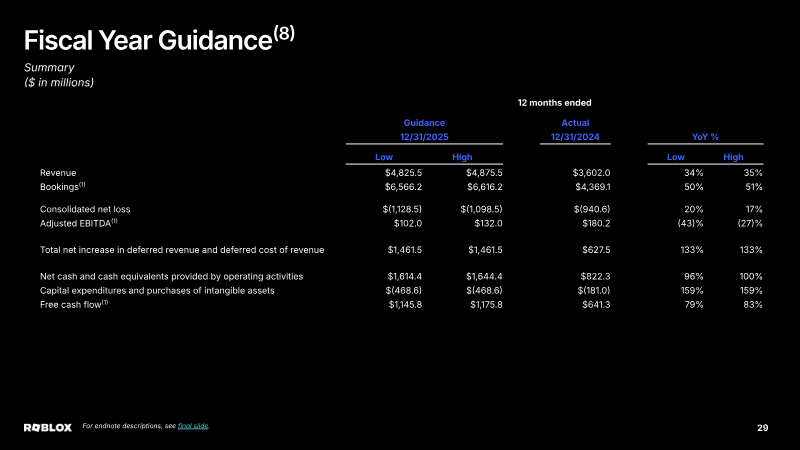
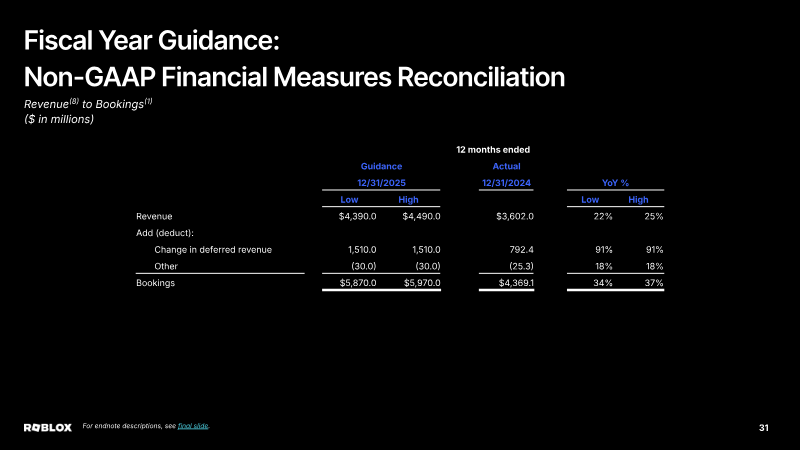
Roblox’s Q3 2026 filing demonstrates robust revenue growth, driven by a 39% increase to $1.442 billion and a 58% share of the U.S./Canada market, while virtual-item sales shift toward consumables. Bookings rose to $1.73 billion, and adjusted EBITDA improved to $99 million from $58 million, reflecting higher operating efficiency despite rising cost of revenue and developer exchange fees. Operating cash flow reached $629 million, with free cash flow up to $596 million, and the company maintains a healthy liquidity position of roughly $6.2 billion in cash and short-term investments against a $993 million 2030 note portfolio.
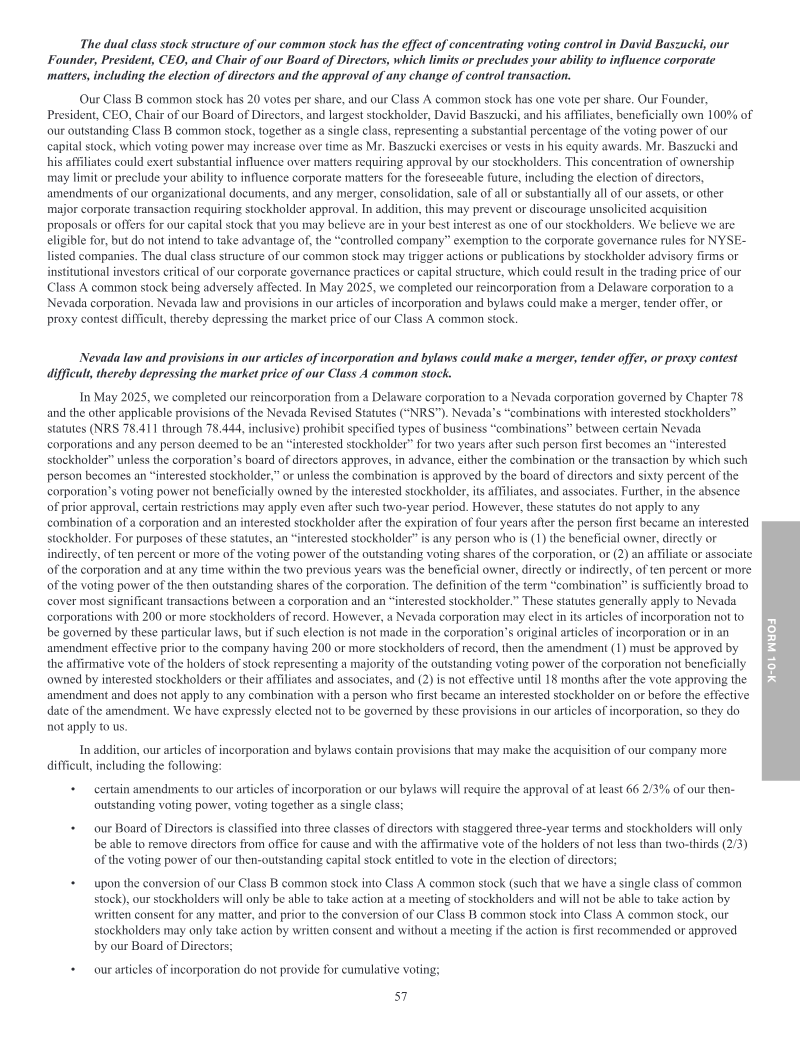
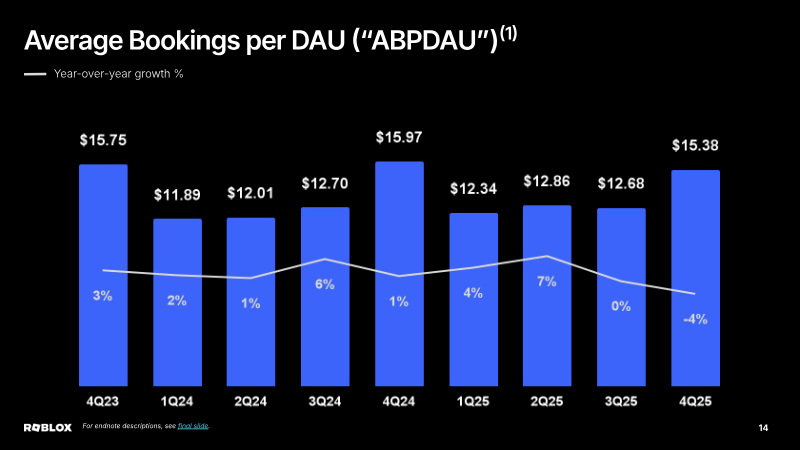
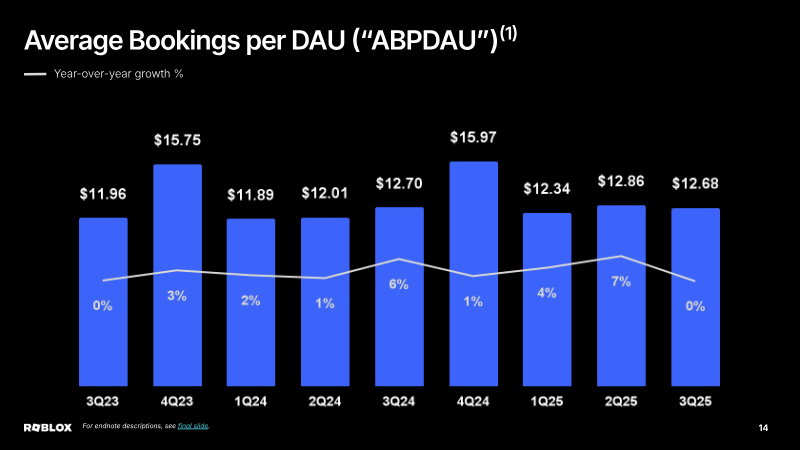
User engagement remains strong, with 132 million daily active users and a 1.9 million payer base generating an average booking of $0.15 per user. The free-to-play model keeps the majority non-payers, yet Roblox invests heavily in creator tools, AI features, and safety initiatives such as Kids and Select accounts to sustain growth. However, regulatory pressures across the U.S., Australia, EU, and China—covering child-protection mandates, loot-box restrictions, and potential Section 230 reforms—present escalating compliance costs and operational risks that could dampen user engagement and monetization.
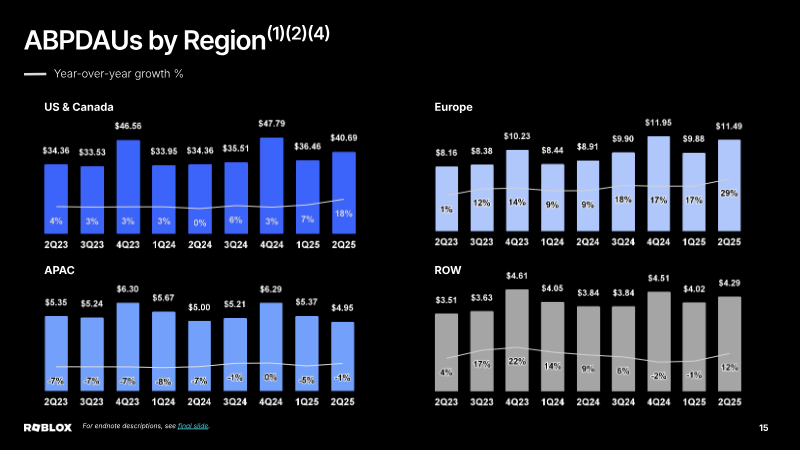
Geographically, 42% of revenue originates outside the U.S./Canada, exposing Roblox to currency fluctuations, trade restrictions, and geopolitical tensions. The company’s reliance on third-party platforms (Apple, Google) for a significant portion of revenue and its dependence on AWS for cloud services further amplify exposure to policy changes, fee adjustments, and supply-chain constraints. Legal risks include ongoing youth-safety litigation, open-source license compliance, and intellectual-property disputes that could erode competitive advantage. Overall, Roblox balances strong financial performance with heightened regulatory and operational risks that may impact future growth trajectories.
Roblox · 2026
Roblox · 2026
Roblox · 2026
Roblox · 2026
Roblox · 2026
Roblox · 2025
Roblox · 2025
Roblox · 2025
Roblox · 2025
Roblox · 2025
Roblox · 2025
Roblox · 2025
Naavik · 2022