Loading the document
Key insights
6 slides
Beyond hardware
The Game Boy Advance is a material artifact, not just a piece of hardware.
Released in 2002, the GBA shapes user identity and social interaction. Its analysis moves beyond traditional computational platform studies.
1 / 6
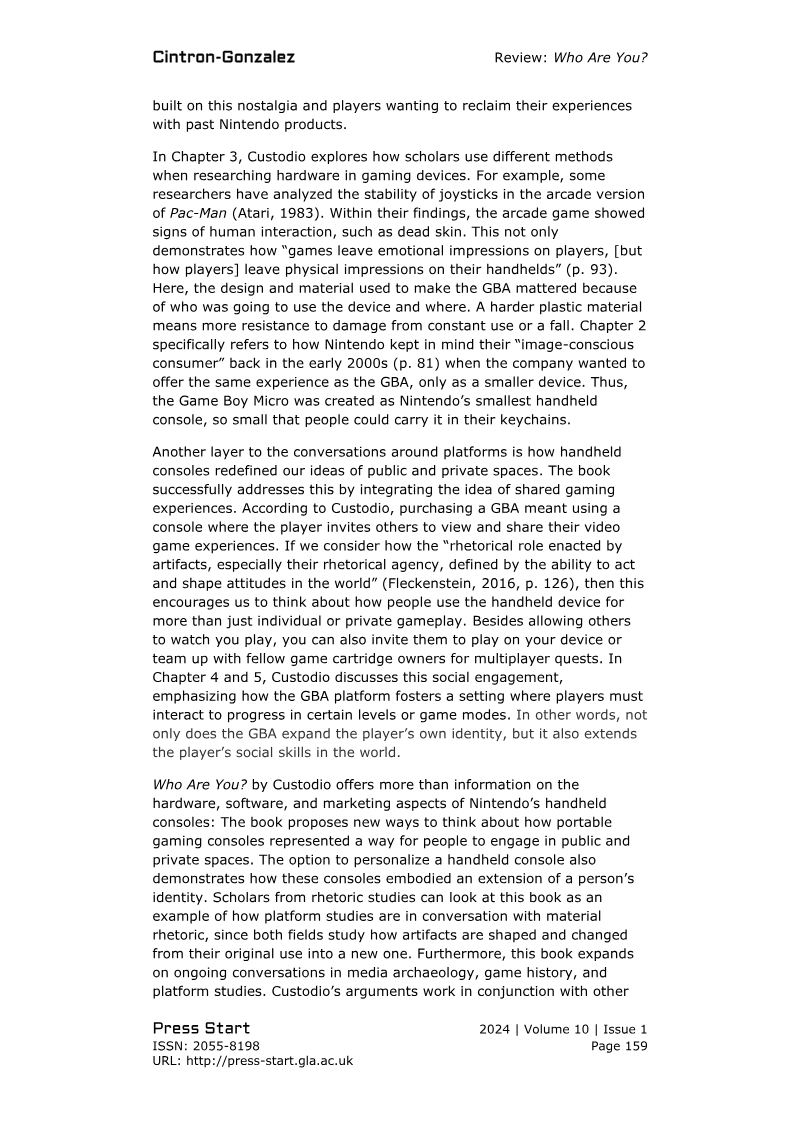
- 01The Game Boy Advance, released in 2002, is analyzed as a material artifact that shapes user identity and social interaction rather than just a piece of hardware.See it on page 3
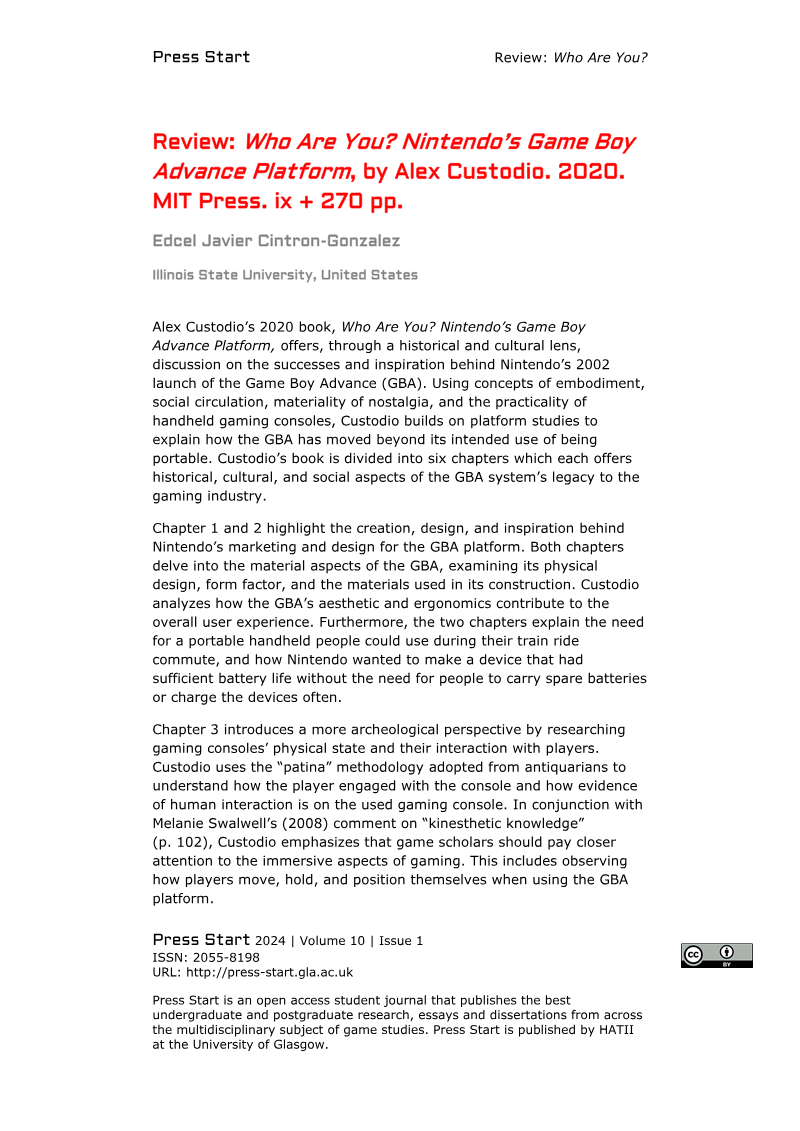
- 02Nintendo’s design philosophy for the GBA prioritized ergonomics, battery efficiency, and portability specifically tailored for the needs of commuters.See it on page 1
- 03The platform utilized link cable technology in titles like Pokémon and The Legend of Zelda: A Link to the Past and Four Swords to foster community and collaborative play.See it on page 2
- 04The study applies an archaeological perspective to the GBA, using the concept of 'patina' to interpret how physical wear on the console reflects kinesthetic engagement and human interaction.See it on page 1
- 05The GBA’s modern relevance is sustained through fan-driven emulation, homebrewing, and hardware modding, which serve to circumvent the planned obsolescence of original hardware.See it on page 2
- 06The analysis highlights a tension between corporate-led technological innovation and the environmental impact of e-waste, framing the GBA as a cultural artifact that continues to evolve through user-generated content.See it on page 2
Ask AI about this article
Summary
The book Who Are You? Nintendo's Game Boy Advance Platform by Alex Custodio provides a comprehensive historical and cultural analysis of the Game Boy Advance (GBA), released in 2002. Moving beyond traditional computational platform studies, the work examines the GBA as a material artifact that shapes user identity, social interaction, and the boundaries between public and private gaming spaces. The thesis posits that the GBA’s legacy is defined not only by its hardware specifications but by the embodied experiences of its players and its enduring presence in collective memory.
The analysis covers the GBA’s design philosophy, emphasizing Nintendo’s focus on ergonomics, battery efficiency, and portability for commuters. A key methodological contribution is the application of an archaeological perspective, utilizing the concept of "patina" to study how physical wear on consoles reflects human interaction and kinesthetic engagement. The text further explores the social dimensions of the platform, noting how titles like Pokémon and The Legend of Zelda: A Link to the Past and Four Swords utilized link cables to foster community and collaborative play, effectively extending the player's social sphere.
Finally, the work addresses the platform’s afterlife through the lenses of emulation, homebrewing, and hardware modding. By analyzing how players circumvent the obsolescence of original hardware to preserve their gaming experiences, the study highlights the tension between corporate-driven technological innovation and the environmental impact of e-waste. Ultimately, the GBA is framed as a significant cultural artifact that continues to evolve through fan-generated content, demonstrating how nostalgia and materiality sustain the relevance of legacy gaming platforms in the modern era.