More from International Journal of Role-Playing
View all
Article
Bridging Historical and Present-Day Queer Community Through Embodied Role-playing
International Journal of Role-Playing · 2023
Article
Experiencing China's Intangible Cultural Heritage in Role-Playing Games: Comparative Studies Between MMORPGs and Larps
International Journal of Role-Playing · 2023
Article
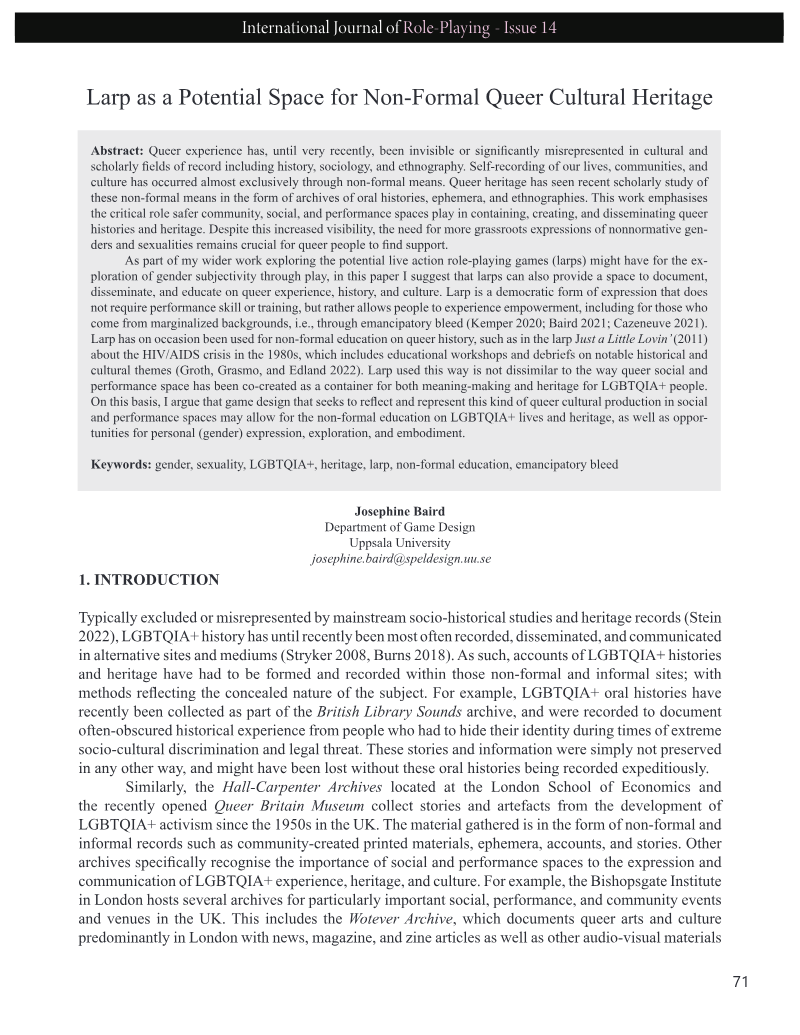
Larp as a Potential Space for Non-Formal Queer Cultural Heritage
International Journal of Role-Playing · 2023
Article
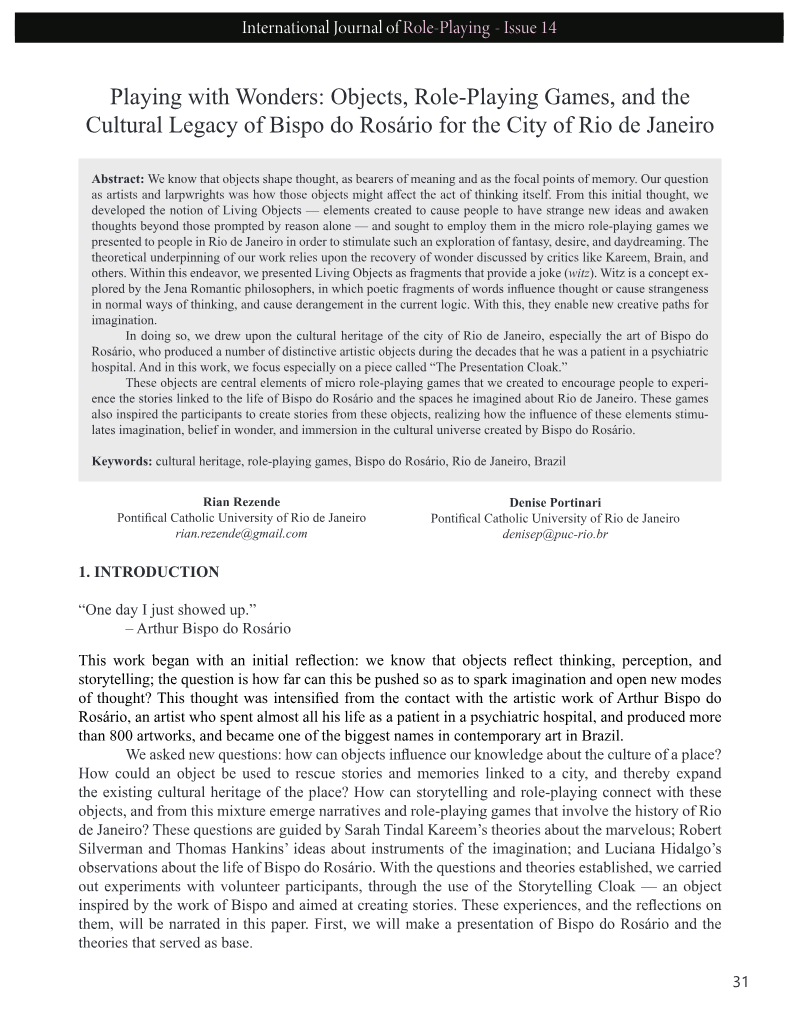
Playing with Wonders: Objects, Role-Playing Games, and the Cultural Legacy of Bispo do Rosário for the City of Rio de Janeiro
International Journal of Role-Playing · 2023
Article
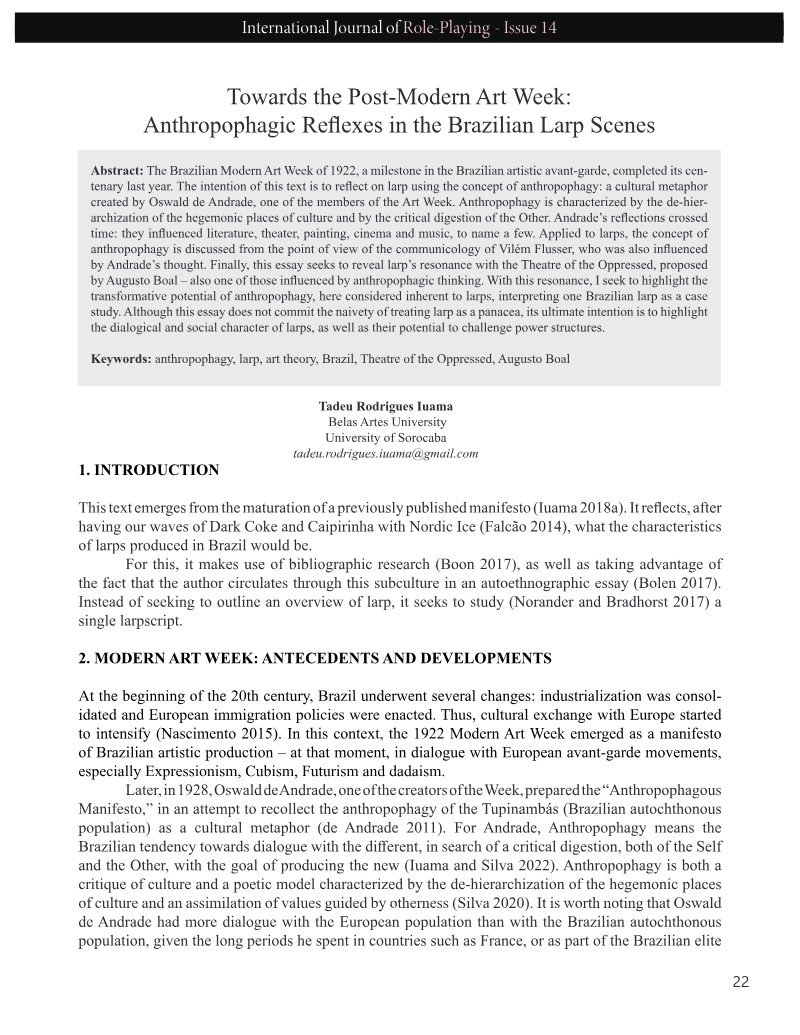
Towards the Post-Modern Art Week: Anthropophagic Reflexes in the Brazilian Larp Scenes
International Journal of Role-Playing · 2023
Article
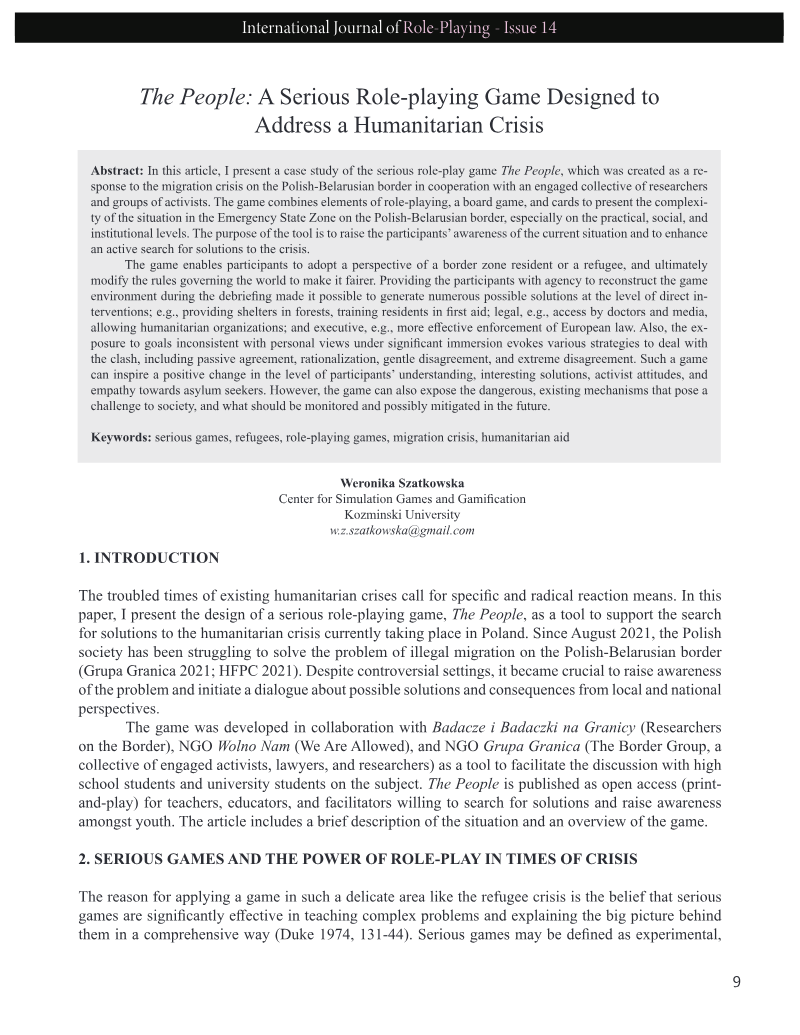
The People: A Serious Role-playing Game Designed to Address a Humanitarian Crisis
International Journal of Role-Playing · 2023
Article
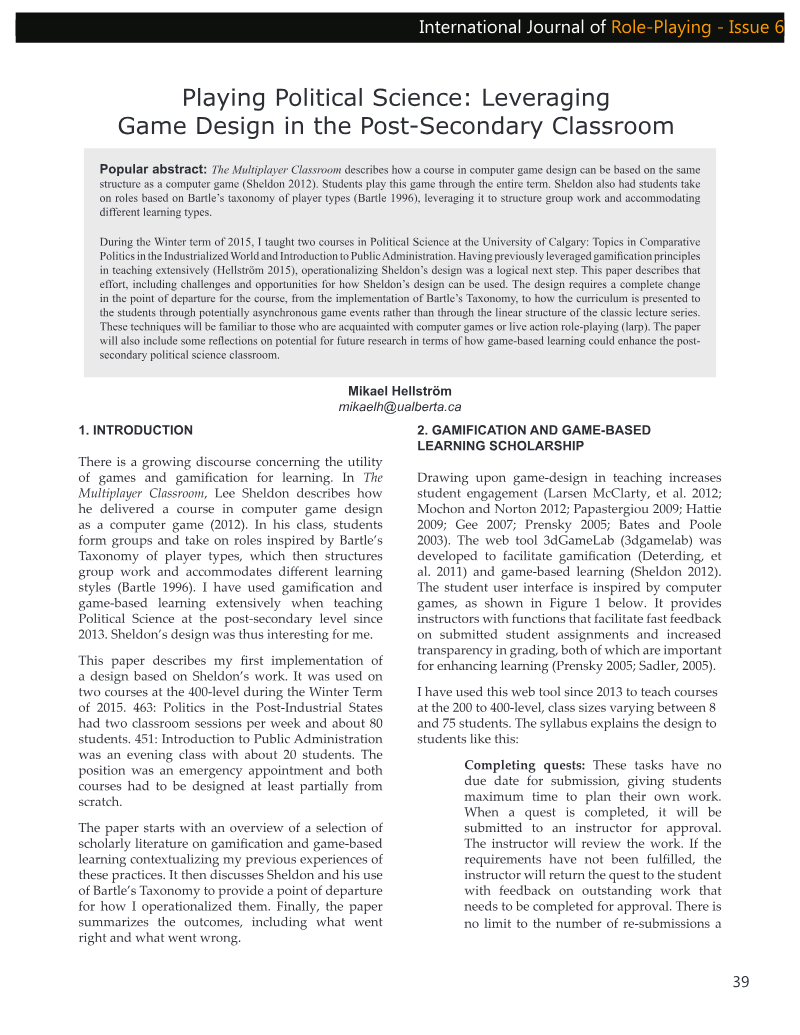
Playing Political Science: Leveraging Game Design in the Post-Secondary Classroom
International Journal of Role-Playing · 2023
Article
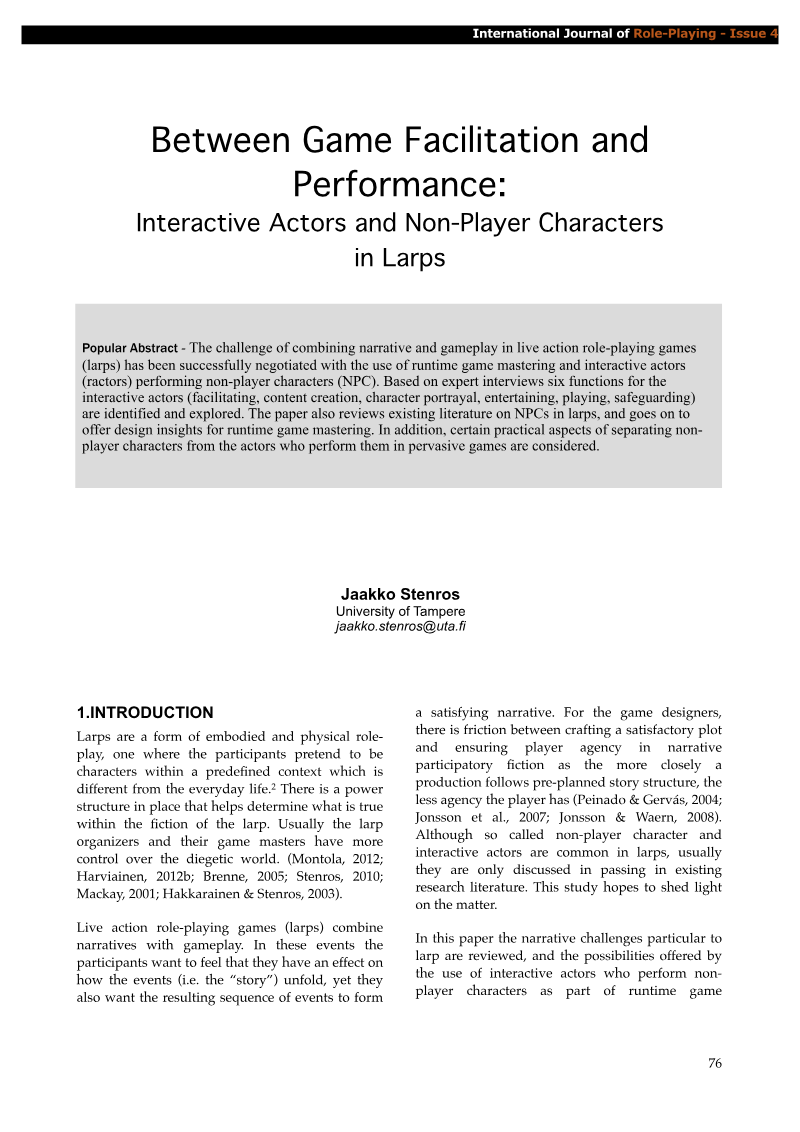
Between Game Facilitation and Performance: Interactive Actors and Non-Player Characters in Larps
International Journal of Role-Playing · 2023
Article
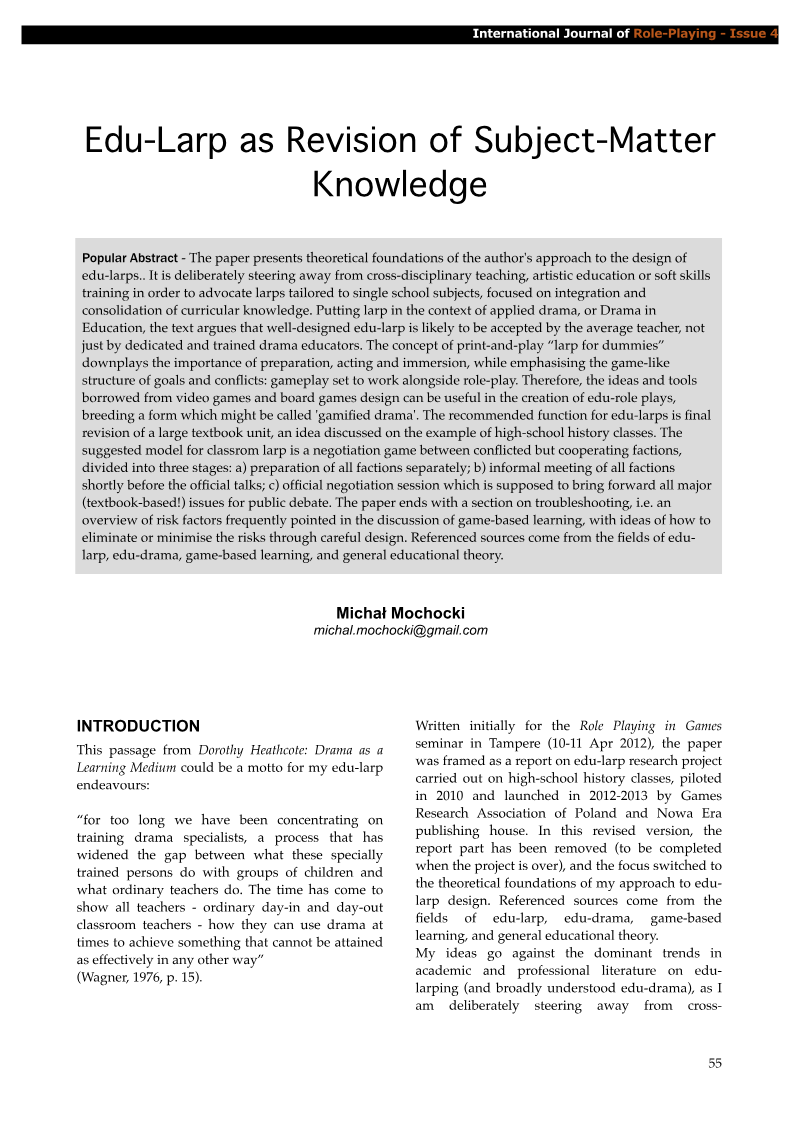
Edu-Larp as Revision of Subject-Matter Knowledge
International Journal of Role-Playing · 2023
Article
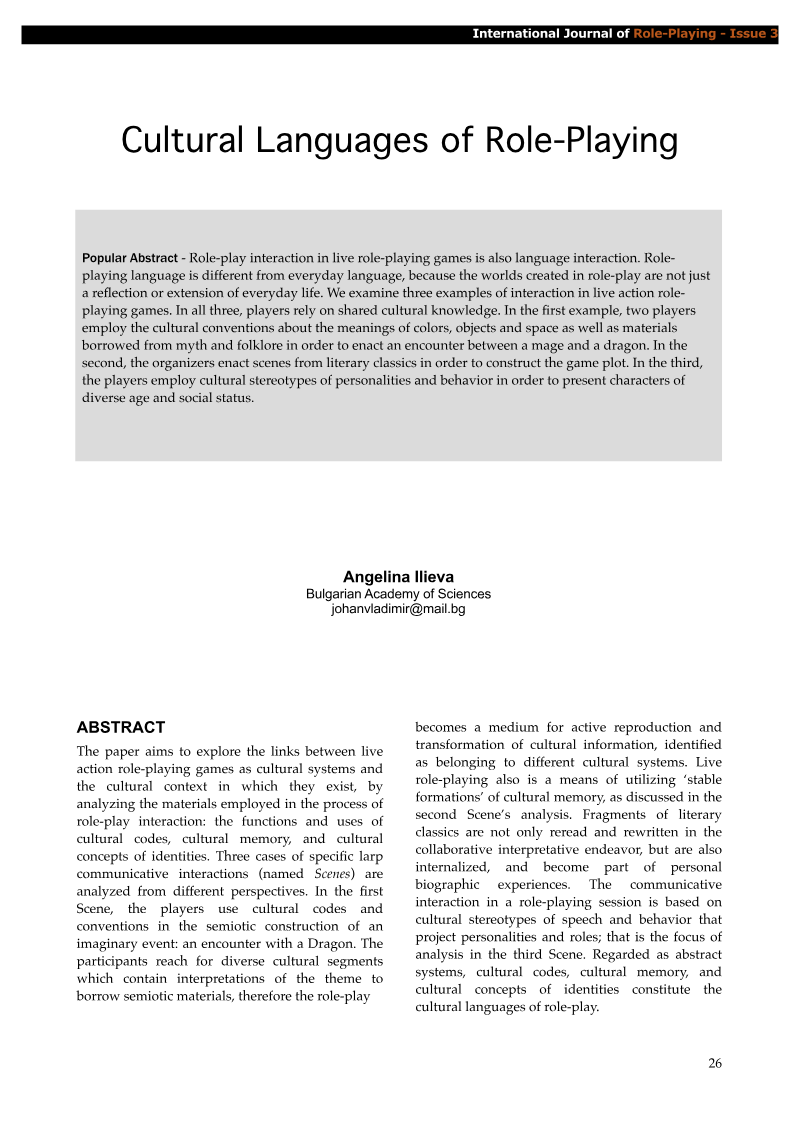
Cultural Languages of Role-Playing
International Journal of Role-Playing · 2023
Whitepaper
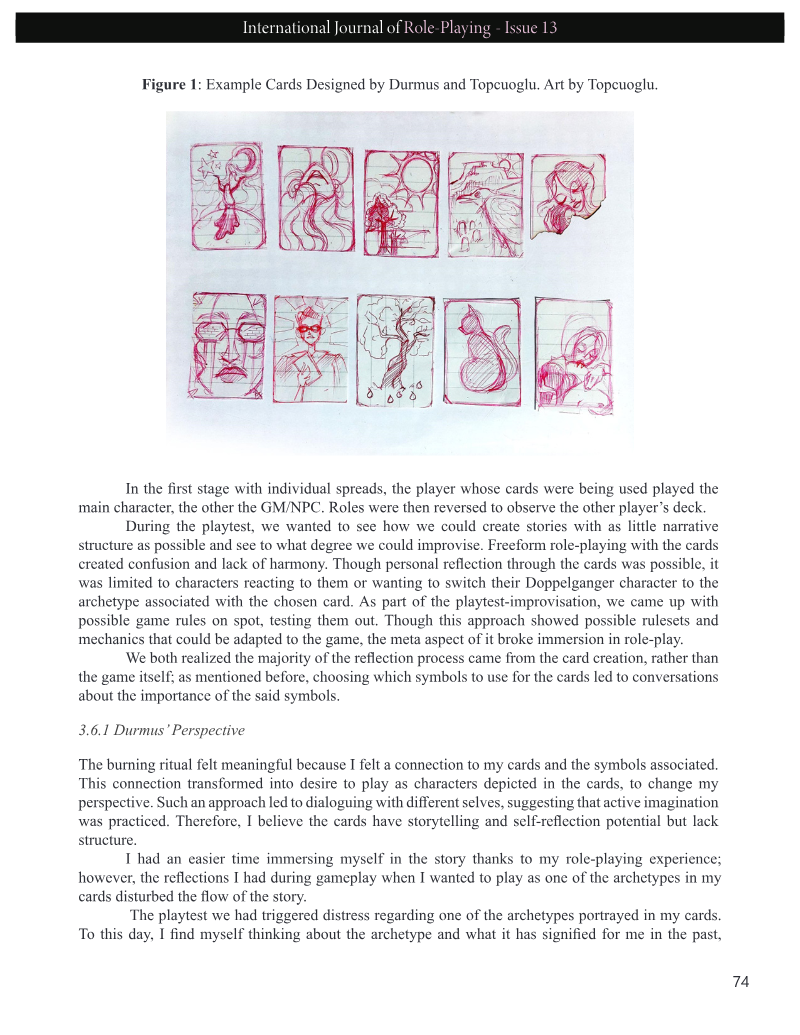
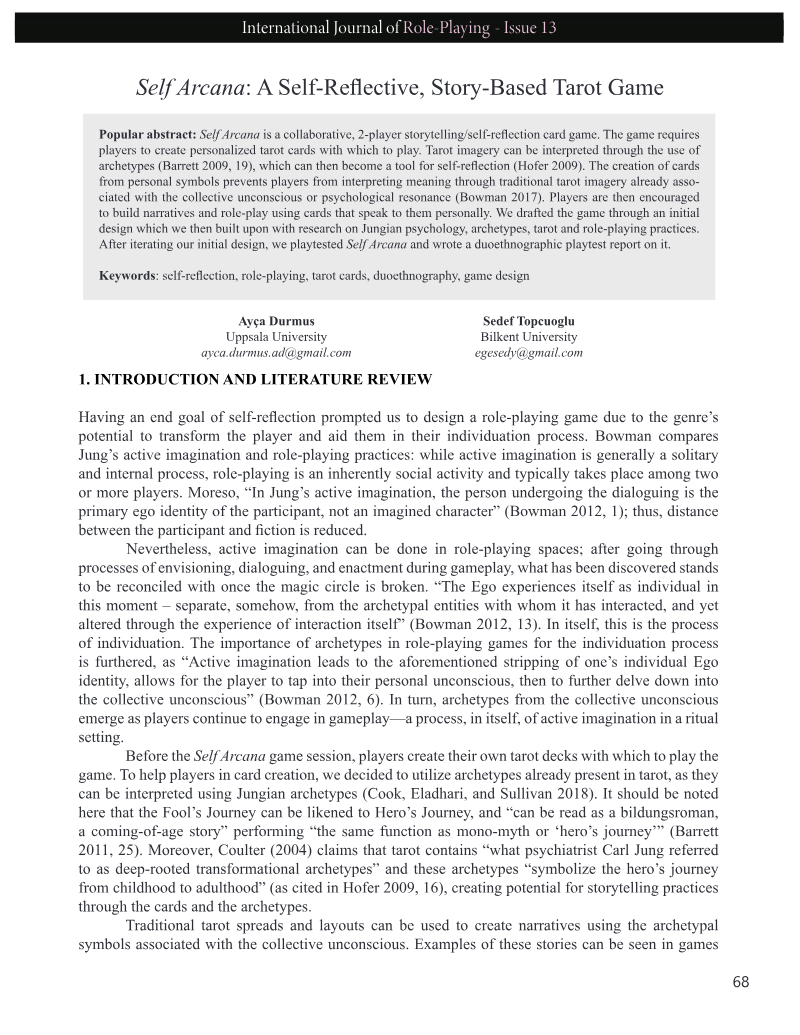
Self Arcana: A Self-Reflective, Story-Based Tarot Game
International Journal of Role-Playing · 2023
Article
A Coin with Two Sides: Role-Playing Games as Symbolic Devices
International Journal of Role-Playing · 2023