1 free read left. Create a free account for unlimited reading + AI research.
Create free accountArticle Eludamos: Journal for Computer Game Culture
1 free read left. Create a free account for unlimited reading + AI research.
Create free accountArticleEludamos: Journal for Computer Game Culture
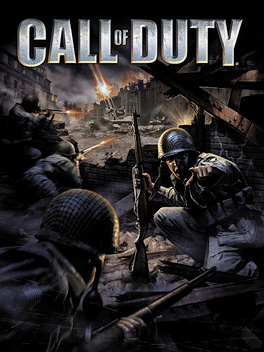
Harrison Gish's 2010 article in Eludamos looks at how the Call of Duty franchise represents the war in first-person shooters. He argues these games do more than entertain.
Harrison Gish's 2010 article in Eludamos examines how the Call of Duty franchise represents the Second World War within the first-person shooter genre, arguing that these games do more than entertain. Six of the series' eight entries are set during the war, and World at War was among 2008's best-selling titles, with 5.89 million units sold worldwide. Gish contends that the games position players within both individual combat and a nationalist, US-centered account of heroism, and that their interactive format reinforces the war's moral unassailability in collective memory while simultaneously exposing history's constructed nature. Drawing on Marita Sturken's concept of "screen memory" and Josh Smicker's work on re-enactment games, he frames the franchise as a digital form of memory-making.
The analysis rests on three narrative layers: the grand narrative of the war itself, cut scenes that personalize the conflict through statistics, archival footage, and character voiceovers, and in-level gameplay that foregrounds violence and spatial conquest. Gish finds a tension between the series' claims to historical realism and its reductive depiction of war as a sequence of violent acts. Its increasingly graphic content, including torture scenes that halt player movement, complicates heroic framing, while the treatment of death as temporary respawn undercuts claims to accuracy. The layered approach, he notes, resembles New Historicism.
Gish's central claim is that the interactive medium distinguishes these games from earlier visual media such as film and docudrama, which tend to offer narrative closure around traumatic events. By juxtaposing glorification with grotesque depictions of death, the games open multiple competing interpretations of the past and cast players as active producers of historical meaning. The article's scope is primarily the World at War title and the broader franchise, with sales context drawn from 2008 global markets, notably excluding Japan, where the game was not retailed.
Each row is a game or company this document names, each column a document, oldest first. A mark means that document names it. Select a row to see those documents.

Eludamos: Journal for Computer Game Culture · 2026

Eludamos: Journal for Computer Game Culture · 2026

Eludamos: Journal for Computer Game Culture · 2026

Eludamos: Journal for Computer Game Culture · 2026

Eludamos: Journal for Computer Game Culture · 2026

Eludamos: Journal for Computer Game Culture · 2026

Eludamos: Journal for Computer Game Culture · 2026

Eludamos: Journal for Computer Game Culture · 2025

Eludamos: Journal for Computer Game Culture · 2025

Eludamos: Journal for Computer Game Culture · 2025

Eludamos: Journal for Computer Game Culture · 2025

Eludamos: Journal for Computer Game Culture · 2025
Extra Credits · 2026