The research explores the unique challenges of character control in real-time mobile augmented reality (AR) gaming, where players must balance device manipulation with the need to keep a tracked marker within the camera's field of view. The primary thesis posits that traditional touch-based inputs often conflict with the requirements of AR immersion, necessitating a diverse range of interaction concepts that leverage both physical hardware and virtual interface elements to optimize the user experience.
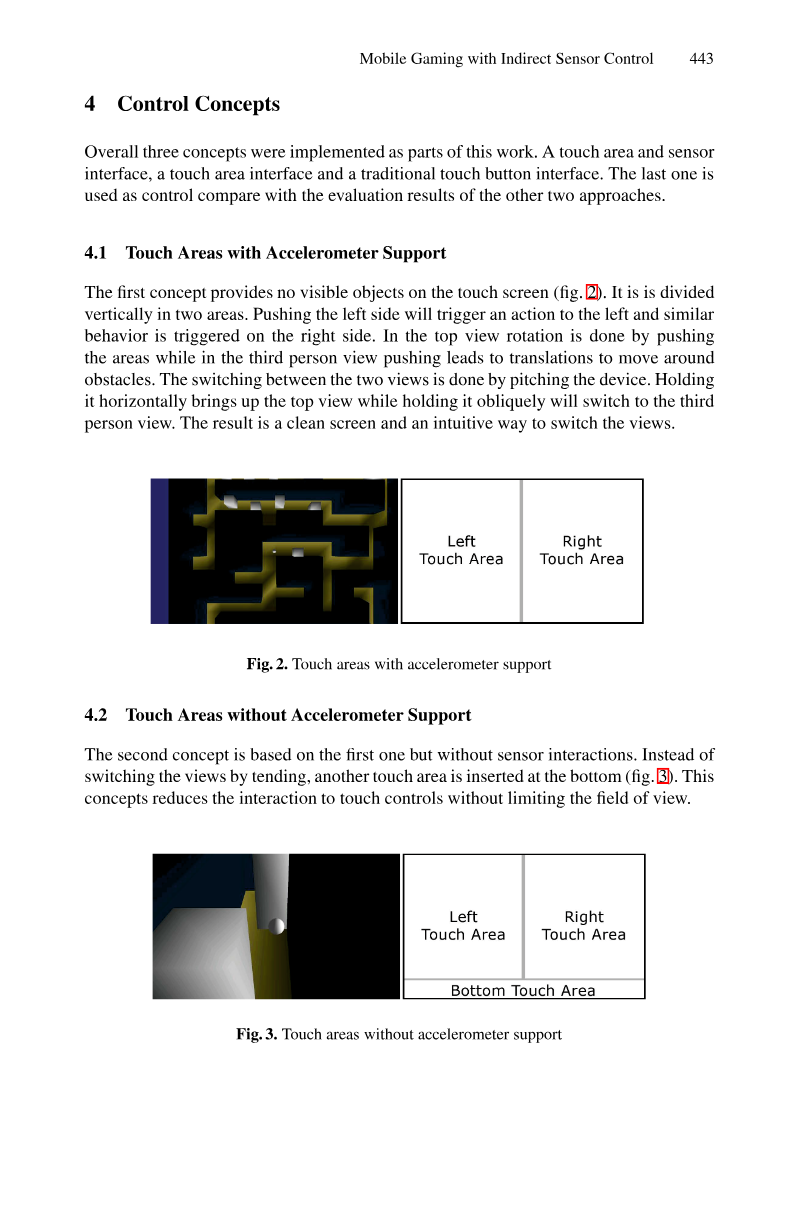
The study proposes six distinct interaction concepts for controlling avatar movement: virtual joysticks, touch-based gesture controls, physical hardware buttons, touch-based absolute positioning, field-of-view-based continuous movement, and physical device gestures such as tilting or shaking. These concepts are designed to address the inherent limitations of mobile AR, specifically the risk of screen occlusion by fingers, the lack of haptic feedback on touchscreens, and the difficulty of maintaining consistent marker tracking while navigating a virtual environment.
The research emphasizes that effective control schemes must incorporate feedback mechanisms—such as vibration, audio cues, or visual indicators—to help players distinguish between input confirmation and game-state changes. While the study does not provide empirical performance data, it establishes a framework for future evaluation using game experience criteria. By analyzing the trade-offs between relative and absolute control, the work highlights the necessity of balancing intuitive input with the technical constraints of mobile hardware. Future research is intended to utilize these prototypical implementations to conduct formal user studies, aiming to determine which interaction modalities best support immersion and performance in competitive, real-time mobile AR environments.