1 free read left. Create a free account for unlimited reading + AI research.
Create free accountArticle Eludamos: Journal for Computer Game Culture
1 free read left. Create a free account for unlimited reading + AI research.
Create free accountArticleEludamos: Journal for Computer Game Culture
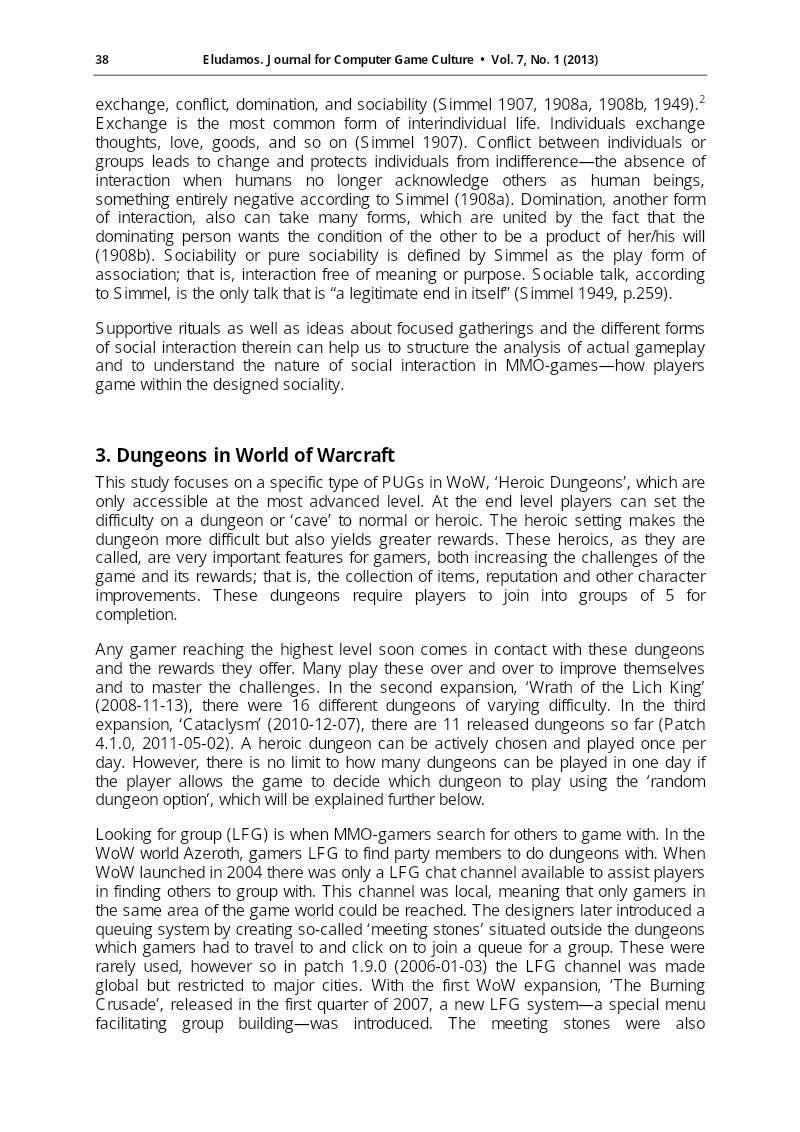
The 2009 Dungeon Finder tool replaced local chat-based group-finding with cross-realm automatic matching by role in World of Warcraft.
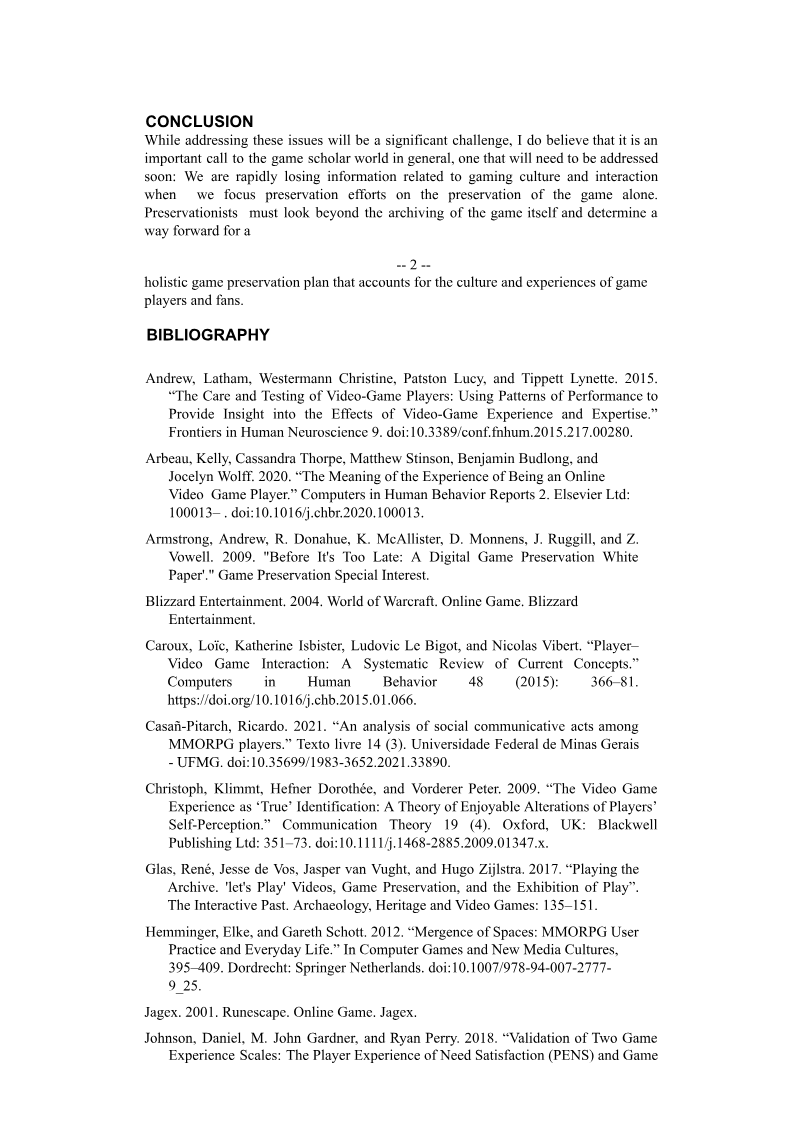
Eklund and Johansson's study examines temporary "pickup groups" (PUGs) in World of Warcraft to explore the interplay between designed sociality, the social architecture built into the game, and played sociality, the ways players actually use and reshape that architecture. Drawing on the sociological theories of Erving Goffman and Georg Simmel, the authors use heroic dungeon groups as a lens for understanding how design changes reshape social interaction. Their central case is the 2009 introduction of the Dungeon Finder tool, which replaced local chat-based group-finding with cross-realm automatic matching by role, a shift they treat as a fundamental change in the conditions for temporary collaboration.
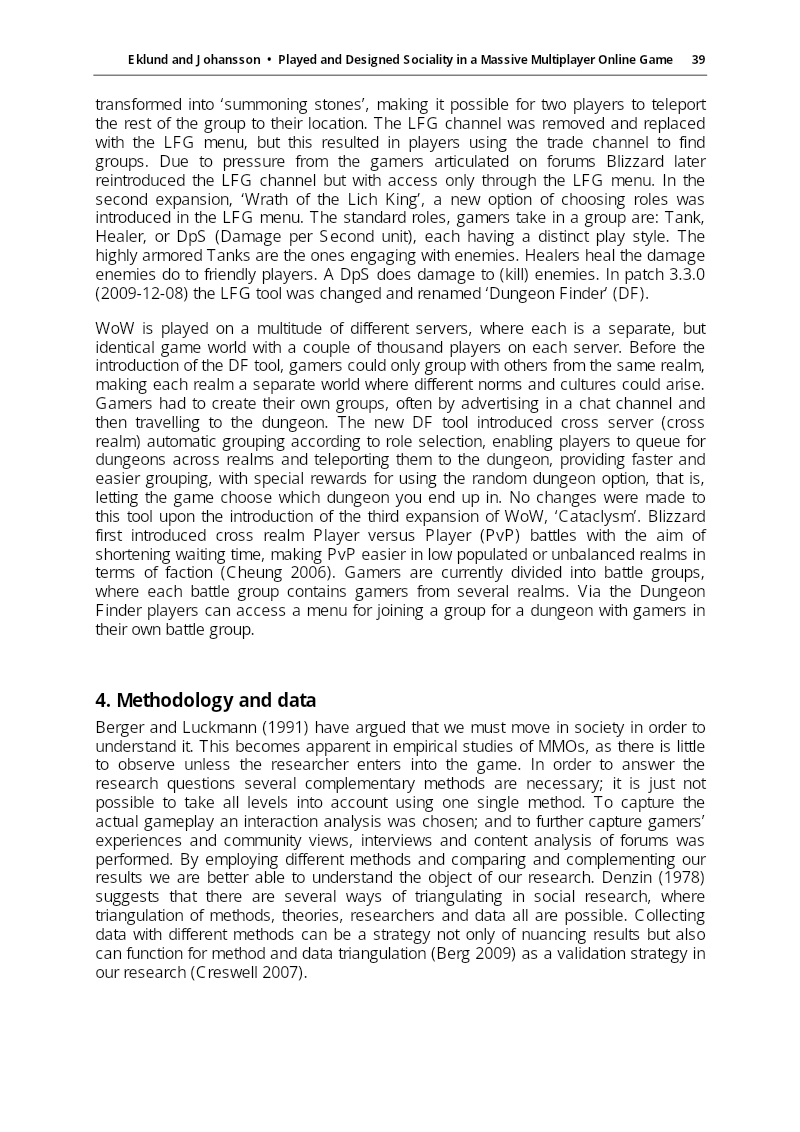
The authors' empirical foundation combines thirty recorded dungeon runs, a focus group of six players, and analysis of forum discussions. Their findings point to minimal sociable interaction within PUGs. Communication is dominated by instrumental, strategic exchanges, while greetings, jokes, and other social gestures are rare. Because groups are cross-server and temporary, players can leave freely without the reputational consequences that govern other online games. Participants attributed the decline in sociability to the Dungeon Finder, shorter play sessions, and weakened guild-based norms, though they reported no observable change in interaction patterns following the Cataclysm expansion.
A further conclusion concerns the cost structure of social play. Cross-server grouping, brief dungeon durations, and weak sanctioning mechanisms make friendship-building and norm enforcement costly and unrewarding, producing a pattern of indifference among players. Many participants nonetheless valued the tool's efficiency and accessibility, particularly those on low-population realms, revealing a tension between convenience and sociability. The authors also observe that community-created tools such as Gear Score were absorbed into official design, reducing player agency over social structures.
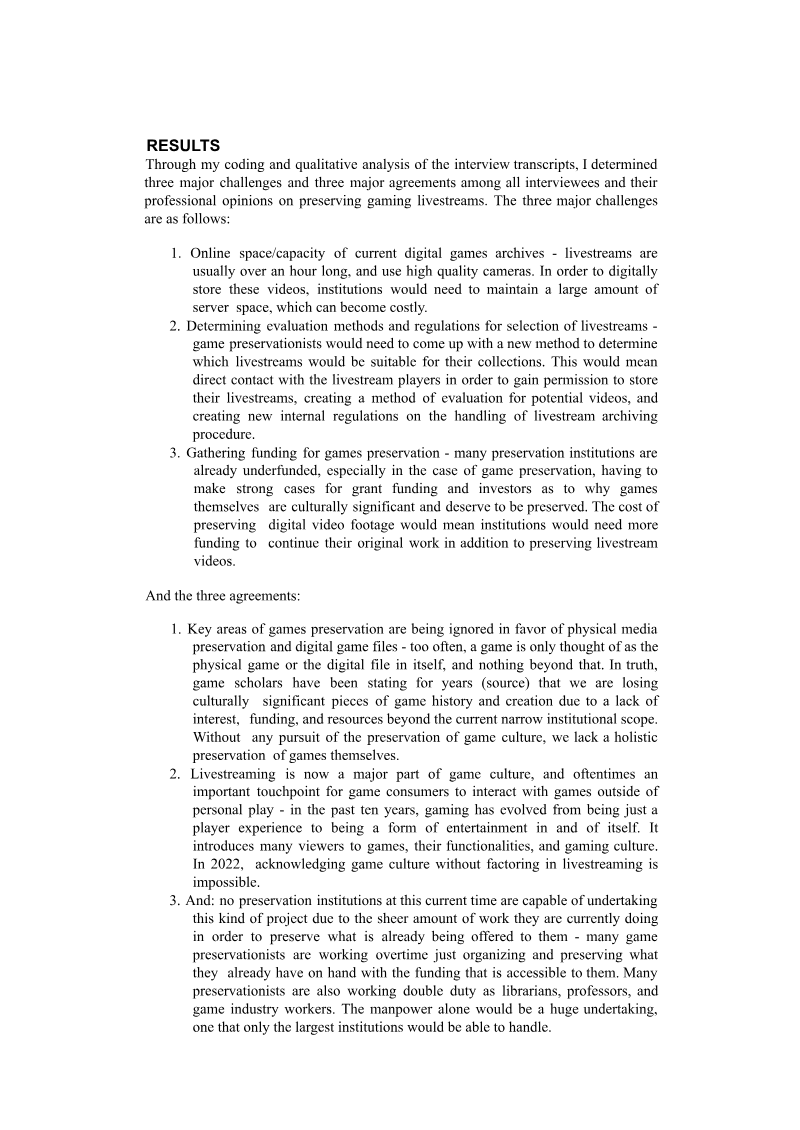
Ultimately, the study argues that PUG design limits opportunities for social interaction, channeling players toward collaboration with existing friends and hindering the growth of broader social networks. Successful collaboration between strangers, they contend, depends on a balance between designed sociality and played sociality, since player-created norms and communities provide the nuanced control that purely technical structures lack.
Each row is a game or company this document names, each column a document, oldest first. A mark means that document names it. Select a row to see those documents.

Eludamos: Journal for Computer Game Culture · 2026

Eludamos: Journal for Computer Game Culture · 2026

Eludamos: Journal for Computer Game Culture · 2026

Eludamos: Journal for Computer Game Culture · 2026

Eludamos: Journal for Computer Game Culture · 2026

Eludamos: Journal for Computer Game Culture · 2026

Eludamos: Journal for Computer Game Culture · 2026

Eludamos: Journal for Computer Game Culture · 2025

Eludamos: Journal for Computer Game Culture · 2025

Eludamos: Journal for Computer Game Culture · 2025

Eludamos: Journal for Computer Game Culture · 2025

Eludamos: Journal for Computer Game Culture · 2025
DiGRA · 2007