ArticleSparkers
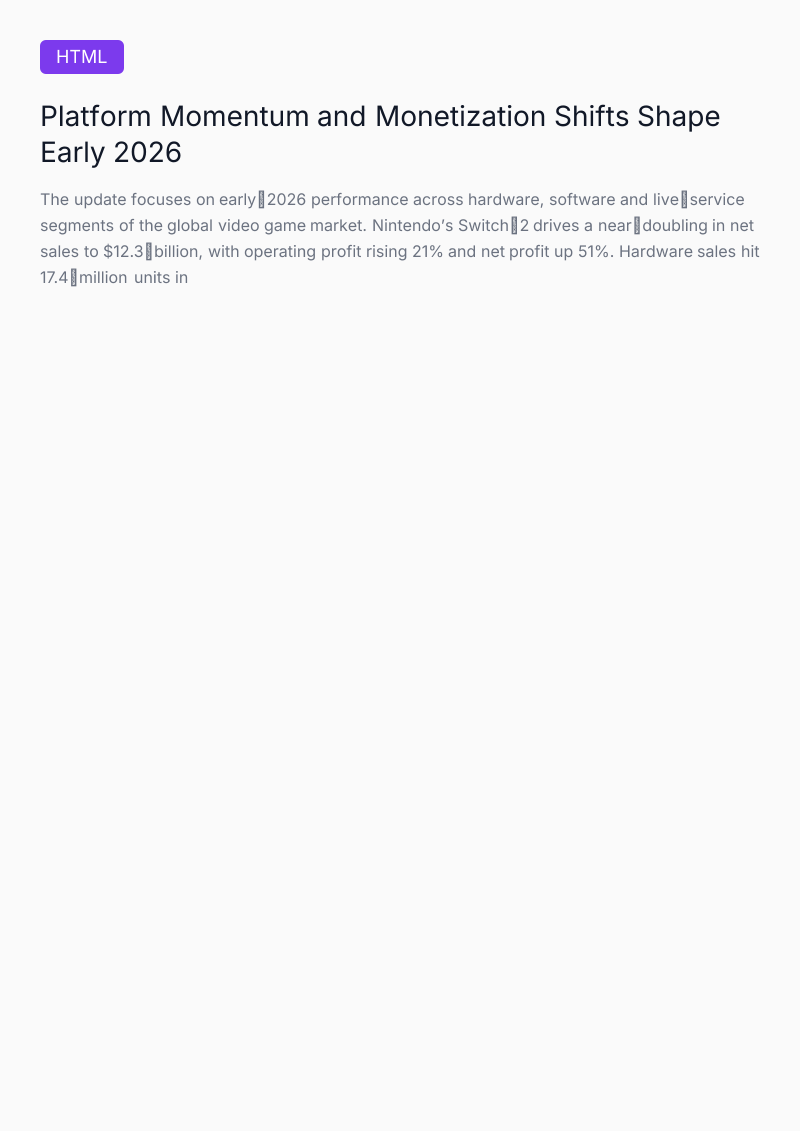
Platform Momentum and Monetization Shifts Shape Early 2026
11 Feb 20261 pages~8 min full read
Key insights
6 slides
Key number
Switch 2 hardware sales surpass the original Switch's first nine months.
Nintendo sold 17.4 million Switch 2 units in the first nine months.
17.4 million
Switch 2 units sold in the first nine months
- Original Switch units in the same period
- 14.9 million
Revenue drop
Microsoft gaming revenue fell 9% to just under $6 billion in Q2 FY2026.
The decline was driven by a 32% drop in Xbox hardware sales and a 5% fall in content and services. Xbox's share of Microsoft's total revenue fell from 10% to 7%.
Platform focus
80% of surveyed developers target PC, far ahead of console ecosystems.
Console ecosystems follow at 40–39% for PS5, Steam Deck, and Switch 2. Developer priorities remain heavily skewed toward PC.
Live-service volatility
Highguard lost 92% of its initial player base within two days of launch.
The title now averages only 7,000 daily players.
Regulatory and supply issues
Valve faces a UK class action lawsuit and hardware launch delays.
The Competition Appeal Tribunal approved the lawsuit. Supply-chain constraints delay certain hardware launches to the first half of 2026. Valve's valuation exceeds $16 billion.
Overall picture
Early 2026 shows strong hardware momentum and tightening live-service metrics.
The period features strong hardware momentum in select ecosystems and evolving monetization models. Competitive positioning continues to reshape as the next hardware cycle approaches.
1 / 6
Ask AI about this report