1 free read left. Create a free account for unlimited reading + AI research.
Create free account
Next Up with N3TWORK (Mobile Pivots to Web3)
Key insights
6 takeaways- 01N3TWORK Studios is pivoting from traditional mobile free-to-play gaming to Web3 by targeting the squad RPG genre, a multi-billion dollar market segment.
- 02The core business model relies on four pillars: squad-based gameplay, free-to-own mints, tokenized guild progression, and a compete-to-earn framework.
- 03The studio is deploying a two-pronged product strategy: a Web3-native title for crypto-enthusiasts and a Web 2.5 experience that integrates cosmetic NFTs and loyalty passes into familiar free-to-play mechanics.
- 04Economic sustainability is managed through a guild-based tech tree system where staked tokens generate research points, designed to curb inflation and power creep via seasonal, skill-based events.
- 05To lower barriers for non-technical users, the studio utilizes Forte’s infrastructure to provide custodial wallets, email-based authentication, and gasless transactions.
- 06The studio prioritizes mass-market adoption by favoring user-friendly, custodial side-chain solutions over pure decentralization to ensure seamless onboarding for traditional mobile gamers.
Ask AI about this video
Transcript
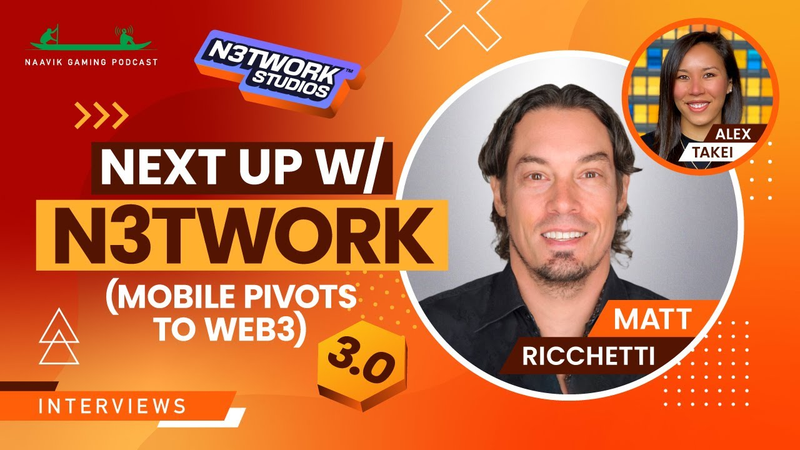
foreign [Music] gaming podcast where it is our mission to explore the business and future of video games we bring together the industry's brightest Builders investors and thinkers to keep a full sun current events dissect emerging Trends and games share Lessons Learned and have a great time this podcast is also part of novik's growing ecosystem which ranges from free and premium research to Consulting and advisory services for more information visit www.navic.com now let's jump into the episode creating citizens welcome to the novik gaming podcast I'm your host Alex Takei and this is the interview and insight segment which is part of a broader Nova gaming ecosystem today I'm super excited to have Matt roschetti the president of Network Studios the spun out arm of network Inc the studio behind Legendary game of Heroes at feel free to jump in any correct me if I'm wrong but I
believe Network Studios first came to be after Forte a back-end infrastructure tool for game blockchain game development acquired Network Inc and an acquisition in early 2022 yes I can give you I I feel like when I talk to people about Network Studios the first question is kind of explaining the the deal that went down at the end of 2021 early 22 uh and it is Matt ricketti by the way oh Matt ricketti sorry um [Laughter] I feel the same way my name is impossible I get tacky takai yeah and then they don't even finish it because they're nervous a lot of directions a lot of directions so I apologize and empathize with knowing what that's like yeah so networking um you know made the decision to networking I was gonna say we I was part of networking before as part of Network Studios so we chose to sell our platform business including about half the
company so we were 100 people 50 people in our platform Tech went over to Forte uh and then the other 50 plus folks were spun out in Network Studios and that's the company that that I now run as as president um you know so we have you know like a a back license to all the platform Tech that we sold to Forte because that's our analytics system and all that stuff this is part of that um so you know I think some people have said oh Forte acquired you that's not true you know we sold half the business as networking to Forte Network Studios is a totally separate company we have our own cap table our own board everything um we work closely with Forte right now on uh Legendary Heroes Unchained one of our two upcoming blockchain games but um you know otherwise we're a fully independent company awesome yeah and so I think like you know that your mission so far is to take some of the great mobile IP that you had in network Inc and pivot the studio to
web3 focus um you know I know that you've had a stellar career in games like your background is like mobile Gaming's Greatest Hits um and prior to network you know you were president of Studios at glue and you came up through the producer track at kabama's and get Nea so you know I want to say thank first thank you for joining me and gracing me with your present twice in one week um it was great to have you on campus uh the other day um for the audience I basically cajoled Matt into coming to Stanford so he could be pestered by a group of overzealous and over eager Stanford web3 um technocrats so uh yes that was a lot of fun and people loved you oh thank you I'm the kind of person who tends to get heads down in in the business but I really love teaching and and and speaking uh and I wish I did more of it so that's a great thank you for kind of twisting my arm to get me to get me down there and I had a lot of fun but yeah in terms of my background um man I've been in free to
play for 20 years now which we were talking uh on Monday you know it was kind of the early days of free to play so I started I kind of went through a twisty career where I was a uh Chinese philosophy major and then got into translation and then editing graphic design web design and got a job finally at EA I was you know I'm a hardcore gamer from a young age and kind of grew up with the invention of Like Home console gaming and arcades and all that stuff so I took to it really you know computers and gaming as as a kid and got really into like Dungeons and Dragons and building my own adventures and all that stuff so I didn't I don't I didn't realize that there were careers in doing things like product management and production you know I've always been kind of a generalist so it's been very uh gratifying to know that you can make a career as someone who is you know a generalist as I I like to dabble in lots of different things so anyway like
you know my career has really been defined by the growth of free to play I got in early at pogo.com um and maybe some people know it some people don't but it was you know in the early 2000s was a 100 million dollar business built off of subscriptions and microtransactions and it was funny it's kind of opposite of the traditional free-to-play like you had to have a subscription before you could buy microtransactions because there was no real way to get people's credit cards other than getting them signed up for a subscription and then then it's like okay now we can sell you other stuff but we had a you know an avatar system and a number of like kind of micro Microsoft Xbox Live achievements type of uh microtransactions there and you know kind of set the stage like that was pre free mobile free Facebook gaming pre-World of Warcraft all that stuff so I was really when we looked around for examples of free to play gaming it was like looking at China Japan Korea and the rise of free to play there
um and that you know I kind of mentioned I had a little bit of background in in Chinese Philosophy from college and spent some time living in Taiwan and mainland China so that all together was really formative for me in kind of the rise of this new business model and a lot of my career was sort of riding that wave through pm and design roles into executive roles the last decade or so at um Kabam and blue and purple and now Network Studios but I think the the lens through which I view a lot of web 3 now is this similar lens of like brand new business model you know sort of lots of potential potentially disruptive but a lot of people either not understanding it or seeing sort of the you know the negative aspects of it you know it can be free to play was perceived as kind of mercenary and and you know the sort of pay to win aspects of free to play were hurdles that had to be overcome for the for the model to become more widespread
and there was you know like a whole period of going from pretty Niche games to you know billion dollar you know multi-billion dollars cases in in the app stores and you know I'm kind of optimistic that the same journey is out there for web 3 and that we're you know we just have to have the long-term view on it yeah yeah um I think this is like a perfect segue to sort of jump into to network then specifically and but before we start like did you guys always have the three in network or did you like or is it like a passive web 3 signaling did you change it from network with an E to network with a three later or did you guys like oh or maybe it was like an R augery of what was always intended to happen to you guys in a way yeah yeah maybe maybe it was a real an augury uh I it that the three kind of precedes me as a member of of network Inc and Network Studios that's funny we did have the conversation when we you know we we did a kind of a branding uh redesign for Network Studios which you can see on my
my jacket here if you're watching on video um but we debated on whether to leave the three in and that was a reason we did leave it in is because you know web3 uh so it's just a little part of the name but strategy wise yeah um I'm super happy to have a chance to talk about the studio it's it's really exciting you know I said we started at about 50 people or around 75 now we're fully remote so we have a lot of presence on the west coast of the US but also in South America and in the UK and in other parts of the U.S we're really embracing the what the pandemic has has given us in terms of remote work uh um we have so we have three teams one team is Legendary game of Heroes that game's grossed over 300 million dollars uh in its lifetime and has really been like the driver of the studio and it's where a lot of our kind of expertise and orientation comes from so you know it's a match three Squad RPG um so both of our web 3 games are also
Squad RPGs uh and you know we're looking at the space we kind of have these like four insights or pillars that we've organized our two games around um which are you know we're focused on Squad RPGs and I'll talk more about each of these uh if if you find it interesting Alex and feel free to ask me more questions but we're focused on Squad RPGs um free to own mints is kind of another pillar of especially getting our products off the ground and then the other two pieces are around tokenizing Guild play and doing that through a what we're calling a compete to earn token so just to start on the there's I think there's a lot to unpack there but the the first piece on Squad RPG is like we have a decade of experience working on Squad RPGs you know with the kind of core Network Studios team and then we brought in some some new folks as well who have that orientation and I think it's a great so what I mean by Squad RPG is the the
kind of you know the classic mobile um hero collector game it's the kind of game that I've worked on a lot myself in the past particularly at per blue uh but it's you know marvel Strike Force Star Wars Galaxy of Heroes raid Shadow Legends AFK Arena Hero Wars I don't you know there's there's a number of games that have crossed you know the multi-million 100 million dollar threshold if not the billion dollar threshold in that space so it feels like a genre that's kind of like Forex strategy has been for mobile It just fits free to play and mobile really well because it's very accessible to pick up and play the battles are quick and easy you know there's a lot of Auto battling and kind of like you know 3x beat or whatever in your Cruiser battles and for the player what's interesting is the the overall kind of investment in your portfolio of Heroes and and there are a lot of different kind of currencies and metagame progression vectors in these games you know you've got room and gear and crafting and
um and obviously there's a lot of Guild play that goes along with that and the guild itself can have progression so I think all that stuff lends itself super well to web3 like when you think about web3 you think about tokenizing and when you're thinking about tokenizings we need things tokenize so you need a game that has a lot of meat in terms of progression and kind of um you know relatively complex economies so I think you know the gamers that play Squad RPGs are pretty used to a lot of that and you know we're trying to find I think like many people in the space right now you know where's the growth going to come from um the web 3 Space is really fascinating and the people that are in it are super dedicated but it's still teeny teeny you know we're talking about thousands of daily active wallets or users in you know one of the in in the top games in the space versus you know millions of Dau and in a top grossing RPG so that there's orders of magnitude in that in that Gap that we need to bridge as as an
industry uh and I think you know it's much more likely that mobile Gamers who are used to like I said these economies and and this sort of a la carte kind of purchasing practice uh and you know games as a service and live Ops are are more likely to kind of migrate towards these you know whether it's web 2.5 games or web 3 games that that feel familiar to them you know versus console or PC Gamers who you know those Industries have changed a lot too but they still are kind of dominated by you know pay once and you know maybe maybe interact with some DLC so it's I think it's a bigger kind of cognitive hurdle to get over for those Gamers and we've seen more kind of resistance in those spaces around web 3 right now so that's kind of a lot of the background and why we feel like Squad RPG you know I mentioned a lot of the games but it's the second biggest mid-core um genre after uh strategy on mobile and
probably the third overall biggest genre you know if you include puzzle it's a multi-billion dollar space so you know I think it can be a multi-billion dollar space in web 3 as well right and I guess what I'm pulling out of this is that there's just a lot you're basically just trying to pull out a lot of incremental Innovations and figure out you know when you're looking for product Market fit like who is the market that is going to be most likely to adopt this right and from that I'm hearing you know mobile free to play um specific types of genres with specific kinds of economies that players are used to that won't be this like gigantic difference between like what they're already expecting right like if you didn't have if you're building a game with no crafting system then you're not building a system of erc20 tokens that are interacting with blockchain and that behavior is not habituated already in the audience that you're that you're serving to so I think it's a very interesting and like I guess like smart take on okay well where where would blockchain players like most likely to be if we had to basically pattern match habituated gaming behavior and that
certainly might be like in a hero collectible mobile game and so there was obviously a ton to unpack there and I'd love to like dive in dive in more but I think one of the questions that I definitely still have is you know why even why I've even have been bothered with web3 given that you guys already had successful games before right I think like unlike some of the other Studios that we usually have on the podcast that are building new web3 Studios from scratch you guys are kind of pivoting from a web 2 world to web3 so you know you had successful games with Legendary Heroes Unchained you know what's gonna happen to the old games and sort of what did you or was this more of a offensive move to sort of say like okay I think we can do this um just walk me through that process before we dive into the free to own and the Loyalty passes and the compete to earn yeah yeah that's a really good question and it's something that you know I think it's a good question for free to play studios in the space to continue to ask themselves you know are you are you in the space for the right reasons
um and the space is so nascent that you know I think that it's it's it's kind of a shifting landscape but um for us you know I think kind of on the external market conditions you know uh perspective like free to play gaming has changed a lot in you know the 20 years that I've been in and especially the last I would say five to ten years we've seen a lot of consolidation we've seen user acquisition become a very different kind of game and experience especially for small Studios like personally I've always gravitated not always but I would say more recently gravitated to small Studios because I like you know being entrepreneurial being Innovative being collaborative um and I think as a small studio and free to play it's just gotten very very difficult to achieve scale um the the marketing side um and then you know the the cost of making games has has has gone up um and so the size of teams and the cost
structures you need to be successful in in free to play as a small Studio is very difficult and I think that's you know kind of why we've seen a lot of consolidation for the for the small Studios it made sense to partner up with bigger Studios and those economies of scale they have particularly around marketing and then for the bigger Studios you know as kind of the innovators dilemma where you know you reach scale and you know there's always been this kind of big split in gaming and I guess you could say particularly free to play around being an operator versus a builder like being an operator is a whole set of different skills than being a builder and you know as you become a bigger game that's kind of inherently if you're going to have Revenue you're managing live games right so it becomes the innovator's Dilemma is around how do you also build and I think a lot of companies have found it easier to grow inorganically you know to um acquire smaller companies and bring new genres uh in so that's kind of like the free to play landscape so I think there's an element there where a smaller
free-to-play developers and and entrepreneurial free-to-play developers are saying rather than trying to compete in this like super red ocean there is a more blue ocean space in in web3 um particularly last year that was a much easier argument to make and I think now it's more of do you have that long-term conviction so you know there's the external marketing conditions and then personally I just I have like a depth of belief in the long term uh kind of inevitability of digital ownership right like you were asking me about the guitar that's that's sitting behind me and I like to use it as an example of you know as a hobbyist musician you're always kind of buying and selling gear right in in the physical world you can do things like you know do I want to have another bass guitar or another drum set and kind of have a collection and I play different ones for different types of songs and different reasons and I show them off or do I sell the one I have because I want to buy a better one and you know I don't have all the money right now to buy too so I you know use
the proceeds from that or do I give it as a gift to a friend because I want to get them involved into into playing music or playing together you know I think all those things are very analogous to our digital Lifestyles and I think the pandemic has kind of accelerated a lot of that process where we're living more and more online and we're interacting with digital Goods more than ever and I think those things together are bringing new expectations for users of digital Goods to have kind of parity with the physical world which is that and that's where the ownership comes in it's like this is my good if I want to trade it sell it you know do whatever to it transform it somehow I have the control over that so I think you know having been in the game industry long enough and and you know spent thousands of thousands of dollars as a player in free to play and also operated games where I've seen players you know treat their free to play game like a true hobby it I wanna I wanna see those Hobbies be a hobbyists be fully unable to be owners you know
and controllers of their hobby um so I think at some level that's inevitable right um and obviously it's a tough market right now but I think you have to have that that conviction long term to kind of you know everybody says like bear markets are when the you know the the successful companies are built so you know you have to you have to kind of be be into that right now to need to get through there so for you guys it was basically like look like we know that we can get on the front foot here and so we're gonna go up here and take a stab at attacking a market that has get it's been underserved so for you guys it's very much a offensive Move versus a defensive oh if we don't pivot we won't survive situation which is I think a little bit of something a distinction between someone building it from scratch versus I think I've talked to a lot of Founders who kind of just threw web3 in their deck to just and then pray right and so I'm going to cheat a little bit with AI right now right there's always a shiny new thing um yes exactly and so it's like are you
building this web 3 game for the right reasons or are you building this web 3 game because web3 is inherently fundable or AI is inherently fundable um and so I'm going to see a little bit because you just gave me a presentation I know that in order to go out on this offensive move you guys are planning to build two games you know you one utilizing the Legendary Heroes IP and the other um building in a new IP um and I would love for you to tell me a little bit about you know like why build two games at the same time we talked a little bit about like the four strategies they're connected to the squad RPGs the compete to own the free to own and some of like the guilds and loyalty passes but you know why why two games what are they meant to be targeting um Etc yeah that's a good question just to go back and kind of tie a bow on the last Point um so it's a bit you know I was talking about how the market conditions uh personal conviction of me um people like Neil who's the executive chairman of the board and the one of the founders of network Inc who you know put this whole deal together to to create network Network Studios but then there's also
just being really honest with yourself about what are your skills and your specializations and that's where we kind of go back to making RPGs you know making games as a service Squad RPGs that's the Studio's been doing that for decades I've been doing that for a long time I think there are many ways to kind of approach the web 3 space and I think it's certainly just as legitimate to come from it without any sort of you know as much as knowing a lot about free to play can be an advantage there's a lot of baggage there too about how things have been done in the past so um I think we're we're going to be hopefully you know leveraging everything that we know to to have success in the space and it's going to be a lot of knowledge share between folks like us who are coming at it from the free to play angle versus people are going to have like we saw this in the early free-to-play days the the brand new free-to-play startups who had kind of no tether to the pre-free to play gaming business models or often the most Innovative and I'm sure there are going to be success
success cases in that space too but anyway okay to go to the games um you know as a small Studio you don't have an opportunity to have a 10 product portfolio approach so for us two products is kind of gives us a little bit of a portfolio play in the sense of Legendary Heroes Unchained is a pure web 3 game in the sense that all the heroes the gear are all going to be nfts the game's kind of targeted towards a crypto audience um and we feel like you know if we want to be legitimate in this space we need to understand that audience well uh understand what appeals to them and be able to build games that that audience is going to are going to enjoy and invest in and on the other side triumph which is our new IP uh so a lot of the the leaders and Builders of Legendary game of Heroes went over to Triumph and this was kind of like okay you built a highly successful uh free to play RPG what's what's like your dream next game that you that you'd want to make and that's that's what
Triumph is but because we had it in the works for a while we were thinking about you know what makes the best we wanted to kind of authentically move into web3 as a whole studio what's the best application of that vis-a-vis Triumph you know is it it felt like kind of forcing the game uh kind of turn on its head and be an entirely web3 from the ground up uh didn't quite make sense and that there and then also again there's kind of like the internal external externally I think there's a big opportunity for this kind of web 2.5 play and we've I think that's become even more viable as as the markets shifted right like you know last year it was kind of web three or bust and now people are kind of more sanguine about okay we've got a ways to go we've got to build the market we need to make sure we are appealing to people outside the web 3 space as well so triumphs strategy is the economy is Heroes and gear it's all IAP based but we're layering some web 3 uh systems on top of it and again trying
to not do it in a way where it just feels crafted on but that it's really a holistic game economy but doing making sure that those things that are being layered on like the assets that can be earned in Triumph so it's gonna be things like cosmetic nfts tokenized guilds or loyalty pass that that will be in nft for Triumph those are all things that players can earn um we're not looking to come out of the gate and say hey we're going to sell you a bunch of of nfts it's like just play the game you know you'll have an organic experience you get exposed to web3 and then you know you'll be able to trade on the secondary market and do things like cash out and own your assets um but the idea is to kind of bring people in gradually um you know and if if the game sees success we can lean more into the web three parts of it got it so you got one game serving dgens which I think is going to look very similar to a lot of the games that we've already seen this is like your crypto raters your like axi Infinities where
like web3 as native to the onboarding process and then you've kind of got this like hybrid web 2.5 where you can engage with this system or not but we're kind of going to educate you into the system and then we're going to offer things that are more standard to like the mobile free to play Space like loyalty passes Etc um I would love to dive a little bit deeper into this um into like the live optimization that you're planning for Triumph I think um the legendary here is Unchained is probably more similar to a lot of the web generation one and generation two games that are being built but I think like strategically and incrementally implementing web 3 is um has a variety of like people are taking a stab at it in a variety of ways um I would love to learn a little bit more about like the tokenized guilds and and the tech trees that you guys were talking about um on campus other day I think those are really interesting and I think cases of monstation tools that I haven't heard about yet yeah so we we kind of went through this process over you know you start a new
studio and there's a lot to do in terms of just hiring and Logistics and operations and getting everything everything off the ground and I think we had this General split between a web 2.5 and a web 3 title pretty early on but you know the the space evolves very rapidly and we were kind of asking ourselves like what's the right way to tokenize an RPG and there aren't a lot of examples out there you know I think I've seen some really good I was looking at examples like um you know a shrapnel was one it's another uh uh portfolio uh investment for Griffin gaming Partners yeah that's actually super super funny I discovered web3 because of Don norbury their CTO um he's a friend of a friend of the Indie Studio that I was at on the engineering side and I had like a meet and greet with him and then he was like yeah I'm building this web 3 thing and I was like what's web three and that's actually like how I legitimately discovered the topic yeah which is just very very interesting that it's like now like here's a huge player of like an
anticipated like extraction web3 shooter at the time I was like I don't really know what they're building that's cool um sorry consumer of all their kind of materials including their white paper I think their presentation and the way that they communicate about approaching web3 is very thoughtful and so like that that model you know just kind of looking at models that I was seeing multiple examples of the same model of so one this the shrapnel example is is ugc right I think there's a real good argument for ugc and web3 fitting together right this idea of you know nft and Creator royalties are something we've seen in the Art Space if you can make ugc for a game so something that's kind of a piece of art but also has mechanical utility in the game um that's all the better and if you can build a whole game around that then you've you've got this interesting set of roles you know between creators and and purchasers and owners um and shrapnel does that with you know there's not only skins that are cosmetic
things but also maps and I I just would recommend people reading about how they're playing into ugc around Maps um as a really good example of like nfts that have you know in-game mechanical impact and then another model I think I've seen a number of examples of in the web three spaces the sort of enter a tournament and use a token to get into the tournament to win more of the token and it's you know using a token as an entry fee and taking a rake and that's been something that's been done with cash on the you know in Mobile and other totally other platforms but it just it just fits really naturally in in you know like so so rare does that Sky Weaver does that and I was like well none of these are RPG games and like we don't really like we could go the tournament route and be very competitive but that's not the squad RPG right there there are skill based RPGs that are that are more about you know the Twitchy tactical gameplay um maybe Champions is is going to be an example of a game like that but it's not really like our bread and butter and
then the ugc side I think there's maybe some opportunities but um Guild of Guardians I think is a good example where they're sort of the way they've structured their guilds and then the crafting of all the individual members of the guilds feels like ugc you know you're not really making something brand new you're making something like within the parameters of the game but you're doing it in a collective way and then ultimately tokenizing those those kind of um individual components that get crafted into gear um so for us we kind of landed on guilt you know like Guild play has always been the heart of any RPG that I've been involved with and it's certainly the thing that keeps me engaged in an RPG for months and years on end and I think there's a lot of great research you know that I've done on games that I've worked on and also red that shows that you know players who join guilds are more likely to stick around they're more likely to pay they're they're very likely to stick around you know not just in the early retention phase but in the late late retention phase so guilds is kind of where everything comes together in terms of the community social experience you
know and people always refer to web3 as Community economics so like we want to bring the tokenization to the community so what we're thinking about doing is um having a research tree just a standard sort of research Tech Tree like think about civilization or any kind of uh game that has a Tech Tree in a guild and it's not a rocket science you know new feature I think there are RPGs and free to play out there that have Tech trees of various types the difference though is that there will be either paths or nodes within the tech tree that can only be upgraded through uh spending a project token a fungible token so we'd have like a Triumph token and an lhu token uh the way you would get that token is strictly through leaderboard position so you know I think we've all kind of learned that anything where the token uh payouts kind of scale off of the user base or the number of users participating is incredibly inflationary and we want to avoid that
um I think like some of the competitive tournament-based systems that I mentioned in other games are good examples of ways people have been effectively avoiding that so we would we would use you know you have to be good so there's there's a there's even though there's it's a squad RPG and getting good Heroes is a function of both of skill and and and paying you know there is a that's that's the compete to Own Part you've gotta you've got to win you've got to be dedicated you got to put it's a mix of time skill and you know potentially um investment of of money or whatever uh to do well on these events and then you can earn a limited amount of tokens and that allows us to kind of you know on a seasonal basis figure out what the appropriate token distribution should be to the player base and as the player base grows and syncs we can kind of keep the the token distribution in in tune with the players and kind of prevent runaway inflation and then the players will there's kind of an intermediate step here so we we work staking into the games by saying okay you're going to
stake your project token for a certain amount of time we have to kind of figure out the details but you know let's say it's the whole season so you stake your tokens for the season when the stake your those tokens are locked up when the season's over your tokens will spit out a number of research points for your guilt Tech Tree and the more tokens you stake the more research points you get uh and then you can so the interesting part in the economy is that a player can then decide do I want to contribute you know uh my tokens stake my tokens to the guild specifically or on my account yeah for the greater whole for the good of the guild or for myself I love this yeah it's like very similar to like yeah syncing and stuff in Diablo seasons and kind of knowing that at the end of this like we're gonna either get some material output that will help us like in the next in the next Journey which is fascinating so like if for shrapnel their color use cases ugc for you guys is your killer use case is like this um unit your guilds like your your your
homies and your army basically being able to progress more rapidly through a tech tree which would ostensibly give you some sort of actual play Advantage exactly yep interesting interesting yeah and there's you know there's kind of endless ways we could design and sort of skin the cat when it comes to the tech tree you know you can have like oh your fire heroes are more powerful or you earn more currency from a mode so there can be kind of you know combat benefits economy benefits more sort of VIP style convenience benefits where you can just play the game quicker easier um and then there can also be kind of seasonal benefits that are more consumable right like ultimately I think things become more sustainable when there's almost like a battle pass style rhythm of earning tokens and syncing those into benefits that are going to allow you to perform better in the specific season and whatever kind of mechanics the season is themed around but those benefits will then either wear off or just not really be as relevant right next season so that you know this Tech tree is not a finite tree it's something that grows over time and
becomes has a live Ops Cadence to it it goes hand in hand with so there's sort of an input and an output right the the input is you you do this seasonal event you earn the token then you invest it in the seasonal benefits for the next season right because there's the lag with the staking and it becomes this virtuous circle that is hopefully fun and it's intentionally designed for you know more Elder players like there will be a significant portion of the tech tree that's also an off-chain investment for everyone in the game that you know an advantage of being in a guild will be you know you don't have to be a big whale or whatever you can get in a guild and you know be kind of lower on the totem pole but still take advantage of the tech tree bonuses that that the guild is offering sure so yeah this is it's just like very interesting it's like a combination of like what we often do in free to play and mobile games which is basically like Sunset stuff that people bought to make it totally and utterly useless so people have to buy new stuff again and so I'm
actually going to maybe ask you a tougher question and I'm stealing actually from a very astute classmate who made this great um uh Twitter post actually actually after you left the other day she wrote um web3 gaming companies are at the risk of seeing themselves repeat the centralized wow Soul siphon Nerf that vitalik so hated the alternative for most is to let their game meta be set in stone which hardly feels viable what is the middle ground and has anybody cracked this so respond um what's the crossfire thing these Dana Carvey used to do that on Saturday Night Live discuss uh yeah and that that I don't know if that was the same person that asked that question when it is yeah that was a great question because you know free to play often depends heavily on power creep right there's so whether the content obsolescence is kind of implicit or explicit it happens
either way and in games that tend to be more aggressive on the monetization side there can be a very explicit like all the new Heroes that come out or the new whatever that comes out is just clearly more powerful than the stuff in the past and I think free to play developers you know kind of live in that space of like how much power creep do we want and how do we kind of work with with players to make it something that's palatable um and there are parts of that yeah I think done well it can be a very um there can be a good partnership with the community but done poorly or you know with not the right intentions it can be pretty painful and shitty and not very fun um so I don't know I I have mixed feelings on power creep I think power creep is definitely going to be harder in the web 3 space like the last thing you want to do is sell people stuff and then undermine its value you know within a any kind of like near-term amount of time that's not going to feel good you know and I think games like magic or Pokemon or whatever all kind of live in that space and they found other ways you know magic has lots of different formats
and they you know move people through different card blocks um in you know in the tournament uh uh setups so that you know they they kind of have a more you know explicit hard wall of obsolescence but it's it's it's it's about recency rather than about power right um and for some people that can be hard to swallow right like I do see people complaining about like if the acceleration of releases you know happens it's so fast you get high enough yeah then people are like oh I can't keep up with all these new cards that are coming out there are pros and cons you know to any system that you adopt um but I think my my real answer to that question is that no matter what kind of game you operate you need to have a really strong relationship with your community you need to be like I'm a big fan of you got to put out really detailed patch notes about every hero that comes into the game and every change to the way the combat system works like you want your players to really understand what the meta is and why because I think if you do that
players will come along with you on a journey like people don't generally want to play a game you know whether it's League of Legends or it's you know Disney heroes battle mode which is a game I worked on at per blue um they don't want a static meta they want the game to feel alive and fresh and they want reasons to you know employ their new Heroes because the heroes are fun and they're cool and they're collectible and you have an emotional attachment to them um so you know the thoughtful way of doing that is saying hey you know not just oh we're nerfing this hero because it's too powerful but you know uh let's an example might be uh we think shielding is too powerful overall in the combat and this hero is kind of an example of shielding and what happens when shielding dominates the metagame is that combat's really slow and sluggish and you just sit there and watch none of the day you know it's like is that fun for people and that's usually what happens right it's like that as a developer you're trying to keep everything as balanced as possible but inevitably you you know you release something that's a little op in
one way or another uh and players are like yeah we don't like all the shielding so like let's let's have a dialogue about like what would make combat better with the players and that's where you you get into things like oh we're going to have Shield Breakers you know we're not just going to Nerf your hero we're going to have a new hero that comes out that's a shield breaker or you know what have you that's just a kind of random example but I think that's always been the way to solve that stuff and I think you can do that in in web 3 just as effectively um so something like the guild research system would have to be you know kind of adaptable and be in a dialogue with players um and then I think you know web3 offers the opportunity to kind of formalize that dialogue in a lot of different ways whether it's through governance token or formal Dao and those are things we're interested in but I think the hurdle of just having a fun and exciting web 3 game is such a big one and it's so difficult even when you're have full control over a game to make something that's good that we want to start there first and then if we can do that kind of
over time you know find ways to give players more like you own the Loyalty pass we're going to invite you into this camera conversation and then this conversation yeah and I think it's also interesting because you know like your your players are obviously your community and your partners but it's almost like presumptive to think that anybody would like want to be in a dow for your game because you don't even know if your game is good right I think this I think ugc struggles with the same problem where it's like oh well like should I Brill build OverWatch Workshop because we don't even know if the base game of OverWatch is going to be popular right so it's almost like this chicken and egg cycle where it's like you know maybe someone would join if you had a dow but maybe like building building putting all that energy into building a dow is actually like totally not the wrong right thing to be focusing on because like fundamentally like your game is not fun and so um you know that's where you should put your efforts but I think it's it's very interesting the way that you guys are ordering and thinking about it and thinking about your your players as as partners um and in that regard you know I also you know want to talk about you know you have your players as your partners right
in terms of maybe developing and um adding to like what maybe the meta might be but you also have another partner um Forte specifically which we mentioned very at the beginning of this conversation which is basically a back end you know infrastructure tool and I'd love for you to share a little a little bit more about your relationship with Forte and the value that they provide I think a lot of webview developers are struggling with like okay there's like the game part but there's like all the blockchain stuff right yeah so what's what's that been like how's the relationship um what do what services do they provide how do you guys work together yeah that's that's a great question um yeah so I think the real value proposition of forte is exactly that you know and Forte isn't isn't the only and they'll tell you this too they're not the only one out there and they're trying to you know earn customers based on the quality of what they're building just like anyone else it's a very fragmented space and there's a lot of choices for game developers about chains and you know where to Mint and uh everything in between wallets and
everything else but but Forte's uh main value proposition is that we can focus on building the games they focus on the blockchain aspect so that it's kind of a plug and play situation for us um and the the main um features or Services they provide are a wallet a custodial wallet um a chain so their chains are evm on Cosmos which is also referred to as fmos you know so they're on mainnet they're on ethereum which is you know where you got to be for for gaming I think and still the probably the long-term play I'd love to see you know all the fragmentation to kind of uh disappear over time and things to converge towards ethereum um so the chain the wallet uh payments so both Fiat in Fiat out crypto and crypto out and then kind of like the apis and the orchestration layer to tie all that stuff together and allow us to do um minting and queuing and secondary
Market transactions and all that stuff um and I think a little bit of a hidden value prop in there too is you know managing all the the payment transactions so Forte has money licenses for uh you know doing crypto transactions not only in the US but around the world it's something that not a lot of Partners have and they're they're very strong yeah they're very focused on compliance um that's huge which does mean that they can be you know slower at times than you know there's a lot of kind of cowboy Wild West stuff that goes on in web 3 and you know maybe I I think the last that's an area where it's kind of a positive that the landscape has changed is sort of slowed down the timeline you know initially we were like oh we got to get out there ASAP and you know Cowboy is is more the way to go but I think now people are kind of looking at okay let's we're playing for the long term and making sure that we're doing everything above board and complying with with all
the legal the complex very complex ever-changing regulations around the world so that piece is you know can kind of let us sleep at night as a game developer um so what that looks like is our games will be on like a Network Studios chain they'll each have their own project you know we can have sort of as many or a few project tokens as we want um it's it's effectively a side chain so you know the advantages of that are we are looking to go for more a more mass-market audience and we want things to be as simple as possible so players you know in terms of scale availability and gas fees like we're in a it's a highly scalable secure environment that's that's gasless because it's on it on a side chain and we control everything so there's not much the downside is there's not much decentralization there and that also assets need to be bridged out to to maintenance or to you know if you want to move them to your own wallet out of your custodial wallet right and I'm
comfortable with those trade-offs right now because I think the again the go to go back to the bass guitar example the the real value proposition is being able to play a game that has tokenization integrated into game in an authentic way where I can own my assets and that I can cash those out like you know people might argue that that point and I I'm I'm not saying decentralization isn't important but I think it's kind of a walk before you run thing like like a lot of the stuff I've been talking about um and obviously we're a company who has not done a mint yet or sure we don't have anything live so we're walking before we run as well not just our our customers um so yeah the theory is that you know or the plan not the theory is that you you will make a Network Studios account it's just an email and a password that silently authenticates you in your custodial wallet so you hop into the game um you may or may not have to do make the the account right away um you know on on the web you'll have to
on mobile we can still rely on like client ID initially um so it makes the onboarding very easy there's no you don't have to be thinking about web3 you know it can be particularly for the web 2.5 Market it's like and kind of cross those bridges as you get to them naturally in the game and then you know you have that wallet and if you have you know like in Triumph where the goal is to just let people naturally earn things through the course of gameplay that stuff just falls into your wallet you can check it out it feels like a regular asset but then if you want to go listed in the secondary market and sell it to somebody else you can um and even then you don't need to really do much else in terms of you know kyc and AML stuff kicks in at certain thresholds for transactions or if you want to bridge out so if you're just if you're just hanging out in the side chain ecosystem and working within our own secondary Marketplace it's all it's all very seamless and got it interesting it sounds like they provide like a demonstrable amount of value right um but I think like one of the questions that I would ask is you
know like it's really the custodial wallet question is you know it's how do these things interact with something like immutables non-custodial passport they just released or everybody's metamask right like what are the hooks that get the people like you know again Triumph we've talked about is the product that's supposed to be targeting like the mobile non-web three user right but what about like your Legendary Heroes Unchained people who are like the d-gens who are expecting to not have to have a non-custodial wall that are going to be sort of like forced to go into this custodial wallet world like has there any been been any thinking about how that will work um it's definitely something that's on Forte's roadmap to support other wallets and you know I think that's that's the path you know I I I I I it seems like in the space in general you know if you look at like again I use skyweaver before but the sequence wallet is is really easy to onboard with and there's probably others I was playing arcade the other day and the onboarding is really simple there um that's probably a custodial wallet
but anyway I think you know everybody's trying to crack this nut of like how do you appeal to both the crypto audience and the and the mass Market audience at the same time and it's it's really hard to do both right now so we're kind of picking a lane um but I think over time we certainly would like to support both in an example on lhu is that we're actually doing a loyalty pass this is our free mint and our very first mint for lhu will be um I probably I should we're partnering with someone and I won't I won't front run the announcement here but we're going to do the mint on mainnet because we want to you know a lot a lot of that we haven't talked about Frito and mints but our take on Frito and mints is that uh it's a wonderful way to build you know some uh street cred and some some recognition around your project to get people into the project and hopefully they're people that are you know they're either dgns or you know um people who are just kind of already
excited about the project and you're giving them an asset that uh for us it's a loyalty pass so you know Azure games hopefuls Mint or what Digi daigaku did they're they're more kind of like pfp assets that have uh Champions to something like this too that has a bunch of kind of um other game benefits to go along with it ours is just kind of this pure loyalty pass asset but it gives you a special access to us as a developer you know in Discord and other channels it gives you you know getting on allow list for future mints and discounts and it gives you in-game benefits so you know these are all things that our players really want so getting them into their hands for free hopefully this kind of helps supercharge your early cohorts of of your game um which is something that's hard to do you know we were talking at Stanford the other day like when you're building through a Discord you know we've got 40 000 plus people on the lhu Discord right now but we know very little about them because the kinds of analytics you have
access to are are very superficial um so getting people to kind of connect their wallets in and getting people who want this loyalty pass starts to give us the next level of of reading yeah who's our audience and who's going to actually be paying for um our primary market sales um yeah I think we could go yeah so we are kind of going around the custodial wallet there just because we want to get exposure I I do think that that's you know one of those trade-offs you're making by having a more insulated uh ecosystem like we're building is you know a lot of the the d-gens are all you know they're all in the centralized the big centralized exchanges and you kind of you kind of wall yourself off from those so we're trying to find ways to sort of have our cake and eat it too with with the side chain that we'll be on yeah but I think it's also extremely challenging I mean I think like you you know in this free to own concept and some of the games you mentioned right those those have
targeted a specific kind of audience and even when I think about the Super Bowl ad that happened you know you could also pay 6.5 million dollars to get twitter twitter followers and test your Tech stack um which is what Gabe basically did but there's only 4 000 of those things and you had to pre-link your Discord and your non-custodial wallets so that when you scan this QR code you could get a like a dragon or whatever it is but like who's gonna do that right like it's like I was reading an article that like 100 of the people that got this were not were already web 3 native right there's 70 we're already prior existing wallets and 30 were new wallets but they're probably burner wallets and so I think you know this is kind of like a interesting like um I guess conundrum where you know doing one thing targets one group versus doing other thing Target another group and I think it's just very interesting to think about the strategy that differ web3 studios are are kind of pursuing um but yeah different challenges that everyone's facing in Mobile they don't just go away
because you're in web 3 you know and web3 does have a great sort of community that's built by word of mouth and you know sometimes by hype in a in a negative way but I think in a lot of a lot of positive ways around hype too is like getting people excited about what you're doing how you're innovating what your game looks like and you know more and more people want to see and potentially play the game before they they start to invest in it but it's still incredibly hard like to build a community from scratch and we're kind of you know I think we've we have a traditional Performance Marketing uh UA team that really has been transformed dramatically in the last six months as we've gotten into partnering with Dows and working with influencers and building our social media and building a Discord uh Channel and figuring out like how to do interesting inter active work on the Discord like it's it's a totally different approach to marketing and you have to somehow hybridize between the sort of I guess I'd call that more
traditional product marketing that you're doing in the web three Space versus the Performance Marketing you've traditionally done in web 2 and I don't know that anybody's like you know figured out yeah yeah yeah it's going to be a battle yeah and then I guess to to start beginning to wrap up I you know you mentioned you know getting players excited getting people excited about the game I want to hear a little bit more about how you've generated enthusiasm for Network specifically you know today web3's in a pretty tricky spot it's definitely gotten a lot more silent than it used to um and I saw like you know you usually you recently pulled a pretty big hire from Tinder um Josh cell to for to be your guys's CEO can you share sort of how this happened and how do you convince somebody to go work at Network on a web free game yeah it's interesting I I was I was reflecting on this and kind of shared at all hands a couple months ago that roughly half our company is new because we you're about 75 now we started about 50 but I think there were some people when we made the transition to Network
Studios who had a moment where like am I in for this new journey into web 3 and kind of opted out so that left us with a core of people who are working on the titles that you know we had all three titles already in the works when we made the switch to Network Studios uh and I think all the teams are really invested in their products which is great like it's one of the things I love about the studios just a lot of uh good kind of cultural Vibes around what we're building um you know I I've always felt like because product and content making is such a hit driven business you have to have good people and good teams a good process and then kind of rely on the Turning of that crank to ultimately output good product um obviously having good product strategy and innovative ideas and product are important too but but ultimately a lot of it comes down to the just the day-to-day execution and and and and having you know really well motivated teams so Josh is kind of a part of this new wave of people that have come into the studio you know some
people who we hired before the bear Market hit they were really excited about web3 and then you know I think there's there's just you know frankly less of those people after the bear Market kind of kicked in but they're still out there and they're people with the longer term conviction in the space and you know I think there are a lot of people from free to play who also see you know the challenges like myself right like they like working at small Studios they like games where the development timeline is fairly short and you get to you know all of us love games as a service because of the interactivity with you know the the consumer and being able to release updates very very quickly and getting reads on things very quickly and and being very data driven so I don't think it's impossible like I haven't found um attracting people to the studio to be that difficult even in the bear Market but you know it's it's a risk like for going into work right now and not everybody has the appetite for a small startup um Josh in particular is somebody I know
really well from working together at glue and you know I did kind of a widespread search for until Josh joined I was like the only executive of the studio and I was like I really need some help on the executive side not too much on my plate I'm not spending as much time on product as I would like um and so you know it's really just Josh had already kind of I guess red pilled on the web 3 space and was working in a web 3 startup and um I just caught him at the right time where time he kind of backed away from his initial startup that he was involved into become more of an advisor and was looking for something new and was a good fit and we you know again so much of it is uh just getting along and knowing somebody and and working well together so the way we're kind of doing it is you know having two Executives it's nice where rather than having a traditional like he's the he's the operations guy and I'm the you know the the strategist we're kind of splitting it and we're
each focusing on one of the two new web three games with the rest of the team and then kind of sharing a lot of the operational work together cool yeah thank you for sharing that yeah um it's it's just very interesting because I think there's like this duality of motivations that I've noticed in web 3 Founders type one is like saitama from one punch man um and it's basically like he's so ludicrously strong that he can defeat everything with one punch and so like nothing is arduous to him and so like that's the first type of web3 founder where they're like I've defeated everything that has ever crossed my path and like let me go into web 3 and see if I can defeat this thing and then type two is like the proselytizers right like the panagyerics who are the ideological Believers of the web 3 Revolution and so I think it's interesting when you're looking for talent you know which pitch do you kind of go with right and like the ideological one may have become a little bit more muted in this bear Market but I think that the people that are looking for a new challenge right are it's just a very cool way to say like hey here's
this red ocean like you had said in the beginning um sorry no here's this blue ocean we've been in a red ocean we're going to go to this blue ocean now and we're gonna see what we can build which is super super cool um but um jump into the blue ocean with no boat and no no boat no life no boat um yeah and then I guess as a final closing question right you know you mentioned the beginning of the podcast you know you studied Chinese philosophy and I think you mentioned the other day that you actually had intended to become a professor in taoism you know is there anything that you actually take from your studies that are guiding principles as a leader today and that influence you in terms of how you live your everyday life and manage a studio yeah that's a good question yeah thanks for asking something a little more personal and softer because I think sometimes that that does get overlooked a bit and actually does factor a lot into you know who we are I think just in terms of managing stress you know I still do a lot of meditation and breathing because being so I have a lot
to learn from you in a really challenging environment some days where I'm like this is ah how's this all gonna work you know and you have to sort of disassociate from some of that a little bit and you know kind of put your head down and just focus on what you can control um it's almost like the you know it's a very Buddhist kind of approach to web3 it's like you know what you know where can we innovate what can we control like we don't have unlimited resources we're just a startup like how do we do the best we can every day to improve um and I think you know it's kind of helped me over the years I think I gravitated towards you know Buddhism and taoism because I am a fairly High Strung person and I'm really driven and you know that's kind of a double-edged sword like on the one hand it helps me get a lot done I can multitask you know being a generalist who kind of you know I kind of know what's going on over here in engineering and I have a sense of the you know the metrics and the and I have the strategy and I'm trying to always be
holding all those things together at the same time it can be kind of exhausting you know and you can get yourself in a mode of being a little hyper Vigilant so you need to find ways to just like turn it off you know and uh it's valuable for creativity too you know I think I think um especially with remote work I've found that you don't have the walking into the kitchen having some casual conversations and maybe they go off on a cool game that somebody's playing that kind of Sparks an idea in your head of how you might take a cool new feature and adapt it to your game like you just don't get any of that you're stuck by yourself sitting alone and it's easy to be kind of overly wrapped up in just the stuff that's right in front of you so like stepping away to pick up the base or go on a walk or meditate or whatever a lot of times those are the moments where you can have you know your most Innovative thoughts so you know gaming you're never going to get away from the art and the science of it and I think you have to find ways you know even as a CEO or whatever to kind of embrace the
art and the creative and the Innovative parts of it and make the space for that yeah I think that this has been that's the thing that's totally remarkable I'm ready to learn I need to I need to meditate um yeah I'm not an evangelist personality to go back to your last question I'm much more of like here's what I do take it or leave it you know and I I feel that's kind of the way I've bring people into the studio too is just to sort of be honest about stuff and you know hopefully what we're doing is something you're interested in but no I took an entire course this year um called the managing the science of the Frankie human mind and it's literally about managing your inner narrative right a lot of us manage our external career as well but managing your inner Narrative of like what you tell yourself how you um you know get yourself through loss or failure is really important and it's super critical to the entrepreneurial founder Journey so I think it's actually
like it's a having taoism and Buddhism accurate as a like kind of a foundation from which to begin to lead and begin to um you know build is actually really awesome but um this has been totally remarkable yeah yeah a lot of the you know the core really The Core teaching of Buddhism is how to deal with suffering right and the fact that we can't escape suffering right and uh that's true you just made that point it's like you're gonna have failure in your career and the realities most startups fail right so in most games are not successful you know you're playing a baseball batting average with games so learning how to deal with things not working out and and using that as fuel to like do better and the next thing is is really critical I still struggle I definitely still have this expectation that everything is going to be a success and you know it's a constant battle to kind of live with that right well gosh well thank you so much for sharing uh learning learning learning from from all the things you guys are building at Network um you know
if there's web3 Talent out there that's interested in network you know how can they get in touch with you uh let's see I I'm on the the twitters I don't even I'm not Super Active on social media because that's one thing that I do to kind of keep myself from getting to uh too much fun and doom scrolling and all that let's see what's the best way I mean I'm okay with people reach out to me at my my network email address which is just m ricketti at network.com uh you got to figure out how to spell my name and remember the three in in network to bring It full circle so nice well that means that you need to it's actually you're putting in some friction so if you only get the people that are really serious um but uh you know on that note like thank you so much Matt for coming um this was a fantastic and an awesome interview uh thank you to our listeners and I'll be back in two weeks until next time friends feel free to hit me up at Alexandra navic dot Co if you have any questions comments or concerns would love to hear your feedback and with that
um au revoir see you next time if you enjoyed today's episode whether on YouTube or your favorite podcast app make sure to like subscribe comment or give a five star review and if you want to reach out or provide feedback shoot us a note at podcast navic dot Co or find us on Twitter and Linkedin plus if you want to learn more about what novik has to offer make sure to check out our website www.navik.com there you can sign up for the number one games industry newsletter navic digest level up your insights with our premium research platform navic Pro or contact us to learn about our wide-ranging Consulting and advisory Services again that is www.navic.com thanks for listening and we'll catch you in the next episode
Summary
N3TWORK Studios is strategically transitioning from traditional mobile free-to-play gaming to the Web3 sector, aiming to bridge the gap between mainstream players and blockchain-integrated ecosystems. By focusing on the squad RPG genre—a multi-billion dollar category characterized by complex economies and established live-ops—the studio seeks to move beyond niche crypto-enthusiasts. The core strategy centers on four pillars: squad-based gameplay, free-to-own mints, tokenized guild progression, and a compete-to-earn model. This approach is designed to mitigate the saturation of the traditional mobile market while fostering long-term digital asset ownership.
The studio is currently developing two distinct titles to test this hybrid model: a Web3-native game for crypto-native users and a Web 2.5 experience that integrates blockchain elements like cosmetic NFTs and loyalty passes into a familiar free-to-play framework. To ensure economic sustainability, the developers are implementing a guild-based tech tree system where staked tokens generate research points, effectively managing inflation and power creep through seasonal, skill-based events. Infrastructure partnerships with Forte further streamline this process by handling custodial wallets, compliance, and gasless transactions, which lowers the barrier to entry for non-technical players.
Ultimately, the studio prioritizes mass-market adoption by favoring user-friendly, custodial side-chain solutions over pure decentralization. This pragmatic approach allows for email-based authentication and seamless onboarding, which are critical for retaining traditional mobile gamers. Beyond technical execution, the leadership emphasizes the necessity of mental resilience and philosophical grounding to navigate the inherent volatility of the Web3 and gaming industries. By balancing performance marketing with community-led engagement, the studio aims to establish a sustainable model that treats blockchain integration as a functional enhancement to core gameplay rather than a speculative gimmick.