1 free read left. Create a free account for unlimited reading + AI research.
Create free account
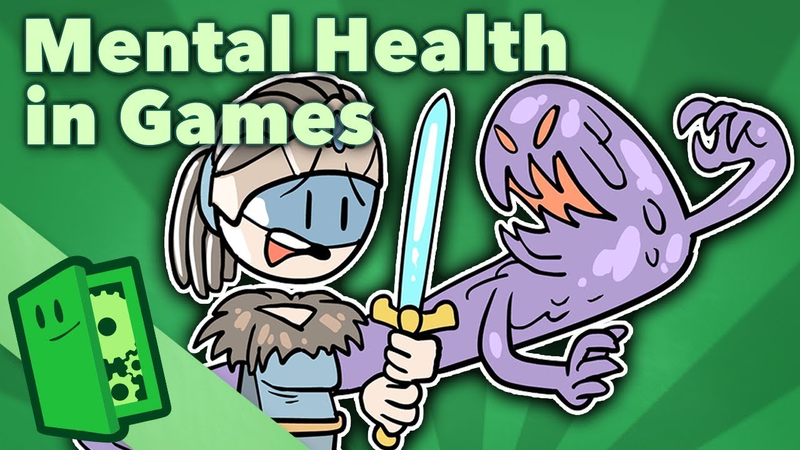
Mental Health in Games - How We Can Do Better - Extra Credits
Key insights
7 takeaways- 01Statistical data contradicts common media tropes, showing that individuals with mental health conditions are more likely to be victims of violence, with only 3% of violent crimes linked to such conditions.
- 02Developers should collaborate with mental health professionals and individuals with lived experience throughout the design process, as exemplified by the realistic storytelling in 'Hellblade: Senua’s Sacrifice'.
- 03Responsible design requires the implementation of content warnings and the ability to skip triggering material without penalizing the player.
- 04While 25% of games feature characters with mental health conditions, these portrayals frequently rely on harmful stereotypes that equate mental illness with villainy or violence.
- 05To avoid stigmatization, character design should focus on multi-faceted identities rather than reducing complex conditions to single symptoms like hallucinations.
- 06Normalizing mental health management by incorporating mundane activities, such as therapy visits or medication, helps reduce stigma and provides a more accurate representation.
- 07Industry professionals should adopt inclusive language by using person-first terminology and avoiding derogatory labels like 'crazy' or 'insane'.
Ask AI about this video
Transcript
one in five American adults faces mental illness and with some of the stresses and constant bad news facing the world today that can feel even higher 25% of videogames portray characters mental illnesses but too often these representations do a disservice to people with mental illness and those who care for them and that figure doesn't even account for other representations like psychiatric hospitals and sanity meters so how can videogames do better and be a part of the solution before we begin please give a warm CC welcome to our guest writers for this episode Heidi McDonald a veteran designer and author of digital love romance and sexuality and games and dr. Kelly Dunlap who holds a doctorate in clinical psychology and a master's in game design thanks so much you too think about it how many times have we seen a villain in a video game with some kind of mental illness that defines them as a character the mad scientist or the evil
megalomaniac out to take over the world or get revenge mental illness does not automatically make a person violent statistically people with mental illnesses are much more likely to be the victims of violence than they are to be the perpetrators of it in fact only 3% of all violent crimes can be attributed to individuals living with mental illness and then there's all the games that take place in a mental hospital or some other type of mental health institution designed to instill fear in players it can be intimidating enough to ask for help if you're struggling with a mental illness much less to sign yourself into a hospital when you really need it but the truth is there's no shame in needing help or asking for it and games portrayals of mental hospitals as evil or violent places where torture happens is not fair to mental health professionals who do their best to help those seeking help and such depictions might also discourage people who need that help from getting it if their impressions of mental hospitals are based solely on media portrayals so if these are the
examples of what not to do what are some ways that game designers can pay more attention to getting it right well if you're making a game that depicts a mental illness talk to a mental health expert or persons who are experts lived-experience to make sure you're doing it responsibly one great example of this recently was hell-blade Sen you--is sacrifice the folks who made hell blade included subject matter experts every step of the way as well as including people who had experienced hearing voices or having hallucinations and that resulted in a game that was compelling and realistic if you want to build awareness and empathy for a mental health condition it's not necessary and could even be harmful to try to force your players to experience that condition for example if you're making a game about anxiety don't try to force your players to experience an anxiety attack to have them understand it that's not to say that games should never have difficult subject matter it just means that you should always bear in mind the mental health of your players and don't do anything that could cause a crisis
for them having a Content warning like the one at the beginning of depression quest helps and so might giving players an option to skip certain content without their doing so affecting the rest of their gameplay which is actually something the developers of the game ana morphine have done but again including subject matter experts in the design process it's probably the most helpful thing you can do none of this is to say you shouldn't have characters in your game who cope with mental health conditions but don't make that illness the thing that defines them make that person a multi-faceted and complicated person for whom the mental illness just happens to be part of their life now I know this example isn't a game but Forrest Gump is an example of a character who is more than just the mental struggles he deals with and there are ways anyone can relate to him also it's important to note that not all villains are mentally ill perhaps they're just a person who because of a few bad choices circumstances or experiences go about their goals in a way that's different than most people would like kill monger in Black Panther but when you are representing a
character with mental illness don't have one symptom be the only indication of that illness for instance hallucinations as the main feature of schizophrenia most mental health conditions have several symptoms which are indicative of that condition and using only one reduces that illness to a cliche and a stereotype rather than getting at the heart of what people are struggling with not to mention mental illness can present differently for different people and know two cases are exactly the same one person with schizophrenia might have hallucinations short but not every patient with that condition will experience them also characters with mental illness can be represented as simply as having a character take their meds or mentioning they visited a therapist once it's totally okay to show the mundane everyday nacelles which might help fight stigma always do good where you can but at least do no harm and finally there's certain phraseology to be aware of when talking about mental illness we want to always focus on the
human being rather than on the condition with the person being secondary so using person with mental illness is preferable to mentally ill person insane is a legal term used to establish whether someone can be considered competent enough to stand trial for a crime it's not actually a term used in mental health care at all then there's the word crazy situations and circumstances like weather or traffic can be called crazy but when you call a person crazy that's not really as considerate as we need to be about mental health there's actually a pretty good list of words to avoid using if you want to be more sensitive about this so those are some ways to design more thoughtfully when you're thinking about how to represent and talk about mental illness and games and if you're making this type of game and want more information feel free to visit I thrive games org because they've been doing some really good work they have awesome design resources to share and curated lists of games to check out and also they'd love to hear about any games
you're making to help a mental health condition or to encourage positive mental health practices like empathy kindness gratitude optimism cooperation self-awareness and any others you can think of we've all witnessed how games can do such good in the world and there's no reason why they can't also support positive mental health practices as well until next time everybody [Music]
Summary
Video games frequently misrepresent mental health, often relying on harmful tropes that equate mental illness with violence or villainy. While approximately 25% of games feature characters with mental health conditions, these portrayals often rely on stereotypes, such as the "mad scientist" or the use of psychiatric institutions as settings for horror and torture. These depictions are factually inaccurate, as individuals with mental health conditions are statistically more likely to be victims of violence than perpetrators, with only 3% of violent crimes linked to such conditions. Furthermore, stigmatizing media representations can discourage individuals from seeking necessary professional help.
To improve representation, developers should prioritize collaboration with mental health professionals and individuals with lived experience throughout the design process. Successful examples, such as Hellblade: Senua’s Sacrifice, demonstrate that involving experts leads to more realistic and empathetic storytelling. Designers are encouraged to create multi-faceted characters whose identities are not defined solely by their diagnosis. Additionally, developers should avoid reducing complex conditions to single symptoms, such as hallucinations, and instead acknowledge the diverse ways mental health manifests. Incorporating mundane, everyday management of conditions—such as therapy visits or medication—can also help normalize the experience and reduce stigma.
Responsible game design also requires prioritizing player well-being. Developers should implement content warnings and provide options to skip potentially triggering material without penalizing gameplay. Language choices are equally critical; using person-first terminology and avoiding derogatory labels like "crazy" or "insane" fosters a more inclusive environment. By shifting the focus from sensationalism to nuanced, human-centered storytelling, the gaming industry can move toward supporting positive mental health practices and fostering greater empathy among players.















Comments