1 free read left. Create a free account for unlimited reading + AI research.
Create free account
Looking beyond blindness: The important role of the disabled in product development
Key insights
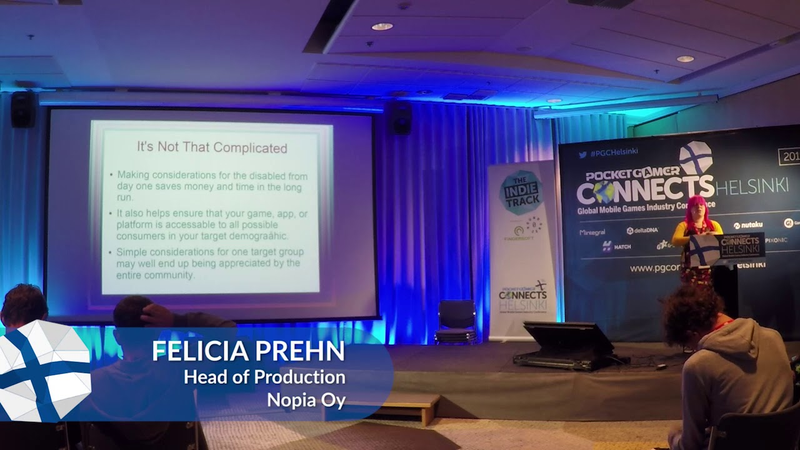
6 takeaways- 01Proactive consultation with disabled testers during the design phase is essential to avoid creating exclusionary products that damage a company’s professional reputation.
- 02Accessibility must be treated as a foundational design principle integrated from the project's inception rather than an expensive, late-stage add-on.
- 03Inclusive design features, such as subtitles and high-contrast visuals, improve the user experience for the entire player base, including casual players and those in noisy environments.
- 04Developers should engage disabled individuals as a viable consumer demographic with significant purchasing power, rather than viewing accessibility through the lens of fear or prohibitive cost.
- 05Effective inclusive design relies on universal usability principles, such as using distinct shapes alongside color to ensure functionality for all players.
- 06Neglecting accessibility can lead to direct revenue loss, as evidenced by instances where design changes rendered games unplayable for specific segments like color-blind users.
Ask AI about this video
Transcript
[Music] hi everybody so yeah as he said I'm going to talk to you today a little bit about trying to see past disability and all that to try and include us in the development of your products whether it be an app or a platform so we can go first my first slide here about Who I am because I think most of you don't know who I am so if we could go to the next slide yeah there so anyway I was born with autosomal congenital cataracts which is a fancy way of saying I was born blind and at the time when I was born back in 1990 the treatment for cataracts for small children wasn't as it was or as it is today so there was no way to get those removed so I grew up almost completely blind I played however a lot of games as a kid I played a lot of Nintendo and also Nintendo 64 I would say gaming other
than music gaming was my biggest hobby as a kid and I moved to Finland in 2011 and in 2015 I started working for a Nokia who at the time just did animation they didn't do any games but it was sort of on the horizon and something that we all kind of thought would be fun though I can honestly say I never saw myself working in the game industry I never studied game design or anything like that so when I started working at Nokia and I began to work on game projects of course the elephant in the room was always that I couldn't necessarily see what was happening or couldn't even necessarily play some of the demos that we had been working on because they just weren't accessible so in 2016 I started giving little speeches here and there at schools and things like that about accessibility and things that people could do to make their games more approachable to people with not just visual disabilities but other impairments as well and aside from games I've had a little bit of success in Finland as a eurodance artist under the name MC Alicia my song
was used on a Finnish TV show last winter called putos and I've done some gigs with some Finnish eurodance art it's like well those people and move on and so on and the next slide if it's possible does this work so there I am on the cover of one Finnish newspaper talking about the game scene in South Atlanta where we're located and the other picture there is just from a recent gig I had this summer with Losco the Belgian euro dance artist so and next slide is a picture from a show I actually wrote which is no BS current project Alvin from Earth you guys might have seen our cardboard cutouts out there on the indie track what makes this series a little bit different is that it's gonna be as accessible as possible so we're gonna ultimately have customizable subtitles and descriptive audio which basically means every action that happens on screen there will be a narrator telling what that action was so if someone picks up a bottle the narrator will say Alvin picked up a bottle and so on so even if you have no vision whatsoever you can still follow along and so to the next
slide I've got some fun facts and a lot of these might seem like really obvious things but I think it's important to state first and foremost that disabled people are people I know that's crazy but I'd actually I can't see you guys if you raise your hands but hopefully someone can tell me I'd like anyone to raise your hand how many of you have actually met a blind person that isn't me half the room okay how many of you have met people of other impairments so people in wheelchairs of people who walk with canes or so on 80% of the room how many of you have never actually interacted with a disabled person you've seen them but you've never actually spoken to one nobody in there okay so that's good and but believe it or not I have had situations where I am the first person with the disorder disability that someone's ever met and then it's a bit awkward because you're standing there and they're terrified to say words to
you because I don't know do they think we're gonna be offended or I'm gonna be offended or what but they're just absolutely terrified so disabled people are people you can talk to us and we have lives we have families we have hobbies we do things our lives are not centered around the fact that we can't do everything that an able person can do and furthermore disabilities are not always permanent or long term so any one of you guys could have fallen at the party last night and you know broken your arm or injured your eye in some way and you'd would be temporarily unable to do the things that you normally do how many of you would stop playing games if you couldn't use both of your hands for two weeks or if you had to wear an eyepatch for two weeks would you stop playing games completely I don't think so so it's kind of the point that's um you're not just kind of targeting these things for specific people but you're targeting for anyone in a situation and
I need to look at my notes here to see where I actually am right now yeah and just disabled people are not sort of either one demographic either we are all different ages all different skill sets all different ethnicities races sexualities and so on so we are a large kind of umbrella group hiding in the shadows always and we have money which seems like an obvious thing to say but it's true many of us have jobs or sources of income and we would like to spend our money so when it comes to products and so on we're going to choose the ones that work for us and we're going to be very loyal to the companies and to the services that we know take us into consideration a good example of that for me would be Netflix there is a wide array of things on Netflix our show series and movies that have descriptive audio similarly in games I always tend to gravitate towards the ones that have kind of thought ahead about people who can't see so well enjoying their product
and yesterday it was quite interesting we can go to the next slide yesterday was quite interesting as I walked around here and tried to play some of the demos I came to a really lovely group of guys and just asked them do you have any accessibility features and the poor guy froze he froze he's like no actually I hadn't even thought of that and I was like well that's this is uncomfortable so I think part of it is people are nervous that it's going to be expensive or it's going to be the kind of thing where they're not going to be able to deliver on anything that we want but in being afraid of that by not talking to anyone not consulting anyone whether they be blind or deaf or if you're making a location-based game maybe Consulting someone in a wheelchair or with the difficulties walking by not contacting
anyone at all you're actually setting yourself up to be in a very awkward situation when it comes time to demo and beta tests and so on because you might have someone who's got really great ideas really great insight who would be a valuable resource for your company a financial asset in the long run who can't enjoy your product whatsoever so I know part of it is a lot of people don't know where to go they don't know who to speak to they don't even know what to put into Google when thinking about you know consultation of the disabled or accessibility testing or so on but it's really important to think about and I have to yeah sorry yeah so the the other thing I've heard a lot from people even in my own circle is that it's expensive and it can be expensive if you think about it at the very end as I said before if you've got an almost finished product or almost finished demo and then you start thinking oh yeah maybe I would like to make this easier for people who can't see to play or for people who are
deaf to play but you've already got something that's already finished so of course it's gonna be very expensive to go back through all the code and fix things and edit and so on but when you think about things from day one from day one and you say we've got this great platform and we want it to be accessible to everybody who could possibly spend money on it we want to make as much money as possible from anyone regardless of whether or not they can see or can't see walk and can't walk if you think about it like that from day one it becomes a natural part of the budget and not an extra because my money should not be extra and the money of disabled people should not be extra money it should just be money because as I said before you never know who's going to be temporarily disabled and who is permanently disabled accidents happen things happen we play sports and injure ourselves we we make mistakes and so on so it's it's it's always this horrible scary thing that only affects a small part of the group and furthermore on that same line
features you put in into a product for people with disabilities might actually be end up being enjoyed by people in the general population a good example of this is subtitles anyone here who can see and who has children who sleep very lightly knows how important subtitles are and how essential subtitles are or if you've not got children anyone here who's allowed eater and Lexton watch Netflix while they eat can also appreciate subtitles so even though you might have no trouble whatsoever with your hearing there are any number of reasons why you might enjoy subtitles similarly if you think about things for the visually impaired for example larger text or more color contrasts if you're in bad sunlight trying to play a game or trying to use your phone those things that were made for people with much worse vision than you are now benefiting you location-based games I'm
a very avid player of Pokemon go myself and when I think about myself sometimes having trouble playing alone because you know is something my team for example where there's a legendary raid might be in a really difficult location for me to get to alone by just slightly expanding the radius even our being aware of where you have your kind of ports or gyms or whatever expanding the radius to make its or make it so that you can be far enough away to make it accessible but still be able to play these are little things that help anybody and because I'm blind I have to check my phone again to see where I'm at so yes we can go to the next slide do not fear input from the disabled and do not be afraid to ask them questions or consult because I can assure you that no one is going to be offended the surefire way to offend the disabled community in my personal opinion would
be to ask us nothing and completely leave us out and then once you've gone to market with your product or your game or your app say oops sorry guess you guys can't enjoy that this thing that's now huge that everyone is doing you're can't be a part of inclusivity is very important for us isolation among disabled people is a very real problem for any number of reasons whether it be because our social skills are impaired because of our disability or just because we are shy and so on which is a very big problem so the inclusivity of gaming is one thing that's very important and I really hope that if you take anything away from anything I've just said it's that inclusivity is is key and yeah disabled people again we're not out to make you feel bad no one wakes up in the morning and says today I'm gonna make developers cry it's it's it's it's more than that we want to be involved we want to help you make things better for everybody and
it doesn't have to be expensive if you plan it out well and if you consider it from day one it's going to be very expensive if you don't start thinking about it until the very end of course some of you are probably sitting here shaking thinking oh my god our game is going out next week and I've only now thought of this it happens but I would hope that next time around when you're developing something if you're already in the early stages of developing your next game or your next product from day one you would think about okay how can we make this accessible what kind of consultation is out there thank you in general not fear working with people with disabilities in general we are very easy of course some of us might need help getting around the office or finding you and so on but when it comes down to doing our work I would say that we are no different than anyone else when in terms of motivation some of us might be more motivated than others some
of us might have a harder time waking up in the morning than others but oh I just got really loud so yeah in short trust us we are here to help you and we are not scary I promise thank you I think it's kind of really important stuff I mean particularly when like you say think that subtitles and stuff like that for my name recent talks about this a lot as well and I mean things like the idea of you know musing definitive shapes that are much easier for people to actual sight to be able to you know pick out but also happen to be really convenient particularly for people who color blind or or even just you know general users who can actually then see that thing more readily differentiate from any other things around colorblindness actually affects in the UK was at twelve percent of male yeah and a colleague of mine Ian Hamilton who spoke at pgc a couple of years ago we were together here in Finland at also University back in April and he actually said when candy cross changed their system they took away I guess I've never
played candy crush - I don't know but he said that they took away differentiated shapes so then it was all color based and apparently they lost basically all revenue from people with color blindness from there on out because the game became unplayable so color blindness even is a disability when it comes to playing games yeah I miss failures anyways Hamilton right that is fantastic and it's very very straight but he's got huge numbers of tips are well worth checking out oh yeah the same thing applies in terms of like audio and you know realizing you how you make things distinctive so anyone going to questions please ask there's a question right at the back hi um I was just thinking about what kind of things help you in the development process for instance is there something the team can take into consideration in from your like point of view just talk to me or not even me you don't have to be me of course I'm busy but talk to talk to blind people from day one
everyone is gonna kind of have their own system when it comes to testing and consulting but I think at the end of the day you're probably gonna get very similar information from regardless so regardless of who you ask so I would say just ask if you've got something that you're not sure about in general just ask there's never such a thing as too many questions or even bad questions so it's hard to say like a abstractly in theory what I could do better for a thing I haven't seen before but just send an email to someone or do a quick google search about what other people in your situation have done there's a lot of resources online now if you research accessibility and inclusivity of the disabled in gaming that are really good it's a lot of reading I understand people are busy they don't have time but read or have someone have something read to you it's it's very important thank you I think I'm saying in terms of night the more we have people who love games you'd have a deaf a disability in the team the more
perspectives we have anyway which is in inherently valuable I have worked on a project in the past where I wasn't consulted on the tables aspect of the game and then I was asked to show the game so here I am at a festival showing a game when people ask me how do I play this and I had to say well actually I know how to play it but I can't see so you'll have to figure it out on your own and I was part of the team but every time I sort of tried to speak up and say hey this is a bit of a problem we said no no no later later later and in the long term it made the team that was part of look quite silly I don't know I'm afraid we're gonna have to quit hopefully you'll be around I will be at my table just look for the cardboard cutouts and come and ask me again there is no such thing as stupid questions and as long as you don't insult my mother you can't possibly offend me my mom is a saint help
[Applause] [Music]
Summary
The integration of disabled individuals into the product development lifecycle is a critical, often overlooked strategy for the gaming industry. The primary thesis is that accessibility should not be treated as an expensive, late-stage add-on, but rather as a foundational design principle. By incorporating inclusive features from the inception of a project, developers can expand their market reach, increase user loyalty, and create products that benefit the entire population, not just those with specific impairments.
Key findings emphasize that accessibility features—such as customizable subtitles, descriptive audio, high-contrast visuals, and adjustable control schemes—frequently improve the user experience for all players. For example, subtitles are essential for hearing-impaired users but are also widely utilized by parents and casual players in noisy environments. Similarly, color-blind-friendly design choices, such as using distinct shapes rather than relying solely on color, are vital for accessibility but also enhance general usability. Neglecting these considerations can lead to significant revenue loss, as demonstrated by instances where games became unplayable for color-blind segments after design changes.
The scope of this argument encompasses the global gaming industry, with a focus on the importance of early consultation. Developers are encouraged to move beyond the fear of offending disabled users or the misconception that accessibility is prohibitively expensive. Instead, the industry should view disabled individuals as a diverse, viable consumer demographic with significant purchasing power. The methodology for achieving this involves proactive engagement, such as consulting with disabled testers during the design phase and utilizing existing online resources to guide inclusive development. Ultimately, the failure to consult disabled users early in the process risks creating products that are exclusionary and damaging to a company’s professional reputation.













Comments