Key insights
7 slides
Key number
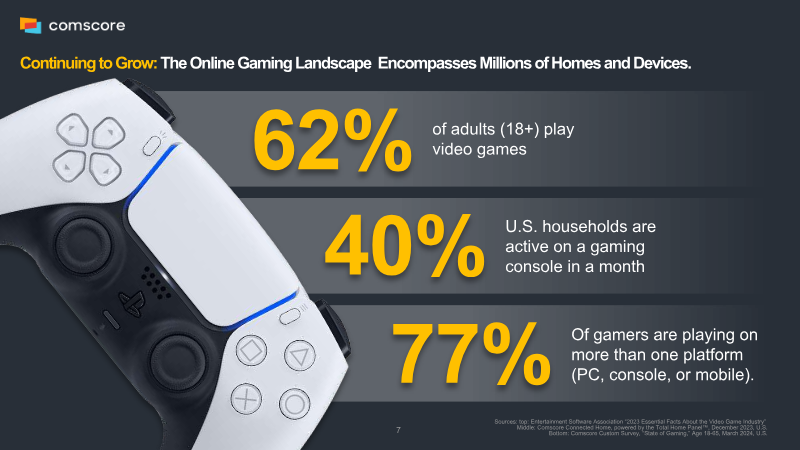
62% of U.S. adults play games multiple times a week.
The 2024 Level Up report defines gamers as adults aged 18 to 65 who play multiple times a week.
What changed
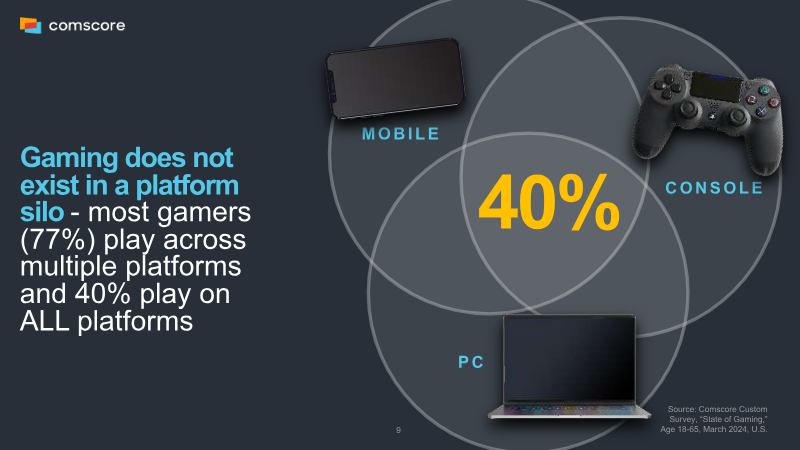
77% of gamers use more than one device.
Cross-platform engagement is high among U.S. gamers.
Multi-device play. 77% of gamers use more than one device and 40% play across PC, console, and mobile.
Platform split
Console gamers show the highest willingness to pay for content.
Monetization preferences vary by platform.
Willingness to pay. 37% of console gamers are prepared to spend over $60 on a single title.
Page 10 of the report37%
of console gamers are prepared to spend over $60 on a single title
- of mobile-only gamers prefer free-to-play models
- 32%
Genre affinity
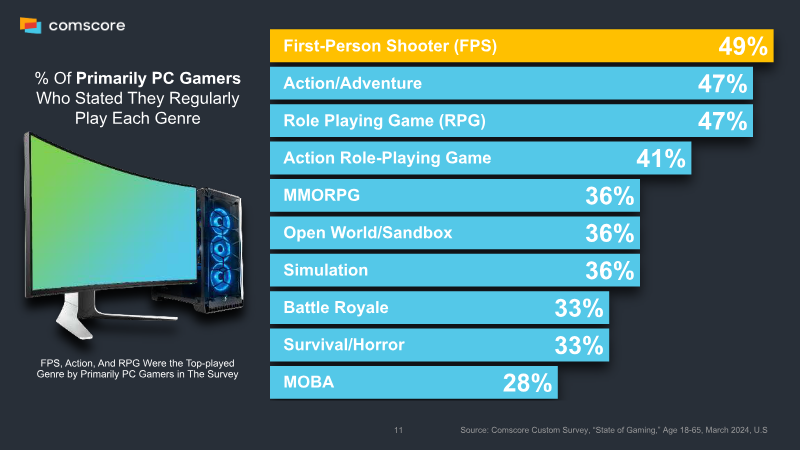
PC players favor first-person shooters and RPGs.
Genre preferences vary by hardware. PC players favor first-person shooters and RPGs, while console players show a strong affinity for action-adventure and sports titles.
Ad perception
Two-thirds of gamers view in-game ads as neutral or positive.
Gaming is a mainstream medium with high receptivity to marketing. Approximately two-thirds of gamers view in-game advertisements as having a positive or neutral impact on their experience.
Page 15 of the report34%
of respondents believe product placement enhances realism
Format preference
45% of gamers express a preference for rewarded ad formats.
Rewarded ad formats are preferred by 45% of gamers. Case studies, such as Tommy Hilfiger’s campaign, demonstrate the efficacy of these strategies.
Page 20 of the report45%
of gamers express a preference for rewarded ad formats
- lift in brand favorability for Tommy Hilfiger’s campaign
- 20-point
- increase in purchase intent for Tommy Hilfiger’s campaign
- 23-point
Measurement
Comscore and Anzu now measure incremental reach for in-game ads.
The partnership between Comscore and Anzu now allows for more precise measurement of the incremental reach provided by intrinsic in-game advertising.

1 / 7
Ask AI about this report