Games and companies in this document
Connections
Each row is a game or company this document names, each column a document, oldest first. A mark means that document names it. Select a row to see those documents.
More from International Journal of Role-Playing
View all
Whitepaper
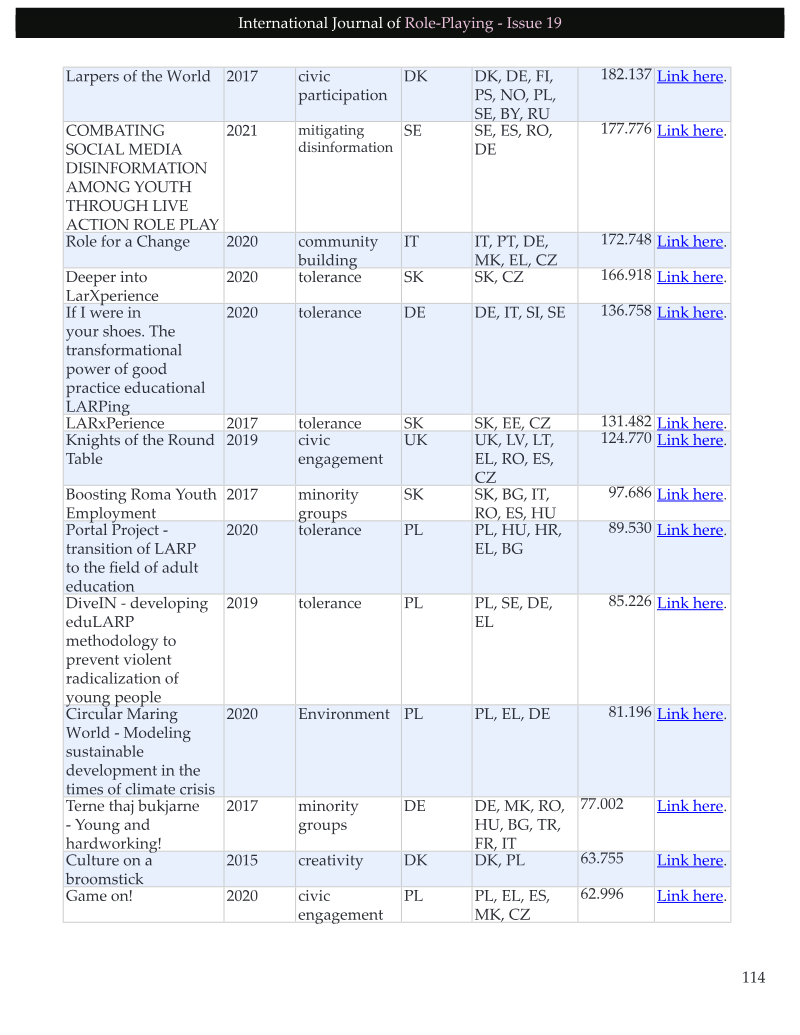
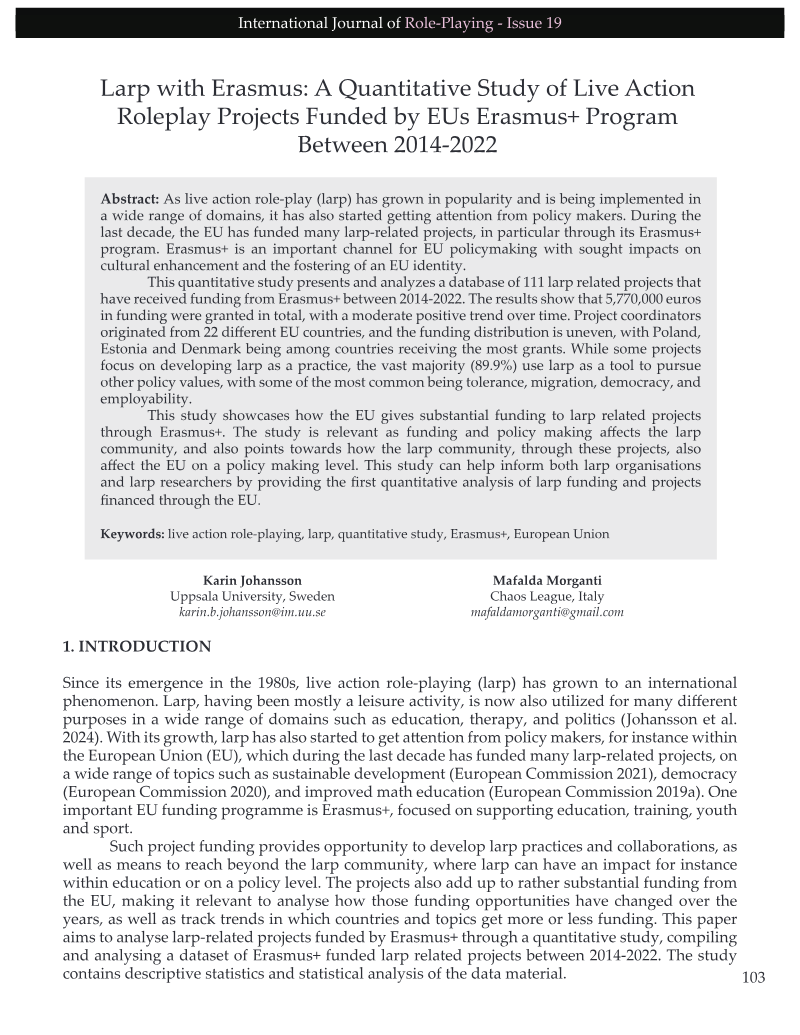
Larp with Erasmus: A Quantitative Study of Live Action Roleplay Projects 2014-2022
International Journal of Role-Playing · 2026



Whitepaper
Let's Do It Together!: Why Participatory Design and Co-Creation Are Promising Approaches for Designing an Edu-Larp
International Journal of Role-Playing · 2026



Whitepaper
Bleed as Intrapersonal Conflict: Understanding Bleed Management and Resilience
International Journal of Role-Playing · 2026
Whitepaper
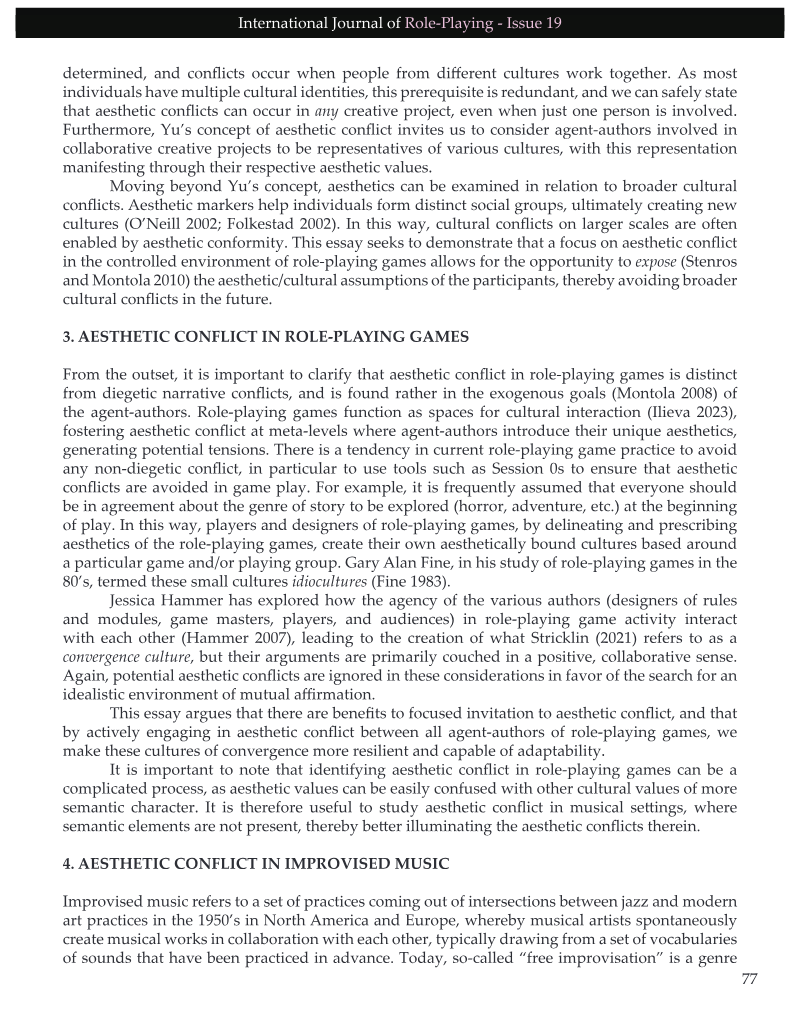
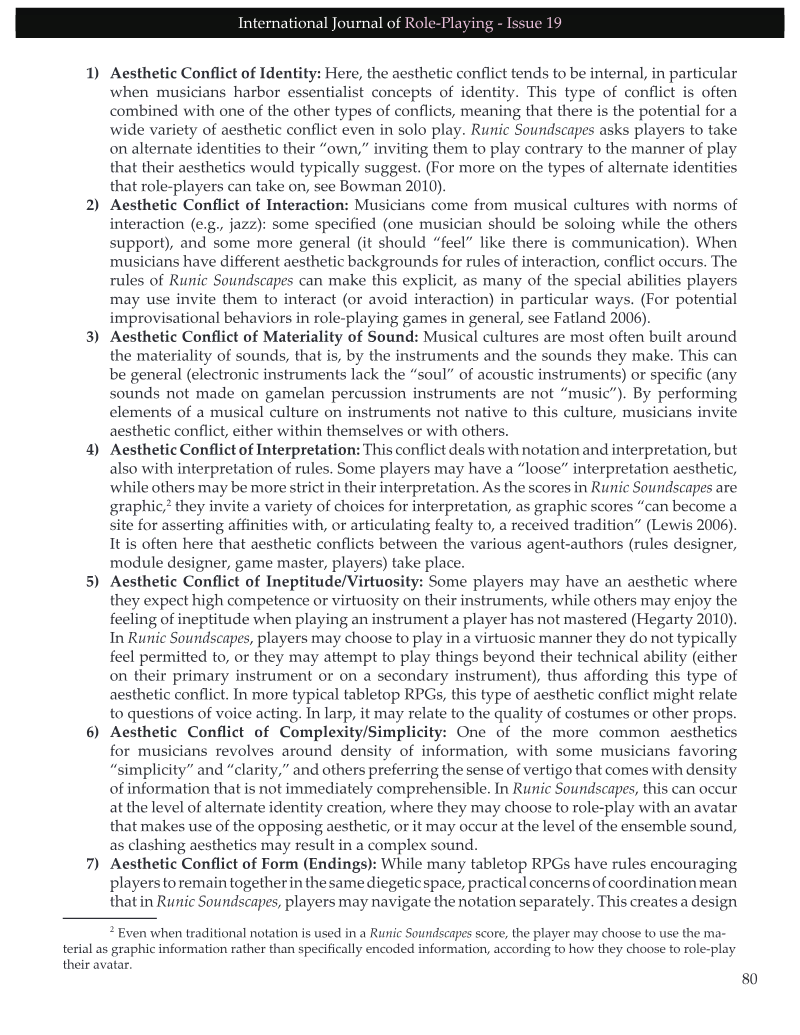
Aesthetic Conflict in the Musical Role-Playing Game: Runic Soundscapes
International Journal of Role-Playing · 2026
Whitepaper
Press Start for Heritage: Representing University Sports Rivalries in EA Sports College Football 25
International Journal of Role-Playing · 2026



Whitepaper
Transformative Play for Building Resilience to Misinformation
International Journal of Role-Playing · 2026
Whitepaper
From Digital to Analog: Disco Elysium’s Conflict Transformation Mechanisms for Educational Larps
International Journal of Role-Playing · 2026
Whitepaper
Masculinity at the Table: Untangling the Male Preserve in Indie and Mainstream Gaming
International Journal of Role-Playing · 2026
Whitepaper
Asteria and Neurodiversity in Role-Playing Games: Inclusion or Tokenism
International Journal of Role-Playing · 2026
Whitepaper
The Role of the Cosmographer
International Journal of Role-Playing · 2026
Whitepaper
How is Learning in Edu-Larp as a Method Described and Seen by Practitioners?
International Journal of Role-Playing · 2026
Whitepaper
The Dynamic Loop Model: A Systemic-Cybernetic Meta-Theoretical Framework for TRPGs
International Journal of Role-Playing · 2026