Market (Mobile)·Updated Apr 30, 2026 by SocialPeta
Report · January 1, 2022
Published by SocialPeta, GameIS
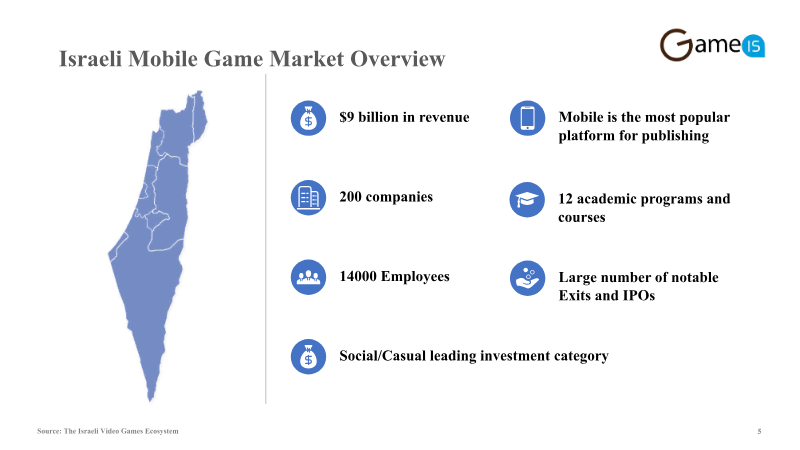
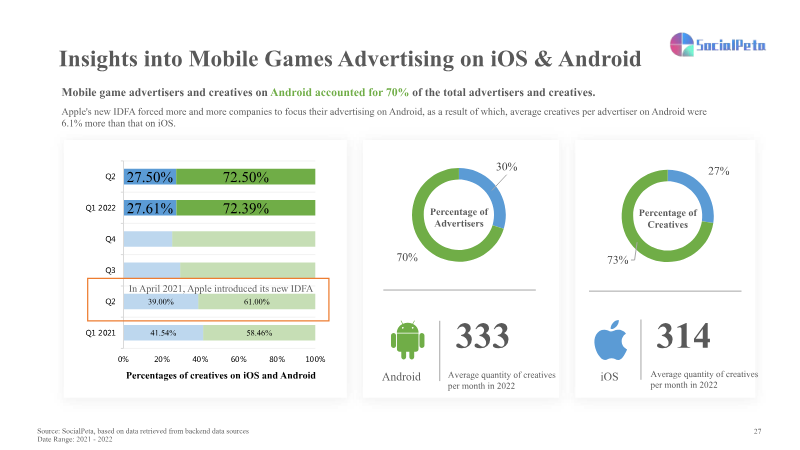
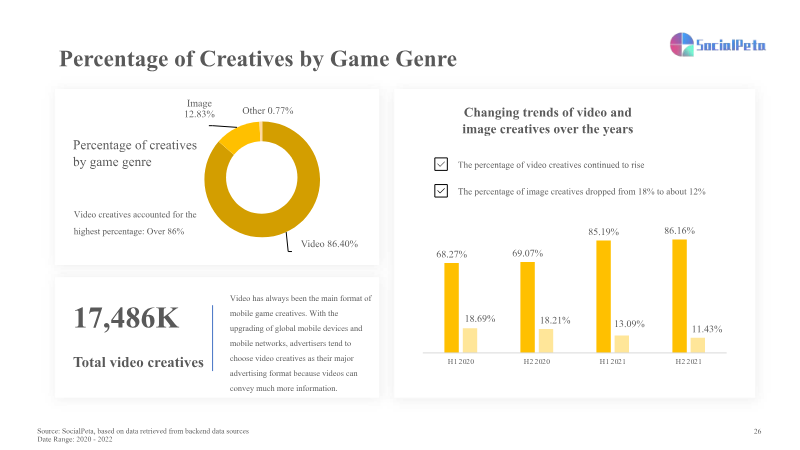
The Israeli mobile gaming sector has solidified its position as a premier global hub, characterized by a robust ecosystem of approximately 200 companies and 14,000 employees. Generating $9 billion in annual revenue, the industry has experienced extraordinary growth, with total earnings increasing by 760% since 2016. This expansion, accelerated by pandemic-era shifts in consumer behavior, is anchored by major developers such as Playtika, Plarium, and Moon Active, who maintain a strategic focus on the social, casual, and hyper-casual genres. Despite this financial success, the advertising landscape underwent significant volatility in 2022. Total ad creatives declined by 17.8% year-over-year, even as the number of active advertisers grew by 4.2%. This contraction was most pronounced within the RPG segment, while casual and puzzle titles maintained dominance. A pivotal shift in platform strategy has emerged, with Android now capturing 70% of all mobile game advertising, a trend largely attributed to Apple’s IDFA privacy changes. Video content remains the industry standard, accounting for over 86% of all creative output. Global marketing strategies have become increasingly localized to meet regional preferences, ranging from live-action influencer content in the United States to character-centric assets in Japan and high-fidelity technology showcases in South Korea. Furthermore, creative trends are evolving away from traditional failure-based hyper-casual tropes toward more positive, success-oriented gameplay. While the Israeli market continues to demonstrate immense scale and innovation, the industry faces ongoing structural challenges, specifically regarding the availability of venture funding and the persistent shortage of skilled human resources required to sustain long-term growth.
SocialPeto Jame is 2022 TheIsraeli Mobile Game Market Report Backed by new insights from SocialPeta and GamelS, this report empowers global advertisers and publishers to learn more about the Israeli mobile game market.
D eclaration SocialPeta 1. Data Sources With the assistance of the world's biggest advertising intelligence and analysis tool, SocialPeta Data Team has provided you with insights into the mobile advertising data of global games. We collect advertising data by sampling worldwide, covering over 70 channels and nearly 70 countries and regions worldwide, and have captured a total of over 1.2 billion advertising data, with over 1 million ad data being updated by the hour each day. Based on such huge data, we can gain insights into the advertising market trends. 2. Data Cycle and Indicators Overall date range of the report: Jan-Jul 2022 For specific data indicators, please see the notes on each page. 3. Copyright Notice All tests, images, and graphics contained in this report are protected by the relevant trademark and copyright laws. Some texts and data are public information and their copyrights are owned by their original creators. No organization or person shall copy or distribute, in whole or in part for any purpose, any portion of this report without approval from our company. The copyrights of all creatives mentioned in this report are owned by the respective advertisers. Any unauthorized use of this report for commercial activities is a breach of the Copyright Law of the People's Republic of China and other relevant laws and regulations as well as the relevant provisions of the International Convention.
ioned in this report are owned by the respective advertisers. Any unauthorized use of this report for commercial activities is a breach of the Copyright Law of the People's Republic of China and other relevant laws and regulations as well as the relevant provisions of the International Convention. 4. Disclaimer The industry data and market forecasts presented in this report are based on the data captured by SocialPeta Data Team and estimated by using a statistical forecasting model combined with research methods such as desk study and industry interviews. Limited by the research methods and data resources, this report can only be used as reference material. Our company shall have no liability for any data or points of view in this report. SocialPeta shall hold no responsibility for any legal consequences resulting from any action taken by any organization or individual by using or based on the above data information, and the organization or individual shall take full responsibility for any disputes or legal liabilities arising therefrom.
Content Analysis of The Israeli Mobile Analysis of The Israeli Large Game Market Mobile Game Companies /05 /12 $ Insights into Global Analysis of Top Performing Mobile Game Market Ad Creatives /22 /30 About SocialPeta & GameIS /38
ame IS Israeli Mobile Game Market Overview 1 $9 billion in revenue Mobile is the most popular platform for publishing 200 companies 12 academic programs and courses 14000 Employees Large number of notable Exits and IPOs Social/Casual leading investment category
ame IS Analysis of The Israeli Mobile Game Publishers COVID-19 pandemic boosted the growth of mobile game market Israeli game companies mostly focus Due to the global COVID-19 pandemic, more and more Israeli users APP Installation Distribution of Israeli mobile game on social and hyper-casual games Global Installation of Israeli Mobile workers by game genre with pandemic era, it has been a habit for most people to entertain Games in 2021 China being their biggest themselves by playing games and spending money in game. 15% 3% 2% 1% market 23.00% 5% 19.00% China 37% 14% 15% 18.50% 17.49% Top 5 genres of Israeli mobile Israel 15.60% 17.95% 15.80% games published in 2021: Social/Casual 1. 15.00% 13.70% Russia 13.30% Mid/Hard Core Casual/Hyper-Casual 12.90% 2. RPG 11.68% US 12% Education 74% 3. Simulation Vietnam 5% Child 4. Social gambling UK 8% 9% Meaningful 5. Puzzle8.60% Other Sports & Other 7.00% 7.95% 01-Apr-20 01-Jul-20 01-Apr-21 01-Jan-20 01-Oct-20 01-Jan-21 01-Jul-21
The 2026 mobile marketing landscape is defined by a fundamental transition from media-centric targeting to creative-driven acquisition, necessitated by tightening privacy constraints and the saturation of traditional advertising channels. Competitive advantage now hinges on the speed of creative iteration and the ability to unify product development, monetization, and distribution. By leveraging early behavioral signals to predict long-term value, industry leaders are successfully aligning short-term performance metrics with sustainable user lifecycle growth. This evolution is supported by a strategic shift toward AI-powered personalization and behavior-driven gamification, as non-gaming applications increasingly adopt the engagement tactics traditionally reserved for the mobile gaming sector. Data from 2025 reveals a period of significant market consolidation, marked by a 16.7% decline in active advertisers alongside a 73.3% surge in creative output per advertiser. Playable ads have emerged as the premier format, consistently yielding the highest attention duration, scroll-stop rates, and conversion metrics. While the AI app sector experienced a sharp 48% contraction in the number of advertisers, top-tier players have responded by aggressively scaling localized marketing efforts. Simultaneously, the finance and health sectors have maintained greater stability, focusing on service-centric, medical-grade solutions and persuasive, value-based messaging to capture mature markets in North America and Europe. Global strategies for 2026 prioritize a balanced media mix, typically favoring video content, while emphasizing hyper-local operations in emerging regions like Southeast Asia and the Middle East. Success in these diverse markets requires intensive user education and culturally nuanced, scenario-based ad updates. As the industry moves toward subscription-based models and on-device AI integration, the focus has shifted from mere technological development to the large-scale monetization of AI-enhanced user experiences. Ultimately, the market is moving toward a future of highly segmented, interactive, and performance-driven advertising that prioritizes technical precision and regulatory compliance to foster long-term user trust.
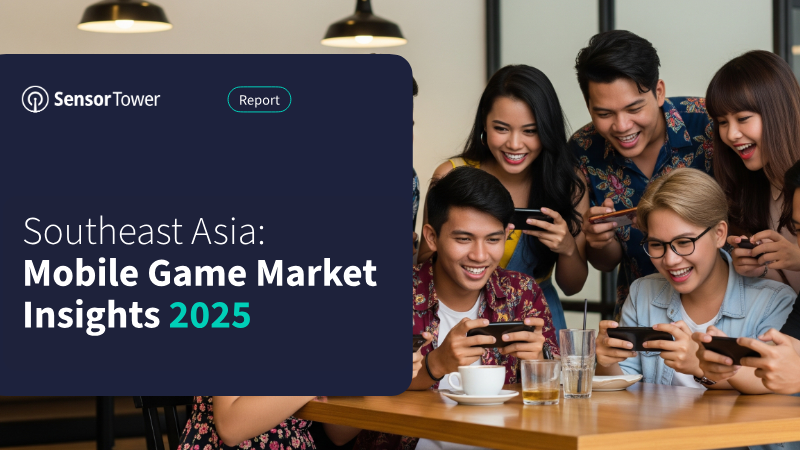
Southeast Asia solidified its position as the world’s second-largest mobile gaming market by downloads in early 2025, reaching 1.93 billion installs. While the region currently ranks seventh globally in revenue at $625 million, it demonstrates significant monetization potential fueled by expanding digital payment infrastructure and rising smartphone penetration. Indonesia serves as the primary volume driver with 870 million installs, while Thailand leads the region in consumer spending, generating $162 million. This growth is increasingly supported by publishers based in Singapore and Vietnam, who have emerged as a dominant global force, contributing over 5.8 billion installs to the international market through a mix of hypercasual hits and competitive titles. Market dynamics reveal a shift toward high-engagement genres and localized content strategies. Although casual arcade and simulation games drive the highest download volumes, monetization is concentrated in Strategy, MOBA, and RPG segments. Mobile Legends: Bang Bang remains the regional revenue leader, sustained by hyper-local live operations and community engagement. Simultaneously, the 4X Strategy genre is experiencing rapid expansion, highlighted by a 77.7% revenue surge for titles like Last War: Survival. Conversely, traditional MMORPGs have seen a decline of nearly 20%, making way for Open World Adventure RPGs and sophisticated strategy games that leverage deep social and competitive mechanics. The regional landscape is characterized by distinct national preferences and the global expansion of local firms. Vietnam has become a powerhouse for survival-themed hypercasual games, while Thailand shows a unique affinity for realistic sports simulations. Established titles like Garena Free Fire continue to dominate global charts by blending cultural relevance with nostalgic collaborations. Ultimately, the region’s trajectory is defined by a transition from high-volume downloads to sophisticated monetization, driven by a combination of community-led activations and the strategic global influence of Southeast Asian publishers.
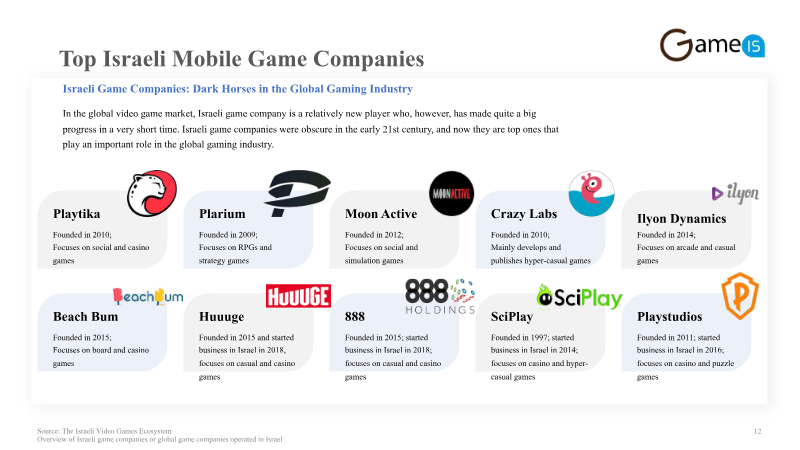
The Israeli mobile game market reached approximately $9 billion in 2021, driven by more than 200 companies and 14,000 employees. Casual, puzzle, and hyper‑casual titles now represent about one‑third of global mobile game advertising spend, a share amplified by COVID‑19‑induced growth in user acquisition and in‑app purchases. Israel has emerged as a pivotal source of high‑volume advertisers, particularly for action, strategy, and simulation games across iOS and Android platforms. Leading studios—Playtika, Plarium, Moon Active, and Crazy Labs—have scaled to global prominence, with their games ranking among the top 20 Israeli titles by ad spend and contributing substantially to worldwide revenue. Two flagship games illustrate this trend. RAID: Shadow Legends, launched in 2019, has exceeded 50 million downloads and generated roughly $700 million, with the United States accounting for 70 % of revenue and 40 % of downloads. Its 2022 advertising strategy deployed an average of 1,100 creatives daily, primarily on Google Ads and Facebook, with a heavier focus on Android. Coin Master, released in 2010 and revitalized in 2019, earned about $1.3 billion in 2021—over half from the U.S.—and averaged 2,500 creatives per day in 2022. The campaign concentrated on video formats across Google Ads for both iOS and Android, reflecting the dominance of video in mobile‑game advertising. Regional analysis shows distinct creative preferences. In the U.S., live‑action, KOL‑driven strategy tips dominate; Japanese campaigns emphasize character art and voice to drive gacha revenue; Korean ads showcase advanced graphics through extended gameplay footage. Across genres, short, engaging videos that spotlight core mechanics or narrative hooks are rising in popularity. Hyper‑casual ads now conclude on success rather than failure, strategy titles incorporate casual puzzles to widen appeal, RPGs employ influencer‑style clips, and simulation games use sympathetic drama with accessible gameplay to attract female players. These findings underscore a highly segmented, video‑centric advertising ecosystem that aligns creative content with regional tastes and genre conventions.
The mobile app industry demonstrated significant resilience throughout 2023, characterized by a global advertising spend of $362 billion and a late-year surge in installations. While the landscape faced challenges such as rising acquisition costs and evolving privacy regulations, the fintech and e-commerce sectors emerged as primary growth engines. Fintech experienced a 42% increase in installs and a 118% surge in in-app revenue, while e-commerce saw a 43% year-over-year rise in installs alongside a 34% increase in revenue. These sectors successfully optimized their acquisition strategies, with banking eCPIs falling from $2.33 to $1.37, allowing marketers to achieve rapid returns on investment within the first week of user acquisition. The gaming sector navigated a more complex trajectory, ending the year with a 2% annual decline in installs despite a notable recovery in the fourth quarter. This rebound was driven by a 7% year-over-year growth in installs and the emergence of the hybrid casual genre. Although overall gaming sessions dipped, specific subverticals like racing and simulation saw dramatic install spikes of 61% and 53%, respectively. Global gaming stickiness remained stable at 20%, and high-engagement genres like RPG and adventure continued to command strong lifetime value, even as broader retention rates across the mobile ecosystem faced downward pressure. Future industry success depends on the strategic integration of artificial intelligence and predictive analytics to enhance personalization and automate complex workflows. To achieve sustained growth in 2024 and beyond, developers must diversify their media mixes by expanding into emerging channels like Connected TV and adopting holistic measurement frameworks. By combining incrementality testing with media mix modeling, stakeholders can better navigate the shift toward privacy-centric marketing while capitalizing on the high-potential returns offered by the global mobile marketplace.