
1 free read left. Create a free account for unlimited reading + AI research.
Create free accountWhitepaperAssociation for Computing Machinery
Distilling the key insights…
Intrinsic Elicitation establishes a novel design framework for games intended to collect human subject data, such as personal preferences or attitudes, where objective ground truth is difficult to verify. Traditional methods often treat data collection as an external task appended to a game, which frequently leads to strategic dishonesty or careless responding as players prioritize game progress over data accuracy. By shifting the paradigm, this approach integrates data collection directly into core game mechanics, ensuring that providing honest, high-quality information becomes the most efficient and strategically optimal path for a player to achieve their in-game objectives.
The framework relies on the Rational Game User Model, which views players as agents who maximize their total utility by balancing in-game goals, social norms, and intrinsic motivations. To ensure data validity, designers must adhere to three core principles: necessity, centrality, and veracity. These principles dictate that data collection must be essential to the game loop, central to the player’s progression, and structured so that accurate input is the most effortless way to succeed. When these conditions are met, the incentive to manipulate the system is neutralized, as the player’s desire for success naturally aligns with the researcher’s need for reliable data.
Case studies, such as the analysis of the game Urbanopoly, demonstrate that failing to align these principles results in significant design flaws, including player frustration and poor data coverage. While the model acknowledges technical challenges, such as the difficulty of isolating specific data points from complex gameplay, it advocates for the use of statistical methods to mitigate bias. This approach provides a robust foundation for future research, which aims to empirically validate the Rational Game User Model through controlled testing and expand its application across diverse digital environments and data collection contexts.
Association for Computing Machinery · 2026
Association for Computing Machinery · 2026

Association for Computing Machinery · 2025
Association for Computing Machinery · 2025
Association for Computing Machinery · 2025
Association for Computing Machinery · 2025
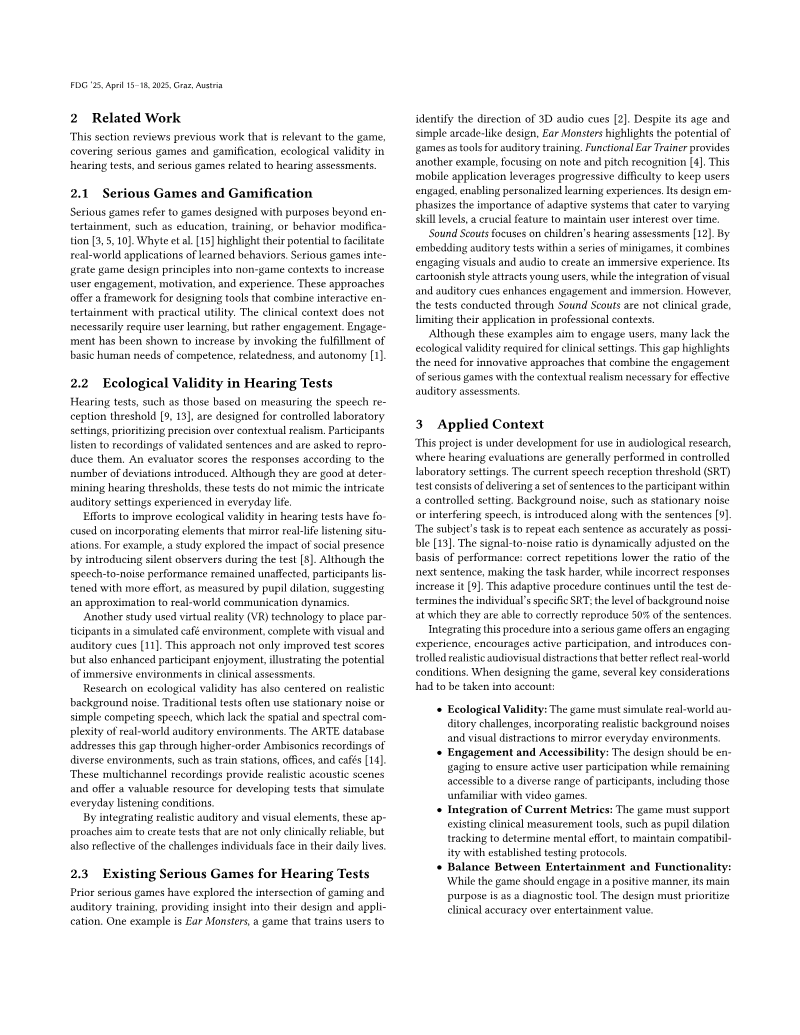
Association for Computing Machinery · 2025
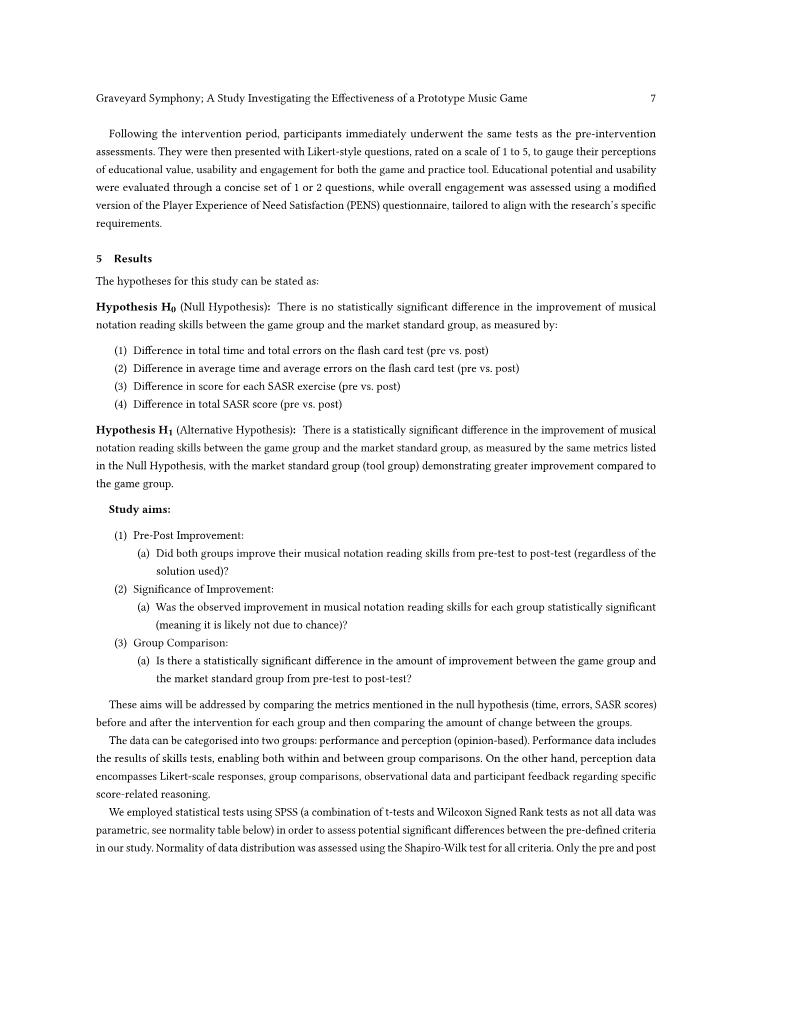
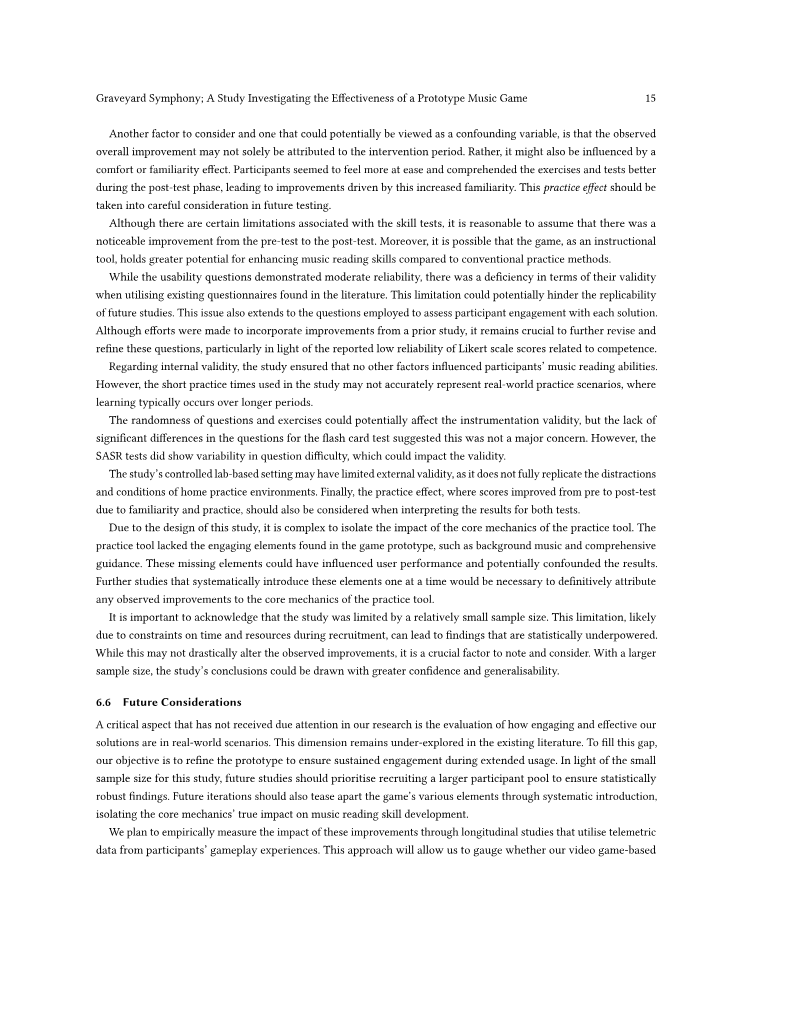
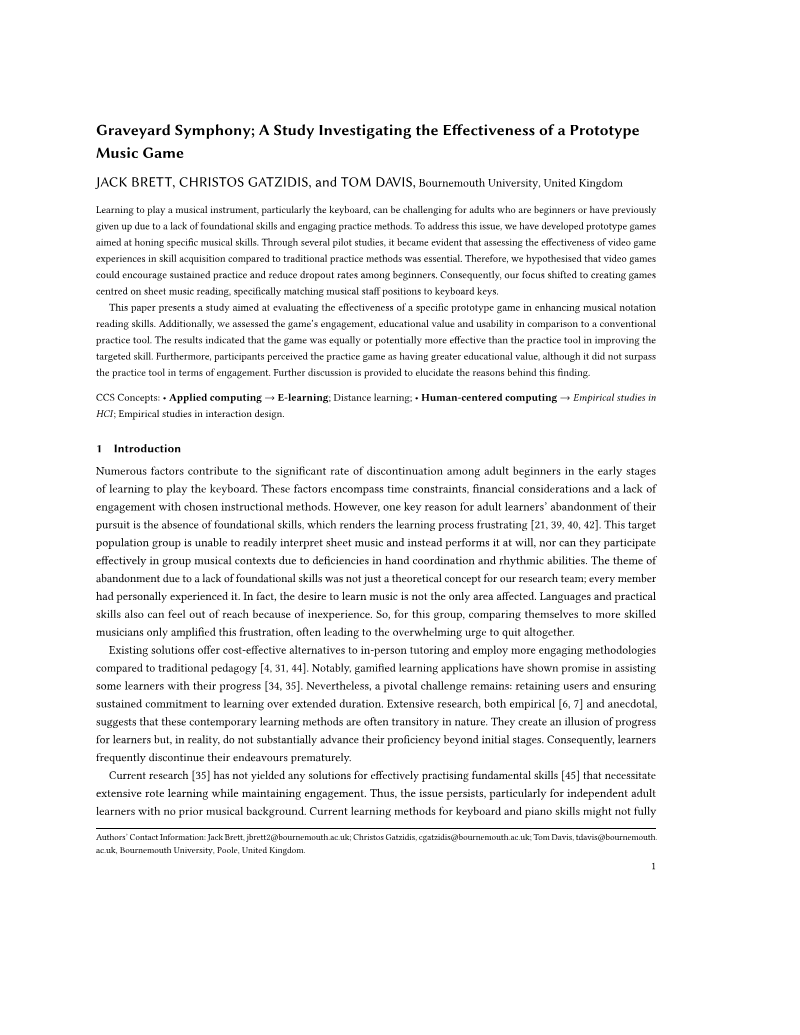
Association for Computing Machinery · 2024
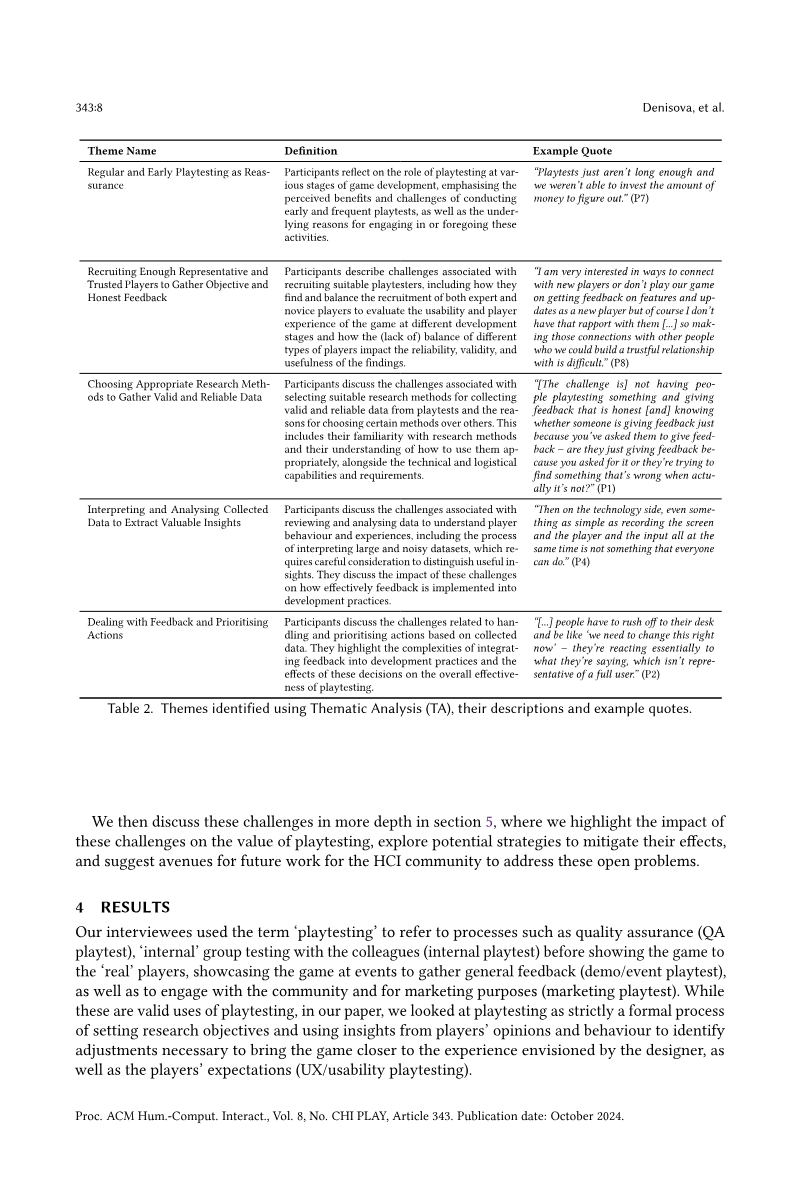
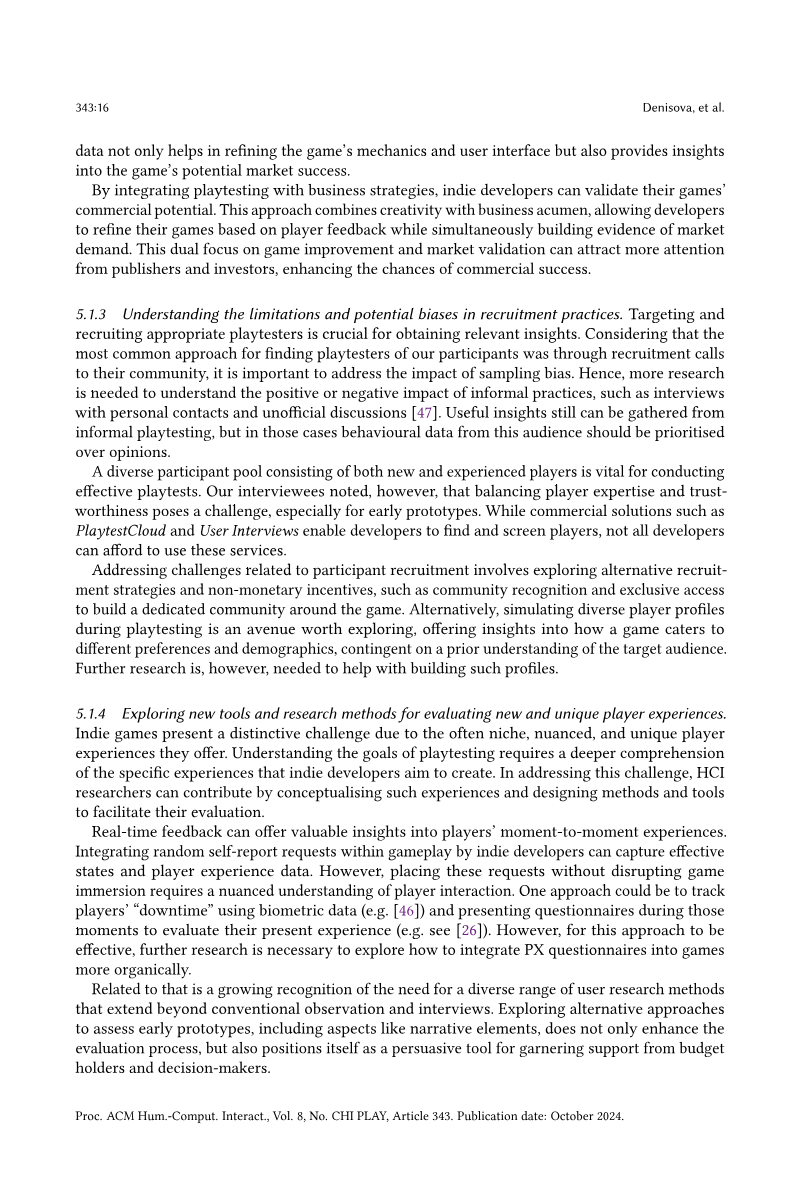
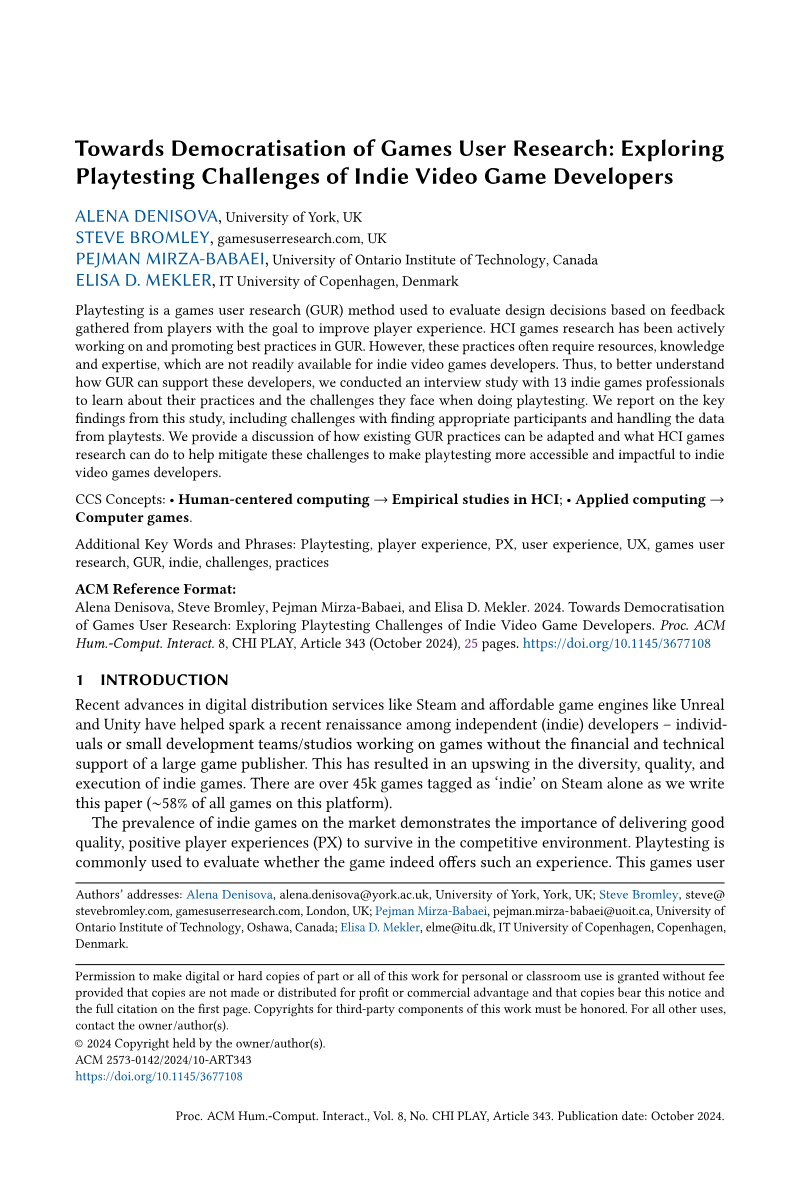
Association for Computing Machinery · 2024

Association for Computing Machinery · 2024

Association for Computing Machinery · 2024
Foundations of Digital Games (FDG) · 2024
Ludic Language Pedagogy · 2026
























Comments