1 free read left. Create a free account for unlimited reading + AI research.
Create free accountArticle GameMakers
1 free read left. Create a free account for unlimited reading + AI research.
Create free accountArticleGameMakers
Supercell's Clash Royale generated over $68.1 million in August 2025. This is a significant increase from its $12–$15 million monthly average in late 2024 and early 2025.
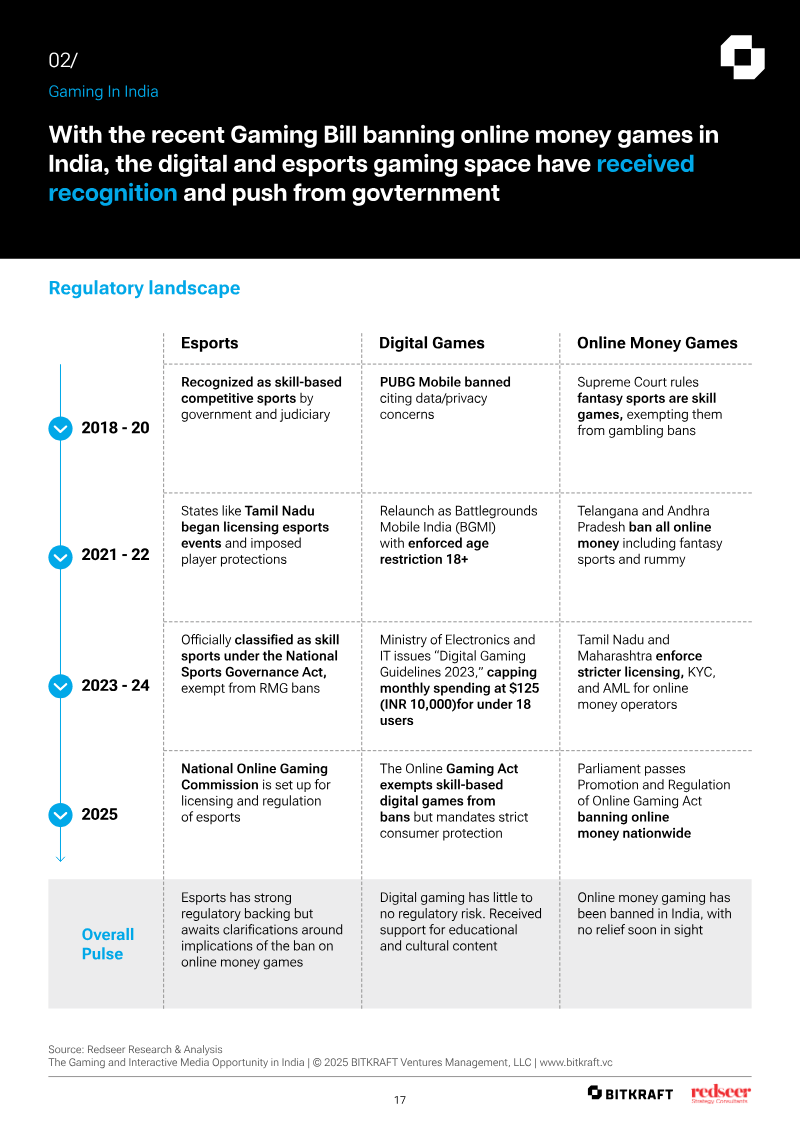
The global gaming industry is currently navigating a period of significant structural and strategic volatility, characterized by shifting regulatory landscapes and evolving monetization models. In India, the implementation of a national ban on real-money gaming has forced major market exits, such as the shutdown of the startup Hike, signaling a contraction for developers reliant on that specific segment. Conversely, established titles are demonstrating resilience through tactical reinvention; Clash Royale serves as a primary case study, achieving a four-to-fivefold revenue increase by integrating aggressive user acquisition strategies with innovative live-ops updates like the Merge Tactics mode. Simultaneously, broader media consumption patterns are shifting as Amazon and Netflix forge new advertising partnerships, reflecting a growing convergence between streaming entertainment and interactive gaming platforms.
Strategic decision-making within game studios is increasingly hampered by an over-reliance on rigid, top-down validation metrics. While data-informed iteration remains essential, the pursuit of binary checklists often obscures the nuanced, organic value drivers that define successful titles. Studios are encouraged to move beyond the concept of the illegible margin—the tendency to ignore unquantifiable creative elements—by balancing data analytics with the intuition of experienced designers. This synthesis suggests that execution and context are frequently more predictive of success than the outputs of complex, noise-heavy validation processes.
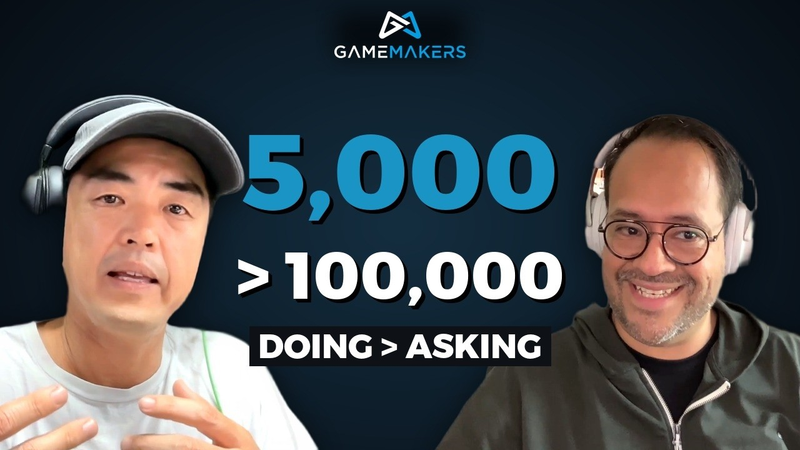
Ultimately, the industry’s long-term competitive advantage rests not on proprietary technology or data modeling, but on the strength of human networks. As the market matures, professional relationships are emerging as the final, most durable moat for developers and executives alike. By prioritizing these connections alongside a more discerning approach to product development, studios can better navigate the inherent unpredictability of the gaming sector and sustain growth in an increasingly crowded global marketplace.
GameMakers · 2026

GameMakers · 2026

GameMakers · 2026

GameMakers · 2026

GameMakers · 2026

GameMakers · 2026

GameMakers · 2026

GameMakers · 2026

GameMakers · 2026

GameMakers · 2026

GameMakers · 2026

GameMakers · 2026
BITKRAFT Ventures · 2025