1 free read left. Create a free account for unlimited reading + AI research.
Create free accountArticle DiGRA
1 free read left. Create a free account for unlimited reading + AI research.
Create free accountArticleDiGRA
Distilling the key insights…
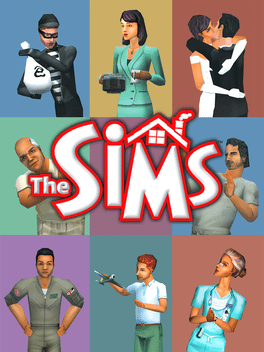
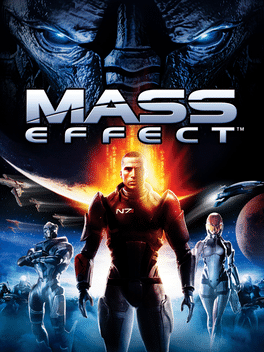
This paper examines how romance functions as a gameplay experience in Dragon Age: Origins, a single-player role-playing game, and argues that its romance options can produce an emotional "bleed" effect similar to that found in non-computerized role-play, in which players partly share the emotions of their characters. The author contrasts romance as a fixed narrative theme, as in Fahrenheit and Heavy Rain, with interactive romance in games such as Mass Effect and Baldur's Gate II, and with romance as an explicit mechanic, as in The Sims. Dragon Age is positioned as a case where romance is woven into both the storyline and the approval system that strengthens party members' combat abilities.
The study's method is qualitative and inductive. Rather than relying on search-term hit counts, which the author notes say little about player engagement, the researcher manually reviewed thousands of forum posts and blog entries until new kinds of attachment stopped emerging, ultimately retaining 62 entries. Official guides, reviews, interviews, and fan fiction were excluded, and the results are explicitly described as not statistically representative. The romance options examined include Alistair, Morrigan, Leliana, and Zevran, with attention to how their storylines and gender-dependent availability shape player reactions, including frustration over Alistair's tragic endings and fan-driven mods adding romance options for male characters.
The paper concludes that Dragon Age's design, which fits romance options to the player's projected identity and offers vaguely sketched player characters, encourages bleed-in and, in turn, bleed-out in which players experience genuine emotional attachment. The findings suggest that single-player games can produce role-playing intensity comparable to tabletop and live-action forms when romance is carefully integrated into both narrative and mechanics.
DiGRA · 2012