1 free read left. Create a free account for unlimited reading + AI research.
Create free accountArticle DiGRA
1 free read left. Create a free account for unlimited reading + AI research.
Create free accountArticleDiGRA
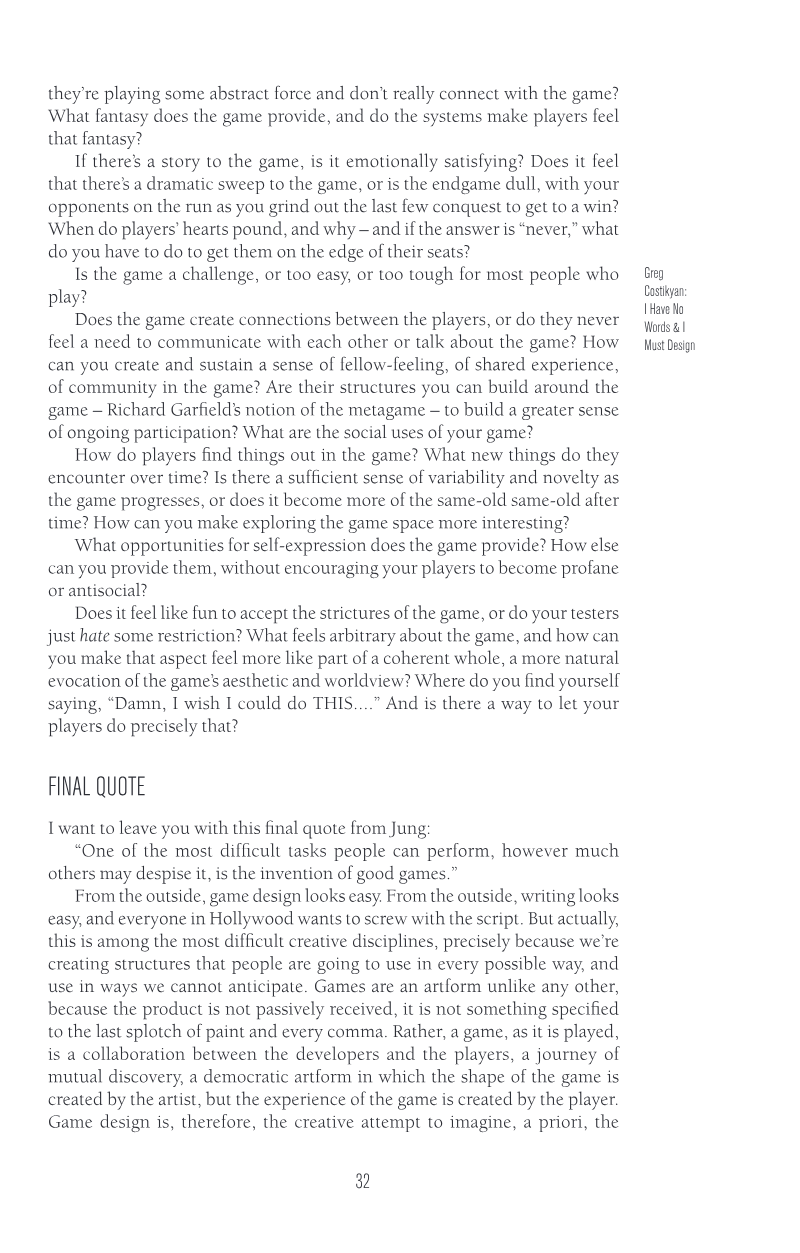
Costikyan argues that game design needs a precise critical vocabulary. He proposes building the discussion around interaction, decision-making, and goals.
Greg Costikyan's essay makes the case that game design needs a precise critical vocabulary, arguing that the term "gameplay" is too vague to guide analysis or practice. Instead, he proposes building the discussion around interaction, decision-making, and goals. In his account, every game is interactive, but interaction only becomes purposeful when it is organized around goals. Games are thus distinguished from static puzzles and from non-game systems by their internal meaning, which arises from their own structure rather than from the real world.
A central claim is that games are defined by struggle rather than competition, since obstacles can take many forms, including opposing players, computer-controlled opponents, puzzles, and social or environmental barriers. Costikyan contends that a game lacking meaningful struggle becomes dull, and that the wish for cooperative games misunderstands this requirement. He also emphasizes structure, the rule mechanics that shape behavior through incentives. Small structural choices, such as whether players can attack one another in Ultima Online versus EverQuest, or how zones of control function in wargames, can produce strikingly different player cultures and styles of play.
The essay offers a taxonomy of game pleasures, drawing on LeBlanc's eight categories, including sensation, fantasy, narrative, challenge, fellowship, and discovery. Costikyan concludes that sensory design supports but does not constitute game design, and that challenge is the one element no game can do without. Games also offer players self-expression through naming, cosmetic choices, and varied paths to victory, while players implicitly submit to a game's structure as the basic transaction of play.
Ultimately, the work frames game design as an iterative and collaborative practice in which designers can imagine but never fully control player experience. Its closing diagnostic checklist, covering interaction, goals, pleasures, social connection, and self-expression, urges designers to articulate intended experiences from the outset to improve the odds of success.
Each row is a game or company this document names, each column a document, oldest first. A mark means that document names it. Select a row to see those documents.
DiGRA · 2023
DiGRA · 2023
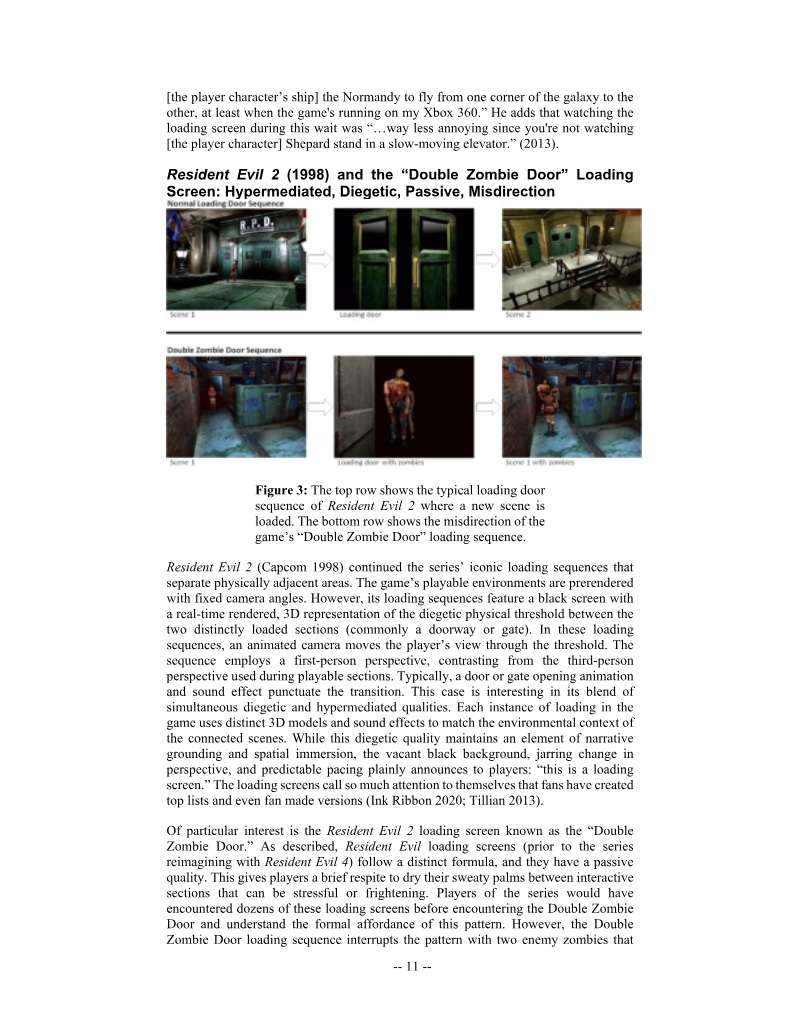
DiGRA · 2023