How to Prioritize Your Dev Efforts in an Era of Rising Costs
30 Jun 202033 min video
Transcript
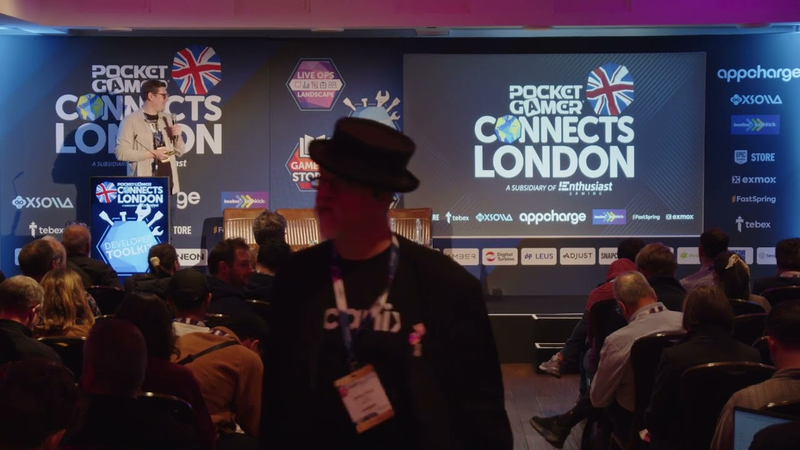
Here, you just say two words here. I'm going to do the exact same thing and then I'm literally going to hand it off. So, Adrian All right. Adrian Crook um I've known for many years. Um he runs a successful consulting company that consults on mobile free-to-play games and unlike most consulting companies actually know what they're doing and give really good advice. Um and so, Adrian All right. All right. I was going to stand. I'm going to probably take it from here though. This seems like we can see each other which was my worry. Uh just to introduce the the panel of course uh you know who I am, you know who uh Dave is. We have Pany uh beside me here, COO of Kongregate. And we have Mario, managing director of PikPok down beside uh Dave. So, uh we only have half an hour. So, I really want to get started before we uh waste too much time. Uh I think a good place to start for the panel would just be fairly broadly uh around the idea of evergreen content and
if it's possible and how you uh strategize for it and design around it in order to you know hopefully lower your development costs. Just thoughts on evergreen content in general? Yeah, in general. I mean, is it you know I know it's like you know it's sort of a holy grail kind of thing like you know the idea that you build once and it just serves your players forever. Yeah. Um but you know is it possible and what have you seen work and not work? So, this was this was our like one of our founding philosophies in Spry Fox was this idea that we were going to make evergreen games that could people could play over and over over again and we were not going to be a content-driven company and that was going to be how we managed to not only control our costs but be more innovative than other companies. And that's like that's you can see that in something like Triple Town and Alphabear, right? Both of those games are heavily heavily heavily driven by an evergreen core mechanic that you can play over and over again and they're still to this day you know I don't know how many hundreds of thousands or millions of people who play Triple Town even though we haven't updated it in forever. Um it's a you know but what we've what we've learned unfortunately is that as the free-to-play market has matured it's getting harder and harder
to make money if you simply are like I have a great evergreen core mechanic and here's a couple things that plug into it like that you can have good retention that way potentially if you're lucky but you almost certainly won't have good revenue. And so, what we've started doing is we still want the evergreen core mechanic because we still think that gives tremendous value but we're starting to try to be a little bit smarter about what we plug in around that. So, in Alphabear 2 which is hopefully coming out later this year um still evergreen core mechanic just like we had before but now we have like a narrative that goes along with it which is sort of this like pseudo back to the future-esque you broke time and you have to fix it thing um and uh there's a whole campaign which we had in Alphabear 1 but it didn't really feel like much of a campaign and now you're actually you have like Mario World style maps that you're navigating through and um and there's a bunch of extra modes that plug in that all reuse the same core mechanic but they have different flavors and different things. And so, like there is a lot more content in our games um to sort of support a richer monetization
but that said, there's still that core that means that we don't have to be constantly like I don't have to pay a level designer uh we actually do have different quote unquote levels in Alphabear but they're very very easy to make because they're basically on this evergreen core. Um and that's the idea is like like you know we can't get away from making content but we want to make it so that level design and playtesting of the levels costs as little as it conceivably can and that art budget is really really low and on and on and on. And that I think we've been able to be successful about and I think you can still do that as long as you have the proper trappings around it. I remember years ago seeing actually a slide from Kongregate that linked linked um like app updates basically with retention. So, if you're not making frequent app updates, is that something you think hurts retention or how do you still sort of ping people to There's no getting away from that. You have to do frequent app updates. And again, then the question is like can you make it so that the update doesn't cost you a ton to do, right? So, that like you know you're you're you know you have a new event that people can get excited about but that event is mostly just a tiny bit
of new art, you know some level designer spent you know an hour designing a new level for it or whatever. You know what I mean? Like as opposed to like I had to spend an a month of engineering time just preparing this one thing, right? And if you look at most of the successful free-to-play games out there, a lot of them are like this where you look at like you know they'll do an update and like tons of new content. It's not really tons of new content, right? Like it didn't actually take that long for them to make the content um but it feels meaningful because of the way it plugs into this evergreen core that they've built. So. I guess related to that is making sure you get the most out of the content that you build as well. So, if you do stuff for a Christmas update or a Halloween update, uh one of the things we try to do is making sure that that content automatically resurfaces uh the next year. And uh that way not only do you have to uh not do an update necessarily a binary update uh for your your players to get access to that content um but you don't have to get into the coding of it again and if you don't have a live team on it, you know
you're not having to relearn all the code. So, it's been important for us to do a little bit more work up front when we do uh some of those kind of seasonal updates or events uh to make sure that that content automatically comes back around the next time and you get that repeated value over the life of the product. But you're essentially doing new Christmas let's say content every year anyways. You're you're just saying it adds to the library of Christmas content let's say that you're Uh you have in this in the product. It it depends and sometimes plans change. You know, we had one game this last Christmas that we were planning to do something and we just ran out of bandwidth. Uh so, we ran with last year's event content uh Christmas event content and actually the play base loved that because they got access to the uh the characters and stuff that they may have missed out on last time that they knew existed. So, um uh yes, we we're trying to stack up updates and make seasonal stuff more and more but uh very important if you're going to do the work to have
uh a Christmas-themed thing uh get that value every single Christmas every single time. Um Apple, you know, is likes to see the the icon update um and see something you know actually physically change. So, we have done some instances where we've done a binary update but literally the only thing we've changed is the icon because because all the underlying stuff is already there anyway and automatically switches on. Yep. Yeah, the the the depressing thing about about free-to-play games is uh even a good game is only going to have maybe 1 or 2% D90 retention. So, in a way if you're not reusing the content like you're giving up on something fresh for the 99% of people who are seeing it for the first time. So, so you can be smart, right? Reuse the stuff each year and do something new. You shouldn't just put out the same thing again and be like hey, hope you don't notice. Like you should add something to it um add add a new character, add a new uh boss battle, add a little bit of a
new like uh hook to the fiction or whatever the case may be but um if you're smart about it, you should not be doing that new each year, right? You should be able to build on top of what you built last year. Add some new competitive elements about it or some new reward system um but you know, like a again, a year later, 270 days later, chances are 99.8% of those users are seeing it it's new to them. So, be smart about reusing the content. Yeah, that that's something that uh some of our designers were a bit worried about when for games that have regular regular events and they want to do something new every time. And we do want to keep bringing new content for those regularly uh engaged players, those long-term engaged players. But like you say, if we repeat an event which has great content every 3 months um 97% of the players experiencing that content haven't seen it before. Right. So, you know, we've we've had to make sure that we're not um you know, we're
not putting our whole content pipeline to work for the 3% that are that are in the long term. But but just to contradict myself, um the 1 or 2% that is there a year later are literally your most valuable players. So, um they're going to remember last year that it was the Valentine's event with you know that particular character that was uh you know the boss or whatever. And so, um a year later, you should not reuse. You should actually look at what you did before, look what's working. Hopefully you've got analytics in place so you can understand where the engagement was. Stop doing the stuff people don't like to do but uh if you're building a new event each um each holiday season or Halloween or whatever, you're uh you're you're basically not getting the full value of the investment that you're making in providing that content to that audience. also been very impressed like I agree 100% percent with it what you just said Pany but I will I I will I will say this that I I've been playing Star Wars Galaxy of Heroes a lot Galaxy of Heroes a lot recently um and been pretty impressed by their game design. Um and
one of the things that I've noted that's interesting about that is that they'll they'll they'll they'll launch this event and and you know they'll make a pretty big deal of it and everyone treats it like a big deal even though if you really analyze how much work went into making that event, it doesn't seem like that much work. Um um and then what they'll do is that that event will be a rare event and they'll have you it will have show up whether it shows up once every month or once every 6 months. I don't know. It depends. They have different frequencies. But what's interesting is that they'll make it so that the thing they reward that that event gives you don't get enough of it the first time you play that event. You have to play it like five times. And if it's only coming up once every 3 months it's like oh, I'm going to have to play for quite a while before I actually get the final big reward of this event which is obvious almost always a character that you really want, one of the Star Wars characters. And and the fact that I'm playing the same event five times over is not a problem for me. Like I don't I'm not like oh, it sucks that it's the same event. Like it's actually a good thing that it's the same event because that way I don't have to relearn it and waste a lot of time trying to get the character that I want. So, that's an actually that's an as far as I'm concerned an excellent example of of the of how they're controlling their costs, They they build this thing once, they have you play it five times over the
course of a year, and you're perfectly okay with the fact that like it's not changing during that time. No. I'm going to change the speed a little bit. In the early going when you're you know in in development you haven't launched yet is there a particular uh KPI that you're using to sort of design features? Like you have KPIs let's say you have in mind when you're designing features. Um knowing that you can't potentially you can't satisfy all KPIs. And I'll just sort of get to the the point here. One of the games that we've been consulting on now for about 3 years is a game called Hempire. It's like a weed growing game. It's done pretty well and we're involved with it today even in a live ops perspective. But we one of the things we didn't do was a good solid meta game right from the start. We just we had to allocate we didn't have much money. This is two guys in the suburbs of BC that um you know came to us. One was like a real estate developer and they you know they have like no game experience. So we essentially had to use their money very carefully. And so you know very compelling early game a very strong
community cuz the weed community is super strong that we hope would stand in for like the the the long-term meta game and it did. But now we're working on the meta game you know when the product launched almost a year ago now. So have you had to make similar tradeoffs like that where um you you know maybe can't touch on you know day one uh day seven day 30 and beyond uh with that initial feature set but you you know what were those tradeoffs and you know what feature of KPI did you prioritize? It's I think it's hard um when you start thinking about okay we're going to launch this and then 2 weeks later a month later we'll we'll drop these features and this content and then a month later we'll drop this because it never works out like that um because for one users always get through your content faster than what your uh team thinks they will. Um and on top of that there's all that comes up issues and opportunities when you launch something. So it's really difficult now we've found
um when when our teams are saying oh well we're you know trying to make compromises here. We want to push this back um because we'll just do that in the first update. And you know the reality is is it's probably update three by the time that comes in. So you have to be really careful about what you push back to make sure you don't undermine yourself at launch. I think for us um the two the two key metrics that we look at to try and make sure we have to a good place before we launch are day one retention and up down. And for us uh retention buys you time. If you have good retention from the outset even if your other metrics aren't quite where they need to be uh you can keep that launch audience around hopefully long enough uh to get those updates out and get those other KPIs up. Um and as long as your up down is high enough uh you can at least monetize
those users that are sticking around well enough hopefully that you can fund that ongoing development. So up down and and day one retention are a pretty big for us. So uh this isn't necessarily shared by everyone at Congregate but uh in my opinion the only thing that matters is the shape of your attention curve. Uh because the difference between a good game and a and a a great game game happens in that first week uh and pretty much any game even a terrible one um if it knows what it's doing can manipulate uh a player into getting a good D1 retention. Um I've just seen terrible games with good D1 retention. Uh but the users are very smart and a week in um no one's sticking around in a bad game and a game that is rich that has a lot of interesting systems or a um maybe a multiplayer component that is compelling or it has a strong aspiration uh it's going to have a great week one curve. And
uh a game that is all bells and whistles and doesn't deliver on the promise that just is a hook um won't survive more than a day or two before retention just uh takes a nose dive. And and monetization is important super important. Um but if you've got someone who will stick around then you can monetize them. Um and uh usually if you've got a great game it's also very easy to monetize because uh whatever is compelling is usually also something that you can also monetize in in one direction or another. And so so for me it's about do you do you have a great game? Does it have does it have depth? Uh is it does a player experience it in a way where they can see their own journey through the game and that draws them through the experience? Uh and that if you just optimize against D1 or looking at a CPI or looking at up down or something you're you're not looking at the full picture. But if you're going to pick one thing it would for me it's that um the curve of the retention is the most important thing. Cuz even if you start low if it's flat you're good to go.
Regrettably we're we are not as sophisticated as the the the other companies here and I I you know something we're we're small and we're trying you know like we have limited resources and and so there's certain things that while we think would be very important to understand monetization is actually a pretty pretty critical example. Like we we literally are not in a position to understand the movie. I mean if you think about it from and those of you who are small but have been doing free to play for a while and will will probably sympathize with this. It's like if only 2% of your users are spending money then you need to have statistically significant data on your monetization at least on on the spend component you know the dollar spend of your IP component of your monetization you need so many thousands of people to download the game. Um and to get those has historically required spend that you know in the soft launch that we're not capable of making. Like I can't afford to spend $50,000 acquiring test users for my game. Um you know I mean I well I mean in theory we could but we we we choose not to uh cuz we're scared and we'd rather spend that money somewhere else. So so um so that has meant that even though we think monetization is fairly important
we tend to ignore that and say like well if the retention is good enough particularly the long-term retention we that will at least give us time to fix the monetization later assuming and this is the big if this is the the only thing that I think I'm really adding in to this conversation assuming that you have the hooks for it. One of the critical mistakes we've made in the past is that we made a game that was delightfully fun but there was no good way to monetize it. It didn't have the proper structure the the proper bones. Triple Town is a great example of this. Triple Town did not have the bones to become a game that could be successfully monetized. Um the core was too satisfying in and of itself and nobody cared about anything that was outside of the core. Um so we were never despite the fact that they had amazing retention and and tons of downloads we never actually got that game to the point where it made a lot of money per user. Did you try loot boxes? Uh uh that's just a joke. That's just a joke. All right sorry. Sorry wow. For a second there you were like So we tried a lot of but but but anyway so the the um and then we didn't try necessarily try everything that we
should have. But anyway the bottom line is that that that was our major screw up. So now when we're launching a game we're like like we try to make sure that it'll have good long-term retention to the greatest extent possible in soft launch. And we also make damn sure throughout the design process and especially in the beginning that we're building something that we think we have has the bones for like if we screwed up the monetization and you know if we find out after worldwide launch that we screwed up the monetization that the bones are there that it's like okay well they're not buying this thing but we can add this thing and they might buy that. We could add this thing they might buy that. And more and we also take ads way more seriously than we used to because that's something that you don't need nearly as many users. Like it's not not just 2% if you've done your job correctly not just 2% of your users watch ads right? So you can get statistically significant data on ad watching way earlier in the process. And so we take getting people to watch ads way more seriously than we used to. Um and anyway so that's our solution as a small less sophisticated company. But I think I think data um or like relying on data is is maybe um it's dangerous. And again Congregate's usually known for its its data but but
for me it's more about um like you don't need statistical significance uh I think to build a strategy around monetization. Um it's more important that you really uh empathize and understand the motivations of your don't remember where I saw this but there's this idea of like the scent the scent of blood which is an awful visual but like blood hounds catch the scent of blood and they they will like dive into holes and dig to find um their um their quarry. And so if you really understand the gold at the end of the rainbow you can take the player through that journey and provide many opportunities to monetize if you understand the gold that they're searching for in a holistic way. It's not just a here's a paywall. It's a you know whether it's a game where the where there's friction around progression progressing very quickly and so timers obviously make a lot more sense in that scenario. If it's a power game you know being able to have a number that goes up more rapidly than your competition and then deconstructing all the ways you can create systems around that um doesn't
require statistical significance but if you want to validate that you've made the right decisions then obviously uh that's important. But you can't um um you have to take responsibility for the actual like the design of the monetization. Like that is that's a difficult thing to do but that that's not something that you you should be saying okay well we'll we'll just guess. Like you should actually be doing the hard work to understand the player their motivations and build systems that are going to allow you to to create interesting systems and features and content. Couldn't agree more. That's basically what I meant by building the right bones. Absolutely. Yeah. So I'm sure a lot of people are sitting here wondering how you can build a game yes cheaply from a development perspective but how do you not spend you know six seven figures on UA? Like that I think is something we'd all love to know is you know have you had success building a game that you haven't needed to blow the blow your brains out on UA over? Uh I've so it's that's a it's it's a the discussion that comes up a lot at Congregate um
because uh in theory if you want to control the destiny of your business, uh you you want your strategy to involve user acquisition if you have access to capital to drive user acquisition. So, if you have access to capital, that's an asset you're acquiring in order to be able to access user acquisition. That informs the whole framework around how to think about designing your game in order to to to tap into that opportunity and what it does is it reduces the risk, right? Um cuz now you can control whether or not like if you just happen to launch the side the next Supercell game and you just get slammed in featuring and there's still a path to success, maybe it takes a little bit longer, but um but if that's not your situation, then then you opt to optimize around featuring and then then there's a whole strategy around understanding what Apple's looking for, Google's looking for, what are following platforms that can allow you to capture some of that investment back. But that's like a 2-hour discussion. So, Yeah, and I know on Hempire we were lucky cuz we had about a half a million dollars for that initial UA period. Right, so then you can get something off the ground and then month to month after that it's all just reinvested profits,
so yeah, but Well, for for Pick Pocket we only started doing paid UA last year. So, uh we you know built our whole portfolio and uh the success that we've had is been driven completely by organic downloads and I guess for us um we we try to build games that uh we think people will be looking for and and will appeal to broad audiences generally. So, uh we have a lot of sports games in our portfolio because we know that there are basketball fans or football fans or soccer fans or whoever and we know that those those leagues are turning over and people are watching those games and people are searching for games on that kind of niche uh or that kind of interest on the store. Um so, we we played into that as we've we've built out our portfolio and um and tried to make games that uh uh are inherently appealing and not necessarily being just another here's
another obscure RPG with a weird name that nobody's searching for. Um you know, we're making things that people can get and wrap their head around and they already have an appetite for. Uh so, that's that's worked out really well for us. Um now we're we're finding paid UA is is a great addition to that and that's helping supercharge the business. Um but uh you can you can totally you can totally make games uh that don't require user acquisition as long as you can build something that that is going to be appealing to a large audience and it helps if you can position it in such a way that Apple and Google feature it as well. Which is a whole 'nother discussion. That's a whole 'nother kettle of Yeah, that really is. I mean, you can't really understate that. I mean, like we've never done paid UA in large part because we haven't been able to afford it historically and and and we um um a huge chunk of our launch strategy for any game is make sure that Apple and
Google want to feature it, which is obviously a huge risk because if that's a big chunk of your strategy and this is these are big companies whose priorities change and whose employees change and stuff and like you could be screwing yourself, right? There's no guarantee you're going to get featured. Um but there's certainly things you can do to increase the probability and we absolutely do them. We we we we maintain as close a relationship as we conceivably can with Apple and Google. Like that is I will drop any meeting for a meeting with them and everyone who I would drop that meeting with would totally understand that why I was doing it. Um um if Apple has a new thing that they're pushing really hard, it really honestly doesn't matter whether it's a natural fit for my game. If I can find a natural use case for it, I will um because like that increases the odds that they'll want to feature the game, right? Um um and on and on. There's a bunch of subtleties too like Apple obviously cares quite a lot about visuals and usability and all that thing and it's not to say that they would never feature. Clearly obviously they would occasionally feature a game with terrible UI, but if your game does have terrible UI, you're way less likely to get featured by them, right? This is something that they care about as a core
thing. So, you know, fortunately we also believe that having a good UI is a really good thing for the game in general. So, this is not like a conflict of interest or anything, but we we make a point of like we always put a little bit of extra in making sure the game feels like something they would be delighted by. Um and on and on and on and on. So, that's a big part of our strategy and I don't think you can be a successful indie if that isn't a big part of your strategy, but um additionally the other thing that we've become I I would hope a little bit more sophisticated about. We when we started off we were like every almost every other indie. Uh we'll make a great game and that'll be enough. Obviously that's not enough. Um um and uh and so now we've started to ask questions exactly like you were saying like okay, well why? Why would someone want to play this? But you know, like well how will it stand out in a crowded market? But also we'll say things like well what is the unique thing that will make people want to talk about this game with their friends? Um which is something that is obviously very hard. If that wasn't an easy question to answer, then everyone would do it and everything would be viral and you know, but that's obviously not the case. But nevertheless you it's still worth asking. A lot of people just assume that precisely because it's a hard question, what's the point in even trying? And no,
you should always try, right? Like you know, in Alphabear arguably would not have been a tenth of the success it was if it wasn't for the you know, the bear speech sharing thing that happens in that game, which you know, it took over Twitter for like a week at launch. Um um and and we do that for every single game. Like we're working on an MMO now called Steamburgs. And in Steamburgs it's the same idea. It's like this is you know, this is a hardcore game. There's a lot of hardcore games out there. Like why would people play this one? And it's not enough to say well it's different. There there has to be more. So, we're like okay, well how do we get streamers to be interested in it? What do we what do we put in the game that will make this interesting to stream in a way that no other game is interesting to stream. Um what do we put in here that makes users so proud of or so you know, so annoyed or so uh amused by something that just happened that they're willing to share an animated GIF of it and on and on. And we have these conversations and these conversations are not a small part of the design discussion for the game. They're a very significant part of the design discussion for the game. And that sort of thing is something that even though we all recognize you should probably do it, it's something that I've noticed that for whatever the reason it tends to like fall to the wayside cuz it's just there's so many other things that you
absolutely have to do that that stuff ends up being like well, okay, we'll get to that. You can't. I would argue you just can't. You can't have that attitude that I'll get to that eventually. That has to be a core part of your thinking about the game from the beginning unless you're in a position to have do tons of paid UA and in which case good for you, but we're not. Uh I will say that like when we started Hempire there was no chance Apple would feature us. I mean, they still will not. But that was also part of the strength. There was a lot of white space in the store and I remember looking at a Sensor Tower kind of competitive um competition index for certain keywords, App Store keywords and you could tell there was a lot of white space like a high search volume, low competition for those particular keywords around weed just because EA or Zynga is not going to make a weed game anytime soon. And so that was one of the ways that we knew we had an audience we could serve relatively cheaply. So, does you know, it's sort of a trade-off. We're never going to get featured, but we also have a way of potentially tapping into a an audience that's being underserved right now. I would kill to figure out what that next thing beyond weed that's similarly underserved is, um but even when we started it wasn't sure
we weren't sure we'd be able to be on the App Store. So, there's a bit of risk associated with that, too. Right. Yep. Uh we're sort of almost out of time. We got a couple minutes. Um let's see. So many questions here. Originally we thought this was going to be an hour long, so I've got way too many questions. As far as third-party tools go, is there is I assume it's better to you know, buy than build? Are you building a lot of your own third-party or sorry, internal tools? Are you um are you buying them? So, we'd you know, we've had a long history of going back and forth between uh third-party engines and building our own stuff and uh I I guess for us uh shifting all of our development a few years back to Unity has been the best thing that we've ever done. It just makes it it has its limitations, it it has its quirks, but it's getting better and better. And for us the speed at which we can develop and the opportunities it lets us respond to um that that has been huge for for our
business. And actually one of the uh one of the successes of our Into the Dead game was the fact that it wasn't built on our original uh on on our own engine. It was one of the first games that we built on Unity and it was only built on Unity because we prototyped that game with artists, so we couldn't give them any programmers. Um but being on Unity allowed us to uh uh be much more flexible with the resources that we applied to uh to that game and take it to many more platforms. Um so, if there's an opportunity whether it be engines, whether it be sound assets or art assets, um as long as you can put your own spin on it and you can bring your creative potential to it, um don't reinvent the wheel. Get the off-the-shelf solution um and it your life will be way easier. Yeah, what what he said. That's perfect. Yeah. And I mean, so does that apply to like
outsourcing as well? And and I know you a lot of your company is um sort of distributed like remote. How do you think that plays into cost savings versus potentially the you know, giving up that creative control and collaboration? We've man, I'm not going to have time to answer this properly. We we So, to be clear, we our company is remote, but it's we don't consider them outsourced. Everyone where regardless where they work in the world, they're like almost to a man or woman full-time working on our stuff and we treat them like a member of the family and so they're not really outsourcing. When we have tried outsourcing, which we have actually tried where there's like like we need you to port a version of Alphabear or we need you to do this or that like this separate entity of whether it's one, two, three, four people, um that's been very hit or miss for us. Sometimes it's worked out well, often times it's worked out very poorly. Um we have a a unique culture, I think, um and a and uh and the fact that we're distributed makes things more complicated. And getting someone to plug into our culture who know, you know, even if they've been following us for a while and knows a lot about us can be very difficult. Um, and we have stand high standard I like to
think high standards for our games and that can also be very difficult in with an outsourcing situation. And so, so we done it, but we tend to avoid it because for those reasons. The quick answer for us is we don't really outsource very much. Um, and certainly when we have it hasn't been cheaper to get the same quality as doing it internally. Um, what it does do is it allows you to respond to opportunities that you don't have the bandwidth for. So, it certainly something we are leveraging more and more and working with more and more external teams because we can't do everything internally, but there are flexible business deals we can do to work with teams um, that don't do it cheaper, but at least let us do things that we otherwise don't have the bandwidth to do. Uh, our entire company is built around working with outside developers. So, um, I think for us we don't even think about it as outsourced or not. It's it's all just about relationships and nurturing
productive um, outcomes where where if you find the right alignment in terms of the the business structure, it's very easy to get everyone doing their best work. So, we have not had a problem with it and we don't really think about it as something that is like weird and they're like outside and it's like we literally work together on this project and um, it's worked just fine for us. Mhm. I think that's the critical distinction though. Like you you are literally built in then in an in an an entity whose purpose is to partner with other developers. And it's no surprise that you do it well. Like we had to do it well in order to survive. Exactly. And you know, I'll I'll just finish up. We we work on lots of different projects, but I'll just keep referencing Empire cuz we've been most involved in that. We started with a group in South America that offered sort of cost savings and they were they produced some excellent work for us and then we transitioned the team internal once it became like a sustainable thing. So, that did, you know, work to sort of thread that needle of like keeping cost down initially, but then now we have more expensive resources, but they can do more and they're more flexible cuz they're under one roof. But we have hit 3:30.
Uh, so if you want to ask these guys a question, we'll be out there probably on the other side of that wall. But thank you for coming out.
Auto-generated captions from YouTube — names and numbers may be misheard.
Key insights
7 takeaways · ~3 min read- 01Prioritize long-term retention over early metrics like D1 or CPI, as a flat retention curve is the most reliable indicator of a game's long-term viability.
- 02Build games with 'the right bones' for monetization from the start, as games with highly satisfying core mechanics—like Triple Town—can fail to generate revenue if they lack structural hooks for monetization.
- 03Maximize the ROI of content by reusing assets for seasonal events; since 97-99.8% of players are often experiencing an event for the first time, repeating content every 3-6 months is an effective way to reduce development costs.
- 04Design games with high-level, accessible concepts that naturally appeal to broad audiences, which increases the likelihood of organic store featuring and reduces reliance on expensive paid user acquisition.
- 05Avoid the trap of over-engineering content updates; successful live-service games often achieve success through frequent, low-effort content additions that plug into an existing evergreen core mechanic.
- 06Standardize development by utilizing established third-party engines like Unity rather than building custom internal tools, as this significantly increases development speed and responsiveness to market opportunities.
- 07Exercise caution with outsourcing, as integrating external teams into a company's unique culture is difficult and often leads to inconsistent results compared to maintaining a dedicated, distributed internal staff.
Ask AI about this video
Cite this video
Citation
Generating citation…

















Comments