Loading the document
1 free read left. Create a free account for unlimited reading + AI research.
Create free account
How to lay the foundations for compelling storytelling in games
Key insights
6 takeaways- 01Integrate writers into the development process from the initial concept stage to ensure narrative and game design are developed in tandem for mechanical and emotional cohesion.
- 02Writers must possess a working knowledge of technical constraints, including engine limitations, motion capture requirements, and asset production pipelines, to ensure creative contributions are feasible.
- 03Use cutscenes and briefings to reveal character depth, fears, and desires rather than relying on them solely for objective instruction.
- 04Infuse level design with environmental storytelling to transform mechanical tasks into meaningful experiences that foster player investment.
- 05Avoid treating narrative as an afterthought, as late-stage writing often results in fragmented world-building and poor player engagement due to disjointed systems.
- 06Maintain constant communication between writers and developers to manage the 'ripple effect' of iterative changes, ensuring narrative consistency when levels or mechanics are cut.
Ask AI about this video
Transcript
[Music] everyone thanks very much for coming along to how to lay the foundations for good storytelling in games I've worked in the games industry as a writer now since 2005 I've worked both in the tripled and in Indy also worked as a consultant on over 400 triple-a and indie games so I've visited a lot of game developers doing a lot of processes and a lot of things that work and don't work some of the game on with the FIFA the journey trilogy destiny to Freight with the journey anomaly warzone earth a bunch of other stuff but anyway let's get straight to it we'd only have 15 minutes and I can talk about this stuff
for hours first of all get the writer in early and collabora don't leave it to the last minute now it hasn't happened to me all that often but I know a lot of writers who has happened to kind of being bought in at the eleventh hour once a game is pretty much complete and then asked to story over the top of that now the issue with that is once you bring a writer in that late all they can do is work with what they're given it's not something that they've been working on from the very beginning so what you often get is a really kind of disjointed story being tacked over a bunch of levels or the mechanics and it often leads to really bad storytelling in games so it's never too early to get a writer involved now personally I advocate bringing a writer in write the concept stages thank you very much so get the writer in even when you were just kind of starting to plan what your game is the writer can be there to work on the story the characters how things work together and from the mechanics to
the systems and tonal as well Tony something overlooked in games often you'll see a game that will fluctuate between really serious tone and then a really zany tone and then back again which means you get this kind of C soaring inconsistent feel for the narrative but if you bring a writer in earlier they can start Pinet and try and get that consistency so plan game design and story side by side wherever possible now in the industry there is still a school of thought and I it's getting better and certainly it has over 15 years but there seems to be this kind of belief that design is over here and story is over here and they're two separate entities now what I'm saying is they're not two separate entities they're actually the same thing because story should be informing bate and gameplay should be informing story when we were doing the FIFO trilogy for example right at the beginning of each game we would get into a room we would
talk through the mechanics we would talk through the story we would plan the game out now obviously in development things change of course they change we have to be open-minded to that as writers and as developers but of course if we're starting from a really strong foundation where we're already trying to plan the story and design together then we can give that platform from which to start building really compelling stories I give suggestions and feedback but trust the writer I've heard some horror stories from a number of writers ideas how they've been bought sin and they basically been asked to write Shakespeare basically but given a minimum amount of support and a minimum amount of trust even to the point where the stuff that they've been writing has either been read someone else in the development scene who fancies themselves as a writer but actually isn't a writer and that ends up giving us really bad results because
it's all very well saying yeah I like films and I really fancy writing a film but writing just like else within game development is something that you craft over years and years and years it's something that has to be learned something that has to be developed and that's why you bring a writer in there's no point bringing a writer in then trying to supersede everything they do just by writing else and just as a point of comparison and it'll be a bit like the writer going to the lead acetate artist and as a group we're generally not the best artists in the world and when it comes to drawing and insisting that the lead character should look something's so hopefully that kind of gives you an idea of what it's like from the writers perspective when someone comes along and starts rewriting their work and often it not particularly well so hope and you know in the future writers will become more incorporated into the storytelling process next up the shared understanding always
communicate game development is a collaborative process now a travel Topher's around the world both indie and triple-a and some some are better at this than others but some are really guilty of having little bubbles throughout the development team you know the artists the programmers the thrillers the level designers etc and they all kind of sit in their little bubbles and doing little thing and not communicating with each other so what you end up getting is there is a bunch of kind of disparate ideas that are all being developed in isolation that are then expanding together to be created and it's the same thing with with the story when you're creating these things separately from the story often you'll find things that don't necessarily make sense so it's important for the development team to understand the demand is Eve rising for games this is kind of this comes in in in several different things first of all this in
game development we have to make changes I mean that's the things will change things will go in and out of the game systems will put in they'll be taken out there'll be iterated on levels will be pulled out they'll be put in now when this happens what you see when you're taking them out is it's like a stone being thrown onto what you see is the splash that's the level being taken out or something being changed but narratively speaking if you're ripping stuff out of your game the ripple effect throughout the pond is what happens to the narrative everything within the narrative is structured to Terry which means if you're pulling something out your obviouly going to be taking out a really important thing in the narrative that either play something off or set something up leading to this really crazy disjointed narrative that doesn't make sense and how many times if we play games where the neurotic sense often it's a case of things are pulled out the last minute the writer isn't informed or consulted and then at the last minute the writer is told that they have to fix
it which of course is virtually impossible when you have virtually no time to even writes it let alone redraft in it it's just as important though for the writer to understand the demands and processes of designing and developing games there's no point a writer coming in and not understanding how games are made this isn't film this isn't TV still games is a element of making a game it's not the be-all and end-all so the writer needs to understand this when they come in they Wilson need to understand that there are certain limitations to what can be done for example in a film you can go to a set F get some props easily acquired film it and you're done but if a writer comes in and starts writing scenes that are set in 20 different locations an artist has to draw those a 3d model has to model them there are pipelines there are time limits else's that are limited so writer can't just come in and start doing anything that they want they need to understand how games work and it's important to have
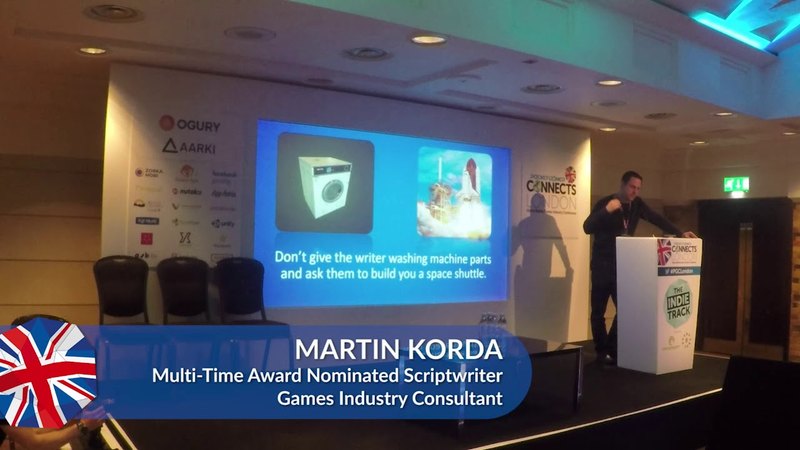
these conversations before you start the process to make sure that the writer understands what's going on the same thing goes and little much for indie but for triple-a you know if you're using stuff like motion capture techniques which have come a long way in the last 15 years there are limitations there to like for example you can only have certain amount of characters on screen at a time in some engines or characters in some way in touch each other or they can't interact with objects so it's my point coming in and creating all these scenes that actually can't be done so have those conversations with each other talk to each other collaborate so just to sum that up don't give the writing machine parts and ask them to build you a space shuttle there's no point giving them a bunch of levels or something lacing the lace in the day where you just wanted to come in at a cast or eon and expect it to be compelling engaging and incorporate it into the gameplay not going to happen so next up make it organic if it happens in the game make it happen
for a reason that makes narrative sense now I've been to a lot of developers and seen a lot of pros and it's off off in this case and it comes back to what I was saying about working in bubbles where you'll see perhaps level designer creating something and the writer will walk along and go well what's that and they'll go I don't know it just looked cool what does he know I don't know just looked cool so if you're trying to create a world and a narrative experience and something immersive that takes you away from this world and it draws you into another world and all of a sudden you come across stuff that simply doesn't make sense in that world totally and utterly rips you out of that moment and makes you think will hold in a minute this is just a box in which people have dropped a bunch of cool looking stuff just for the sake of it so again have those conversations all it takes is to go with it the writer and say look I'm thinking about putting them how can we make this work narrative lis how could we make this work within our world and actually make it convincing thing so infuse level design and
scripting with narrative character development backstory and so level design in many ways is a very kind of a logical process ultimately if you think about it in its most basic form it's a box in which we drop stuff in where stuff happens to go from point A to point B maybe triggers some have a fight go to Point C solve a puzzle point four go to point D pick something up now if you're working with the writer the writer can infuse those things with a narrative vein that actually gives them extra emphasis and believability so again please be having those conversations and make use of every narrative tool at your disposal Walken talks books Diaries radio broadcasts barks environmental storytelling it all depends on the type of game you're making but even a really simple puzzle can be embellished with a good little story one of the game's indie games that I worked on was called spooky spirits a simple puzzle game but we
infused it with a story about two ghosts who were kicked out of the spirit world because they've messed up and you as the player have to help there simply by solving these puzzles and each time you see next part of their story and you help them redeem themselves and that instantly gives a narrative threat to what is just a puzzle game ultimately but there are tons of different things you can do look at something like sky Rumple the way they tell stories in the myriad of different ways all the books that you can find you know all all of the all of the NPCs you come across in The Witcher 3 does it superb Lee where every character you come across feels like they're actually believed I'm sure we've all played RPGs where the side quests are just basically tacked on you know you walk up to someone and it's a sheep farmer and he goes oh some someone's stolen my sheep can you go and get the Sheep for me you ain't get the Sheep for the sword at the end and that doesn't really mean anything within the context of the world in which you're
playing however The Witcher 3 what they did is that every side story felt like it was somehow connected to the main story in world in which you were in they built this incredible world and then they utilized it not just for the main quests but for the side quests too so there's loads of different ways that you can be doing this and for me perhaps the most important thing narrative in games is making the player care about what they're doing this is what narrative can do it can take a set of mechanical actions you know go over there shoot this thing solve this puzzle and it can make them link to the player again with building worlds with building experiences we want to take the player away from their day-to-day lives and make them believe that they're here so narrative is more is about more than setting up what to do in the next level one of the biggest missed opportunities I think when it comes to narrative in games is this idea that before a mission
whether it's just a mission text or a mission briefing or an expensive cutscene we're spending too much time telling the player what they need to medal rather than trying to tell story rather than trying to show character rather than to trying to show motivation about why is this important why should we care about this what are the stakes so think about those things even if it's just text or Eve if it's a nice cutscene what can I tell you about the characters and why this what I'm about to do is important to them and how I I as the player can make a change for them in terms of what their lives are like or the things they want to achieve all the things that they need so raise the stakes the story and writing should give additional meaning and emotional heft to the gameplay so imagine this you're heading towards a big battle and next to you are a bunch of NPCs and you know that the visceral battle is going to be a bloody battle it's going to be really really really difficult but the guys next to you have
no personality there are a bunch of stereotypes something pulled out of an 80s action movie so basically you go into this battle and they start all around you and you don't care you don't care all you care is whether you get to the end because that's your goal as the player now imagine doing the same level again this time the guys next to you you spend time with them you understand who they are about them you know what their fears are you know what their hopes are when these guys die next to you you're gonna care you're gonna want to protect them and you're gonna want to play the game in a whole different way not just like being gung-ho running up off doing all the shooting and who cares if they die suddenly become comrades they become friends with these people that's what we can do with narrative we can create these AI drones and give them a personality and make us care about them as human beings so create deep interesting characters with believable motivations desires needs to pain
strengths weaknesses etc how often do we see one-dimensional characters in games how often do we see cookie cutter villains whoever the sake of being evil try and explore who these people are where did they come from what motivates them what made them who they are today and what are they trying to achieve not just well domination but world domination for a reason that's motivated thing you know we're aware of these characters come from and what's influenced them if you can really kind of explore that and start and start getting into those things about what they want and what they need and about the stuff that scares them and the sights them then all of a sudden we can start creating those emotional engagements and create moments where we do feel like we want to smile or we want to cry or we want to look after these people or we want to work with them so ultimately it's about together creating that process where we're talking together whether it's the writers of the
designers and the artists or getting together and all pulling in the same direction to create a world and create an experience and create a narrative that can create a much more compelling and engaging gameplay experience thank you very much does anyone have any questions you know how important that is and that kind of pivotal placing the player as part of a dilemma that can have a process that locks them into that world I think it's absolutely critical or not and it doesn't have to be Beck's world it can be just in the simplicity as Natasha was saying and the visuals of how you express it absolutely but as you ground it in a great storytelling concept I think you've got no chance of doing that so is anyone else 20 questions I will happen to lead to more powers as we all know so if anyone has any
questions please put your hand up but I just want to sort of pursue that a little bit further so when again I'm off in the situation where I'm a kind of designer I'm trying to convince the team to get the writer things that kind of one thing I should do to kind of convince the guy with the money that that writer on the team at the day one really matters how do you how do we can you go about convincing that so I think I think what it is is there's throughout games for the last 20 years you know writing has come under a huge amount of criticism and I think a lot of that has come down to the processes that we implement in terms of creating games now you simply let's not bring in a level designer let's not bring in you know a concept artist let's not bring in a designer let's not in a producer all of these things are given it's like why well obviously we need those things and like narrative has become such a massive part of this game industry and such a massive way of
embellishing gameplay and making it more emotional engaging that the idea of not bringing a writer in early to me is almost as nonsensical as not bringing any of those other people in so perhaps maybe that way of convincing the money men that you know they're just as important as everybody else and if they can be there early on we can make a better game now exactly and we had this problem with I was working on a game called reality clash which is location based shooter game and it needed a narrative hook to explain how the game plays I ended up having to write it and I'm not a writer I mean I like writing but I'm not a writer like yourself and so it's again it's something that keeps coming up time and time again so anyone else had trician yeah there was a you know question go for it yeah so you were talking about when content gets cut and obviously there's narrative elements and the content that's been removed from the game obviously like when you're trying to shift things always get car so do you
have any sort of tips for how you can mitigate against the inevitable point at which you have to cut content in order to ship but that has an effect on the narrative maybe making it not make sense yeah absolutely so what I found often happens in guides is that things get ripped out without consultation with the writer now you don't need the writers permission of course you don't this is game development right we understand how this works or at least writers should understand that it's works if something is going to get pulled out and ripped out get the writer in immediately and talk to them about look we're thinking about making these cuts right what impact is that gonna have on our story and how can we mitigate the impact so there might just be that thoughts and bits of information in the bit that you're ripping out that can be placed elsewhere in the game and if you give the player if you give this story the right of the heads up they can be planning you know is it's not going to be perfect of course not but if they can at least be thinking about it and planning that hey look this thing is them you've ripped an out this thing is it's paid off there and we've
rigged now where else can we be doing that can we put it into vo is there a cheaper what cheap way that we can do it quickly to patch it up to at least keep making it feel consistent and make sense better for it to not be done at least feel consistent then to be not be done at all and to be nonsensical so you know have those conversations and you know let you know and give the writer at least that ability to do to patch things up and move things around to try and keep it consistent I would that's what I would recommend to you anyway I mean whoever's the product owner has to take that responsibility to make sure that happens because if they're not defending the the player experience they they can't defend it without the the writing and the art and all the other stuff as well so Oh Saturday thank you very much right thank you very much all right thank you [Applause] [Music]
you
Summary
Effective game storytelling requires integrating writers into the development process from the earliest concept stages rather than treating narrative as an afterthought. The primary thesis is that game design and story are not separate entities but must be developed in tandem to ensure consistency, emotional resonance, and mechanical cohesion. When writers are brought in late, they are often forced to patch disjointed narratives over existing systems, which frequently results in poor player engagement and fragmented world-building.
Key findings emphasize that collaboration and communication are essential to prevent the formation of isolated development "bubbles." Because game development is iterative, content is frequently cut or modified; these changes create a "ripple effect" that can render a narrative nonsensical if the writer is not consulted. To mitigate this, developers should maintain an open dialogue, allowing writers to redistribute narrative beats or adjust dialogue to maintain consistency when levels or mechanics are removed. Furthermore, writers must understand the technical limitations of game development—such as engine constraints, motion capture requirements, and asset production pipelines—to ensure their creative contributions are feasible within the project’s scope.
The analysis highlights that narrative should serve to elevate gameplay by providing emotional stakes and character motivation. Instead of using cutscenes or briefings solely to instruct players on objectives, developers should use these moments to reveal character depth, fears, and desires. By infusing level design with environmental storytelling and ensuring that every in-game element serves a narrative purpose, developers can transform mechanical tasks into meaningful experiences. Ultimately, the goal is to move beyond one-dimensional tropes and create believable, motivated characters that foster a genuine emotional connection, thereby increasing the player's investment in the game world.














Comments