1 free read left. Create a free account for unlimited reading + AI research.
Create free accountWhitepaper International Journal of Serious Games
1 free read left. Create a free account for unlimited reading + AI research.
Create free accountWhitepaperInternational Journal of Serious Games
The Powersaver Game serves as a superior alternative to traditional energy dashboards for fostering sustainable household energy consumption. By employing an inverse gamification strategy that integrates real-world conservation tasks directly into gameplay, the intervention achieves a 33 percent greater reduction in energy usage compared to standard monitoring systems. This approach not only facilitates immediate behavioral shifts but also secures long-term conservation outcomes, as evidenced by the strong correlation between active participation during the intervention and sustained energy savings over time.
While both the game and the dashboard effectively maintained high baseline levels of positive environmental attitudes among participants, the game significantly outperformed the dashboard in driving tangible behavioral change and increasing conservation knowledge. Traditional dashboards suffer from low user engagement and high attrition rates, whereas the game environment successfully sustains user interest. The observed ceiling effect regarding participant attitudes suggests that while users are generally predisposed to value energy conservation, standard feedback mechanisms lack the persuasive power necessary to translate these intentions into consistent, long-term action.
These findings underscore the necessity of interactive, task-oriented design in environmental behavioral interventions. Future research aims to isolate the specific mechanics—such as social competition and personal relevance—that drive these outcomes. By moving beyond passive data visualization, game-based interventions provide a robust framework for influencing household habits, offering a scalable solution for energy management that transcends the limitations of conventional feedback tools.
International Journal of Serious Games · 2023
International Journal of Serious Games · 2022

International Journal of Serious Games · 2020
International Journal of Serious Games · 2020
International Journal of Serious Games · 2020
International Journal of Serious Games · 2020
International Journal of Serious Games · 2020
International Journal of Serious Games · 2020
International Journal of Serious Games · 2020
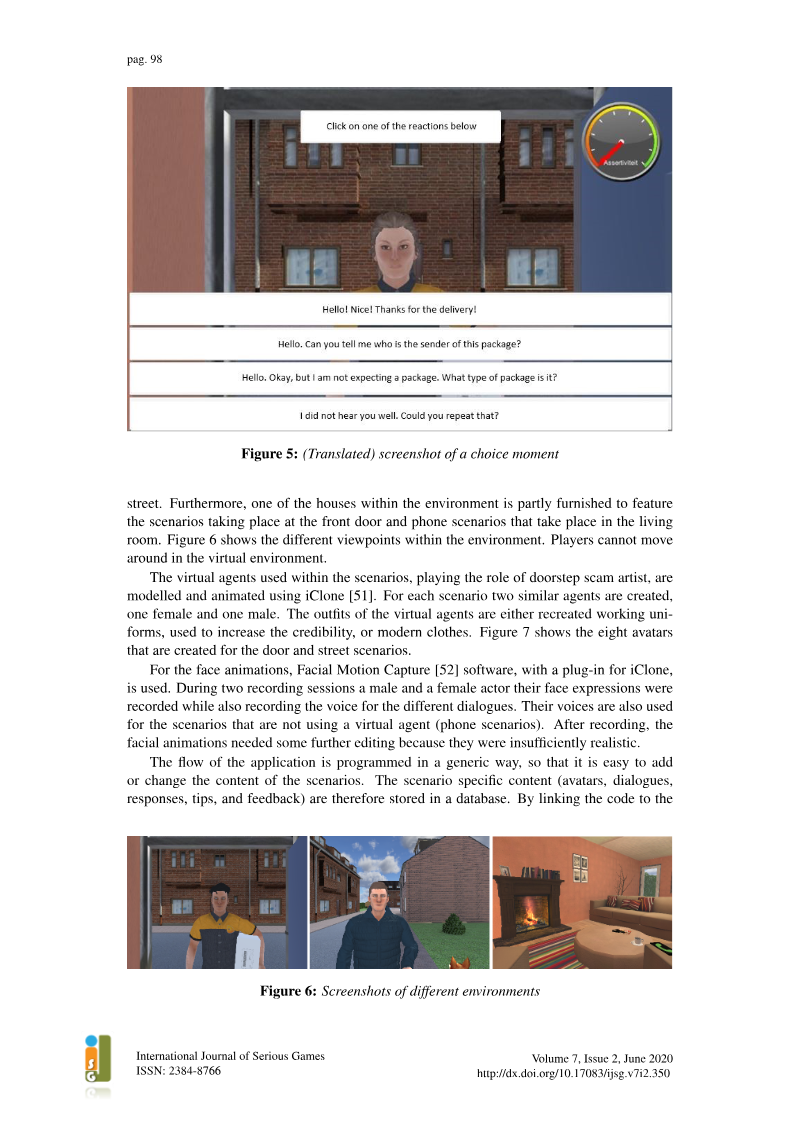
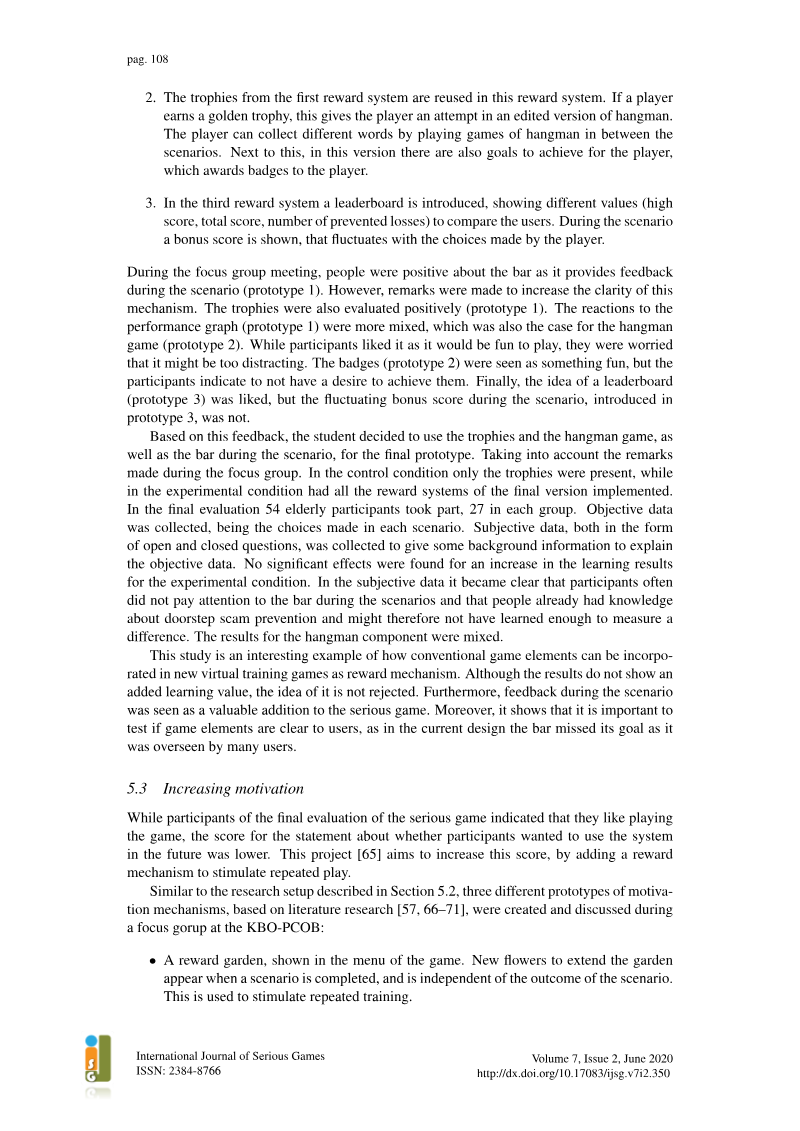
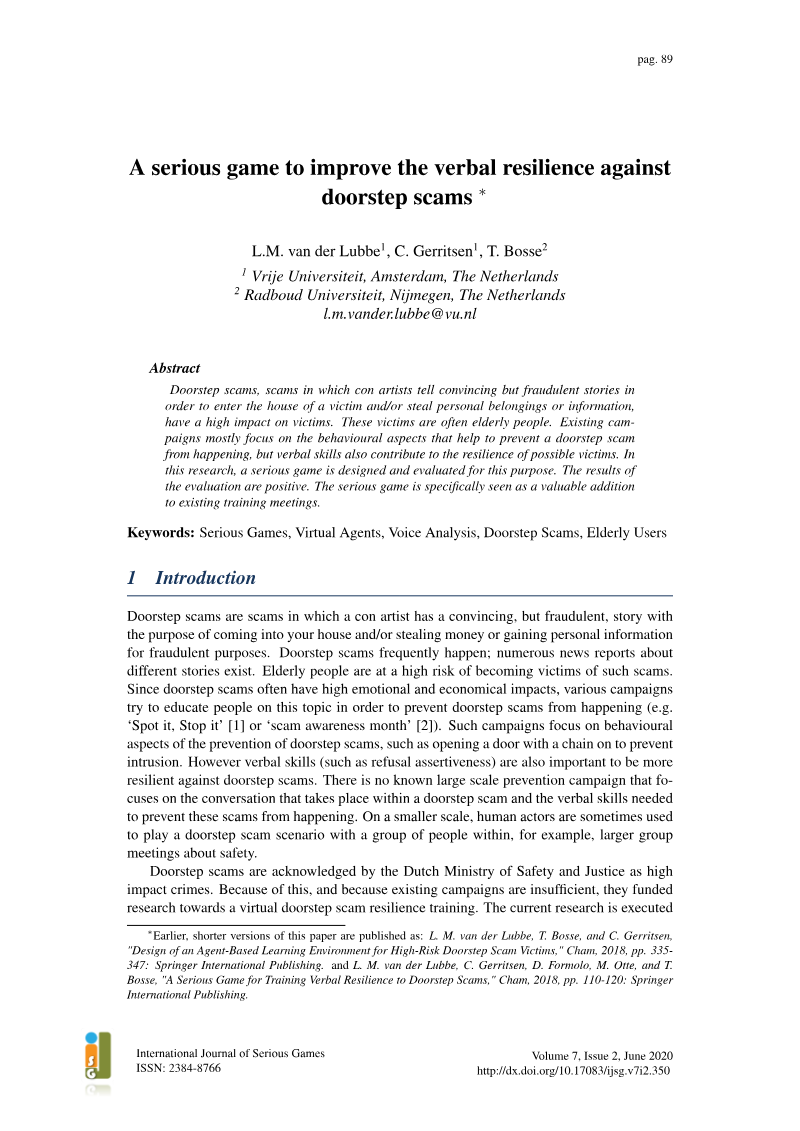
International Journal of Serious Games · 2020

International Journal of Serious Games · 2020
Air Force Institute of Technology · 2020
European Conference on Games Based Learning (ECGBL) · 2023
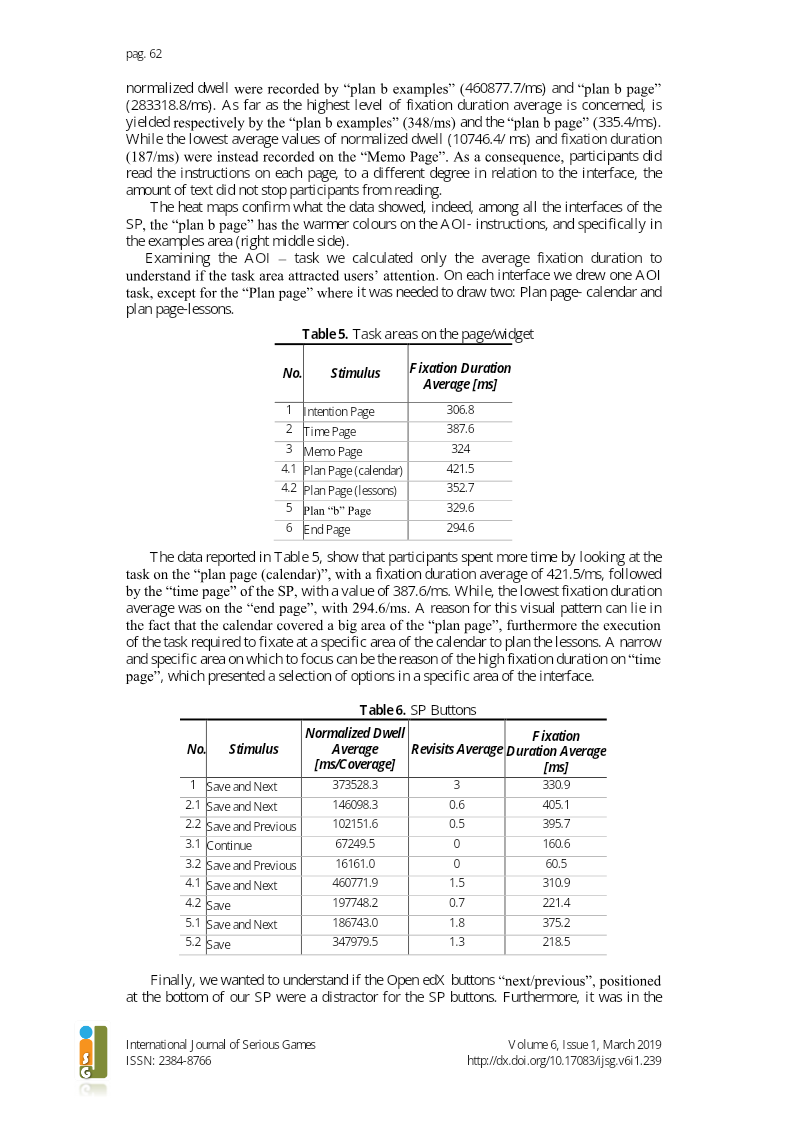
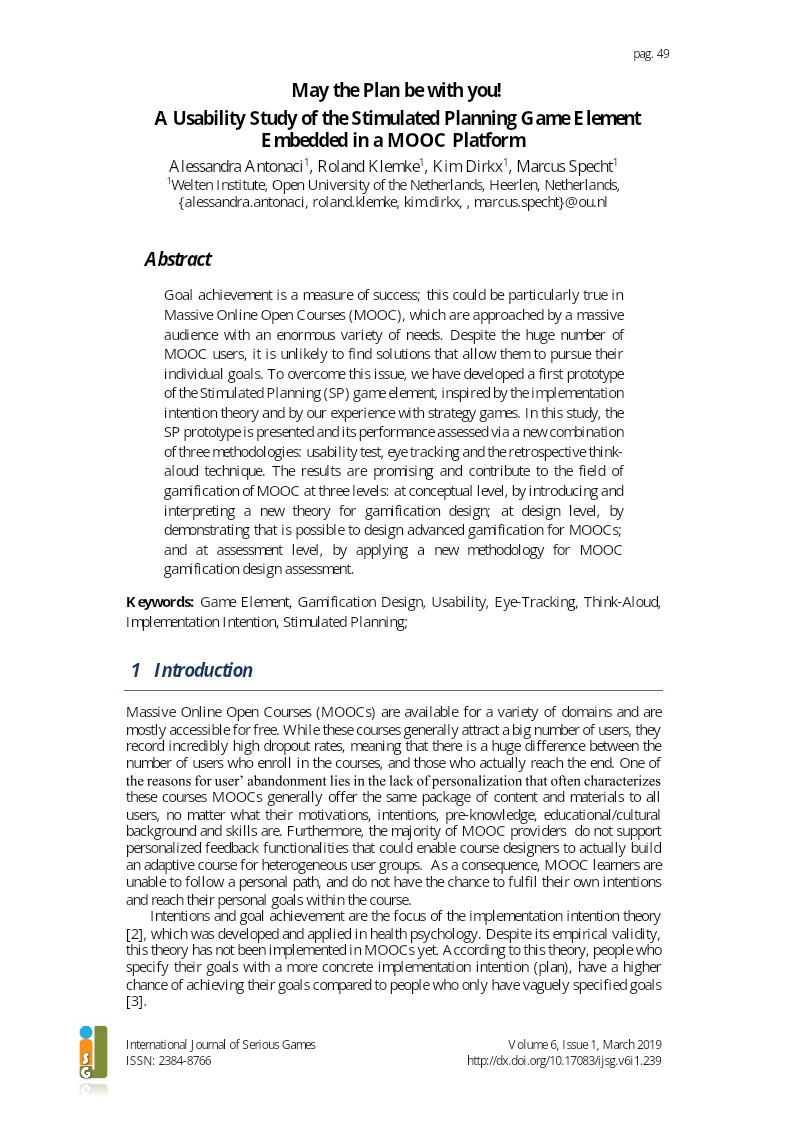
International Journal of Serious Games · 2019
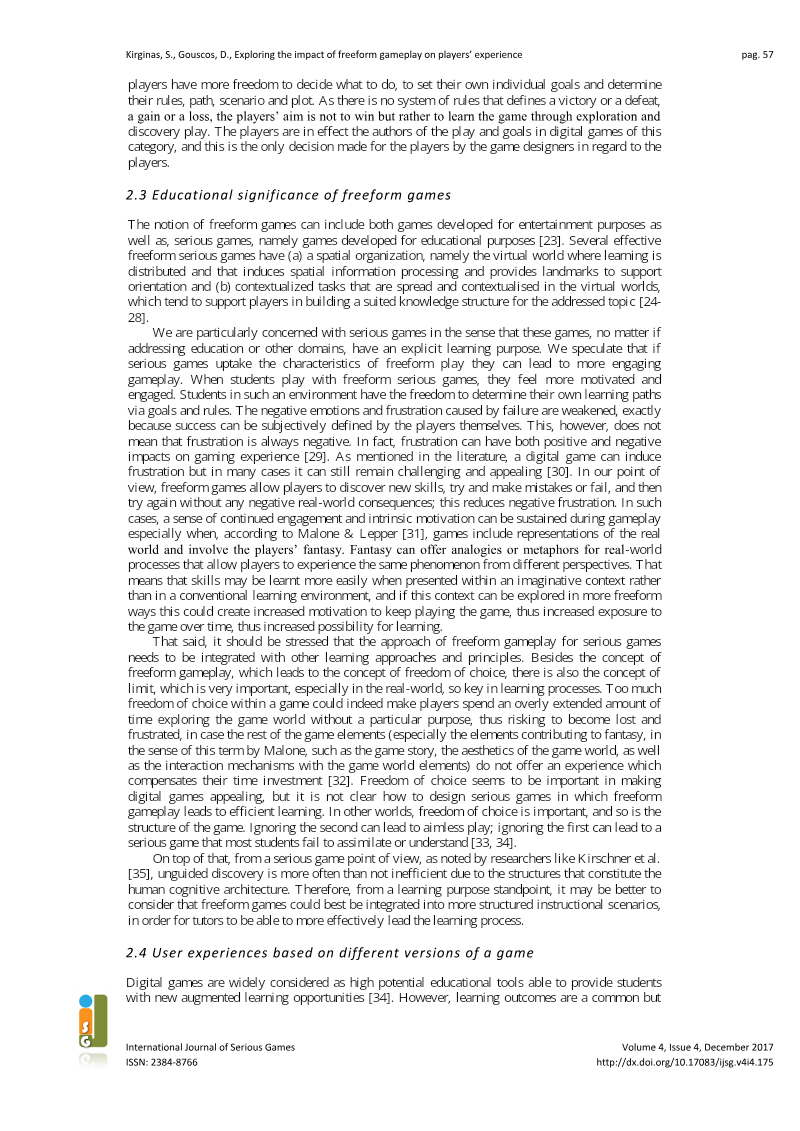
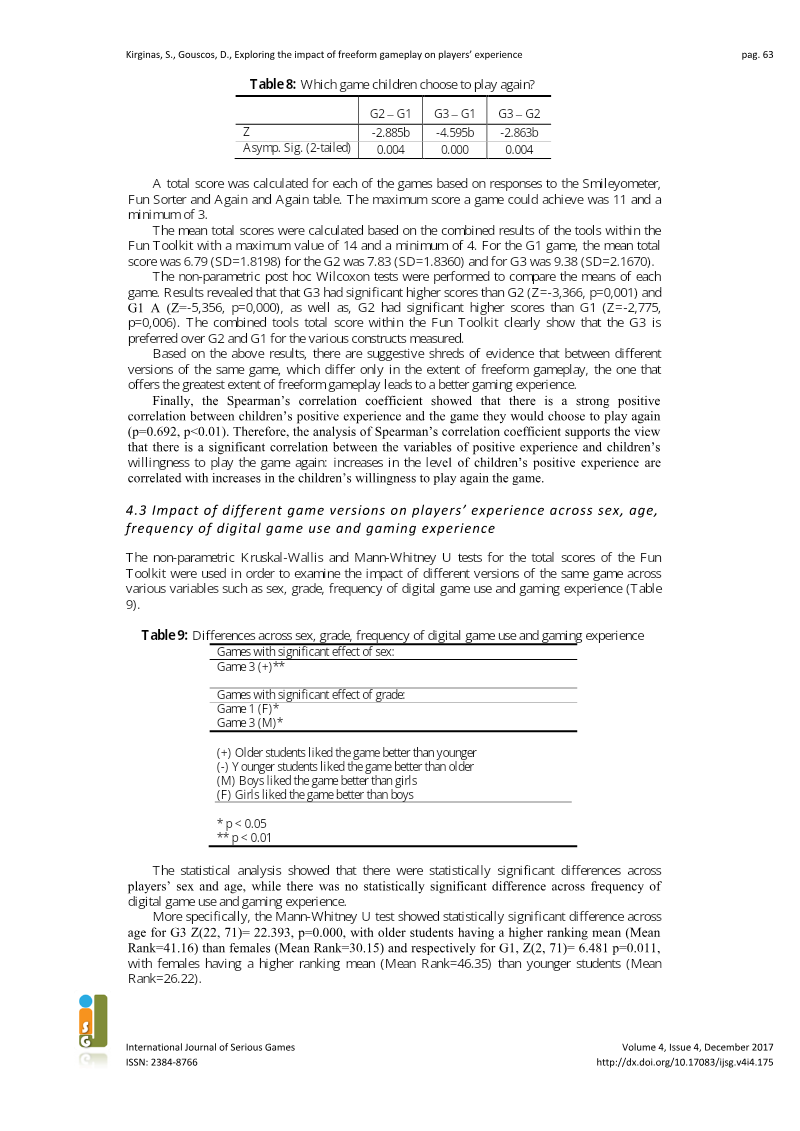
International Journal of Serious Games · 2017