1 free read left. Create a free account for unlimited reading + AI research.
Create free accountArticle International Journal of Esports
1 free read left. Create a free account for unlimited reading + AI research.
Create free accountArticleInternational Journal of Esports
The study examines how esports players cope with the physical and mental demands of competitive gaming. Interviews covered professional, semi-professional, amateur, and retired players.
This study examines how esports players cope with the physical and mental demands of competitive gaming, drawing on semi-structured interviews with players across professional, semi-professional, amateur, and retired levels. Grounded in the transactional model of stress and coping, the research seeks to identify the strategies players use to sustain their careers despite fatigue, pressure, and health risks, and to determine whether these approaches can inform structured support for the broader esports community.
Three coping themes emerged from the analysis. Life balance and time management, which includes taking breaks and engaging in non-gaming activities, functions as a problem-focused strategy. Social support, both during and after players' careers, operates as an emotion-focused strategy and moderates stress, with parental support proving especially important for younger players. Sleep management, identified as a problem-focused strategy, was reported as essential for handling heavy training loads and competitive pressure.
The authors situate these findings within the broader literature on sleep and athletic performance, noting that sleep restriction can impair reaction time, decision-making, and mental health. Esports players face many of the same sleep-disrupting risk factors as traditional athletes, including caffeine use, exposure to light-emitting screens, and extensive travel for competition.
The authors conclude that esports players would benefit from structured dual-career guidance and support programmes modelled on those used in traditional sports, and that such initiatives should be developed by professional teams and organisations.
The study carries notable limitations. Its sample was predominantly male, with only one female participant, and interviews were brief and conducted during tournaments rather than in the off-season. It also relied on self-report rather than objective measures of physical activity, mental health, or wellbeing. Future research is advised to include more women, extend interviews beyond competition periods, and examine how coping varies by age and competitive level.
International Journal of Esports · 2026
International Journal of Esports · 2026
International Journal of Esports · 2026
International Journal of Esports · 2026
International Journal of Esports · 2026
International Journal of Esports · 2026
International Journal of Esports · 2025
International Journal of Esports · 2025
International Journal of Esports · 2025
International Journal of Esports · 2025
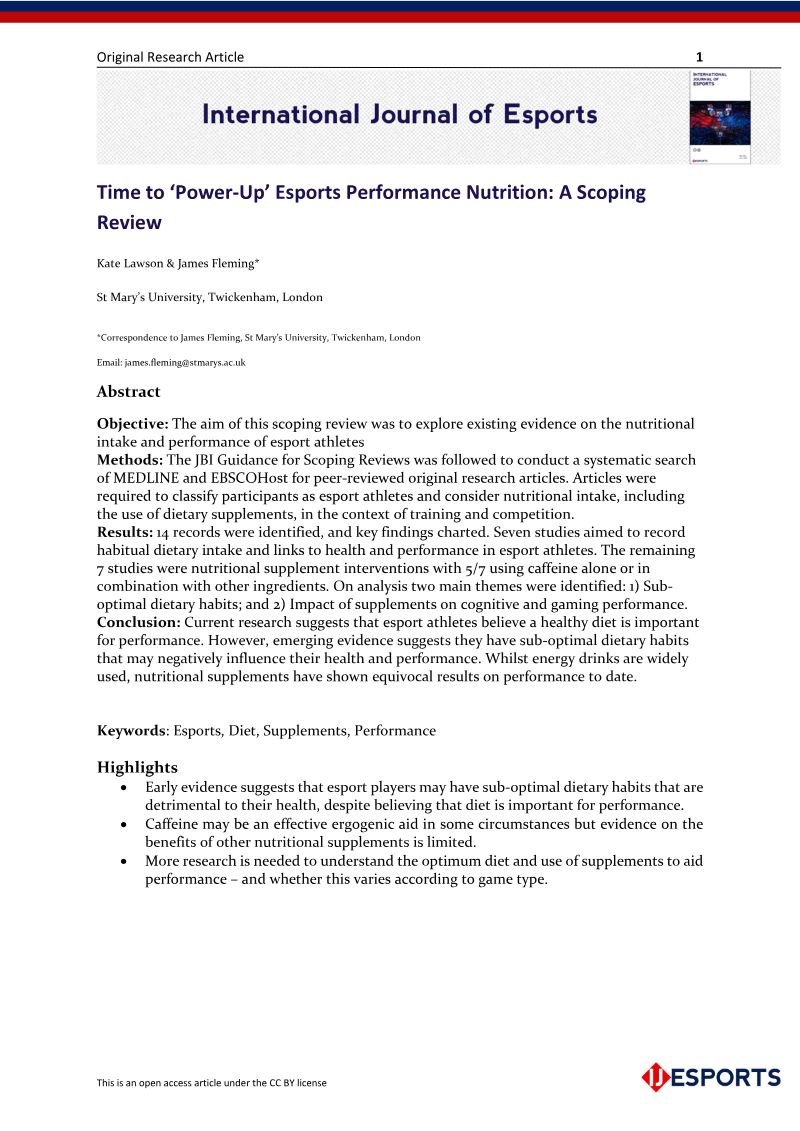
International Journal of Esports · 2025
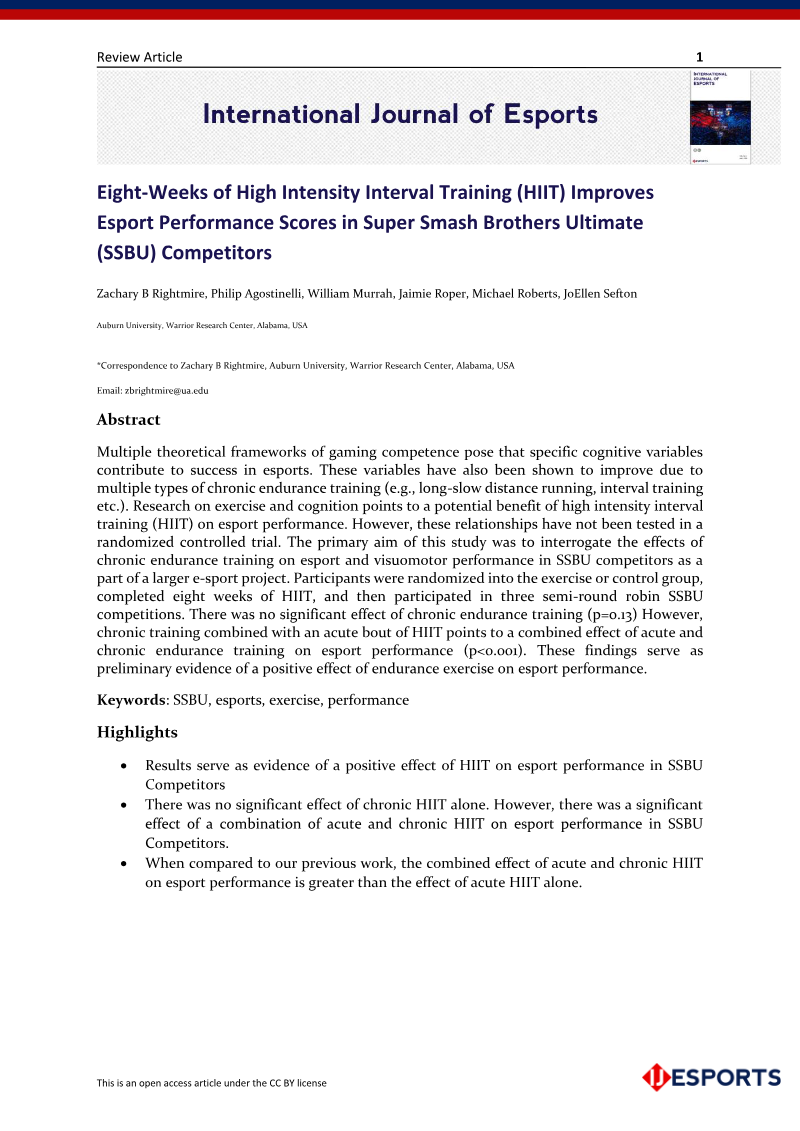
International Journal of Esports · 2025
Game Developers Conference · 2021