More on Serious Games
View all
Whitepaper
Tasks-Interactions-Environment for Simulations and Serious Games (TIE-SSG) Framework: Exploring Practical Applications
Western Norway University of Applied Sciences · 2025
Whitepaper
Using Games to Simulate Medication Adherence and Nonadherence: Laboratory Experiment in Gamified Behavioral Simulation
University of Warwick · 2024
Whitepaper
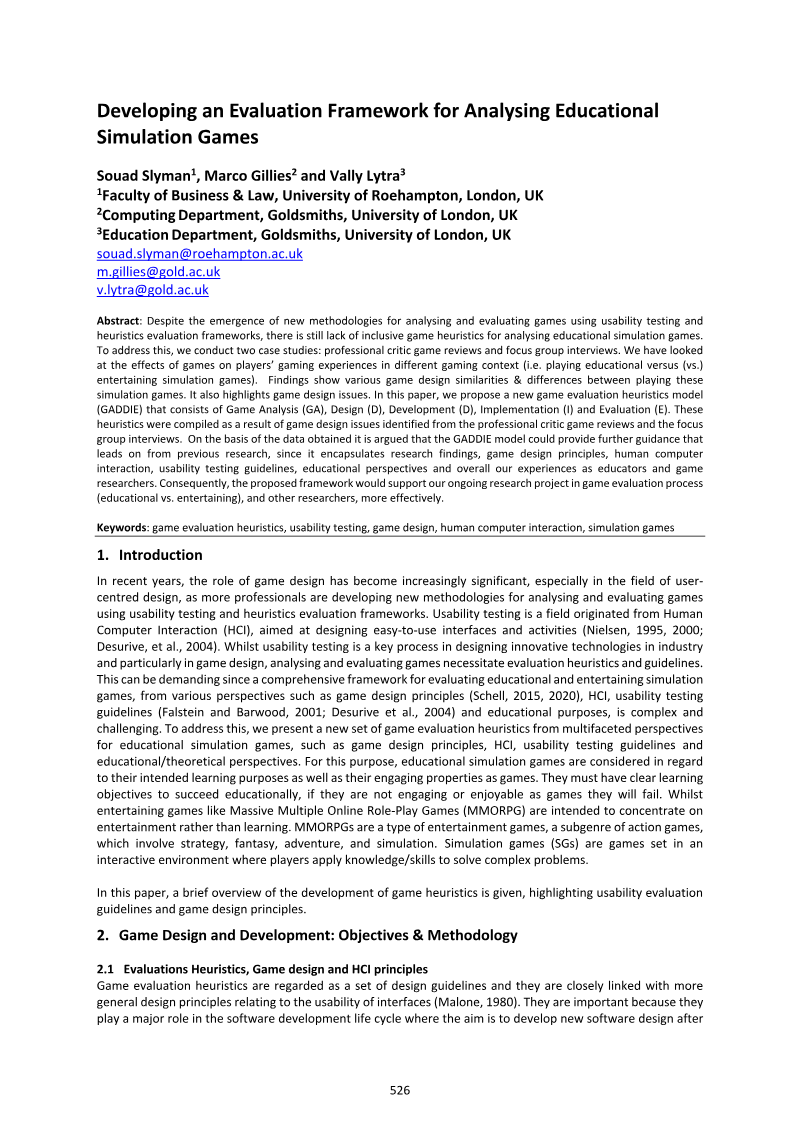
Developing an Evaluation Framework for Analysing Educational Simulation Games
European Conference on Games Based Learning (ECGBL) · 2022
Whitepaper
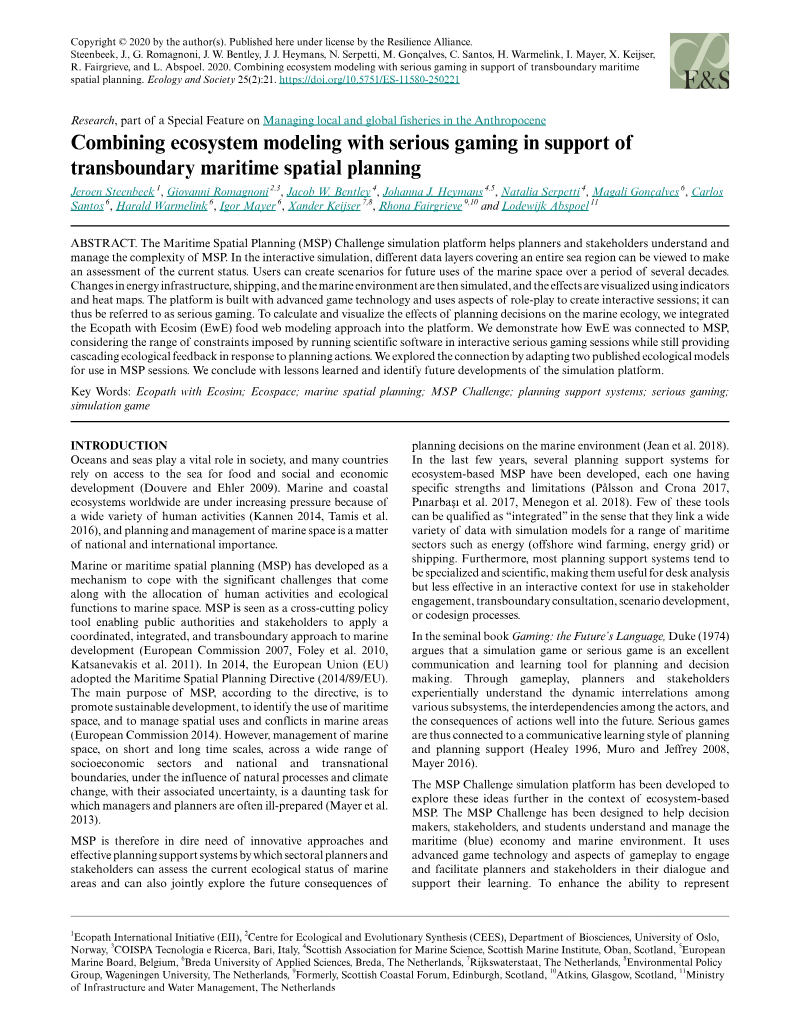
Combining Ecosystem Modeling with Serious Gaming in Support of Transboundary Maritime Spatial Planning
Breda University of Applied Sciences · 2020
Whitepaper
Steps to Design a Household Energy Game
International Journal of Serious Games · 2016
Whitepaper
Business Management Simulations: A Detailed Industry Analysis and Recommendations
Vienna University of Economics and Business · 2016



Whitepaper
Beyond Fun: Gamified Multidomain Reading Assessment for Children
International Journal of Serious Games · 2026
Whitepaper
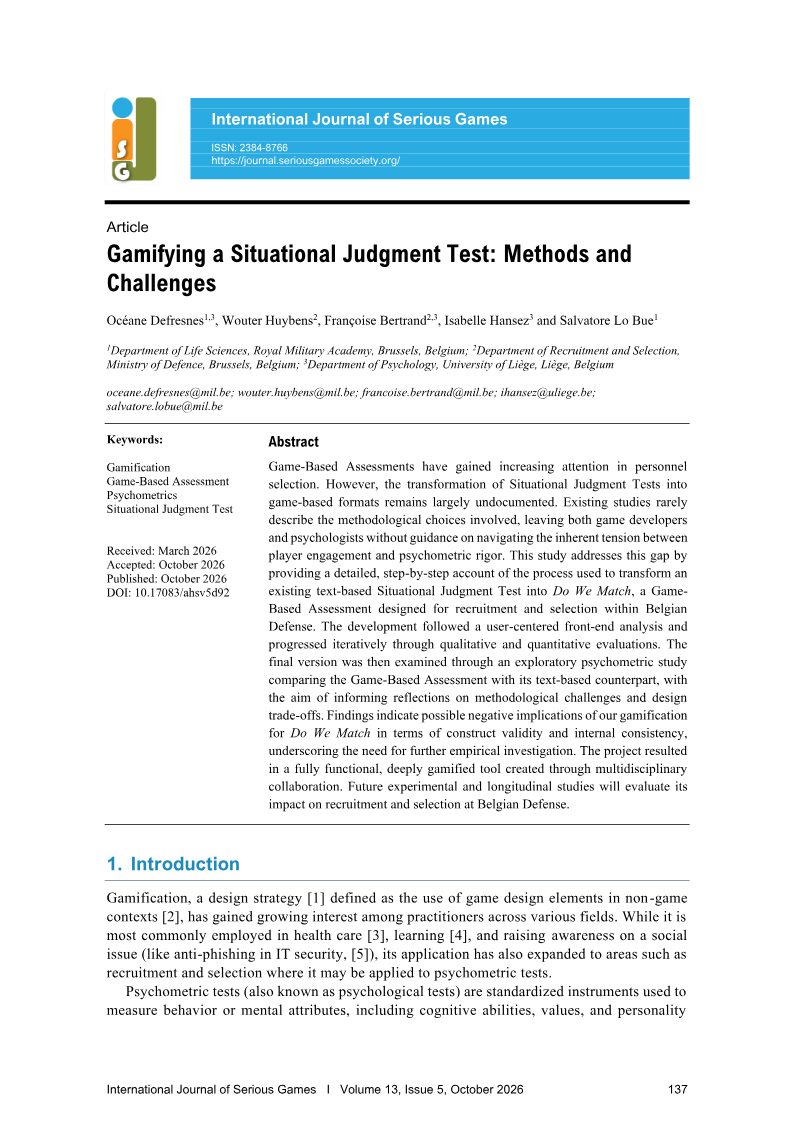
Gamifying a Situational Judgment Test: Methods and Challenges
Serious Games Society · 2026



Whitepaper
V3NU5: Learning Beauty – The Quantum Game Promoting Cultural Heritage
Serious Games Society · 2026
Whitepaper
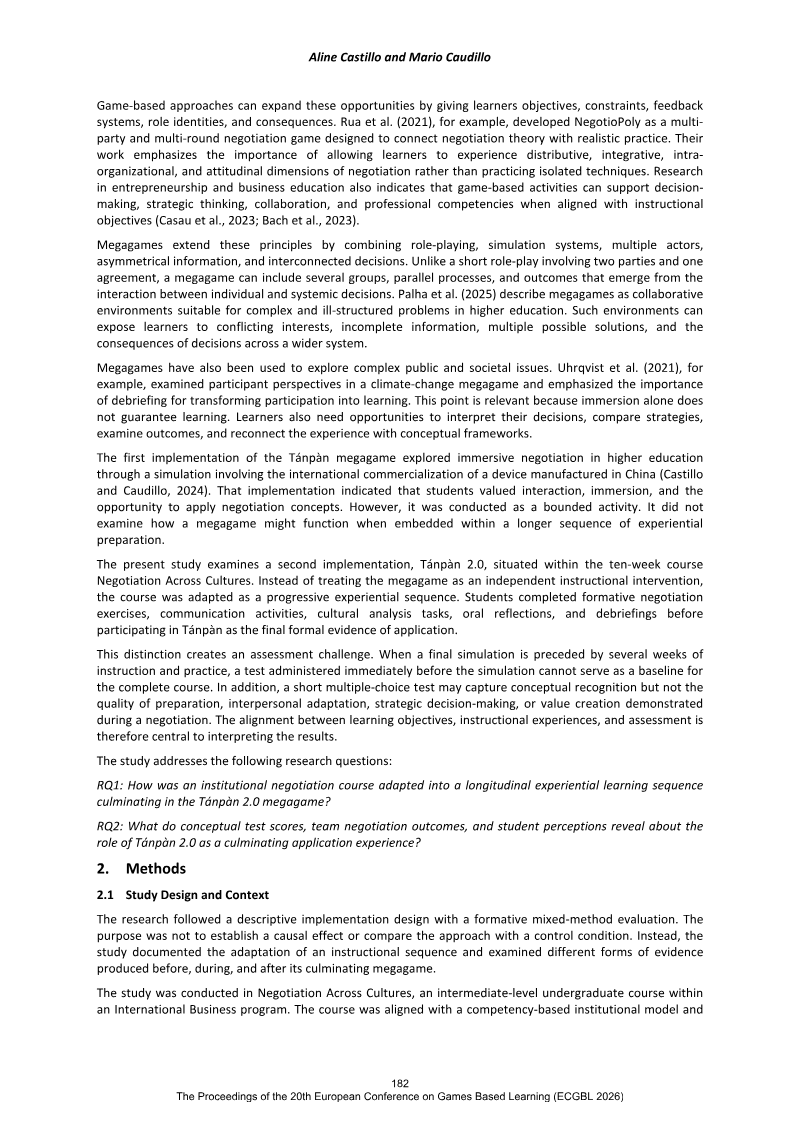
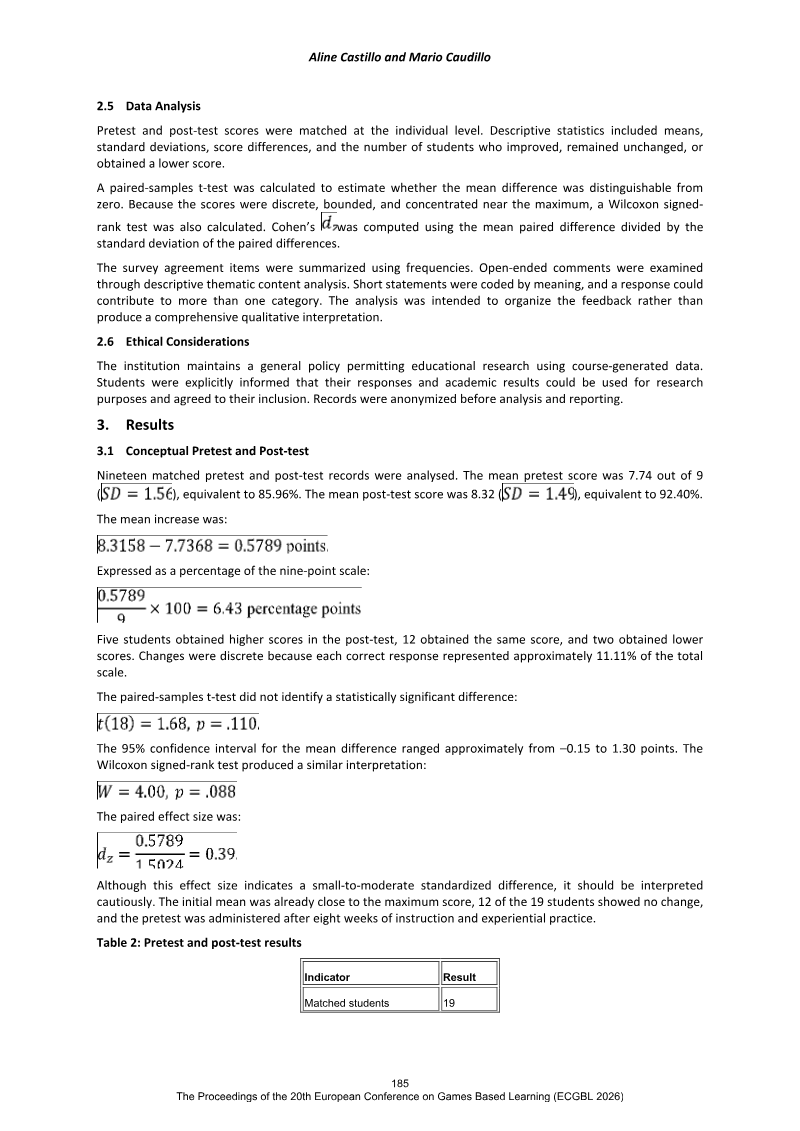
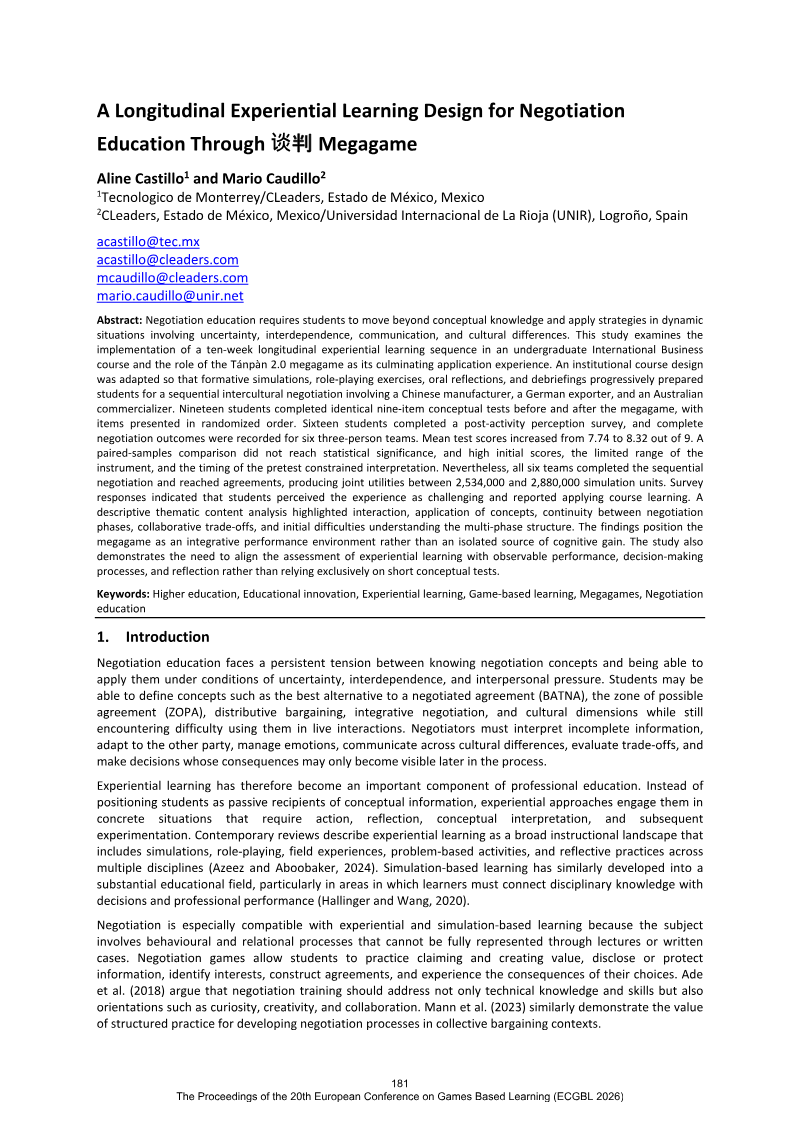
A Longitudinal Experiential Learning Design for Negotiation Education Through 谈判 Megagame
European Conference on Games Based Learning (ECGBL) · 2026



Whitepaper
Mission Profiles and Interaction Patterns in Gravitas: Evidence from a Simulation-Based Physics Learning Game
European Conference on Games Based Learning (ECGBL) · 2026
Whitepaper
From Games to Consequences: Scaffolding Professional Accountability Through Game-Based Learning and High-Fidelity Simulation
European Conference on Games Based Learning (ECGBL) · 2026