1 free read left. Create a free account for unlimited reading + AI research.
Create free accountArticle Eludamos: Journal for Computer Game Culture
1 free read left. Create a free account for unlimited reading + AI research.
Create free accountArticleEludamos: Journal for Computer Game Culture
Mike Piero's analysis argues that The Binding of Isaac: Rebirth's structure is itself the critical point. The essay frames the player as a biopolitical subject.
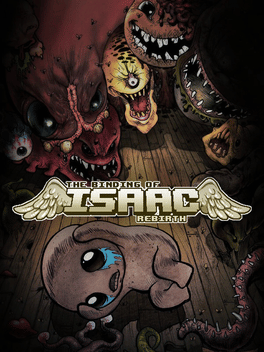
Mike Piero's analysis of The Binding of Isaac: Rebirth argues that the game's form is its critical content. Drawing on Bakhtin's threshold chronotope, Kristeva's theory of abjection, and Agamben's concept of homo sacer, the essay proposes that the game's randomly generated rooms, abject creatures, and repeated descents into the basement stage the player as a biopolitical subject living under permanent emergency. Read this way, the abject becomes a site for reflecting both on the experience of play and on the conditions of control that operate outside the screen. The study situates the game within a Western religious frame, reworking the Abraham and Binding narrative, and it treats the medium as a space where questions of sovereignty, bare life, and subjectivity can be examined.
The analysis extends these claims to the cultural and gendered dimensions of the game. Its item design, including the "Mom's" and "Eve's" items, and its camp-like descent structure are read as embodiments of states of exception that govern bare life, while patriarchal and religious-medical discourses are shown to shape the player's subjectivity. The argument also addresses popular discourse on suicide, which is traced to Christian-derived taboos rather than philosophical traditions, and contends that these taboos restrict life-and-death choices and reinforce biopolitical control.
A further strand considers the ethical potential and risk of this confrontation with abjection. Engaging Kristeva, Agamben, Derrida, and Kierkegaard, the work holds that the game's jouissance-driven encounter with abjection can prepare players for ethical engagement or instead reproduce passivity and violence. It reads the game as relocating the Abraham narrative from responsibility to ethics while warning against isolated, faith-driven violence, illustrated through the 2015 Colorado Springs shooting and the 2021 Capitol insurrection. The author calls for philosophically engaged, flexible methods in game studies, and supports the discussion with a single cited statistic on U.S. immigrant detention.
The closing sections frame player-game contact as a shared timespace in which meaning circulates among human, nonhuman, living, and material actors, with the chronotope mediating that relation moment by moment. Drawing on Jean-Luc Nancy's notion of "being-with," the analysis points toward further connections with Artaud and Kierkegaard and defers extended treatment of the abject and threshold chronotopes to a forth
Eludamos: Journal for Computer Game Culture · 2026
DiGRA · 2026