1 free read left. Create a free account for unlimited reading + AI research.
Create free account
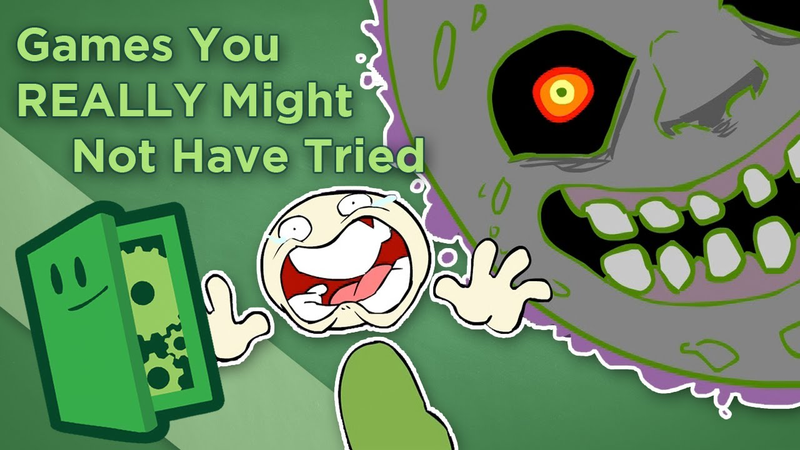
Games You REALLY Might Not Have Tried: Horror Games - Find New Games - Extra Credits
Key insights
6 takeaways- 01The most memorable and artistically significant gaming experiences are frequently found within the experimental fringes of the medium, outside the boundaries of conventional design.
- 02Games such as 'The Castle Doctrine' and 'Starseed Pilgrim' utilize unconventional mechanics that force players to engage with internal systems rather than relying on standard tutorials.
- 03Experimental horror games often prioritize systemic complexity and psychological discomfort over the polished, accessible mechanics found in high-budget survival horror titles.
- 04The game 'Pathologic' is highlighted as an example of how distinct cultural perspectives can provide unique value, even when hindered by translation flaws or technical limitations.
- 05Many unconventional and experimental titles suffer from significant accessibility barriers, including dated graphics, poor localization, and steep learning curves.
- 06Titles like 'I Have No Mouth, and I Must Scream' and 'Song of Saya' demonstrate how mature, transgressive themes can be used to explore complex human narratives beyond traditional genre tropes.
Ask AI about this video
Transcript
Happy All Hallows, fair viewers. In celebration of such a fine night of frights, we have decided to cut James loose and let him talk about all those crazy games he plays. Many are strange and disturbing. Many are things that might keep you up at night, but more than anything, many will be games that you really, really might not have heard of. The standard rules about these episodes apply double here. All these are interesting and far outside of your run of the mill, doesn't make them all good or even in some cases palatable. If you're ready for a trip into the weird, here we go. Memories of a broken dimension. A DOS screen. An implied accident in space. A world half formed, fractal, barely understood. Rebuild what was lost step by step. But for what?
The game's incomplete and the answer is not yet known. Have fun. Castle Doctrine. Jason Rohrer, the creator of Passage and Inside a Starfield Sky, brings us this strange and paranoid MMO. In this game, you play as a father looking to protect his family and his wealth while looking to rob others of theirs. You begin the game by turning your house into an incredibly elaborate death trap and locking your family away behind whatever you can put between them and the door. Then you go out and systematically rob the houses of others, trying to avoid their traps and alarms to take what's theirs. Just be warned, the house building is incredibly complex and there's really not a tutorial as of yet, so to play it takes the sort of manic paranoid dedication that the whole game serves to warn us against. I Have No Mouth, and I Must Scream. Rarely have I played a game so unrelentingly dark.
Never have I said that about a game and still called it mature, and not in the puerile mature sense that plague most games with that label, but truly mature, looking deeply at our humanity. This is unquestionably one of the grimmest games ever made, but it forces us to stare deep at issues that to this day, 20 years later, we have a hard time addressing in games. It's written by Harlan Ellison, Hugo and Nebula Award winner, and the man behind The Guardian of Forever. And while he's an author who I often think goes too far and sometimes simply writes to shock us, you cannot say I Have No Mouth was written lightly or without purpose. If you're willing to ask yourself, why does humanity deserve to be in adventure game form, and you can deal with the disturbing, unrelenting, and grim subject matter, you'd be hard-pressed to do better than this nearly forgotten gem. No one has to die. Wait. Hang on. And the parrot What? The name of this game tells you the
premise. Each level you must solve a puzzle, and on each puzzle, someone has to die. Or do they? Can you get through this burning building without getting anyone killed? The rules say it's impossible, but in the end, are they really the rules? Starseed Pilgrim. Sometimes our walk through the weird doesn't have to deal with anything bleak or disturbing. It sometimes can just force us to look at things a new way. Of course, I can't tell you anything about this game because the point of this game is discovery. It comes without a tutorial and only the barest clue as to the goal. You learn by doing, and the game is as much about deconstructing the system as about anything we traditionally call play. Does this make it a good game? Depends
on your definition, but it certainly makes it an interesting one. If you want a game that is itself a puzzle, then Star Seed Pilgrim won't disappoint. Off If a French version of David Lynch remade Earthbound and gave it a fight soundtrack weirdly reminiscent of soul coughing, you might have something like Off. If that recommendation doesn't sell you on it, you probably won't like Off. The fight system is antiquated. The game is slow. Sometimes it really does feel like you're playing the worst parts of an NES RPG. But Off is worth it just for the places you visit and the stilted tasks you are asked to perform. The story is convoluted and interesting and strays far from standard RPG fare. Far, far from your standard RPG fare. Pathologic Russian bleakness at its very best. If you're looking for a grim old-school survival horror game, Pathologic is the
place to stop. Foreboding village, dark rituals, monstrous avatar, it's got it all. What's more, it's not a Silent Hill clone. Pathologic is a unique product of Russian culture the way Dostoevsky is. To a modern viewer, the graphics are bad and the translation is worse. The graphics I can live with, but I got to say it's almost criminal that a game this unnerving and unique is marred by such an abysmal translation. The game's still great, but you'll rage at the moment when that poor translation ripped you out of the experience. Song of Saya I apologize. What the did I just play? This may be one of the most twisted, skin-crawling visual novels out there. It's disturbing, repulsive, and uncanny, but I wouldn't be talking about it if it weren't also well executed. I won't get into the topic of what age you should or shouldn't be to play a
game, but let's just say I'm not sure I'm old enough to play it. It's filled with sex and nudity and types of violence that are far more disturbing than your usual variety. It's like Silent Hill, but with no holds barred and no restraint for taste. If you want to dance down the dark side and are looking for something that will leave you genuinely disturbed, Saya is worth playing, but just know what you're getting into. It's written by the guy who wrote Madoka Magica. It's a solid piece of psychological horror that slowly strips away all that's good in the world. The writing is robust and the translation solid. You'll find yourself flying through the pages of text, horrified, repulsed, but weirdly transfixed by this macabre piece. If you want to be unnerved, this is for you. And it wouldn't be up here if I felt like its grotesqueries didn't have artistic merit, but again, know what you're getting into. And finally, Outlast. Survival horror that's thoroughly about
stealth. This game plays the overrun insane asylum card to the hilt. And I'll confess, the first half hour got to me. It does become a little road over time in my opinion, so the game doesn't hold up, but the first hour or so may be worth the price of admission. If you like survival horror and are curious about how it would play out with stealth gameplay, this is a trip to the mountain top you might not want to miss. So, merry All Saints. Enjoy your walk into the other side, and we'll see you next week. Hey. Listen.
Summary
This overview explores a curated selection of unconventional horror and experimental video games, emphasizing titles that deviate from mainstream industry tropes. The primary thesis posits that while many of these games may be unpolished, difficult, or intentionally disturbing, they offer unique artistic experiences that challenge traditional definitions of play and narrative. By highlighting titles that prioritize discovery, psychological discomfort, and systemic complexity, the analysis encourages players to look beyond high-budget survival horror to find works with genuine, albeit sometimes unsettling, creative merit.
The selection covers a diverse range of genres, including visual novels, survival horror, and experimental puzzle games. Notable examples include I Have No Mouth, and I Must Scream, cited for its mature exploration of humanity; Pathologic, noted for its distinct cultural perspective despite translation flaws; and Song of Saya, recognized for its extreme, transgressive psychological horror. Other titles, such as The Castle Doctrine, Starseed Pilgrim, and OFF, are highlighted for their unconventional mechanics—ranging from paranoid home-defense simulations to surreal, deconstructive RPGs—that force players to engage with systems rather than traditional tutorials.
The analysis acknowledges that these games are not universally accessible. Many suffer from dated graphics, poor translations, or steep learning curves that can hinder the player experience. However, the core argument remains that these titles possess significant artistic value. By focusing on games that evoke visceral reactions or demand deep intellectual engagement, the discussion serves as a guide for players seeking to explore the darker, more experimental fringes of the medium, ultimately suggesting that the most memorable gaming experiences often lie outside the boundaries of conventional design.














Comments