1 free read left. Create a free account for unlimited reading + AI research.
Create free accountWhitepaper DiGRA
1 free read left. Create a free account for unlimited reading + AI research.
Create free accountWhitepaperDiGRA
The paper argues that self-referentiality operates across hermeneutic, representational, and cultural-practice levels. It entangles play with work under neoliberal technocapitalism.
This paper argues that self-referentiality is a recurring structural feature of computer games, operating across hermeneutic, representational, and cultural-practice levels, and that this feature entangles play with work under neoliberal technocapitalism. Drawing on computer game studies, media archaeology, and critical theory, the authors examine games about working, gaming, working on games, and games about working on games, such as PC Building Simulator, Job Simulator, Game Dev Tycoon, and Arcade Operator. Their central claim is that these works are symptomatic of a deeper undercurrent in which games can only refer inwards, yet are always already entangled with society at large.
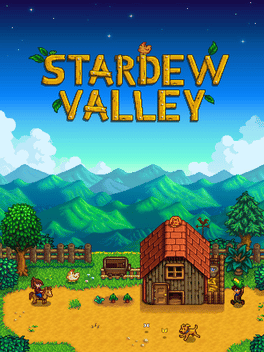
The argument rests on conceptual framing rather than empirical measurement. The authors draw on Aarseth's notion that understanding a game means playing it well, and on Pias's account of early twentieth-century work sciences as sharing conditions of possibility with early action games, to suggest that similarities between industrial labor and play are expected rather than surprising. Contemporary gaming practices, such as showcasing collections on Steam, professional e-sports, and Twitch subscriber counts, are read as forms of self-management and self-fashioning that mirror neoliberal subjectivity. The discussion of Stardew Valley serves as a key case: although designed to critique capitalist economies, player commentary reveals that its task-management demands reproduce the very principles it targets.
The paper concludes with a deliberately paradoxical position: computer games can only be about themselves, yet they are always about society, since neoliberal society itself resembles a gamified form of life. The authors contend that clinging to a modernist conception of play within a "magic circle" is an expired utopia, and they suggest that transferable skills developed through e-sports may prove useful in this context. The scope is primarily theoretical and conceptual, situated within contemporary digital game culture and drawing on a bibliography spanning game studies, critical political economy, and media theory.
Each row is a game or company this document names, each column a document, oldest first. A mark means that document names it. Select a row to see those documents.

DiGRA · 2026

DiGRA · 2026



DiGRA · 2026



DiGRA · 2026



DiGRA · 2026



DiGRA · 2026



DiGRA · 2026



DiGRA · 2026

DiGRA · 2026



DiGRA · 2026



DiGRA · 2026

DiGRA · 2026
European Conference on Games Based Learning (ECGBL) · 2026