More from Kazimierz Wielki University
View all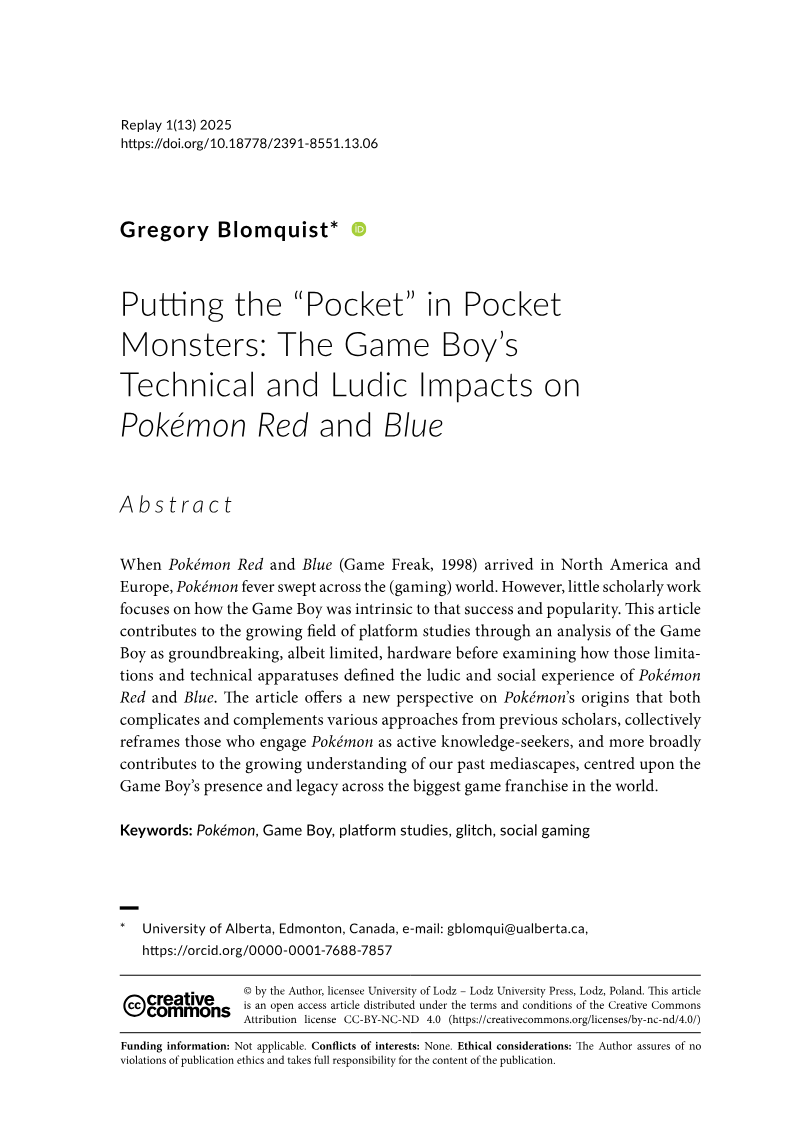
Article
Putting the "Pocket" in Pocket Monsters: The Game Boy's Technical and Ludic Impacts on Pokémon Red and Blue
Replay. The Polish Journal of Game Studies · 2026
Article
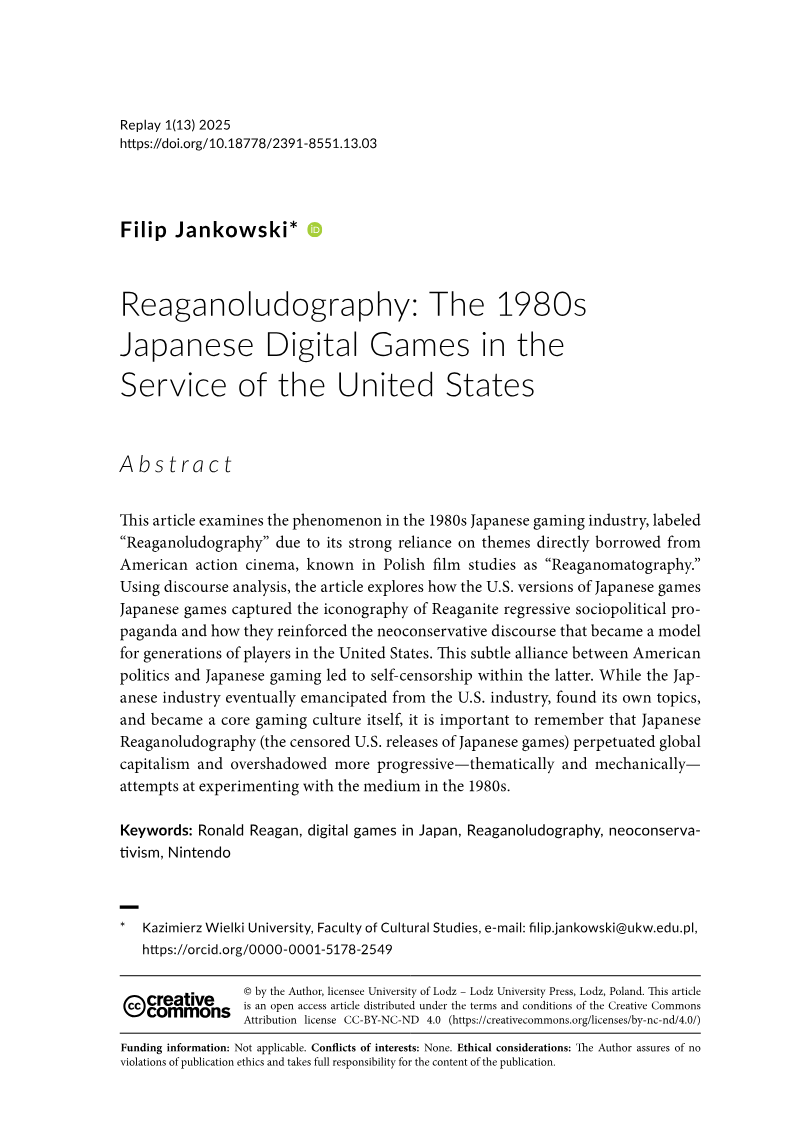
Reaganoludography: The 1980s Japanese Digital Games in the Service of the United States
Replay. The Polish Journal of Game Studies · 2026



Whitepaper
Tworzenie „przestrzeni dyskomfortu” jako narzędzie zarządzania afektywnego: przypadek marki Pokémon
Replay. The Polish Journal of Game Studies · 2026
Article
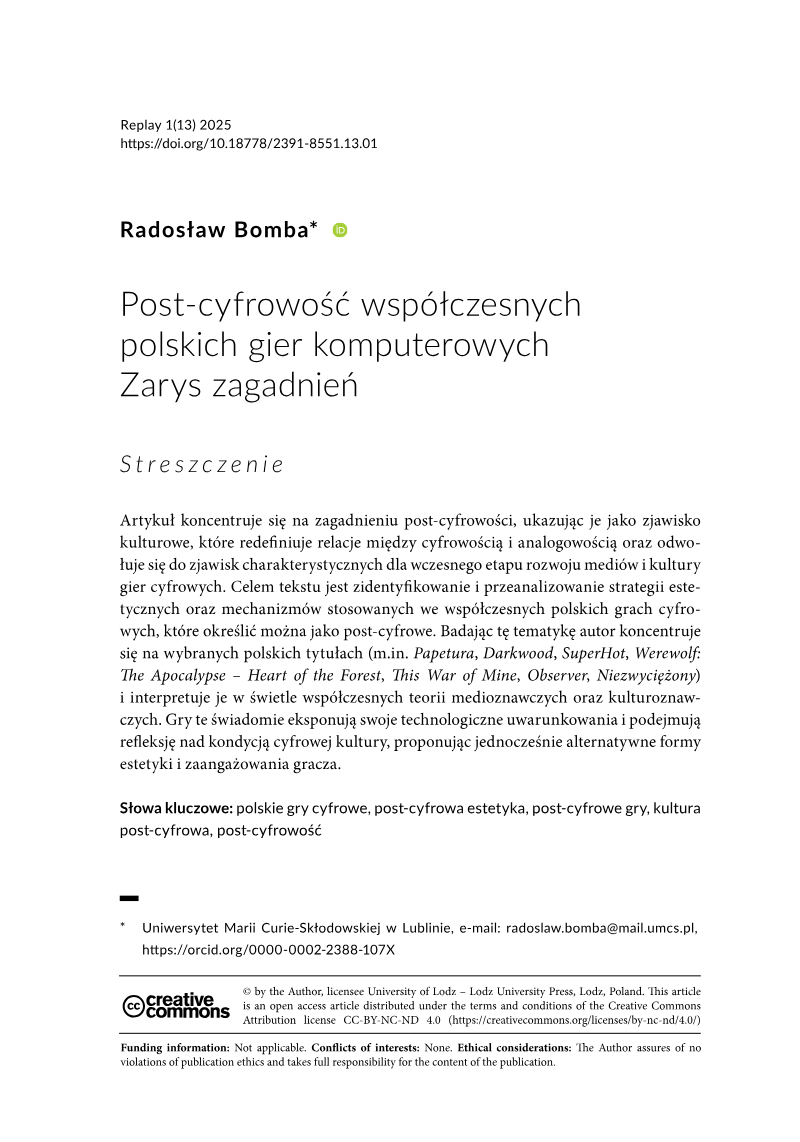
Post-cyfrowość współczesnych polskich gier komputerowych: Zarys zagadnień
Replay. The Polish Journal of Game Studies · 2026
Whitepaper
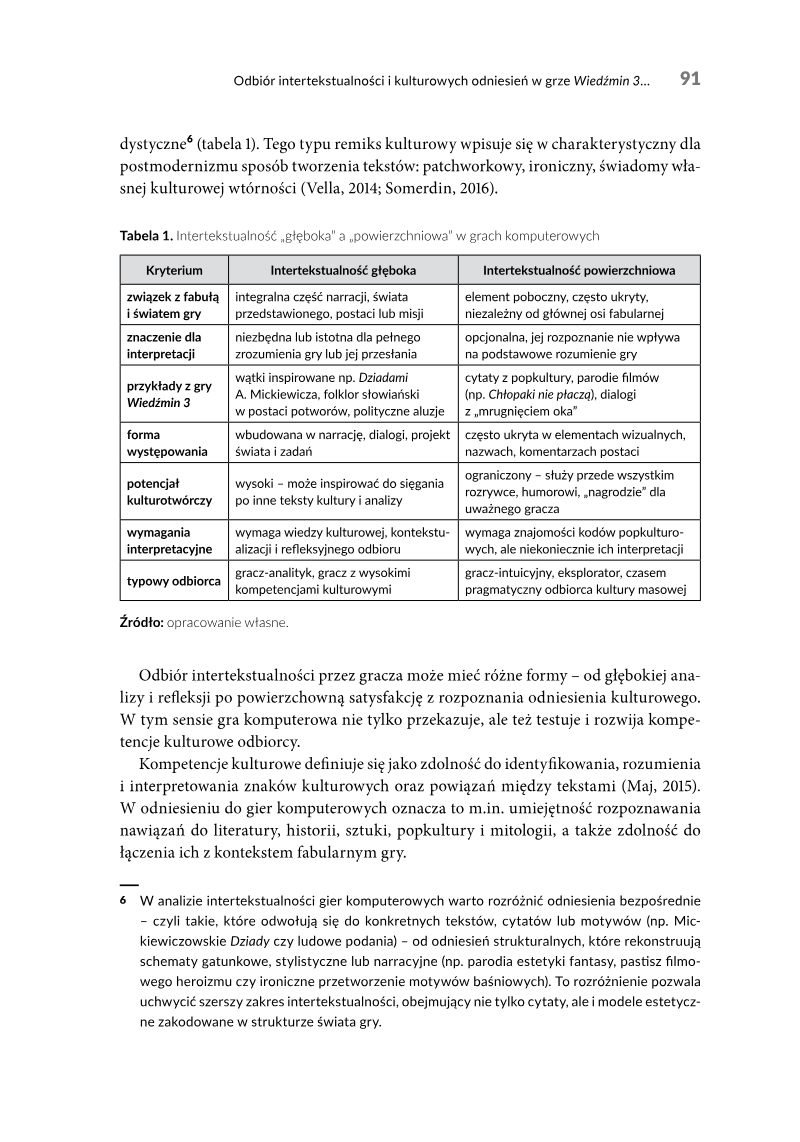
Reception of Intertextuality and Cultural References in The Witcher 3: Analysis of Player Typologies
Replay. The Polish Journal of Game Studies · 2026
Article
Graphical User Interfaces (GUI) in the Assessment of Future Game Designers and Users
Replay. The Polish Journal of Game Studies · 2026
Whitepaper
Brewing Happiness: Design Aspects of Coffee Representation in Cozy Games
Replay. The Polish Journal of Game Studies · 2024
Whitepaper
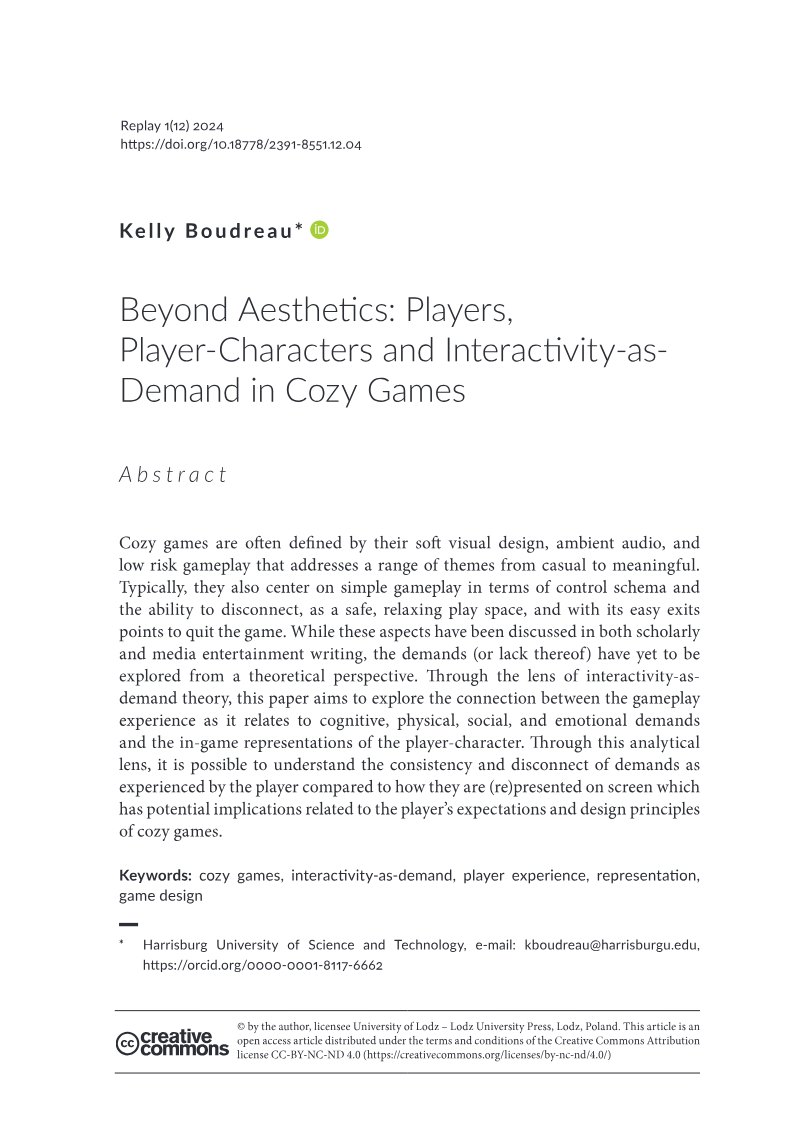
Beyond Aesthetics: Players, Player-Characters and Interactivity-as-Demand in Cozy Games
Replay. The Polish Journal of Game Studies · 2024
Article
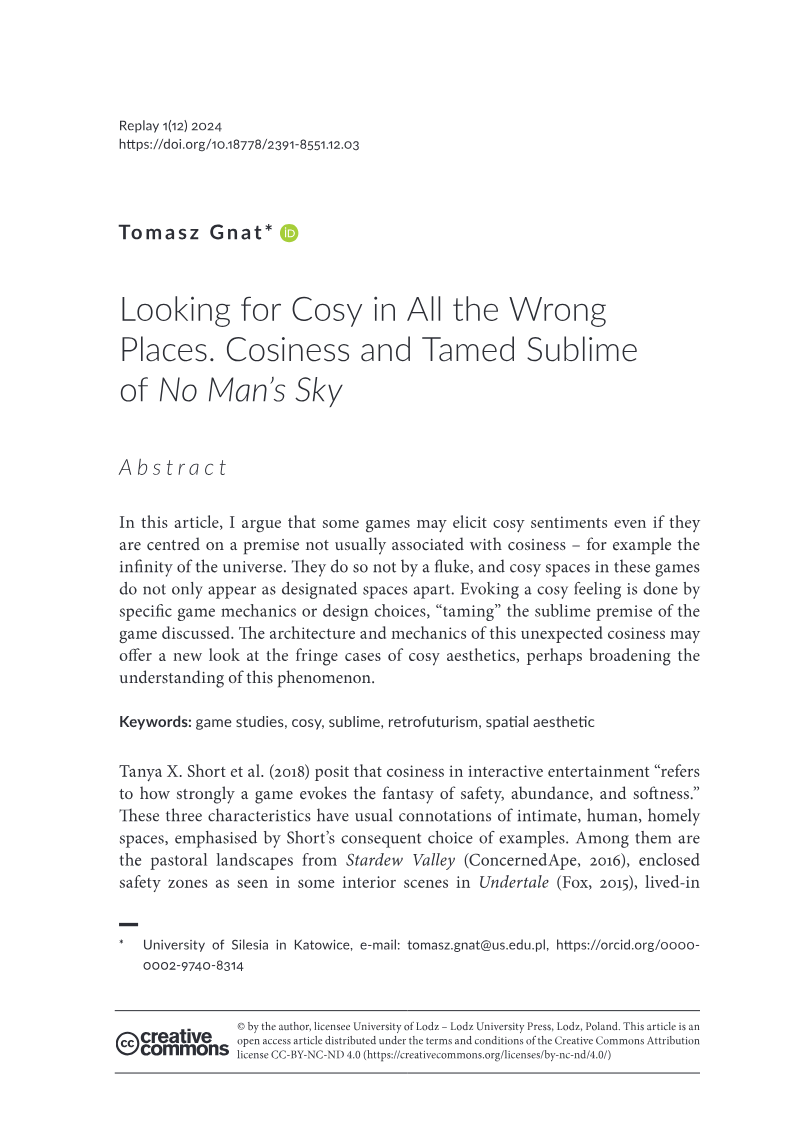
Looking for Cosy in All the Wrong Places: Cosiness and Tamed Sublime of No Man's Sky
Replay. The Polish Journal of Game Studies · 2024
Whitepaper
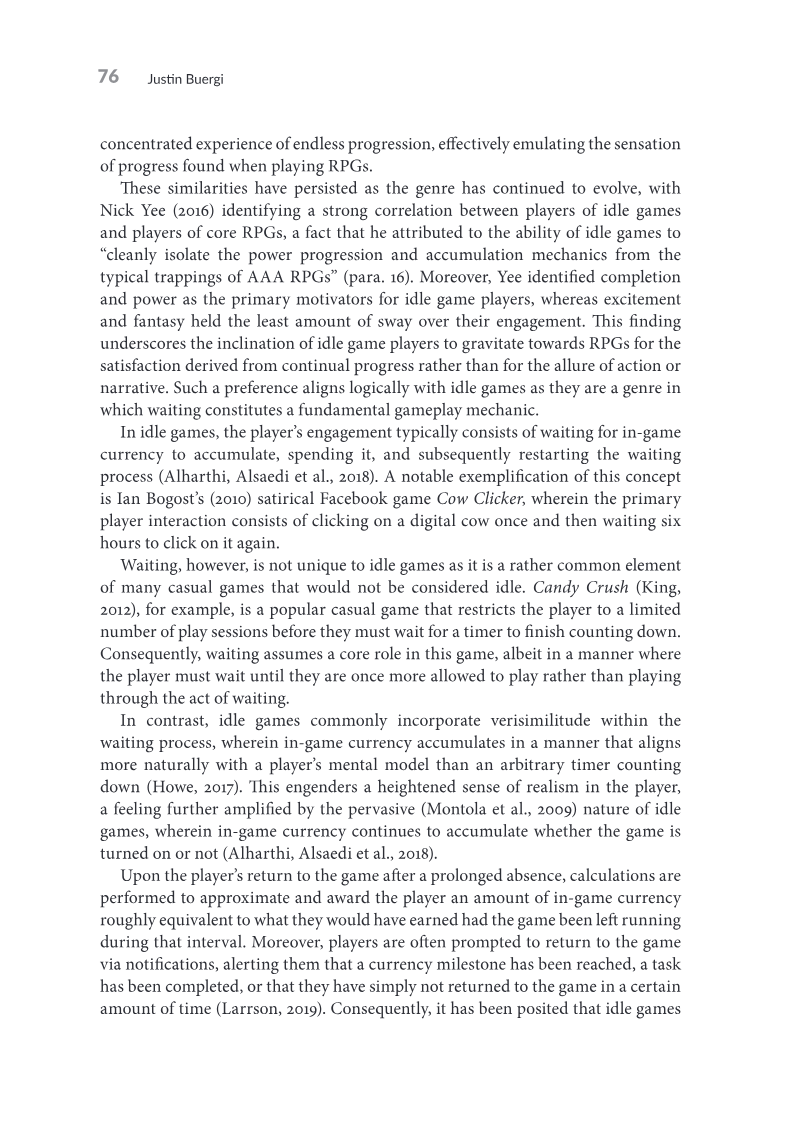
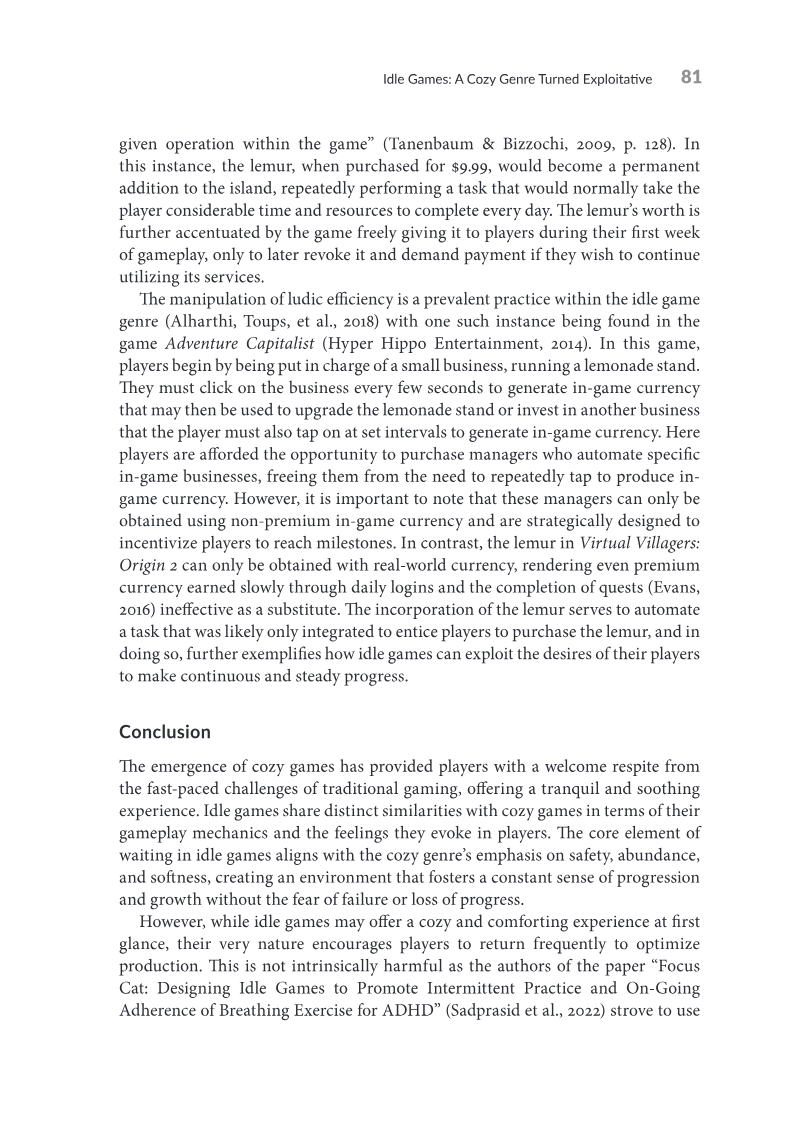
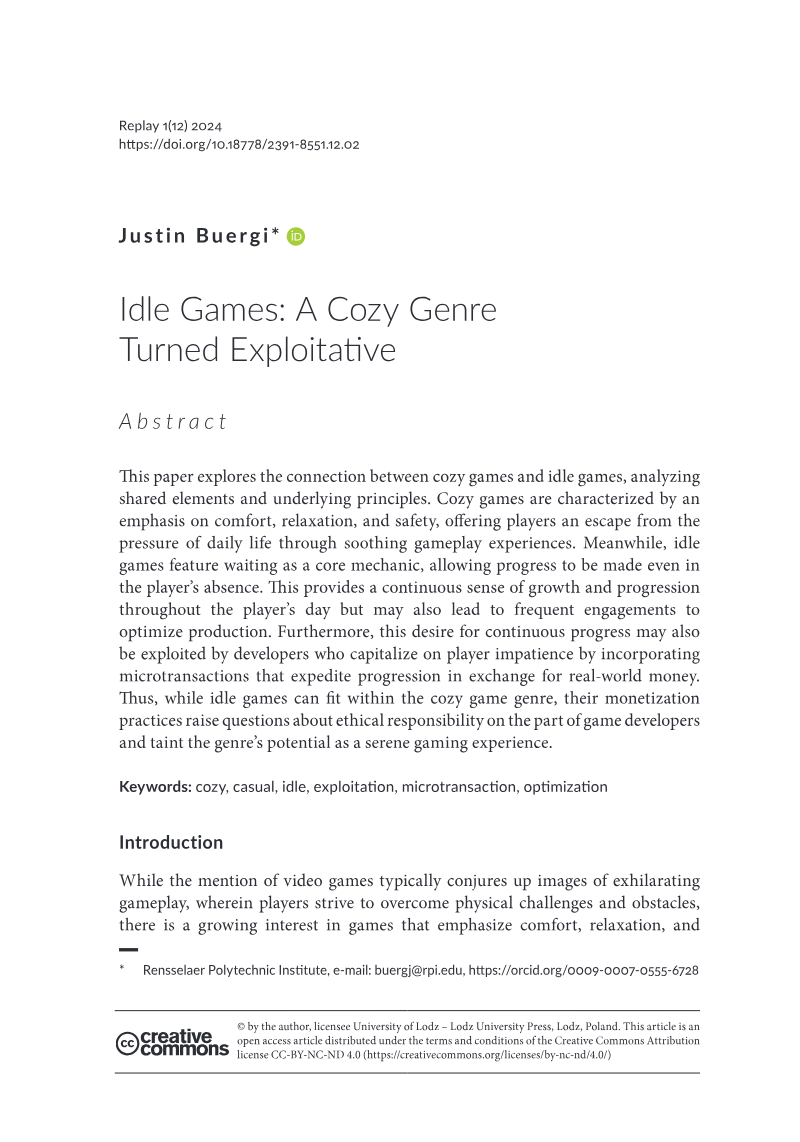
Idle Games: A Cozy Genre Turned Exploitative
Replay. The Polish Journal of Game Studies · 2024
Article
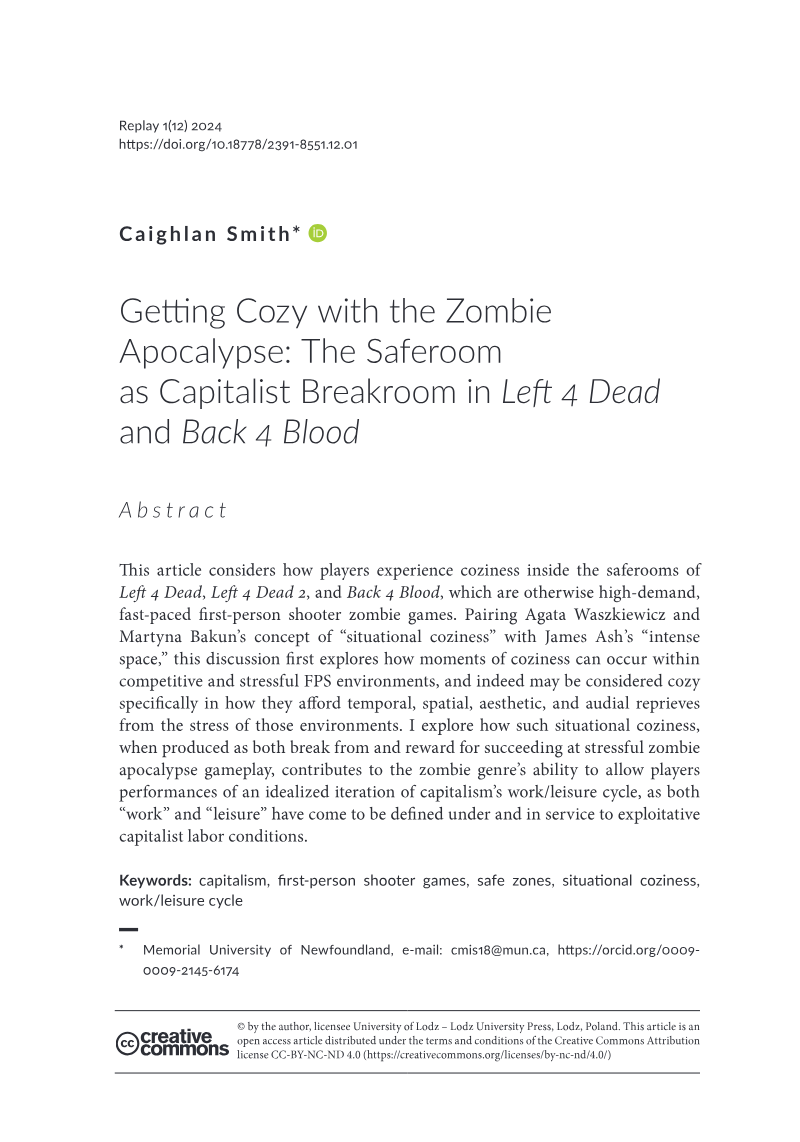
Getting Cozy with the Zombie Apocalypse: The Saferoom as Capitalist Breakroom in Left 4 Dead and Back 4 Blood
Replay. The Polish Journal of Game Studies · 2024
Article
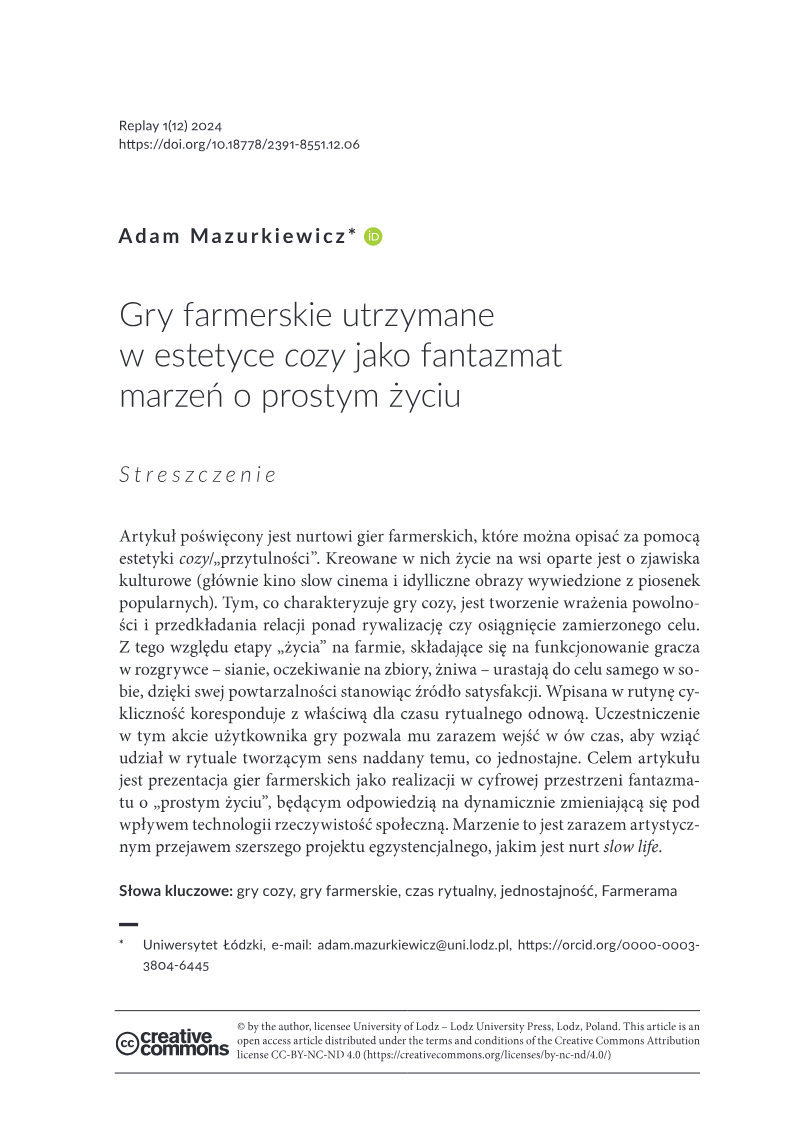
Farming Games in the Cozy Aesthetic as a Phantasm of Dreams of a Simple Life
Replay. The Polish Journal of Game Studies · 2024