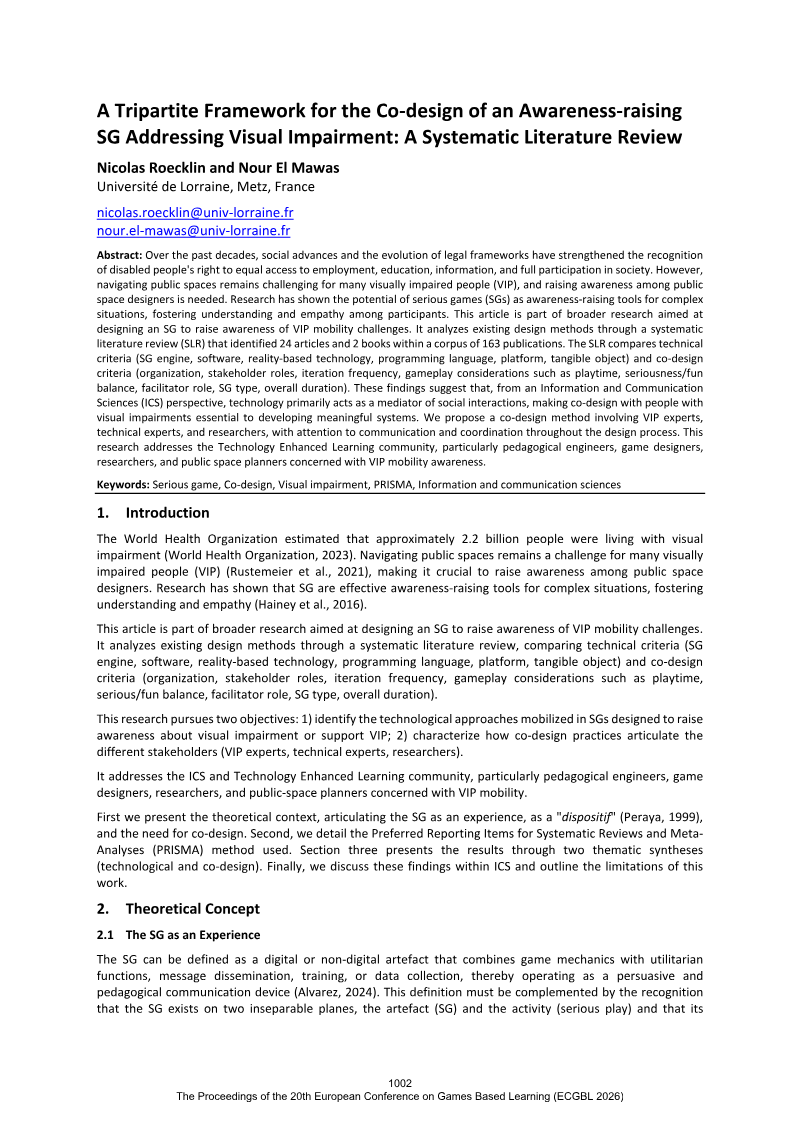
1 free read left. Create a free account for unlimited reading + AI research.
Create free accountWhitepaper European Conference on Games Based Learning (ECGBL)
1 free read left. Create a free account for unlimited reading + AI research.
Create free accountWhitepaperEuropean Conference on Games Based Learning (ECGBL)
Game design, it says, requires learners to decompose problems and make rules explicit.
This paper argues that game design can serve as a more effective assessment method than traditional essays in humanities and social science education, and that the Teaching for Understanding (TfU) framework offers a better pedagogical foundation than Bloom's taxonomy-based learning outcomes. The author, drawing on classroom experience beginning around 2006 at University College Cork, contends that essays allow students to meet formal disciplinary expectations without demonstrating genuine understanding, whereas game design requires learners to decompose complex problems, weigh alternative possibilities, and translate ambiguous narratives into explicit, quantifiable rules. The central claim is that TfU, which centres on generative questions and performances of understanding rather than predetermined outcomes, is better suited to preparing students to address complex, "wicked" real-world problems.
The paper sets out a stepwise course sequence for moving from narrative description to procedural model, including identifying actors and processes, mapping systems relationships, expressing events as matrix game statements, and assigning probabilities using dice distributions, GURPS attributes, and Sherman Kent's language of estimative probability. It also critiques learning outcomes on theoretical grounds, citing Richard Pring's 1971 argument that Bloom's taxonomy imposes a misleading precision and fails to account for how knowledge is comprehended and applied, and noting that the framework predates constructivist theories of learning.
The empirical basis consists of two course cases rather than a formal study with survey data or a controlled sample. The first, a second-year military history course on the period 1405–1920 that ran from 2006 to 2012, replaced a mid-term essay (20% of course marks) with a group wargame design task; the author reports that groups usually produced accurate, playable games and that those following a structured process performed better. The second is a general game design course spanning recent years, in which the author observes that the approach aligns with the Community of Inquiry and SOLO models. The paper acknowledges that large language models were used to generate some table content and that the evidence is largely anecdotal and self-reported.



European Conference on Games Based Learning (ECGBL) · 2026



European Conference on Games Based Learning (ECGBL) · 2026



European Conference on Games Based Learning (ECGBL) · 2026



European Conference on Games Based Learning (ECGBL) · 2026



European Conference on Games Based Learning (ECGBL) · 2026



European Conference on Games Based Learning (ECGBL) · 2026



European Conference on Games Based Learning (ECGBL) · 2026



European Conference on Games Based Learning (ECGBL) · 2026



European Conference on Games Based Learning (ECGBL) · 2026



European Conference on Games Based Learning (ECGBL) · 2026



European Conference on Games Based Learning (ECGBL) · 2026



European Conference on Games Based Learning (ECGBL) · 2026



European Conference on Games Based Learning (ECGBL) · 2026
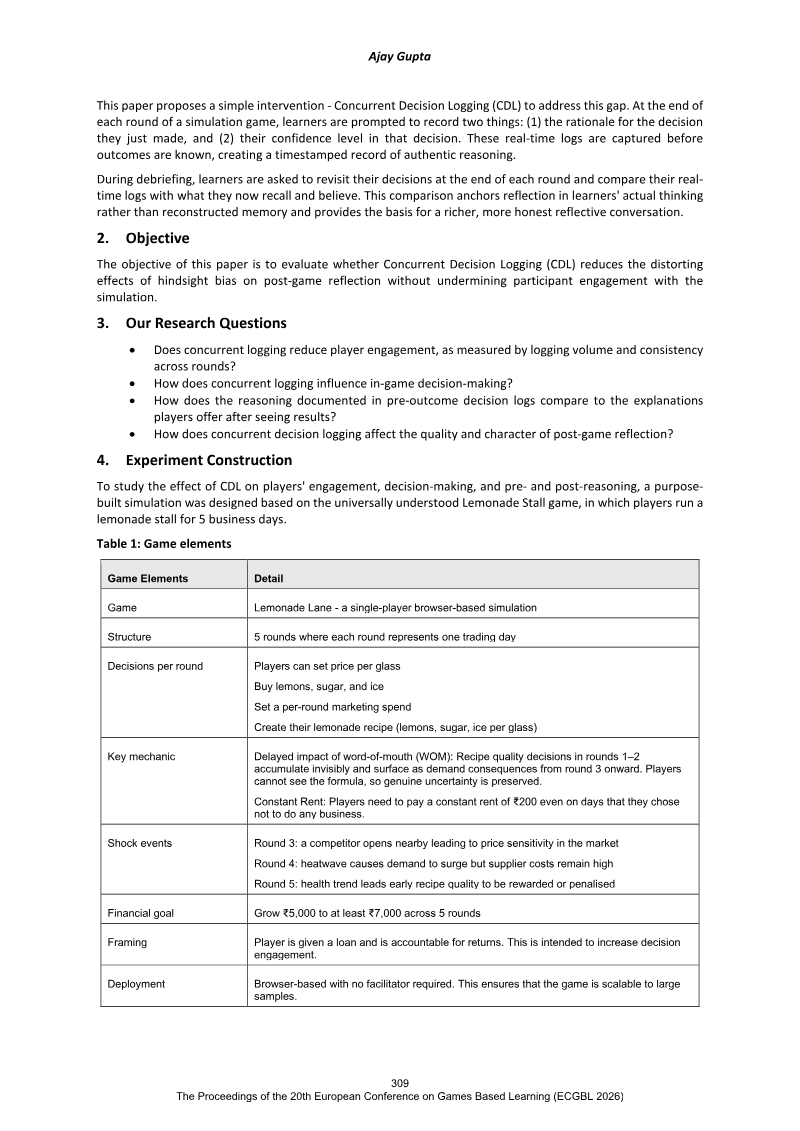
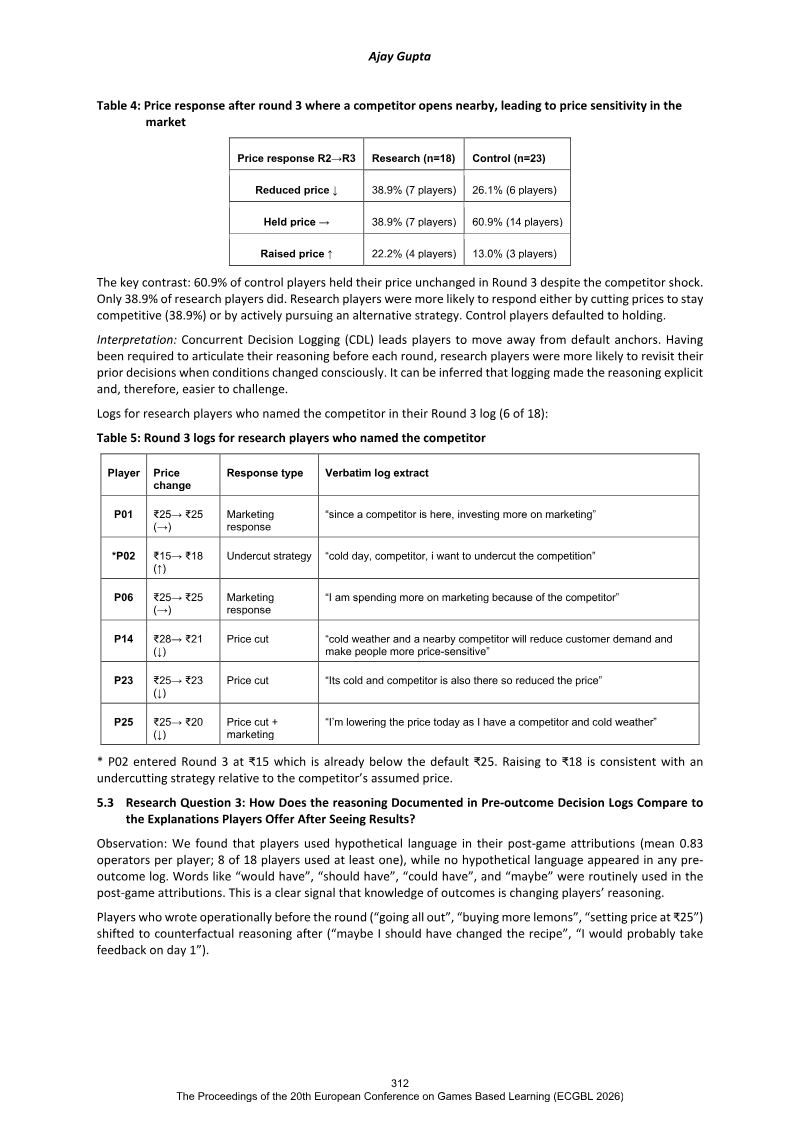
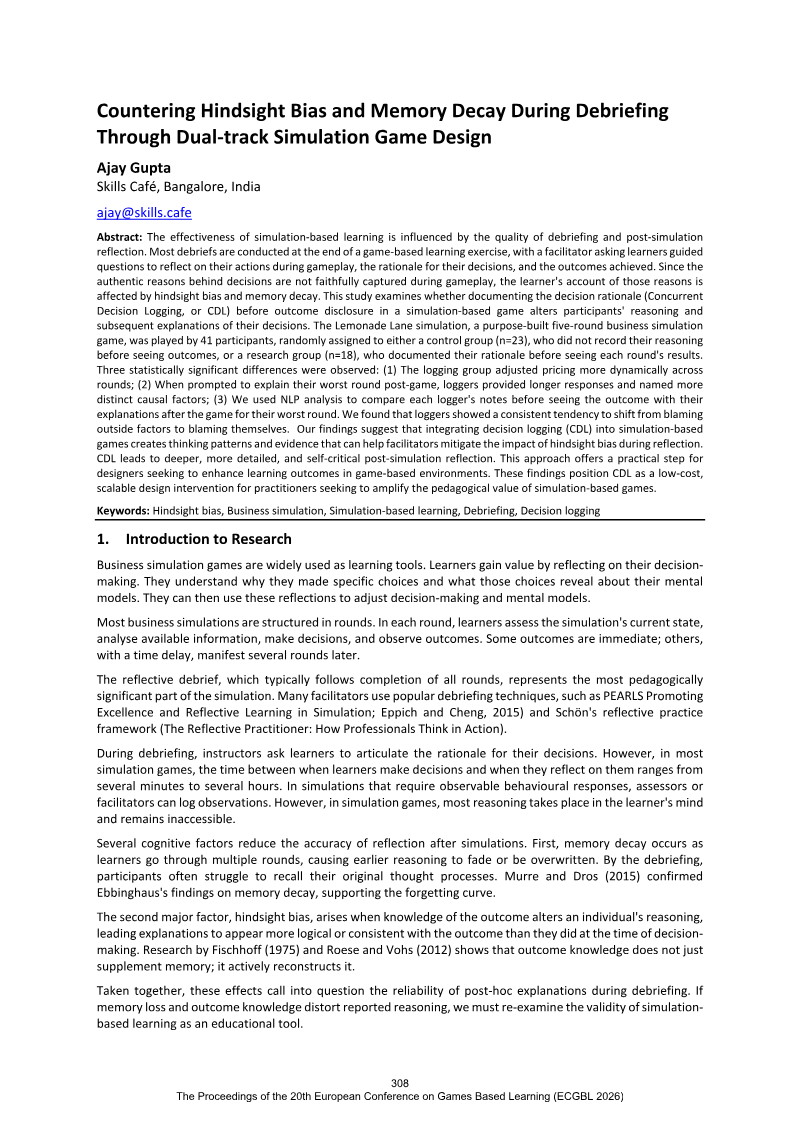
European Conference on Games Based Learning (ECGBL) · 2026



European Conference on Games Based Learning (ECGBL) · 2026