1 free read left. Create a free account for unlimited reading + AI research.
Create free account
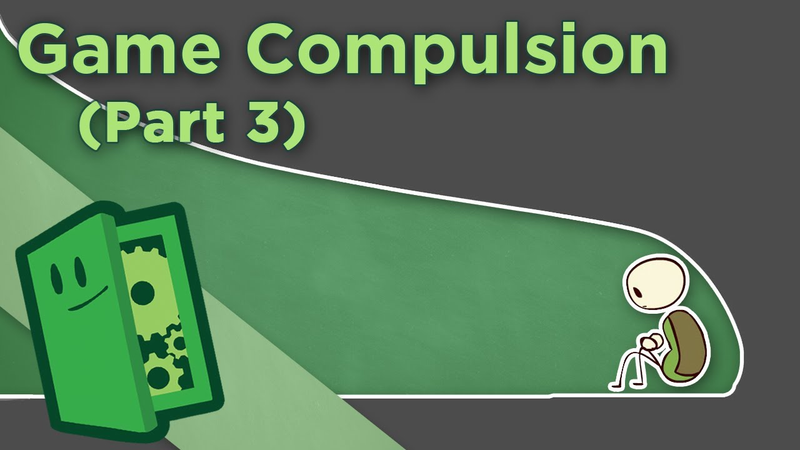
Game Addiction - III: Why Does Game Compulsion Exist? - Extra Credits
Key insights
6 takeaways- 01Game compulsion is primarily driven by a search for purpose, agency, and validation rather than purely mechanical addiction or adrenaline-seeking behavior.
- 02Compulsive gaming should be viewed as a symptom of unmet psychological needs rather than a purely pathological condition.
- 03Games provide clear objectives and immediate feedback loops that are frequently absent in modern bureaucratic workplaces and rigid educational systems.
- 04Digital environments offer a sense of mastery and contribution by allowing players to assume meaningful roles, such as healers or heroes, which mitigates feelings of powerlessness in a global society.
- 05Gaming spaces function as meritocracies that reward specific talents and intellectual gifts, providing essential validation to individuals who feel marginalized in their real-world social circles.
- 06Individuals can improve their real-world well-being by applying the lessons of resilience, goal-setting, and agency learned within games to their daily lives.
Ask AI about this video
Transcript
It's been a year since we last talked about game compulsion. I think it's time we look at it again. In the last year, a number of you have written to us talking about your own experiences, and James has had several people, both friends and students, ask for help getting back to the world. We've learned a lot from these interactions, and I think it's time we talk about what we think are some of the root causes of the compulsion that many of us wrestle with. Because the more we learn, the more we realize that there's a larger issue, a sense of being lost, a sense of not having a purpose, that many of us turn to games to solve. I believe that game compulsion is the result of many things, but the thing I rarely hear all the studies talk about is the human element. The pressure society may put on us that leave us with the unmet needs that games feed. James talked to several experts and read many papers on game compulsion, and we have great respect for the people doing work in this field, but most of those he talked to didn't play games. They never had to wrestle with that dragon or see how it affected the lives of those around them. And because of
that, they seem to focus on things like the Skinner box elements of games, or adrenaline addiction, or whatever. When what's at the heart of it may be a lot closer to home, maybe in our society itself. I think today many of us are lost in society. We don't understand our purpose of why we matter in this world. Back when mankind lived in little villages, it was easy. If you were the only cobbler in the village, you understood why you mattered. If you weren't there, no one in the village would have shoes. Today, it's just so much harder. I don't know if the human brain was built to comprehend a society of 6 billion people, to understand why being a cog in the vast machinery of our modern times could possibly matter. Many of us look to our jobs and to our lives and see no greater purpose, no reason to be. And this wears on a body. If you're entering data into a spreadsheet that you don't even know what it means, or pressing a button that puts a cog on a sprocket, which will eventually be some part of a machine you'll never see, it's hard to always remember why it all matters. And this is something we need. It's also something games are very good at giving us. In this giant post-industrial world where our purpose might be obscured, games are very good
at giving us a clear sense of purpose, of being a hero, of mattering to the people around us. When you're the healer or the tank, you know exactly why you're there, and you can take pride in a job well done. You can feel accomplished and proud, like you're part of something greater without being subsumed by it. When at the end of the game you save the world, you are sure of who you are, that you're not just some interchangeable part. And we as human beings need that. You may not notice it in your day-to-day, you may not be consciously aware, you may not be actively registering or saying to yourself regularly, "I wish I understood better why I matter." But for many of us, on a subconscious level, today's society leaves us with that void, that gaping hole that games can help fill. And so, when we talk about game compulsion, we have to talk about a sense of purpose, about the meaning in our lives outside of games. Otherwise, the discussion's incomplete. But along with this loss of meaning also comes a loss of control. In this giant incomprehensible world we live in, sometimes you feel like you don't have any agency over your own life. You're going to school, taking classes you don't care about because it's what you have to do. Your parents would be ashamed if you didn't. You're stuck in your job because of choices you
made years ago. You can't be with that girl you like cuz you're not good enough at talking to people. Or you can't be with that boy you like cuz his friends are too cool. Now, these are all illusions. They're all things we actually do very much have control over, but it's very, very easy to feel powerless in a society where someone else assigns you grades, gives you job reviews, rejects your resume, or lays you off. But games give us a sense of agency. They show us the consequences of our actions and always leave the outcome we want as we can achieve through our direct control. In a game, you know it's a fair playing field, a place where if you really try, you can succeed. No force beyond your control is going to tinker with that outcome. You're never going to be denied that job because someone had a bad day in the HR office out in Poughkeepsie, or get rejected from the school you wanted because someone didn't have time to really read your essay cuz they had to rush out to get their daughter from daycare. No. In games, you are the ultimate authority, the final arbiter. The The make a pact with you that if you work hard enough and are skilled enough, you will succeed. That feeling of control, that assurance that our destinies really are own, is something we all need. Something
that's essential to our morale, to our well-being. Studies have shown that kids who feel like their choices matter, that what they do will get them into the college they want or earn them the career they long for, simply perform better than those who don't, regardless of IQ or even school system. When we don't feel that in our lives, it's easy to retreat to games to find it and slowly withdraw more and more into that world we can control, as doing so causes our real lives to seem more and more out of our control by comparison. Lastly, there are times where our society doesn't reward us for things that we think make us great. I mean, I was lucky in high school. I met good people, I found my tribe, but we've talked to several young people who see all their talent and their gifts, the fact that they're smart, the fact that they're good at math or that they've read a lot of books, and those things seem to have no value in the society they're in. The popular kid gets the adulation, the praise, friends, and relationships they want. And so, they turn to games because games reward you for all those things. Because games acknowledge to some of us the things society doesn't and tells us, "Yeah, you should be proud of that." That is a powerful thing and an easy place for us to get lost in if the rest of the world doesn't seem to value
what's good in us. Just remember, that's all an illusion. We are the ones who create worth. We are the ones who decide why we matter. And we are the ones that control our own lives. It may not always seem that way, and it may be much easier to see these things in a game, and to get what you need to fill that psychic void from characters on the screen, but you don't need that. Rather, use it. Use it to make you stronger. To remind you that you do write your own story, that if something doesn't succeed, if it falls out of your grasp, come up with a new plan. You die in a game and you don't just give up, you try something different. Use that lesson in life, because our hours in games aren't wasted time. They're not just a way to burn daylight or escape from the world, they're a way to teach us to conquer it. And remember, life will always welcome you back. We'll see you next week. Darkness follows when we fall. The morning will reveal us after
Curtains wide, say you'll run with me. Captives we were called, but now we're free. We won't stop until we say we're done. We'll win.
Summary
This analysis explores the psychological drivers behind game compulsion, arguing that the phenomenon is less about mechanical addiction and more about a fundamental human search for purpose, agency, and validation in a complex, post-industrial society. While traditional research often focuses on Skinner-box mechanics or adrenaline-seeking behavior, this perspective posits that games serve as a surrogate for the meaningful roles and clear feedback loops that are frequently absent in modern life.
The core thesis suggests that individuals often feel like interchangeable, powerless cogs within a global society of billions. Games mitigate this existential crisis by providing clear objectives, immediate consequences for actions, and a sense of mastery that real-world environments—such as bureaucratic workplaces or rigid educational systems—often fail to offer. By assuming roles like a healer or a hero, players experience a tangible sense of contribution and control, which is essential for psychological well-being. Furthermore, games provide a meritocratic space where specific talents and intellectual gifts are rewarded, offering validation to those who may feel undervalued or marginalized by their immediate social circles.
Ultimately, the analysis concludes that game compulsion is a symptom of unmet psychological needs rather than a purely pathological condition. Rather than viewing gaming as a destructive escape, the argument encourages individuals to recognize these digital experiences as a reflection of their own potential. By applying the lessons of resilience, goal-setting, and agency learned within games to real-world challenges, individuals can reclaim their sense of purpose and navigate the complexities of modern life with greater confidence.






















Comments