1 free read left. Create a free account for unlimited reading + AI research.
Create free account
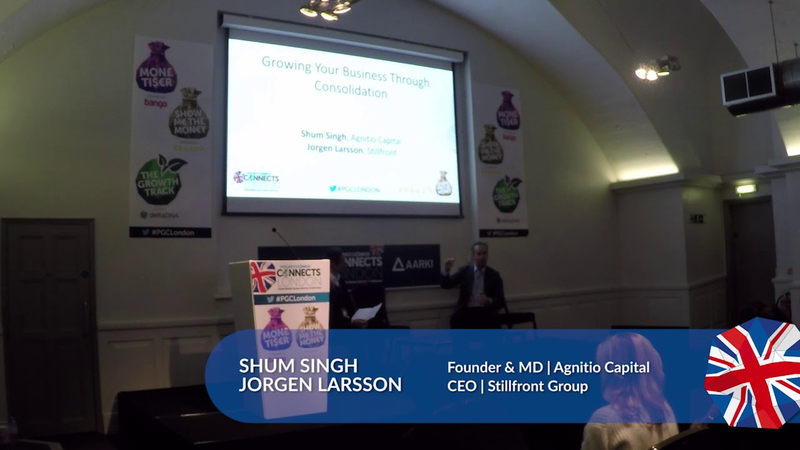
Fireside Chat: Growing your business through consolidation – The Stillfront Group story
Key insights
6 takeaways- 01Stillfront Group utilizes a decentralized acquisition model to scale independent studios by providing centralized access to capital, cross-platform expertise, and a collective user base of approximately 500 million registered users.
- 02The group targets profitable, long-lived products and experienced management teams rather than distressed assets, focusing on a portfolio that currently exceeds 30 products.
- 03Strategic transitions to HTML5 and cross-platform environments have proven effective, with some titles doubling their revenue within a 12-month period.
- 04Investment decisions are governed by a strict performance marketing model that mandates all user acquisition spending must be recouped within a 180-day window.
- 05The company employs a dual-track acquisition strategy that targets both smaller studios for growth acceleration and larger, established entities generating between 50 and 100 million euros in annual revenue.
- 06The gaming industry is expected to undergo significant consolidation over the next three to five years, as mid-sized studios increasingly struggle to scale independently against larger, data-driven competitors.
Ask AI about this video
Transcript
[Music] it's almost time for that beer right I'll make a quick introduction on myself I think many I recognize a lot of faces in the audience I think most of you know who I am so I'll keep it really brief my name is Sean saying I'm the founder and MD at agnya capital were fully regulated an authorized investment bank here in London my partner David bloom runs our office on a Seattle we are principally focused on mergers and acquisitions we've sold a variety of Studios over the year to a number of some of the largest players publishers worldwide in fact some of the more
recent transactions we've done three in fact we've had a privilege of working with jørgen and yep it's a good good good segue into introducing yourself you're good please thank your film so I'm the founder and the CEO of different groups so we we have a vision that we should create a really significant gaming group being really really successful by doing a particular thing we would like to find the best independent studios and create a group where you really can draw the benefits from being a larger player but still keeping a trooper that are so strong I think in in creating a company so my background being founding this is a fourth company I'm a founding so I've made a lot of the errors so being an entrepreneur but also found some findings I think great and I think what would be really helpful for the audiences obviously some background on still front I mean you guys only recently listed and you you know you came out of nowhere and made some you
know pretty phenomenal transactions so that would be fantastic yeah so we are today 11 studios we are from significant studios so good Game Studios is part of all state from group today so that was obviously a significant transaction so we acquired the Google Game Studios for 270 million euros one half year or just over a year ago but also we have niche studios to focus on the typical types of products or category of products but the common denominator is that we have games that live for a long time so our oldest game is from scimitar onyx in the US and st. Louis their game is over 30 years old so we have been shown that we can really create from successful games even small up to very large ones we can increase their performance by joining forces in our group so I think that our model works both for small studios joining in to us and also significant students like good game well that's
really interesting what I'd like to know more I think a lot of people probably the audience want to know how do you do that how do you extend the longevity of those games and you know once there I guess part of still front groove we look for companies that are successful that rounds with where the good profitability and with inexperienced experienced team so we're not going into trying to figure out the distressed situation or something like that what we do and we're very particular about that we spend some serious time with the founders and the management to figure out whether we think truly we can accelerate their business that could be either by adding a user acquisition knowledge and experience and just the amount of data we have to see whether game could form better or not is massive so we have thoughts approximately half a billion registered users and we have spent some 250 million dollars in user acquisition throughout
the years so we have a lot of data so we can identify if we think we can scale up the business if we think that lie box could be improved because we have a lot of experience if we think we can take a product that is successful in one region because we are truly international to take it into the Middle East for instance where we are super strong or to another market in Europe where we're also strong or to the u.s. that then we can also create something which could accelerate that business so we've seen through the years that we have been able to accelerate the 10 studios out of the 1200 we've looked into the 11 to 10 students that we're invested in all have accelerated post joining the group of ours okay I'm just gonna shift gears a little bit in the third quarter q3 which you've obviously announced that earnings report you stated that 50 cent percent 57 percent of the revenues that you generated came
from mobile games is it's that really more of a focus or or as PC as well or browser I mean you know we focus on on creating good content and do the gaming experiences so then we adjust and go cross-platform so we're a platform agnostic in that way because we focus on really bring in that entertainment on the channel that the consumers really would prefer so now it's the consumers behavior because we're completely data driven so we're measuring everything and they do prefer to consume our products primarily on mobile and that's increasing significantly but if it's if it's something else in two years time three years time then we adopt because the focus in the content of our products and the joy the consumers have of consuming them rather than saying that we'll go mobile or not mobile or so having said that I must say that we were extremely happy with the improved cable
to achieve going true cross-platform so we have transferred several of our games to html5 and they are accessible both through PC browser as well as as any browser as well as native mobile and progressive web apps and that has really made those products doubling revenues in 12 months so is that kind of a firm part of your strategy is it kind of it's obviously not mobile first but it's maybe cross-platform or platform agnostic first try to obviously just distribute to as many platforms as possible yes you can say that it's platform agnostic first right in that sense before and focus on the libel so we have products that that have moved migrated from one platform to the other still keeping the the players I think that's a very strong sign that the important thing is the content and the live ups done it's it's a joy to consume our products rather than using certain platform right you also reported in q3
that you grew revenues by 25% what what was driving that I mean was you what is ultimately your gold strategy I mean obviously you just mentioned you know you're kind of platform agnostic but do you see sort of more opportunity in mobile and browser in in sort of all all areas I mean what's what's driving that I guess we're completely data-driven so we so we go out and do test models in different territories on all our 3032 products so the ones that shows the traction needed for putting in money and we're quite a bit oriented so we only conduct marketing performance marketing or user acquisition if we can get the money back in 180 days net so whether we can do that on browser or on PC or in that territory and that territory that is what drives and defines our growth mm-hmm we're good I think we're good and strong in user acquisition so we have
been proving that we can scale up existing products and that is exactly what we look for very often when you're an entrepreneur you have built it a nice performing company but you have assets that are not exploited to the food so and that's so often the case when it comes to marketing so we can scale that up just kind of changing gears because I'm sure obviously a lot of people in the audience would be interested in this is I mean you know you've obviously made eleven studios you mentioned that you're continuing to be acquisitive well what are you actually looking for in terms of of of a potential acquisition candidate if someone has built their company and I really in any way in every way put my respects to that company and at some point if you would like to sell that's all good and step down that's all good but we are not required if you're still hungry to build your company to the next level but it's tricky to take it from 50 people to 200 people that's a tricky tricky step with
a lot of pitfalls and you have to put another risk into it so what we would like to do if someone that's really hungry you're a business builder you still think you can do it but there is another amount of capital that that is needed it's more knowledge that you need to take into it you need comparison data whatever it could be that is lacking or knowledge or a new market to enter then we can add that if we can define such your growth agenda and we believe in the individuals because we are super decentralized then it's the right target for us to stop to discuss with then obviously there's a lot of things that you should agree upon before it making its transaction but that is the right prerequisites for for starting a more intense discussion okay so given that and you've obviously done it now 10 11 times what's the kind of success rate because you know obviously in M&A a lot of transactions don't end up succeeding a lot of the synergies or a lot of the
plans that you initially sort of hypothesize don't actually materialize how has how has the post transaction performance been of a lot of students so with the model we have we have been lucky to actually all of the older as I mentioned briefly all of our acquisitions have performed better after transaction compared to prior to the transaction so so for all companies that has joined the interest rate for group has accelerated and I think the reason for that it might be locked but it also might have to do with the model that we have so we are super decentralized so we're not making this hard kind of integration where now we have a corporate way of doing this we have another corporate way of doing that you have to adopt to certain policies that's not us keep the way that you operating because you're a good company you're a good business builder but we could add things we could add some UA acceleration we could add some capital if that's a
limiting we can take away some hinders and that has proven to be a very it's not bulletproof at least there are better risk people balance so I think that's the reason why we so far haven't been exposed for any case of negative post transaction development right so given that I guess that a lot of the targets tend to be then smaller right because there might be lacking a particular functional area of expertise as such as maybe you a such as maybe live ops you know or other areas how do you see that because obviously still front has grown tremendously but how do you see that evolving over time because now you're obviously going to be competing with larger publishers for acquiring larger Studios I think it will be a tremendous consolidation the next come in three four or five years so I think that it's crucial not to be stuck in the middle you have you need to have the access to
muscles in terms of financials on a capital etc and so I think that what will happen is that it's very few companies between say five million in revenues up to 250 actually that will be quite few companies in three four five years time what we have done is that we have now established the dual track practice when it comes to M&A so we continue to look for companies that are smaller in their way that you mentioned typically them from 5 to 15 20 million 15 2 million in revenues but we also have a separate track because there are a number of companies between them 15 up to 50 or even hundred million in revenues and there are still independent companies out there which we can add value to so we have some interesting discussions ongoing but we'll we'll see what the future will bring I think that's most of my questions so I think
there's a do we have a few minutes or so if anybody's has any questions as the industry matures how do you believe that the importance of consolidation like this is going to be towards small and independent companies remaining competitive or becoming competitive I think that it will come and go consolation as new technologies come obviously that opens for for new companies to come from from nowhere but I think that if you if you look back for a certain time when I started in gaming in quite some time ago and 20 years ago of course it was a large publishers but
then the the digital distribution everything came and an exploded a couple companies I think that that consolidation will take place for quite some more time so it will be quite tough for a small company to be super successful some will be successful being small companies very niche very focused also in three four or five years time but on average few companies what is needed then is a technology shift or that you have something very very unique of course that will always happen but in average it will be less companies of that size is my absolutely I'm absolutely convinced that that will be the situation and you will be tougher to compete with user acquisitions or or technology development etc so I think that for several reasons that will be the case I mean I would just add to that you know look at the top 500 grossing you know a few years ago maybe the top 200 crossing was dominated by large players it's probably the top 500
grossing now so every trend that you see only forecasts a more a more dominant position even though the industry in absolute terms continues to grow that growth is going to be comprised more or could be attributed more to larger players who are going to take a bigger bigger slice of that that growth but to you're against point I did you know I know I concur there's definitely space for those or really nimble fast-moving smaller to mid-size players that that that you know understand their audience can continue to be loyal and provide enough content to their end user communities I think also it will be more difficult to take a company from the five million to the 50 million in a couple if you focus on your niche you could be profitable and take care of your consumers in a good way but it will would be more even more difficult to take that that leap in the future so that's why why we're creating
our group because if we are 20 Studios taking that leap we can help each other and just increase the risk reward improve the risk reward yeah so hi Dave when you look at it strictly done from our financial standpoint or is there your sort of gut feel for you know what the company is doing and how well it's doing that's a good question we are exceptional data driven company so typically we agree upon a framework which is typically the budget that the business plan that some studio has when they come into our to our group where are things happen you might publish it
or come up with a new product that shows tremendous strong data that then formally it works the following that they the studio ed comes to me with an investment ask and that happened for instance for Bob the games that had their super success needs the harp published just one year ago it was were just tremendous but they didn't have any more money on the back account so they came to say this is the data I would like one bill one hand over 1 billion 1 million dollars to accelerate the business and that we look at the data so it's quite simple from that perspective if the data suggests that you can meet the scaling up this case for for you way then we grant that that request so and of course in some cases it could be more difficult it's not black or white but then it's a judgement call so but I strongly believe we invested in the individuals because they have proven a track record of building businesses so usually it's a quite straightforward discussion even
though that the the answer could be hard to see but we'll figure out a way to do it in different steps and measure and try to expand it further all the way so so far we figured out quite nicely [Music] you
Summary
Stillfront Group operates as a gaming conglomerate focused on acquiring and scaling independent game studios through a decentralized model. The primary thesis centers on the belief that independent studios can achieve superior growth by joining a larger group that provides access to capital, cross-platform expertise, and extensive user acquisition data, while maintaining their original operational autonomy. By leveraging a portfolio of over 30 products and a collective user base of approximately half a billion registered users, the group aims to accelerate the performance of its member studios, all of which have reportedly seen growth post-acquisition.
The group’s strategy is strictly data-driven, prioritizing studios with experienced management teams and profitable, long-lived products rather than distressed assets. Investment decisions are based on a rigorous performance marketing model, where user acquisition spending is only authorized if the capital can be recouped within 180 days. This analytical approach extends to platform strategy, where the group remains platform-agnostic, focusing on content and live operations. Recent efforts to transition titles to HTML5 and cross-platform environments have successfully doubled revenues for certain products within a 12-month period.
Looking at the broader industry, the group anticipates a period of significant consolidation over the next three to five years. As the market matures, the competitive landscape is increasingly dominated by larger players, making it difficult for mid-sized studios to scale independently. To navigate this, the group employs a dual-track acquisition strategy: targeting smaller studios for growth acceleration and pursuing larger, established entities with revenues between 50 and 100 million euros. While acknowledging that niche, nimble developers may still find success, the overall trend points toward a market where scale, financial resources, and sophisticated data capabilities are essential for long-term competitiveness.

























Comments