1 free read left. Create a free account for unlimited reading + AI research.
Create free account
Esports Winter / E3 Cancelled / Mobile Markets / Sky Mavis Ronin Games
Key insights
6 takeaways- 01The esports sector is undergoing a structural correction as organizations like TSM and CLG face unsustainable salary structures and an over-reliance on volatile sponsorship revenue.
- 02Major publishers, including Electronic Arts, are prioritizing fiscal discipline and operational efficiency through workforce reductions and write-offs to focus on established, low-risk franchises.
- 03The collapse of E3 highlights the failure of traditional trade shows to remain relevant in a direct-to-consumer landscape, despite the ongoing industry need for in-person engagement.
- 04Publishers are increasingly integrating user-generated content and creator tools into their ecosystems to drive long-term player retention.
- 05Mobile gaming growth has plateaued, forcing companies to overhaul user acquisition strategies to navigate the constraints of a post-IDFA privacy environment.
- 06Sky Mavis is attempting to pivot from a play-to-earn model to a broader infrastructure provider via the Ronin Network, but faces stiff competition from better-capitalized rivals like Polygon and Immutable.
Ask AI about this video
Transcript
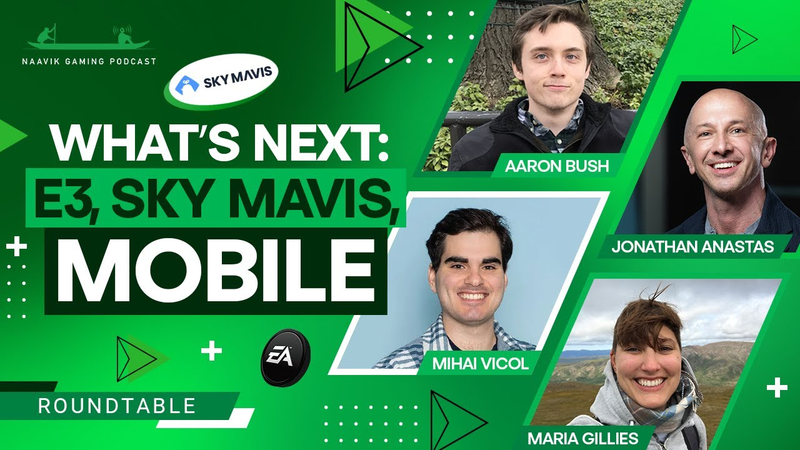
foreign [Music] gaming podcast where it is our mission to explore the business and future of video games we bring together the industry's brightest Builders investors and thinkers to keep a full sun current events dissect emerging Trends and games share Lessons Learned and have a great time this podcast is also part of novik's growing ecosystem which ranges from free and premium research to Consulting and advisory services for more information visit www.navic.com now let's jump into the episode hi friends welcome to another round table episode we're joined by Aaron Bush co-founder of navic mihai Vico game strategist at doppelganger and Jonathan anastas CEO of clash TV hi everyone hello hello thanks for joining us for your for your first episode it's good to have you here
so um yeah do you mind kicking us off with the quick self intro of course thank you yeah it's a very very kitchen name I guess um sorry mihai I'm um for the last few years I was a market Analyst at nuzu which is basically a one of the leading market research firms in the gaming industry and now more recently I've joined doppelganger as a game strategist where we work with Brands and we help them um basically ideate create and develop their gaming strategies or gaming related strategies cool um you'll have interesting thoughts to share I'm looking forward to hearing them and Jonathan I say Clash TV you have a new role congrats yes thank you so much yeah I joined this month Clash TV where a stream platform focused on helping emerging and Niche Sports find Their audience in a changing media landscape so thrilled to be here we will
have a web 3 gaming strategy and an Esports strategy to be announced in the near future so I stay very close to this category here that I love ooh also another game I like Clash TV it makes it sound like a wrestling Channel or something it's just bodies clashing and lastly but not least Aaron brought us his donut hat yep next to regular appearance happy to be here and congrats Jonathan on the new role too that's exciting stuff Aaron you didn't say you're usually happy hello are you are you dropping them oh I don't know my intros are always really awkward sometimes recently I've gotten them from chat GPT and they haven't they haven't really worked um but I should probably bring that bring that back that would be fun yeah I was listening to last week's episode and I was waiting for it and I didn't it didn't come it's okay I can I can bring it back cool cool all right what are we talking
about this week uh yeah ease layoffs E3 saying goodbye and catching Us by surprise or not surprisable we'll discuss that the mobile Gaming's Market is meant to be stabilizing and we'll dive into what that means and if we believe that that is accurate and also looking at the games that Sky Mavis announced for his Ronin blockchain and first up we have Lehigh so what's going on with Esports um yeah so as many of uh our listeners probably already know Esports is in a pretty bad shape and has been in a pretty bad shape as of late uh but this week started with a few shock announcements uh to many Esports fans uh so basically there were two announcements uh one or two days apart um and essentially both TSM one of the most decorated teams in the history of League of Legends also
active in other sports and just a very popular Esports work with a lot of fans has announced that it will positive Sports efforts in several titles and is likely to be selling their League of Legends spot in the LCS in North America um and one day after this announcement CLG another very seasoned Esports work based in n a have announced that it's closing its doors as an Esports org and obviously Mass layoffs are to follow suit um so we know Esports has been in a slump as of late uh DSM you know DSM was rumored to be in a pretty bad shape after before the FDX is Fallout but I don't think many people expect it to of the largest Esports orgs in na to actually disband to essentially stop their operations and I'm wondering if we see these two
huge orgs with a lot of fans and a lot of traction among sponsors and other third parties close their doors what will happen to other last seasoned Esports teams and organizations and the second thing I'm wondering and that would be nice to discuss is is a vicious cycle likely to follow we know Esports teams have been traditionally highly reliant on sponsorship Revenue um as a main Revenue driver so you know if some of these big teams close their doors then will this mean that less fans are engaging with Esports as a whole which will drive in turn less viewership and less fan engagement which in turn means that you know it becomes less attractive for Brands and for Brands both in them economic to sponsor Esports which will kind of
further accentuate Islam um what do you think so I have a crazy view here which is it seems to me in these cutbacks Esports teams shouldn't be cutting back on the thing that they are by definition which is Esports teams right so if you're going to stop doing something maybe stop making crazy expensive merch maybe like pull back on your like Creator side like The Core Business seems to be the thing that they should be doubling down on right in in times of financial difficulty and to your point the greatest risk is to break the flywheel and the flywheel is based on being competitive Esports teams could you imagine if a professional sporting team said we're in financial trouble so we're going to stop doing professional sports like yeah yeah I think the especially with TSM dropping League or selling that spot that that's where I was like are they shooting themselves in the foot by that
specific move like their biggest esport above all where they probably have the most fans and have you know probably a decent chunk of their revenue coming through and I yeah I don't know what the logic is but it but it definitely is rough and I guess like the it's just that the economics don't really work anymore even for some of these like larger um Sports so they just have to make tough decisions where just like the cost of operating in these leagues and paying players which I know uh you know we've seen salary Rises grow pretty quick over time that maybe it's hard to unwind from from that um you know that's made a dent while revenue from lower engagement you know post covid Etc um has also been hit harder but to me I mean it seems like I mean apart from like Esports prize pool weddings that the like the formula for an Esports business is the number of
fans you have times the average revenue per fad if that revenue is profitable and so we've seen all of these teams go a little crazy on both sides of that equation where like to earn fans you know they're going going hard and just Creator verticals partnering with streamers and YouTubers and and things like that that maybe didn't work as well as planned in terms of converting those viewers into you know League of Legends you know fans or something something like that so then on the other side of the spectrum just throwing things against the wall in order to earn Revenue such as merch or you know random partnership deals or or what have you and it to me it just feels like that equation needs to like be reset and get refocused on what matters most which you know hopefully that would be Esports in this case as you're saying Jonathan but I guess it's kind of hard to know
without looking at the the numbers on what really is driving you know the the profitable Revenue in those those cases but it is dangerous to abandon what you're known for I think like crypto like crypto disrupted the ecosystem right and all of a sudden these big checks started landing outside of the Core Business you know for traditional sports that was a smaller percentage of Revenue so it didn't matter so much and now that money gone but I kind of blame FaZe Clan for kind of this misdirection right which is like somewhere along the line This category of the thought they were selling cool instead of Esports and it's called Esports to your point Aaron right like if if you're not participating there you can't just export cool so yeah I I think we're we sound somewhat aligned and in the surprise and shock here well but didn't that happen and I think we've discussed this in a past episode for example the franchise model where the teams have to pay so much to even
participate in the Esports style they can't make their money back and then if they get uh you know if there's no TV licensing or a TV I mean streaming platform licensing deals for them to get some Revenue stream from that if the prize pools are dwindling in size like is it actually profitable with all these costs to keep your doors open and not ever to try to find other revenue streams that are not Esports I think that's pretty much the case um you're saying that you know um they should be focusing more on their core business but I think the main reason they don't focus more on their Core Business is that it's just not making them enough money to stay afloat this is exactly why we've seen them try anything and everything including you know Partnerships with pretty much anyone who's willing to throw money their way including blockchain and what three uh companies um but yeah I think some works like a
hundred thieves um they were making the revenue they were making like a third of the revenue from March a third from the resource activity and the third from other activities and I think this was in their case this split was on the good side because most teams are making even less than that on the Esports vertical alone yeah that makes a lot of sense the the other thing the the last thing maybe that comes to mind is just a lot of these teams raised so much money on so much hype and it's hard to backtrack from that to unwind all of the investment that you put in to a bunch of areas but also you know at a time to stay competitive um that sort of seemed like it was the norm that you know teams were were chasing but yeah really thorny on all sides I think Esports as a business probably just wasn't ever what it was hyped up to be but the unwinding phase
which I think we're in the middle of it's been going on for a while it's It's just tough very tough and I don't have an answer for your question mihai about the Vicious Cycle uh Jonathan do you have any views on whether by seeing these big teams leave for example the League of Legends tournaments do you think that that will dwindle the numbers of the fans and so on with that cycle perhaps and even relatively more straightforward question do you think we'll see more is for steams following the footsteps of CLG and DSM it's a very interesting question right to your point if there are fewer competitive teams is that unwind the whole flywheel the question that I don't think we've answered yet because this category is so new is are eyeballs driven by the underlying IP right are you tuning in to watch League are you tuning in to watch Cod and almost who's playing as long as they are competent is irrelevant or does it look more like traditional Sports where who ends up in
the finals has a huge bearing on ratings right in in traditional Sports there's nothing they want more than like New York versus LA or Chicago versus LA and you know it can have double digit changes on ratings and an Esports that hasn't been the case right it's like the IP it's what's driving the eyeballs and I think we're about to find that out right if more if more Esports organizations start unwinding we're going to learn the answer to that question I think leagues need to reset because the teams are sort of operating at the whims of the games and the companies that own the games and you know run the run the show that they must play inside of and so um yeah I mean someone like Activision we know has we've talked about before they've you know been leaned very on the greedy side and have viewed Esports more as a revenue driver more so than like uh engagement driver um I mean it's both but um you know by treating as a revenue driver it increases cost for for all the
participants and so honestly I think if if games want prosperous Esports they need to be more generous in how they set up their ecosystem to succeed I don't know if we'll see that happen and that's probably more specific to the top games more so than the long tail of games but yeah probably a major reset is needed I think the Vicious Cycle will probably continue unless um the Publishers step in with a bit more generosity For Better or Worse agreed well we'll keep an eye on how things develop and then yeah approach it again on the episode when we have more more news on that front so unfortunately continuing on the layoff train uh Jonathan what's going on with EA yeah speaking of top Publishers so EA announced that they're laying off six percent of their employees across a number of departments and taking I think up to a 200 million dollar write-off related to that my first couple of thoughts are you know in terms of framing how they did it you
know they're going to focus on larger scale higher engagement bigger Community IP and my first question isn't isn't that what they're supposed to be doing all along right hasn't that become the model of big Publishers right if you look at the top 10 gaming charts for years and years and years at any given time 80 of it is SQL or franchise or or top IP you know EA's got four games on the top 10 charts now one of them is new IP right so it makes sense but it also sort of feels like you're just confirming that you are doing what you probably always should have been done doing a right and then B it seems like Wall Street has given them a bit of a reward for the financial Prudence you know we've seen this happen with Fang in the last 60 days right bang announced hundreds of thousands in layoffs and they've been the highest Rising stocks of the first quarter you know that is up 70 Tesla's up 60 percent so if EA was
making a play to Wall Street they got exactly what they wanted right they get they gave all the stock value back that they lost when they announced stepping out of mobile so if they're making a market cap play uh they've succeeded I would argue if they are in fact gonna focus on fewer bigger better they're also going to succeed you know Activision got a big hard time from The Gaming Community when they decided to make that decision about a decade ago and I was there and they became exceedingly profitable and you know continue to set the bar for the highest valuation you know in a gaming transaction so you know it's it's it's a moment that reflects the times but it feels like the right decision yeah I I like first thing that uh I don't know I've just observed and that you've also mentioned is that you know most of the time when these big black firms or run gaming companies are are announcing that obviously we can basically see the stock go up and I'm
like this is such a weird thing from uh you know human perspective or from any perspective in general to see you know basically people are are left without a joke then now we're kind of celebrating this happening uh through the stock going up but to to to my other point like it feels expected given the current macroeconomic situation but it's also a little bit weird because on the one hand DA has been has already laid off some people a few months ago um and if you know it's not like they're in a tough financial position necessarily like a few months ago I think towards the end of January they've delayed their um their their new their upcoming Star Wars game which will very likely be uh hit from all perspectives and some people may argue that they've done this precisely to kind of prop up
their next round of earnings so it's very much expected that the next round of earnings for EA will look very good partly as a result of the layoffs parties as a result of the new Star Wars game coming out um so you know doesn't make a whole lot of sense to me I mean I it it kind of does to me I mean I think we're going through an era where companies are trying to be fiscally fit um and you know they put a spin on it I don't think anybody is necessarily celebrating the layoffs I think it you know the stock going up is more just the math of you know what's in models and what it means for profits and things like that not really celebration um but I mean I think Jonathan you kind of said it right where where you said well haven't they been kind of doing this already and I think that's largely true and so I I feel like most of the public rationale is is mainly span but uh the one piece of it
that felt kind of new to me uh was um uh I think they said they'll be focused on a handful of strategic strategic priorities going forward building games with large communities making the most of those communities with social and Creator tools and I feel like that Creator tool piece of things is actually quite new and actually might be telling of where they aim to take their major franchises going forward as we saw with Activision Blizzard um but what that has meant has meant different things for different franchises but really like you know probably the largest driver of that business has been Call of Duty less from like a Creator standpoint and more from well we'll just bring it to mobile we'll make it free to play and we'll just build this massive ecosystem around it to get juice as much engagement as possible from this Mega IP and EA doesn't really have a Call of Duty per se it has other really strong IPS that they I'm sure they could take in more
directions but if they really want to Turbo Charge engagement further then it kind of makes sense to unleash the community upon it in new ways and we're already seeing this maybe a bit with the Sims it was announced a few months ago that Ford Sims 5 EA is partnering with overwolf to essentially integrate ugc capabilities into the game which makes a ton of sense for for that franchise to be able to level it up in that kind of way but maybe we can see it elsewhere I mean it could make sense in like other big franchises like a Need for Speed so I'll take it to the next level um several other you know places too so I think that that part to me was kind of like the one interesting bit that stood out from the announcement that might be telling um I don't know also I mean I think all the mobile Shenanigans play into this as well in terms of just how they're resetting and they have been over the past um few months and I I can't fully blame
them um for that when they look at how the unit economics of mobile have just changed in the industry but um but yeah it is more of the same but also um perhaps a little bit telling of how they're thinking differently about the future first bonus points for using the term Shenanigans one of my favorites and all nobody wants to celebrate the loss of jobs it's interesting because there is a school of thought circulating Silicon Valley right now that is all of these large Tech and gaming companies grossly over hired you know during the pandemic era and you know I think Professor Galloway even referred to this as like basically White Collar Ubi right like six-figure up Ubi based on like you know a decade of zero interest rates and even post layoffs you're looking at head counts significantly higher than 2019 so you know there there may have been an irrational exuberance in all this hiring
over the last few years fueled by zero interest rates and and all these companies I believe today from Amazon the EA Etc are all net double-digit head count versus 2019. yeah and the other thing with ea2 is just that I mean the focus on like the bigger IPS I I can see sort of making sense because where they haven't done that recently it hasn't worked uh mobile being probably the largest example through their Acquisitions um even um so yeah I could see them wanting to just reflect over the past few the past handful of years be like well we probably did over over higher we probably have people in areas where the economics are not as strong as what our core business has been and we're actually seeing our strongest performance from what is our biggest IP already so let's lean into that further um unlock what we can and move forward I think that makes a lot of sense from
like a managing risk perspective and doubling down to what you know Works part of me is still is a bit worried about when you do that um you also make yourself more susceptible to like Innovation around the edges in the industry and it makes it a bit harder to to potentially catch up I mean that did happen to them with mobile and when they tried to catch up it didn't didn't work um so I would be a bit concerned about the industry growing past these big companies in some ways when they do that but I think these big IPS like FIFA have have legs so I think EA is still pretty well positioned for the next three to five plus years if I had to guess yeah I thought the I think the last point I thought the the relationship with over wolf is quite interesting to see how that's going to play out because I a few days ago was at ARK survival announced the partnership with overwolf to do cross-platform wadding so that you can do Moz on PC and then you can see
that and engage with it on Console which has always been a barrier in terms of creation and monetizing now you have this whole audience that you can't access so I'm very interested to see how EA will take advantage of that to create the the Creator economy and on this has nothing to do with Creator economy I have stage fry because Devon has such great Transitions and I had a blank uh yeah so yeah move on to the next topic which is Diablo for yeah me hi how's the better the beating going yeah so uh the beta for the open beta for Diablo 4 went pretty well uh actually um or some may argue incredibly well so basically Diablo 4 was playable for two extended weekends um and during the first weekend it was only playable by those who purchased um some premium version of the game in the second weekend it was playable uh yeah it was available to everyone for free for around four days and
um it has been reported that across these two weekends players have played for a total of 62 million hours a combined of 62 million hours which is essentially the equivalent of 7 000 years of play time um so you know that's that's quite a number um and yeah the feedback generally has been very positive yeah I have opinions um to me it's just Diablo like it's just you know Diablo is Diablo it's gonna sell really freaking well um and in large part the game is pretty unchanged like if you played last Diablo it'll feel really similar it's just a slightly prettier and a creepy way you know World um where you know Diablo things happen um so I actually and that'll perform really well I think from my point of view like from from having watched a ton
of other people play this game because when I looked at the beta the server kept on crashing on me um that it feels um let's put it to put it I think the formula isn't necessarily stale but from what I've watched it maybe could use some Innovation at this point like I wish they were pushing the envelope a bit better the production quality is great the combat system is typical Diablo but the level scaling seems like that could get stale like as the same generally recurring monsters scale with you as you level up the skill tree seems maybe to not have a ton of variety or really feel like it makes that huge of a difference and one from what I've read it feels maybe a bit more like an MMO than an arpg and some some ways which maybe is a bit different from what you know the biggest fans of the franchise really want so so yeah I mean it's going to sell like crazy I think I just wish they would push the envelope a bit more um you know other arpgs like Path of
Exile even lost ark have innovated in this space and Diablo doesn't necessarily need to change things up as much as other players in the space have but um seeing more signs of thoughtful Evolution I think would have been nice and it's not to say it's game over they still could produce more updates through patches or through DLCs or things like that but um but yeah it doesn't really matter what I think because it'll sell really well anyways but I'm curious what you think Jonathan from having worked in the belly of the Activision Blizzard Beast is Diablo ever going to change or is Diablo just always going to be Diablo as we've forever known it well first I really worked in the Activision Beast so I'm far from an expert in the blizzard beast but I will say this what Activision learned and a lot of their core IP and what we seem to have discovered is gamers are surprisingly conservative a lot and what I mean by
that is like they don't actually want that much change the the parallel I can make to that from the part of the belly of the Beast I lived in God the backlash when we put Call of Duty in space right like a huge massive backlash you know so I think you really hit the key word with like Evolution like Diablo should evolve slowly and I think you raised some excellent places where it could but these giant multi-billion dollar franchises do not seem to be rewarded for step stage evolution in fact they seem to be punished for that right and every time somebody writes off one of these major franchises for being stale or being old you know Candy Crush went on to continue to make billions a year Cod went on to now be bigger than it ever was before after concerns that it wasn't evolving and so Activision especially sort of facing a major modernization event probably made a very smart decision to evolve a teeny bit and
deliver the fans what they wanted right and again it's like how much does like a Marvel franchise movie like evolve so careful evolution is probably the prudent you know I hate to sound like a CFO on these uh on these zooms but you know it's like the cfo's view of evolution is probably what's going to reward these multi-billion dollar IP for Better or For Worse for better and for worse I'm absolutely aligned with you Jonathan even with Marvel Marvel is trying to evolve now with their movies and series and US gaining massive backlash even just trying to create some diversity in their character set so I don't think there is financial incentive to try to evolve just to evolve you have a market it's known it's predictable you know how to satisfy your players they're going to buy the next Diablo and continue spending with those live Ops formula that they've perfected with Diablo immortal yeah if I were in Blizzard's shoes I
wouldn't try to mix the formula too much if it's working that's fair I mean you're right I think I just don't see the evolution at all really other than just kind of the looks and so I feel like there still could be a little bit more done even just future proof the series for like another decade or something in a market that is more competitive than it used to be so I I totally understand the the CFO point of view as you put it and I think it's largely wise and I don't think it needs crazy changes but I still think it could be a bit better than it is but again my opinion doesn't matter because it's going to sell like crazy so let's move on okay Jonathan so why did E3 get canceled so big story of the week right E3 cancel potentially a surprise potentially not a surprise right like it sort of feels like what we're trying to unpack here is had enough Publishers made the decision on their own to leave
where there wasn't enough great weight gravitas and revenue to keep E3 alive for 2023 or was the process Under New Management and under re repop broken enough that that contributed to Publishers choosing that to participate right like we know E3 has had a very Rocky history of huge highs and huge lows and going away even before the pandemic and coming back and being reborn and it's in a little venue in Santa Monica and I used to build five million dollar booths for it you know it's lived in all iterations but I don't believe you can blame the industry per se like it feels like without being completely behind the curtain this year mistakes must have been made right like Gamers were all over CES Gamers were all over you know South by Southwest I had just come back from GDC that was crazy busy you know felt like pre-pandemic times now certainly those shows don't require for the most
part multi-million dollar activations on the part of each publisher right they can be activated in smaller scale more intimate ways which potentially is part of the problem but Gamescom was back on last year like it feels like there's an underlying strategic and management problem that in some ways has been foisted off on publisher participation I agree I think uh read pop probably dropped the ball in a few ways um probably is largely execution and um not really picking up the pieces after kovid too well but also I mean I think the reality of the market has changed quite a bit too where it's just so much easier for Publishers to go direct to Consumer and so um and all of the you know at least the big three like console companies do a pretty good job of that and you know Jeff Keeley has done a nice job too swooping in with summer game Fest and um see and he has very high participation from all the big players
there too which is really impressive I mean he he executed well um so yeah I have a hard time seeing exactly how E3 is really gonna ever come back to at least what it was um I don't know if it'll come back in general I kind of hope so I've never been to E3 I would love to to go to E3 even if it's the last one and it's not great you know just to say that I've been um but yeah I'm really curious to see where this goes next because the market doesn't need it the same way but at the same time I think fans would enjoy you know what it used to be again I'm gonna question whether the market doesn't need it right because you make a great point which is gaming as a category has a large enough scale and an ultra enough cultural gravitas that they can create their own marketing beats right and that's proven an analog I kind of like to compare this to is the auto shows which have come gone through the same thing and you're like why the auto
shows so the honor shows is like the manufacturers used to activate multi-million dollar booths great expense at like LA Auto Show New York Auto Show Detroit Auto Show and what you started to see was Brands activating outside of the auto show but they still used the beat or the blast radius of the auto show to tell the story and even to your point about like the direct to con you know direct to gamer activations you know Microsoft Sony Nintendo used to put on their own events but during the E3 period right or I was at Activision of the Year where we put on the concert for Guitar Hero at the Staple Center but during the E3 period so yes these gaming companies can pivot to around CES around South by Southwest they're just competing with a different kind of noise right but they're still competing with noise I do think there's a role for them and here's my crazy I have two crazy ideas of Howard can come back one is
have a media company buy E3 and the combination of the media activations around gaming like a gaming Media company like IGN or even have Jeff Keeley by you know E3 and come back at work the second one is double down on where the heat is right like how about E3 2024 is in Mina it's in the how at the heart of like Saudi Arabia or Qatar like regions that have like said I'm spending 12 billion dollars in this space and then when that is successful bring it back to LA right that's sort of reborn it so if you made me the CEO of e3 tomorrow I'm shooting for like Saudi Arabia 2024 and then back in LA 2025. on this point do if E3 were to be held in I don't know in Saudi Arabia do you think um I don't know you should receive backlash from The Wider Gaming Community given you know the regions um history
it could I mean they're very different markets right I stole that strategy a little bit from the watch industry who came back immediately post covid to do kind of like major luxury watch events in that region of the world because they Remain the largest buyers now that may be a very different Market that didn't get the same backlash and there could be backlash so that could be an issue but you know remains to be seen all I will say is like look at the energy Around the World Cup right like I'm not going to delve into the politics of anything but like everybody who wanted money wanted to raise money was trying to raise money was there in Qatar what do you think is most likely to happen most likely to happen yeah I think most likely to happen they give it one more try in 2024 under better management and that in in Los Angeles and it defines the state of the franchise okay I'm curious do you think that'll
work though if they give it one last shot you think it'll stick I may be the rare believer in IRL events this year but you know I I made an effort to go to CES I made an effort to go to dice I made an effort to go to GDC and it felt like for no other reason that people wanted and needed to see people again there is a Marketplace demand for industry-specific Gathering spaces IRL now does that mean that companies have the stomach and this economic climate to build five million dollar booths again I don't know but I do feel like business wants to go back to doing business face to face I think the thing almost more about E3 is having the in real life fever dream together of experience something all at once and just taking in the energy that it creates with awesome reveals and
personally I believe that these events sort of need to evolve with the globalization of gaming and not everyone can buy this really expensive ticket to travel to another country and accommodation and we're starting to see these with for example conferences like the GDC it's just so expensive it locks a massive amount of the market of the game developers not just talk about the consumers of being able to attend these and so it's very expensive for companies to attend E3 and it's also very expensive for the players to attend E3 and so and then I miss when I'm watching to the the game announcements just through a stream I really miss being with my friends and being with strangers and just owing like oh gasp what is this awesome new game and you just enter into this fever Community experience um so I I really hope we're moving towards a place where there are more localized simultaneous or across time zones that just localized
um activations where you can go with other people in real life and it is accessible to experience these reveals all together because I don't I don't think that's a gap that digital will plug for now that's so bang on and I'll tell you that's what it felt like in the room at the Game Awards this year right like that's a little bit of a less of a participatory and light sound experience but it felt like a room full of people in Los Angeles celebrating their shared love for gaming and I think people deeply want that well I think we'll move on then to the next topic about the market stabilizing less of a fever dream hopefully not a fever dream Aaron what's going on sure so last week data.ai which is novice mobile data partner published two reports uh it's q1 gaming index and it's state of mobile gaming 2023 reports they're interesting from a high level so so go check them
out but uh there is a quote from the Venture beat article that covers the report that I wanted to call out and get some get some opinions on it says data.ai suggests that mobile Gaming's New Normal is a much higher Plateau than it was in the pre-pandemic years the q1 index predicts that Gamers will spend more than 1.6 billion dollars a week on games in the first quarter of this year that's about a 28 increase on spending from pre-pandemic levels which is around q1 2020 they're also downloading games at a rate of 1.2 billion titles per week globally the numbers aren't as high as they were in the P pandemic periods such as q1 2021 or 2020 to but they are above where they were at the beginning of the worldwide shutdowns so if you look at the chart that's in the article of consumer spending games for q1 unsurprisingly from 2020 to 2021 it blasted up from 2021 to 2022. it fell a bit and from 2022 to 2023 it's
essentially flat so um you know if you just kind of step back and look at how they were portraying the numbers while it's true that from 2020 to 2023 q1 spending is up 28 which is yeah you know about eight and a half percent annualized that eight and a half percent analyze doesn't really exist because it's sort of been all over the place and extrapolating any kind of line of best fit is pretty pretty misleading because of the impacts of ATT specifically are probably going to keep the market flat-ish for a while um so anyways I don't know how long we really need to spend on this topic because we talked about mobile quite a bit but but I'm curious what you think about how the best way to frame up this so-called New Normal is these days or even if it makes sense to call it a new normal it feels wrong like in my opinion to frame it as like a pre-verse post pandemic a new normal versus more of like a pre-verse post ATT for example
but I'm just curious like when you look at these numbers how they're portrayed and how you just kind of viewed this Market going forward what do you think about a new normal or not in Mobile gaming I I agree with you though it's hard to pull apart the pandemic and the post idfa effects I think we are seeing still an effect of the market on uh Google play with Android so it's not just idfa and privacy changes I will not be celebrating the market stabilization yet one quarter can be coincidence two quarters maybe there's a trend three quarters then I'll make my own conclusions and I also don't want to celebrate uh return to growth too early because we will have the Google privacy sandbox changes coming at some point maybe end of 2024 beginning of 25 we're not sure yet and so the mindset that I'm in at the moment is we really need to
learn how to go back to growth and increasing financial performance and we're launching new games and scaling new games in this post idfa landscape so that when the Google privacy changes roll in we won't see the downward Trend that we saw in all these effects because we can take the learnings ahead yeah that's fair I think from my point of view maybe I just like I just quibble with the framing of some of some of this like it feels a bit disingenuous to to like cherry pick 2020 through you know 2023 and be like look the plateau is at a higher level than it used to be when in reality maybe the better framing is like oh crap it's a plateau versus yeah like you know it used to actually be a line that went went up um and yeah I mean you're right Maria um I think we the industry needs to figure out how to how to launch and scale um when UA
is harder or just figure out those new techniques no no I don't think we need to spend too much time and that yeah um but anyways a message of hope I think when I first started working in the mobile games industry and there were just clear incumbents in the top charts I entered the industry thinking how will I ever topple them is it even possible for a small company to grow and reach a scale of the companies that arrived early in the in the growth of the mobile gaming space but now with these changes of the landscape I'm kind of enthusiastic of okay wait as a small company if you can kind of figure out how to use this to your advantage we can perhaps see just a mix-up of these top charts and seeing new games and new companies and a shift in general in the market so that's what excites me and what keeps me hopeful for the next few years of mobile gaming well let's talk about games mihai yeah Sky Mavis announced some games
um indeed so Sky Mavis the creator of blockchain game Max Infinity um has announced um it is partnering with four different game studios as part of their Builders program so they're essentially making also making some migrating Brands into these Studios and you know um they will build together some games that will be exclusive to the Ronin Network um but before talking about the individual Studios I think it's useful to just do a brief recap of uh Sky Mavis and what's been going on in the last few years on their end so obviously they've released actually Infinity which was you know um kind of the poster child of blockchain games has seen over 4 billion um USD in trading activity on its Marketplace um was later hacked for 625 million
um in the meantime Sky Mavis has raised some money and made the users whole also address some of the security concerns by shifting from shifting Ronin from proof of authority to the Gated proof of state which as I said is likely to alleviate some of these concerns but not eliminate them entirely uh because you know there's still a bridge between Ronin and ethereum and bridges generally introduce uh new um attack collectors or make uh the possibility of an attack or a hack um quite a bit higher but uh today Sky Mavis is focused on building um Three core pillars so to speak so on the one hand they are building games so they've released like Infinity which is the elg blockchain game they've released taxi Origins which is kind of a free to play game that's meant to draw people into the exe ecosystem and draw them towards the main
game um they release some land gameplay right uh you know you can users could require land and now there is some games there on that there is a separate game um so this is the first pillar the second pillar is kind of the gaming adjacent tools so there is they have a proprietary wallet which users can leverage they have a proprietary Marketplace which uh both the axi games and the games that they are partnering with will be able to leverage and they also have something called the mavisap which is kind of a digital storefront uh so similar in a way to statement to the the game store um but there's something that doesn't really make sense here to me because they have this maybe sub that you can download on your PC but Sky Mavis says they did repeatedly that their current focus is on mobile so I'm not sure how these two things will work together if they will in the future and there's one more thing here
since you know their games are although they're available on mobile they're not available on any of the two main stores so they're not available on the Google Play store or the iOS store which is obviously a huge distribution problem because that's how you get you know you get people to play them you need to make these games available but because of the fact that they contain nfts and regulatory uncertainty they are not yet available and now the third pillar is the kind of the blockchain infrastructure tools pillar you know they have the uh the blockchain obviously uh The decentralized Exchange Katana which players can use to sort tokens and stuff like that so this is kind of a short um you know a short description of where Sky Mavis is now and now on to the four Studios that they've been that they've partnered with um yeah so I'm not sure if I should go
through all four of them or if I should just describe in a in you know do a one-liner of what their main specialty is yeah sounds good yeah nope all right so the first one is called directive games uh it was founded in 2014 uh developed some relatively unknown VR AR games um and yeah now it is partnered with Sky Mavis the second one is stripe Studio um it's in essence they they're planning to develop a social MMO on a blockchain like pretty much a lot of other Studios uh building MMOs on the blockchain or in general seems to be a very popular strategy because they can essentially be you know as a successful MMO is poised to be a cash cow for many years to come but this doesn't mean that
um it's an easy task and now those are some of the most complex games to develop all the more so if they're on the blockchain because you'll need to build a whole economy around them the third studio is called uh baling games it's found itself founded by some people who build the popular anytime Series in South Korea and the four studio is called bout.io and they're basically building a qriket game for the Indian mobile market um very different from one another yeah I think that's part of their strategy I think they're kind of trying to appeal to different audiences right so they're trying to appeal to the mobile gaming audience in India they're trying to appeal to the mobile gaming audience in South Korea and in that part of the world and they're also trying to appeal to um you know to Western audiences uh with
uh the first two the first two games but yeah I think the main question is do you think you know do you think these Studios will release good games that will be played by a considerable number of people because my concern here is that there's nothing that to me indicates this will be the case I yeah I think that's that's right let me let me share my my point of view and maybe just zoomed out a little bit then I'll Zoom back into the the game so I've always admired um um Sky mavis's ambition and you know as a flag bearer of this new movement amassing a ton of users and and funding and then trying to you know turn that into a much larger ecosystem and I think that's exciting and all this news you know it's great to see them still in the game uh but I think they shifted from
being a first mover to you know being more much more of an underdog now in the world of web3 because of obviously actually Infinity blowing up it wasn't a sustainable economy and two the Ronin hack really set back um those Ambitions to onboard other teams and developers onto its platform and what those t with those two things being really compressed the other parts of the the ecosystem you know can't really gain traction either since they all they all work together so the company has been largely quiet for a while as they've just been building to to kind of fix Ronin to now have this major upgrade to delegated proof of stake which is exciting but now the question is like you know are these games going to move the needle enough not just for like the games themselves for the ecosystem as a whole um and I think it's interesting to look at these games from the standpoint of
like they're very curated sky made us before had a Creator program which empowered who were people who were essentially fans to make small games but I think when we talked about this like a year ago or whatever that was uh you know we were pretty skeptical because the quality of the games didn't look awesome the Creator revenues the revenue share terms didn't look that competitive and it just had weird quirks like forcing uh users to like adopt like the AXS token like across their games which just made it more limiting and I don't think that program has worked out super well but maybe it was a stepping stone to what this um became which actually has professional teams um but another couple observations I had about this move is that at least two of these four games from what I could tell will not have web 3 features out of the gate um which shows a pretty major transition from being like very much
play to earn first to now game play first to then you know build a better game build an audience so then start to integrate web3 features probably in more subtle ways um and then third one of these games is using the axi infinity IP for a match 3 game I don't fully under understand um that uh the match 3 component and how that'll work with Mavis Hub and stuff like that and it's just a super competitive market anyways but but whatever it still shows that they're trying to think of like more utility for the core IP and uh I think x infinity has like 200 000 daus so it's obviously tiny in comparison to other like mainstream games but you know still is an asset and really their Community is their largest Advantage right now um and then lastly yeah one of the games is uh cricket which shows that they're focusing on the India market which obviously is huge and from what I could tell is you know much more receptive less critical of you know web3 gaming
um as a whole and that's that would be a very new direction for Sky Mavis too so it still is a bit scatter shot in the approach here um and I'm not sure how much it will really work or scale but it is a it is a very positive development so Props to the team for getting to this point the hard part for me to understand uh or just like really want to be super bullish on this is while uh Sky Mavis was pretty quiet and building all of this up we saw a polygon in a mutable in particular just turbocharged forward have pretty tremendous BD and be able to to onboard a ton of external Partners onto their their Tech and their platforms um and so I think it's going to be really hard for Sky Mavis to kind of compete against those two companies especially now that they're partnering together in more ways and maybe they'll have some tricks up their sleeve or much more announcements to come but I think shifting from a
first mover to now being the underdog is a tough position to be in and while this is a positive development it's not nearly enough to compete um more ecosystem wide over the next few years at least it's interesting because from where I sit actually Infinity was a financial schema before it was a game and then it blew up and I don't think there was actually any real gaming there and you raised a great point where now these are web 2 games not web 3 games and so really there's a disconnect between actually Infinity's first audience and first position and now the current position and what I can't tell is it is it a major walk back to try to actually be a gaming company or is it just simply a disconnect right from who Their audience was and what Their audience seeks versus what they're making now you raise a great point about polygon and immutable and they have
incredible BD but I would also characterize as checkbook BD right which is a lot of checks were written to a lot of Partners to get them on the platform which is a little different than belief in the platform and I believe even in this news that checks were written to these developers so I I think we have to find in this web 3 gaming world you know games that are built with an audience in mind with an audience in mind and developers are in place because they're Believers instead of Czech recipients right it was very easy to go raise money in this world to build games by aligning yourself with a major platform and that's very different than the way traditional gaming ecosystems have been built and as all these funds become depleted what happens to the whole Space right as people are making decisions without big Advanced checks where does it all go yeah I don't know probably to where the most where the network effects are or the most players and the most other
developers are and when that works that also you know turbo charges both fundraising and just revenue for those other companies to get advantages and reinvesting in r d it rates that other the other platforms can't really match as sort of where I would guess but to kind of your earlier point I do think there there has been a disconnect between um what players initially expected and what they do now um and you know before the expectation the job to be done was to to earn money from playing games uh which is what the entire web3 gaming bubble you know was was driven by and I do think that you know many teams at Sky Mavis most of all they had like they were coming from the right place like they like their heart was was like in a place of like helping people unlock economic Prosperity it just didn't just didn't work um and so now with a much smaller audience because many people went away because I couldn't make money anymore
the job to be done has shifted from less earning although that still might be a component um some more just um asset ownership and just being excited to be part of a community and I think um I think their Community is their largest asset but obviously it's not at a scale that it that similar to other franchises so it only has you know more minimal impacts and how it can drive a full ecosystem from from this point but I do think the job to be done of more ownership and leveraging assets across games and joining the community having fun with the community is more of the the driver um which is a very much a disconnect and I'm not 100 sure if that's strong enough to really push things forward in a super competitive way it'll take more than that you raise the point about Community twice which I think is
really important I was at the marketplace raising money for something with axi infinity as a cop in the DAC and there was a huge amount of VC blowback right like we actually ended up taking it out of the deck as a comp like it's become that much of a negative in the money raising space and it's also interesting because it's been that Community has been held up as like one of the larger scale you know in web 3 and kind of like a Target Mark and you raised earlier in this conversation relative to the community scale of traditional gaming it's actually quite teeny right that if you live in this bubble it's quite big but if you step into the larger gaming ecosystem the scale really isn't there so um I think the way that I'm processing Sky Map is and I won't be arrogant and enough to say that they should have done this in a different way they were in a very nascent Market it was so hard to know what the right decisions were made I'm sure they made the best decisions with the information that they had at hand but I see almost three three big
moments where that has led to them to to their current standpoint I think one they started building a game and it looked cute they had a community but I ended losing fuel because they shifted their attention to trying to build being a platform I think and use the term being just scattered and so instead of like doubling down on something where you already had a community where you already had a foundation and really focus on trying to build that and make it sustainable and grow it they decided to try to build out being a platform but then they went quiet and in a nascent Market where you have so many companies trying to enter blockchain and so many of them have no idea who to work with you'll probably go to the person that talks the most because they have the most presence you feel that they're more trustworthy and I think you had a really great point with immutable and polygon they're the first people to think about if you're ever oh I want to make a blockchain game okay I'm going to go and speak with them like who's Ronan really in this in this market apart from the
checkbook and then yeah by being quiet they just lost their market share and they also lost their identity and I think that's the third point I just don't know who Sky Mavis is do they make games are they a platform are they a publisher I just don't understand what their dream and what their value proposition is at the moment for the market and so I really hope that they can find that and unfortunately looking at all the different kind of games like a VR AR company and then an MMO is just again it's like a scattered a scattered proposition of what games players can find on this blockchain it's not even targeting like one Community is targeting so many other different communities so how are you going to leverage your existing Community right a bit I don't know if the bill for rent I hope this makes sense um yeah I'm hoping to see the Consolidated vision of Sky movies really yeah the very total sense in this time where everybody has the intent in this time where everybody has the attention span of a Nat if you don't understand who somebody is basically instantly
you're in deep trouble and that and that's really the powerful point in your point about their identity issues yeah the very last thing I'll I'll say on this is just to put a plug for an interview that um the Nico on our team for this podcast did with um Kathleen I'm blinking on her last name but she's like the head of beauty BD for Ronan and I've heard really good things about the interview I haven't listened to it yet but it just came out um a few days ago at the point that this episode will come out so I'm sure that'll put much more context around this conversation answer many of the questions that we have and um yeah if you're interested in this conversation I'm sure that one will be super interesting too I'll go and listen to I should have listened to be prepared with my phones I know so I think I think we'll wrap up here and we're a little bit over over time uh mihai thanks for joining for your first episode Jonathan Aaron it's always nice to have you here and it was lovely to host you for this week and
we'll see you in the next week bye everyone if you enjoyed today's episode whether on YouTube or your favorite podcast app make sure to like subscribe comment or give a five star review and if you want to reach out or provide feedback shoot us a note at podcast navic dot Co or find us on Twitter and Linkedin plus if you want to learn more about what novik has to offer make sure to check out our website www.navik.com there you can sign up for the number one games industry newsletter navic digest level up your insights with our premium research platform navic Pro or contact us to learn about our wide-ranging Consulting and advisory Services again that is www.navik.com thanks for listening and we'll catch you in the next episode
Summary
The global gaming industry is currently undergoing a period of significant structural correction, characterized by a shift away from speculative growth toward fiscal discipline and operational sustainability. The esports sector is experiencing a painful unwinding as organizations like TSM and CLG grapple with unsustainable salary structures and an over-reliance on volatile sponsorship revenue. This downturn forces a critical re-evaluation of the industry’s business model, specifically regarding whether competitive viewership is anchored to game intellectual property or the brand equity of individual teams. Simultaneously, major publishers like Electronic Arts are implementing workforce reductions and write-offs to appease market demands for efficiency, prioritizing established franchises that deliver consistent, familiar experiences to core audiences.
Industry events and distribution channels are also facing a period of instability. The decline of E3 serves as a case study in the failure of traditional trade shows to adapt to a direct-to-consumer landscape, though the cultural necessity of in-person engagement remains a point of contention. In the mobile sector, growth has plateaued, necessitating a strategic pivot in user acquisition as companies navigate the complexities of a post-IDFA privacy environment. These challenges underscore a broader trend where publishers are increasingly integrating user-generated content and creator tools to maintain long-term engagement within their existing ecosystems.
Finally, the blockchain gaming space is struggling to transition from speculative financial models to sustainable, gameplay-first experiences. Sky Mavis, once a leader in the play-to-earn movement, is attempting to evolve into a broader infrastructure provider through the Ronin Network. However, the company faces an uphill battle against better-capitalized competitors like Polygon and Immutable. By shifting focus from its core community to a fragmented platform strategy, the firm has struggled to maintain its market position, highlighting the difficulty of pivoting from a financial-centric project to a competitive, diversified gaming ecosystem in an increasingly crowded and skeptical market.













Comments