Loading the document
1 free read left. Create a free account for unlimited reading + AI research.
Create free accountArticle DiGRA
1 free read left. Create a free account for unlimited reading + AI research.
Create free accountArticleDiGRA
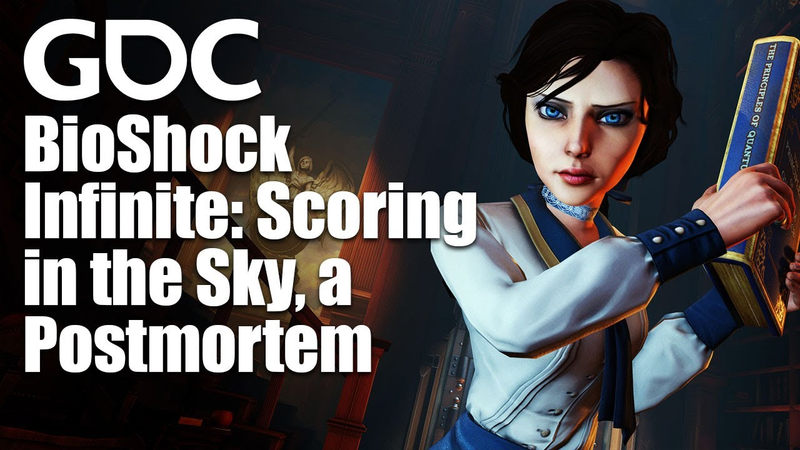
Zakowski treats environmental design in the BioShock trilogy as a core narrative element rather than a backdrop. The game space itself carries meaning.
Space in the BioShock trilogy is not a mere backdrop but a core narrative device operating on three levels: the storyline, the storyworld, and the narrative universe. Zakowski's analysis covers all three games, from Rapture in 1960 and its aftermath a decade later in BioShock 2, to Columbia in 1912 and its parallel realities in BioShock Infinite (2013). The argument draws on narratology and spatial theory, including Marie-Laure Ryan's possible worlds model and Henri Lefebvre's concept of social space, as well as game studies work on environmental narrative.
In the first game, scattered, non-chronological audio diaries and set pieces such as the electrocuted smuggler embed stories in the environment. Players reconstruct Rapture's history much as they would solve a murder mystery, so the game becomes as much about the place as about its protagonist, Jack. These embedded narratives also deepen characters such as Ryan and Fontaine.
Rapture also serves as an ideological battleground. Ryan's capitalist vision made it a Lefebvrian "homogenous space," but rivals carved out "differential spaces" that undermined his control: Fontaine's Homes for the Poor and Orphanages, Lamb's Dionysus Park, and Simon Wales' church. This fragmentation helped drive the civil war and city's collapse.
BioShock Infinite extends spatial storytelling to the level of the narrative universe. Elizabeth's Tears allow travel among parallel realities, borrowing ideas from quantum physics, and the Sea of Doors connects Columbia to the Rapture of the earlier games. This crossing of ontological boundaries makes the story metaleptic, a story about stories, which the author reads as the meaning of "Infinite." The study presents this "ecological" approach as a systematic framework for analyzing narrative space, while noting that other applications, such as using personal space for characterization, remain open for future research.
Each row is a game or company this document names, each column a document, oldest first. A mark means that document names it. Select a row to see those documents.

DiGRA · 2026

DiGRA · 2026



DiGRA · 2026
DiGRA · 2024