1 free read left. Create a free account for unlimited reading + AI research.
Create free accountWhitepaperAssociation for Computing Machinery
Distilling the key insights…
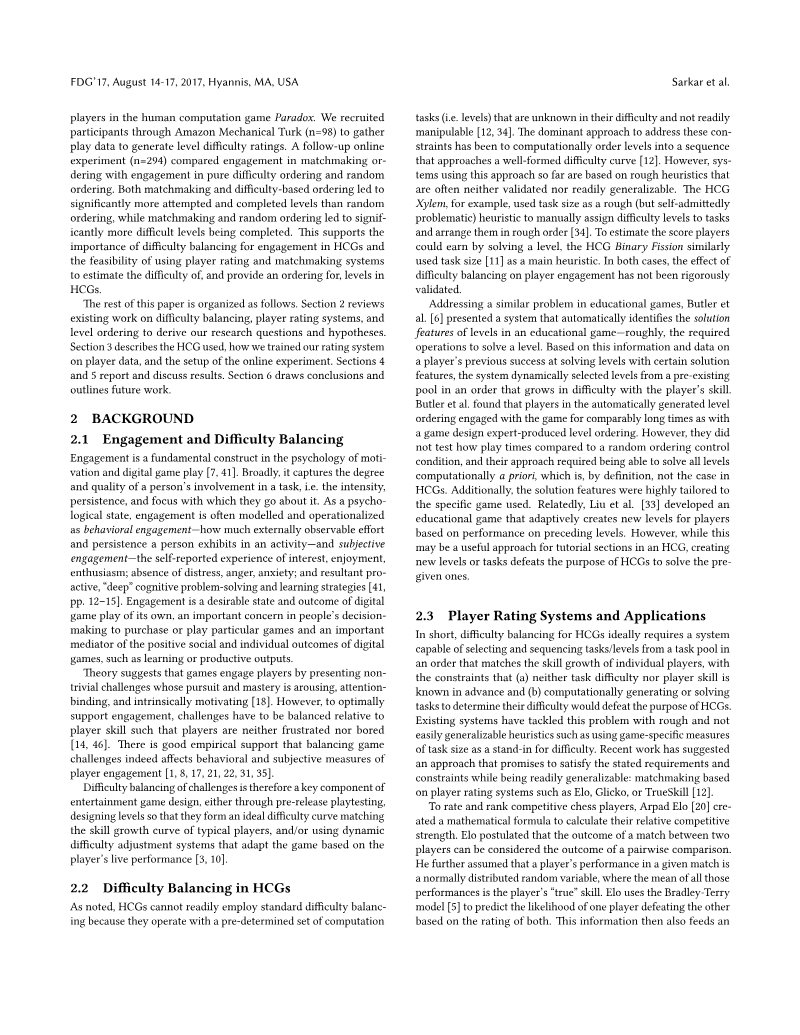
Human computation games rely on the effective calibration of task difficulty to maintain player engagement and ensure the successful completion of crowdsourced objectives. By integrating the Glicko-2 player rating system into the level-ordering process, developers can dynamically align task complexity with individual skill levels. This approach serves as a scalable mechanism to optimize user retention and productivity, moving beyond static or randomized progression models that often fail to sustain long-term interest.
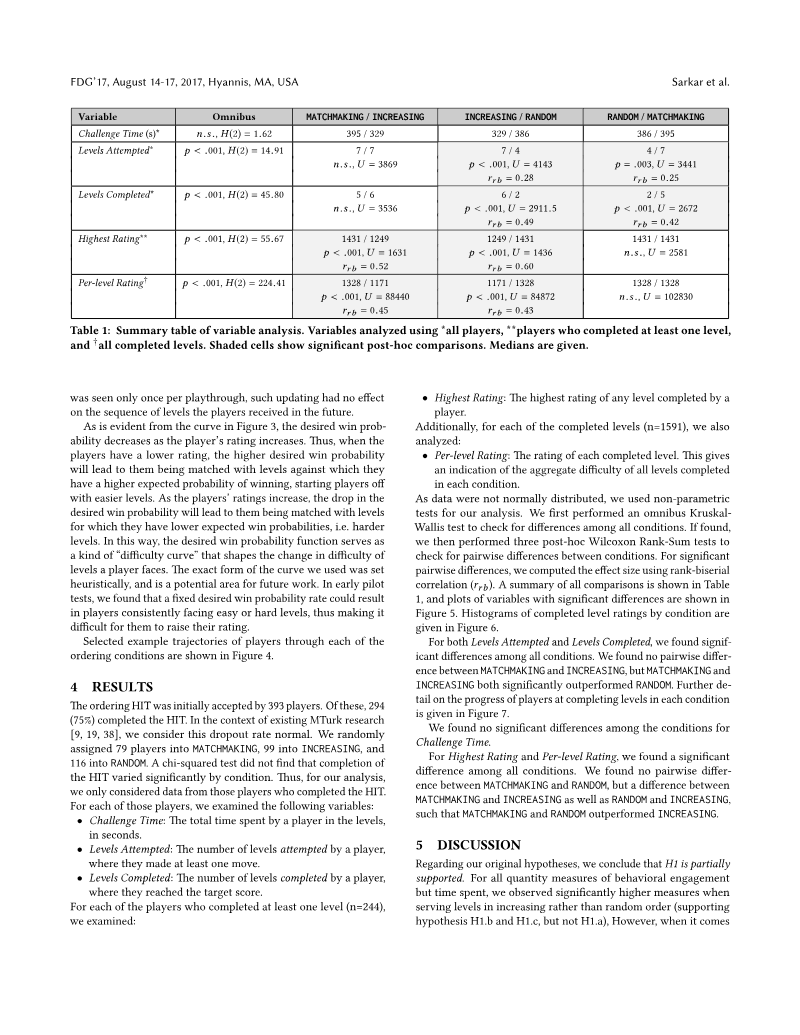
Empirical analysis demonstrates that both structured difficulty progression and skill-based matchmaking significantly outperform random level ordering in terms of the total volume of tasks attempted and completed. While both structured methods yield similar results regarding the total time players spend within the game environment, matchmaking offers a distinct advantage in managing task variety. Specifically, matchmaking excels at engaging players with higher-difficulty content, effectively bridging the gap between high-volume participation and the successful execution of complex, high-value tasks.
This methodology draws upon established principles from flow psychology and established rating algorithms such as Elo and TrueSkill to create a balanced user experience. By implementing these systems, human computation games can achieve a more sophisticated equilibrium between player capability and task demand. Ultimately, the integration of rating-based matchmaking provides a robust framework for maximizing the utility of human computation platforms, ensuring that participants remain challenged and productive throughout their engagement.
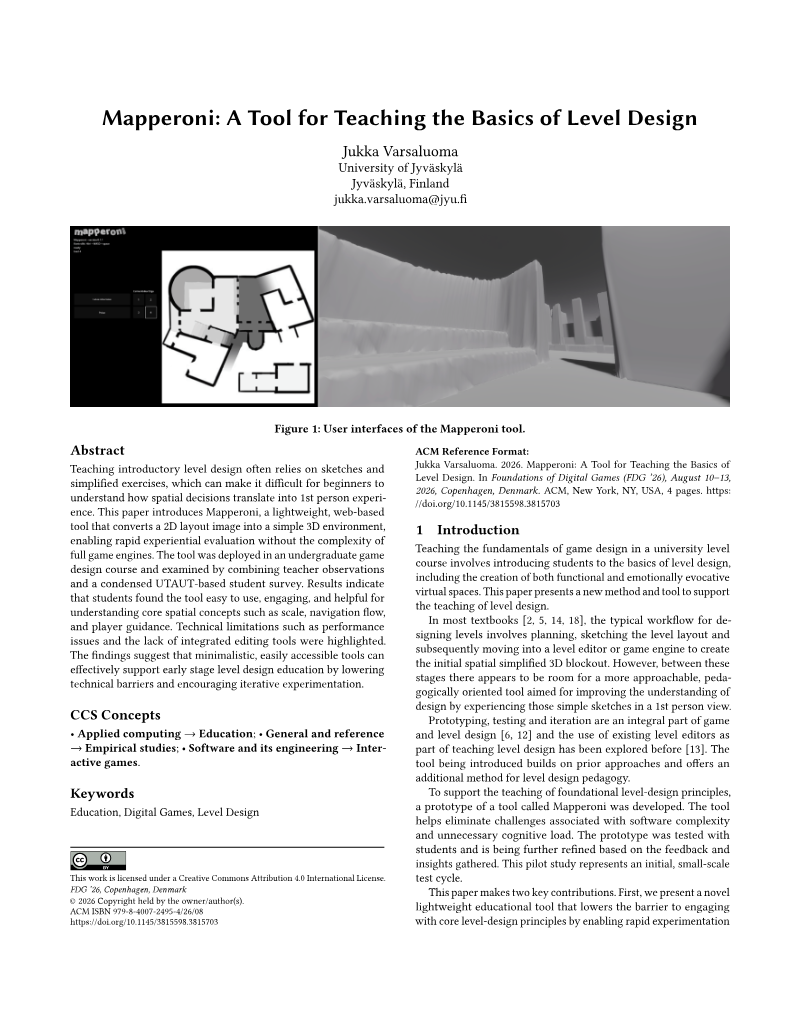
Association for Computing Machinery · 2026
Association for Computing Machinery · 2026
Association for Computing Machinery · 2025
Association for Computing Machinery · 2025
Association for Computing Machinery · 2025
Association for Computing Machinery · 2025
Association for Computing Machinery · 2025
Association for Computing Machinery · 2024
Association for Computing Machinery · 2024
Association for Computing Machinery · 2024
Association for Computing Machinery · 2024
Foundations of Digital Games (FDG) · 2024
Ludic Language Pedagogy · 2026





















Comments