
FinancialElectronic Arts
Electronic Arts 10-Q — Q2 FY2020 (August 2020)
7 Aug 20201 pages~192 min full read
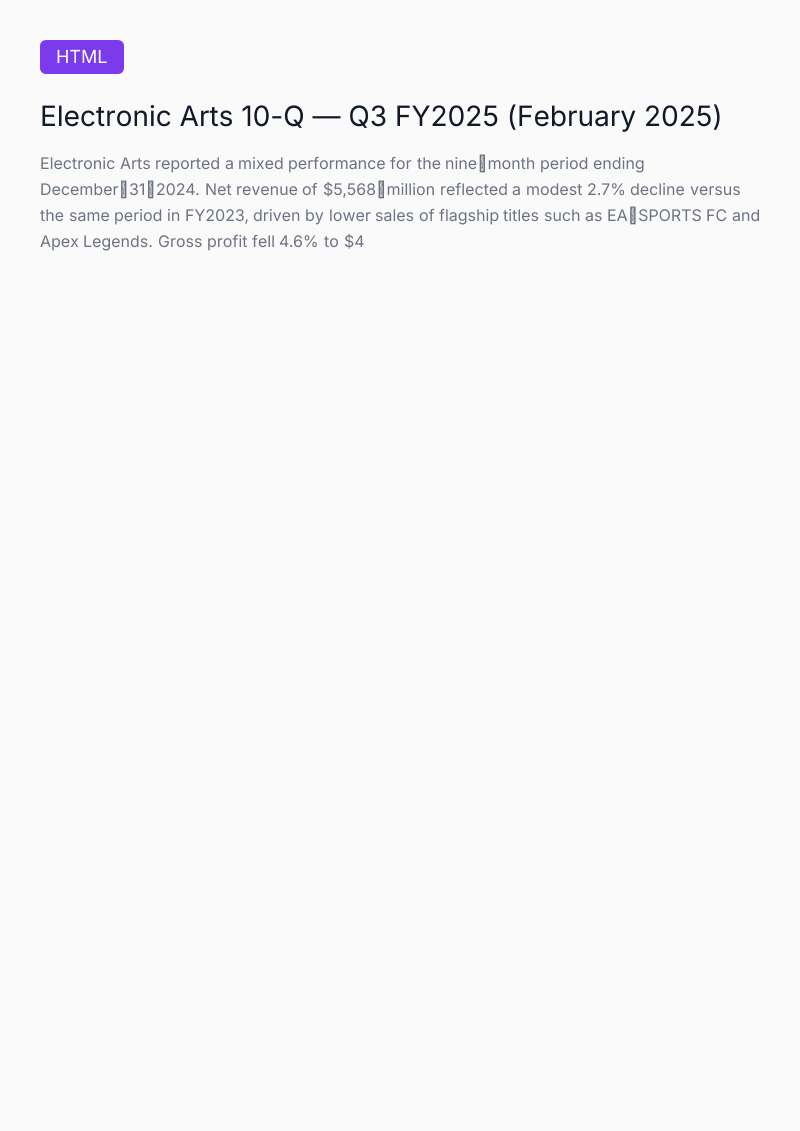
Electronic Arts reported a solid Q2 FY2020 performance, with net revenue rising to $1.46 billion—an increase of 21 % year‑over‑year and 24 % on a constant‑currency basis—largely driven by higher online‑enabled game sales and expanding live‑service revenue. Operating income climbed to $471 million, while net income reached $365 million after a significant tax benefit; diluted earnings per share fell modestly from $1.28 to $1.25. Cash flow from operations surged 139 % to $378 million, supported by a strong liquidity position of $4.01 billion in cash and equivalents against total assets of $11.28 billion.
The company’s revenue mix shifted further toward digital downloads and recurring content, with full‑game download sales reaching $811 million in FY2020 versus $714 million two years earlier, and extra‑content sales from flagship franchises such as FIFA and Madden totaling $1.49 billion. This transition is expected to improve gross margins over the long term as live‑service and free‑to‑play models mature. Operating expenses rose 15 % to $700 million, driven by higher variable and stock‑based compensation in research & development, marketing, and general administration.
Financially, EA maintains a robust capital structure: an unused $500 million revolving credit facility, senior notes totaling $1.09 billion at fair value, and significant unrecognized commitments of $3.015 billion in developer/licensor obligations. The company’s short‑term investment portfolio is sensitive to interest‑rate changes, with a projected 150 basis‑point rise potentially reducing fair value by about $17 million. Disclosure controls and internal controls were deemed effective, with no material changes identified during the quarter.
Risk disclosures emphasize exposure to intense competition, reliance on flagship franchises, live‑service vulnerabilities, macroeconomic headwinds, and regulatory uncertainties—including data privacy, gambling laws, and content‑rating requirements—alongside operational risks such as development delays, cyber‑security breaches, and third‑party platform dependencies. These factors could materially affect future financial performance across the global gaming industry.
Electronic Arts · 2026
Electronic Arts · 2026

Electronic Arts · 2026
Electronic Arts · 2025

Electronic Arts · 2025

Electronic Arts · 2025
Electronic Arts · 2025

Electronic Arts · 2025

Electronic Arts · 2024
Electronic Arts · 2024

Electronic Arts · 2024

Electronic Arts · 2024
Ubisoft · 2026
Sony Group Corporation · 2026

Enthusiast Gaming Holdings · 2026
Drake Star Partners · 2026

Aream & Co · 2026
Capcom · 2026

Modern Times Group · 2026
Bandai Namco · 2026

Aream & Co · 2026
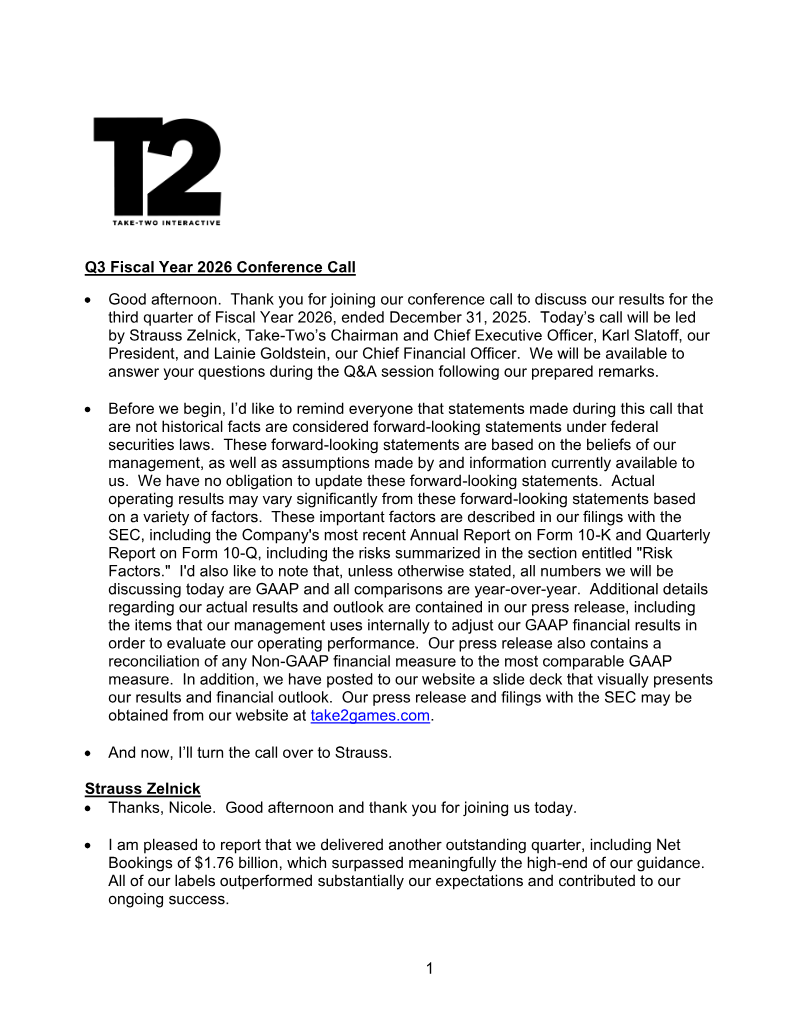
Take-Two Interactive · 2026
Take-Two Interactive · 2026
PCF Group · 2026