
FinancialElectronic Arts
Electronic Arts 10-Q — Q3 FY2026 (February 2026)
3 Feb 20261 pages~194 min full read
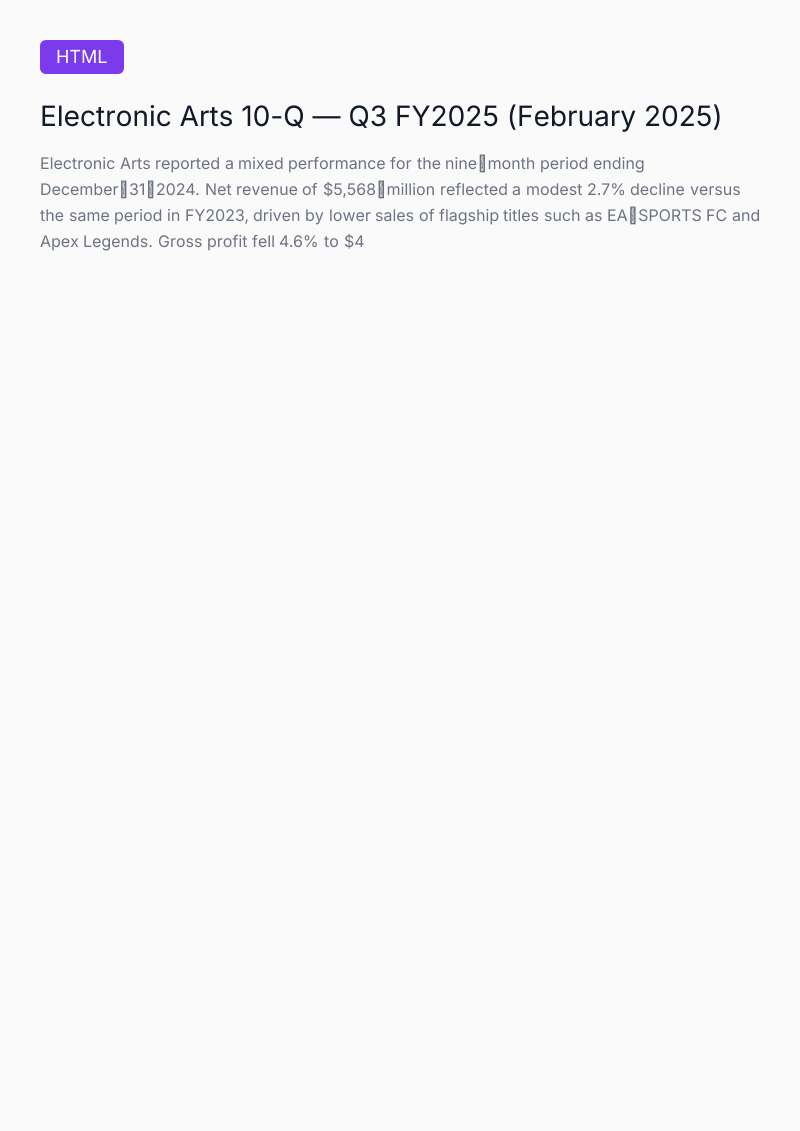
Electronic Arts reported a modest 1 % increase in net revenue to $1.901 billion for the quarter ended December 31, 2025, driven largely by live‑services and other income. Live‑services revenue fell 1 % YoY to $1.269 billion, while full‑game sales rose 22 % to $632 million. Gross margin slipped to 73.8 %, and operating expenses jumped 22 % to $1.276 billion, resulting in a 66 % decline in operating income ($127 million) and net income of $88 million (diluted EPS $0.35). The company suspended its $5 billion stock‑repurchase program pending a merger with Oak‑Eagle AcquireCo, offering shareholders $210 in cash per share subject to regulatory approval and a potential $1 billion termination fee. A dividend of $47 million was returned to shareholders.
Operating cash flow surged 55 % YoY to $1.826 billion, bringing total liquidity to $2.899 billion. Net bookings for the quarter rose 38 % to $3.046 billion, supported by Battlefield 6 and EA SPORTS FC 26 releases. Cost of revenue increased 2 % YoY to $1.220 billion, largely due to higher royalty and hosting fees, while R&D expenses rose 11 % to $2.096 billion and marketing costs jumped 20 % to $1.422 billion.
Financial risk management relies on short‑term forward contracts for currency and interest exposure, with potential adverse moves of 10–20 % capable of eroding $221–442 million in hedged fair value and $203–406 million in operating results. The company maintains a debt‑to‑EBITDA covenant compliance, having redeemed $400 million in 2026 notes and holding no outstanding debt under its revolving credit facility. Unrecognized commitments total $6.76 billion, including developer and licensing obligations.
Operational risks include AI‑driven competition, content moderation failures, quality control defects, and reliance on third‑party consoles and licensing agreements. Regulatory risks encompass evolving data‑privacy laws, content‑rating requirements, intellectual‑property litigation, and global tax changes. Macro‑economic downturns, geopolitical tensions, and market volatility could materially affect earnings, share price, and the ability to execute its repurchase program.
Electronic Arts · 2026
Electronic Arts · 2026
Electronic Arts · 2025

Electronic Arts · 2025

Electronic Arts · 2025
Electronic Arts · 2025

Electronic Arts · 2025

Electronic Arts · 2024
Electronic Arts · 2024

Electronic Arts · 2024

Electronic Arts · 2024
Electronic Arts · 2024
Aream & Co · 2026
Take-Two Interactive · 2025
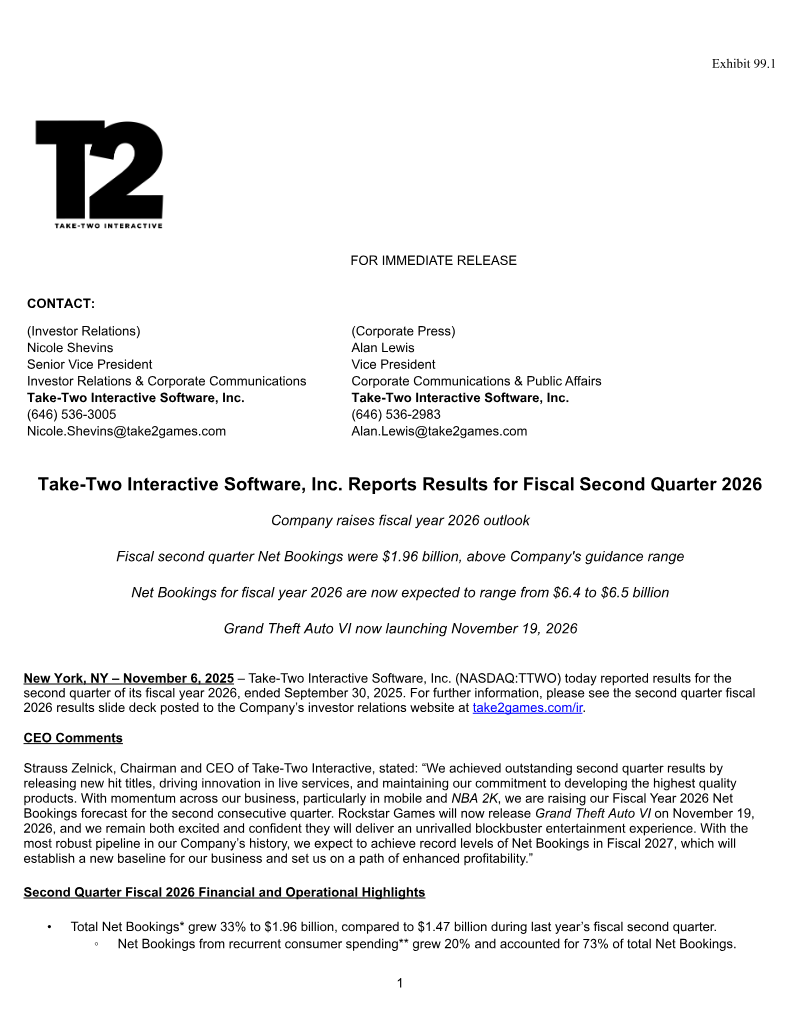
Take-Two Interactive · 2025

Aream & Co · 2025
Morgan Stanley · 2025

InvestGame · 2025
Konvoy · 2024
GDev · 2023
Koei Tecmo · 2022

Koei Tecmo · 2021
GREE · 2020
GREE · 2020