1 free read left. Create a free account for unlimited reading + AI research.
Create free accountWhitepaper DiGRA
1 free read left. Create a free account for unlimited reading + AI research.
Create free accountWhitepaperDiGRA
The paper argues that a coherent fictional world must be built through narrative, spatial design and interactive elements.
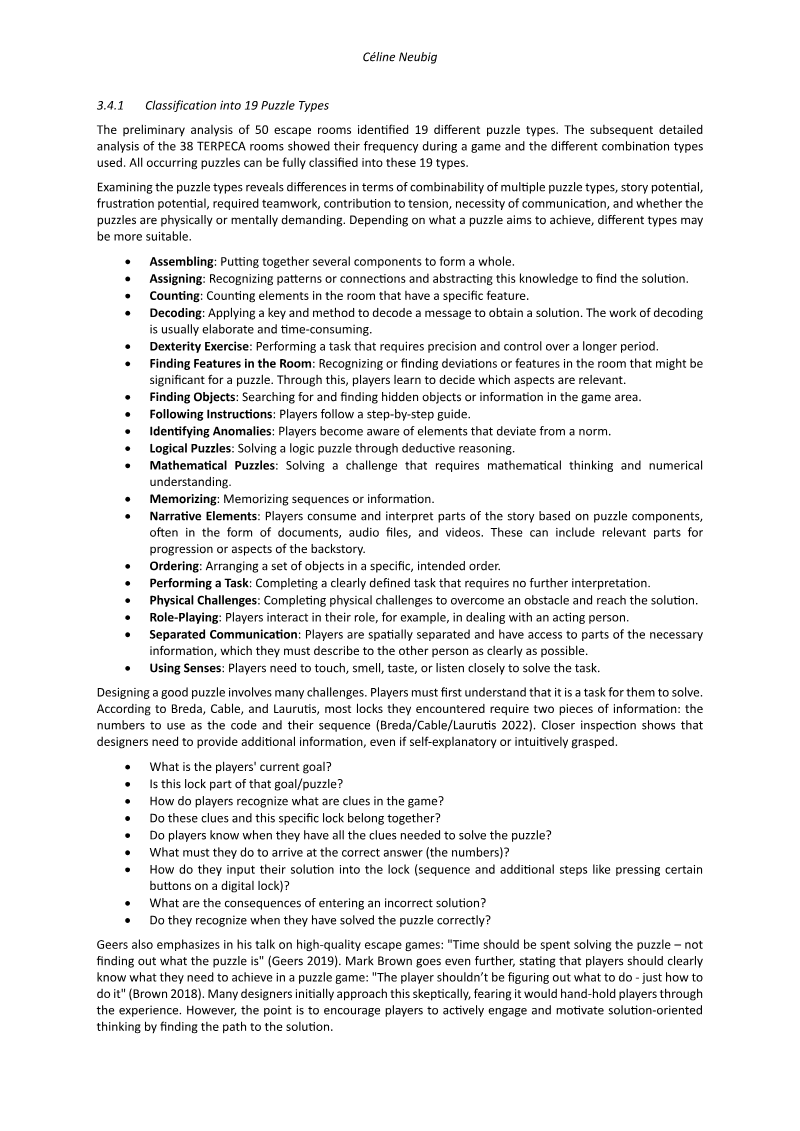
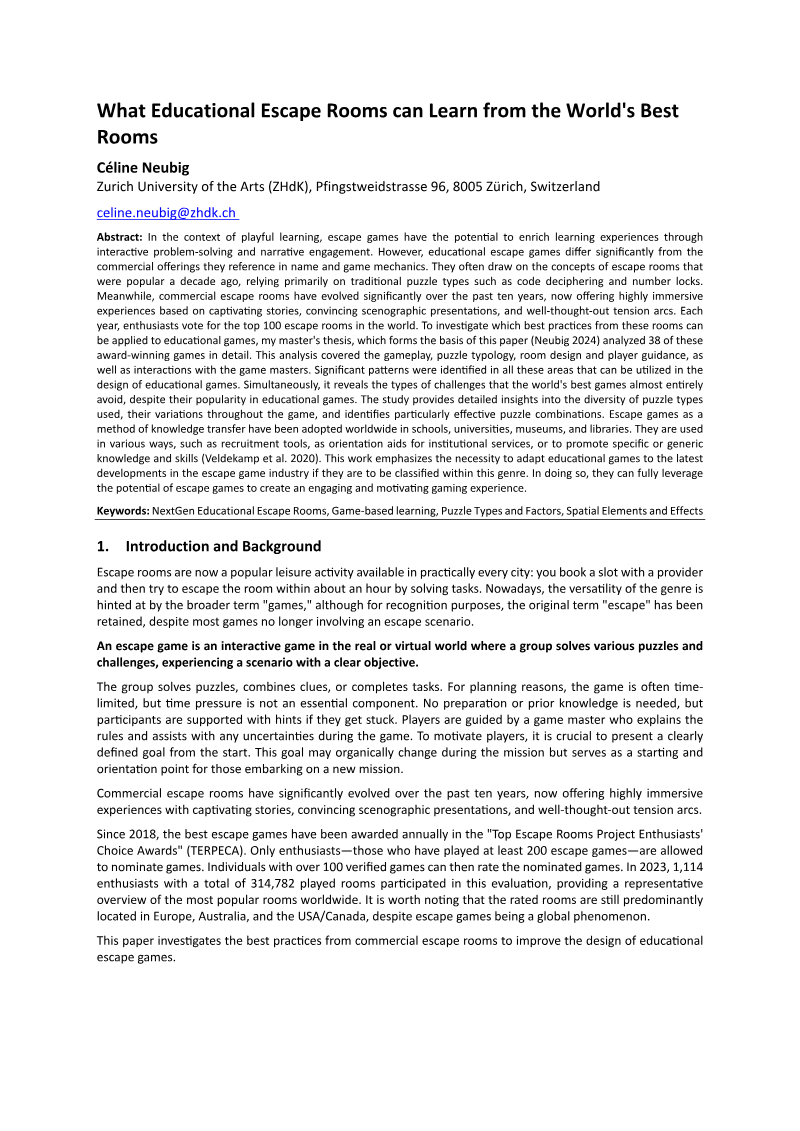
This paper examines how escape room designers use diegetic construction and multimodal sensory strategies to produce immersive, emotionally engaging experiences. Its central argument is that escape rooms, despite operating in physical space, do not automatically generate immersion; instead, a coherent fictional world must be built through the integration of narrative, spatial design, and interactive elements. The author draws on game studies, affective gaming research, and narratology to frame diegesis as the organizing principle that determines whether players respond with emotions anchored in the represented world. Multimodal cues such as scent, temperature, soundscape, and texture are presented as tools that heighten affective involvement when they remain consistent with the narrative and mechanics.
The empirical basis is a qualitative study of 10 Polish escape rooms ranked in the TERPECA awards between 2023 and 2025, selected to span horror, adventure, and science fiction genres and varying multimodal strategies. Data come from repeated play sessions by the researcher, supplemented by field notes on group interactions and sensory-affective reactions. Because of the one-time nature of the experience and limited access to production materials, the study uses a descriptive, reconstructive approach grounded in participatory autoethnography and participant observation. Specific rooms are anonymized, and the author reflects on positionality, genre familiarity, and expectations that may shape immersion.
The analysis is oriented toward two research questions: how diegetic cohesion and multimodal realism contribute to affective involvement, and how the interplay of multimodality, digitization, and affect extends existing theories of emotional design and sensory affordances across media. By treating escape rooms as hybrid environments, the work aims to extend game studies discussions of immersion beyond digital media and to clarify the role of sensory coherence in experiential design.

DiGRA · 2026

DiGRA · 2026



DiGRA · 2026



DiGRA · 2026



DiGRA · 2026



DiGRA · 2026



DiGRA · 2026



DiGRA · 2026

DiGRA · 2026



DiGRA · 2026



DiGRA · 2026

DiGRA · 2026
DiGRA · 2026