Transcript
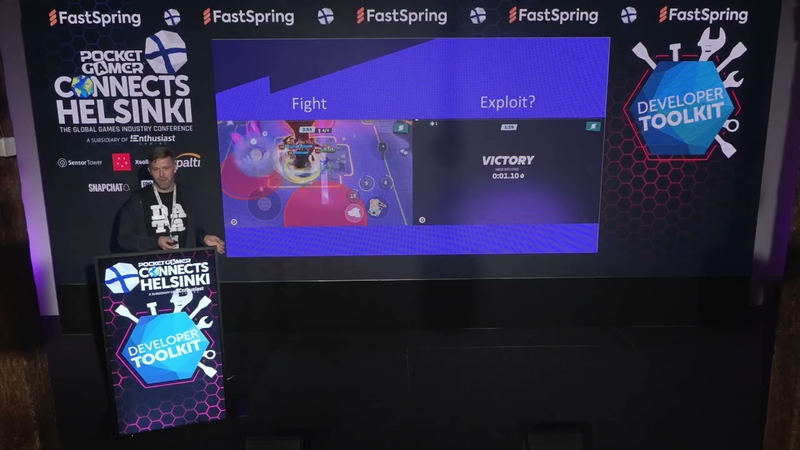
[Music] thank you my name is Ben broad uh I've got a click here okay here we go let it make sure my clicker work there we go okay uh I'm the chief development officer at second dinner uh where over the last five years we made marble snap before that I spent the last 15 years at blizzard doing QA and other things for work three World of Warcraft Diablo 2 and some other stuff but I spent most of my time there on Hearthstone where I was the first game designer and eventually the game director on that game I also have a successful rap career on YouTube um but I'm mostly known for having a weird laugh this is holding up better than I thought I'm so far so good okay okay so uh this talk is about how we designed Marvel snap
it took us a little over four years uh and over the next hour I'm going to talk about everything we tried the stuff that worked the stuff that didn't work and everything I learned from that process mostly about the core gameplay of Marvel snap and I was going to show you an outline but instead I'm just going to show you every slide of the presentation that's that's the whole presentation and as you can see there's no cute cat images so keep your expectations low please Marvel snap is a mobile first super fast digital collectible card game where players compete to win two out of three locations by playing cards to locations and trying to add up all their power from their cards to get the highest total power on their side uh we did some crazy stuff like make all of our cards in in 3D but one of the biggest things that we did is add this cool bedding and bluffing mechanic uh with the cube or you could snap on it to double the stakes of the game uh how many of y'all have tried Marvel snap I'll buy you a copy sir
okay so step one inspiration designers are like shifts for the most part we don't invent new ingredients we take ingredients that always already exist and combine them in new and exciting ways for example you might give two different chefs flour water tomato tomato basil and cheese and one of them might make pizza the other one might make pasta but the pasta Chef wouldn't go to the pizza chef and say Ray I invented flour all right that's my thing you took flour from me uh it's not about inventing new ingredients it's about how we mix them and sometimes people find really exciting ways to mix old ingredients like this fellow online I found who has a recipe for basil tomato cheesecake so as fans of games We Gather ingredients naturally as we play games but I wanted to talk about how I approach ingredient Gathering differently as I start a new project so I'm going to talk about how we did this for marble snap but one of the
things we tried on Snap uh some of the things to try Snapper were either the result of lessons I learned on my time on Hearthstone that worked really well for us or uh the result of some hard lessons I learned while in harsh when I want to do a little differently for SNAP so I'm going to tell a few Hearthstone stories along the way here starting with my first visit to the supermarket 15 years ago so uh uh 15 years ago is when we started working on Hearthstone and this is before the App Store existed before the iPad was announced in 2008 when people talked about mobile games we were talking about Game Boy games uh so the first thing I did when I joined the Hearthstone team was play literally every game in the digital collectible card game genre and I I learned a time for playing these games sometimes I found a new ingredient I was excited to try sometimes I just found out I didn't like onions or something but that's still really valuable for example I didn't know that I wouldn't enjoy a grid-based card combat system in the collectible card game I played all these games and it's way cheaper to learn that Lesson by
playing someone else's games in the Pro type yourself and learn it that way but despite having been a fair number of digital clips of card games 2008 most of The Inspirations for Hearthstone came from physical games so here's the recipe for hearthstone's core gameplay we took a lot of ingredients from the world of trading card game like the card types direct attacking sticky damage the win condition a really important ingredient from battle spirits uh which is being re-released soon which is the Mana system and then we came up with a few important Innovations like hero Powers no responses weapon durability the fatigue mechanic and general low complexity so I asked Mike Elliott who was the designer on battle spirits uh how he comes up with new ideas for games because he's designed like hundreds of board card games uh and I have not designed hundreds of games so I was like how do you do it how do you go and he told me he gets all of his game ideas from games conventions he just walks the show floor where everyone's showing off all their new stuff that they've been working on and
he just lets ideas come to him he just soaks him up and then we leave the convention he's got like 12 new ideas for games this is a supermarket it's full of ingredients so this is a picture of Gen Con where I I went uh in 2008 or nine and this is where I discovered battle spirits which ended up becoming a big inspiration for Hearthstone so I used Mike's technique to find and become inspired by his game which I thought that was kind of cool so I worked on HearthStone for about six years before it shipped but I missed the uh launch party for Hearthstone because my son was born that day and Uh I that we hadn't launched on mobile yet but I I got a special build of the game on my phone uh and I spent a lot of time playing Hearthstone on my phone I was holding my son on the other hand and uh being a dad really changed the way that I could play games I could just sit in front of my computer for four hours rating I had to get my games in while at the park or on the bathroom so uh Clash Royale came out a couple years later and I was super jealous of clash Royale because you if you have five minutes you were 100 sure you can
get a game of clash Royale and um and I thought that was just brilliant and then uh five years ago uh Hamilton and I Hamilton's the EP was the EPF Hearthstone he's the CEO of second dinner uh set out to build a new company try something new and we didn't know that we were going to make a uh collectible card game but once we decided to do that I once again found myself playing every mobile digital card game I could find so here's all the games I was playing in 2018 and that game on the left card monsters three minute duels uh is really cool it's a has anyone played that game oh my gosh what up we probably fought on the ladder uh so I uh it's great it's it's a vertical mobile digital collectible card game and uh in in some ways it was the proof I was looking for that there was something really cool in the space so what was the recipe uh my voice is better when I talk deep what was the recipe for Marvel snap what ingredients Did We Gather this is the
mystery I'm setting up to pull you all through the rest of my presentation here so we had a bunch of ingredients running around in our heads and it was time to prototype so this is what the first prototype for Marvel snap looked like I'm serious okay so we were sitting around brainstorming game ideas and Hamilton said you know I've always wanted to play a turn-based strategy game with the backgammon doubling Cube and so I booted up Hearthstone in every turn of the game Hamilton said you know would you double the cube right now if you're if your opponent dealt with a cube would you concede and uh we got to immediately feel the impact of that mechanic without having to build anything and through those initial play tests we realized a couple things about about this doubling mechanic it increased the emotional range right instead of just one star per match you're playing for potentially a lot more stars we spent
less time losing right in a in a normal game if you have like a five percent chance to win you're gonna play that all the way out right because you might win and that that period of time where you're like probably going to lose could be pretty grueling like the final six hours of a game of Monopoly uh but when when you're incentivized to bail out because you're going to lose less cubes you can just you can just leave and you spend less time in that gorillic zone uh games that you don't play all the way to completion or faster obviously uh but there was two other things that I think had a really big impact that I'm going to dig into a little bit more so the first is zero sum is zero fun if two players play a game and one of them wins and the other loses and it is as fun to win as it is not fun to lose you have created Net Zero Joy you just you just moved happiness from one person to another so uh we were we were trying to avoid the situation there's a bunch of ways to tackle this uh the first is Bots it's one of the easiest ways to avoid Zero Sum because you just have a player who's
winning and nobody's losing so I I really like pubg mobile I put a lot of pubg mobile and the first time I played it I got first place and the second time I played it I got first place again out of a hundred people and I started thinking you know I used to play eliminate on iOS and I played Metroid Prime hunters on Nintendo DS maybe these skills are coming back to me after all these years and so I posted this screenshot on Facebook and I was like guys I just went my first two games of 5G mobile I'm so good which is you know a little Annoying and all my friends jumped on into comments like dude you played a hundred percent bots in those first two games and I was embarrassed so I deleted the post uh but if they hadn't told me I would have experienced all of the joy of Victory without any of the agony of defeat so instead I just have to ask the joy of having a rad looking character Avatar uh so a GDC 2014 my uh Mentor in the original game director of hearthstone Eric Dodds gave a talk about Hearthstone design values he talked about little victories
the big victory is whether you win or lose the game and the little victories are things that happen during the game anything that makes you feel smart or powerful so imagine playing a game of Counter-Strike and you come out of this Pawn point and someone headshots you need to die you had no moment where you felt smart or powerful during that game but let's imagine you're playing the game of Counter-Strike and you run out and you're just blowing up everyone on the enemy team and eventually you lose but you still felt like awesome while you were doing it that's little victories so essentially little victories add a little Joy even if you lose so our Hearthstone we avoided cards that blow up enemy Mana crystals or force your opponent to discard cards because they they could potentially create scenarios where you never get to feel powerful in a Marvel snap there's six turns you always get to play six turns you always get to do something you have to put some of your cards and feel a little bit powerful while you do it uh but the cube had one of the biggest impacts on the zero-sum paradigm so we found that when your opponent snaps and you Retreat it could feel like this
in some cases it made losing feel like Victory it's a strategic Retreat where you don't fall victim to your opponent's Gambit and we realize we could emphasize this with some presentation changes so this is what the concede button used to look like here's what it looks like now here's what it used to look like when you retreated and here's what it looks like now you didn't lose you escaped you're a genius so this this presentation stuff works in Reverse as well when you uh lost the game we used to have the announcer and go you lose and we cut that because it's it's emphasizing exactly the emotions we're trying to minimize so the effects on the zero-sum problem were encouraging but the really game-changing uh effects of of the cube is the depth please excuse me for one second oh yeah uh so we often talk about poker as a game that is never required an expansion to remain strategically deep for decades and it's because of the power of betting
and buffing mechanics so uh Hearthstone with a doubling cube is all of the depth of hearthstone plus all of the depth although these bedding and buffing mechanics we thought hey what if we could reduce the complexity of the genre and lean on the cube mechanic to make up for some of the depth that we lose by simplifying the genre so with that Insight we set out to build the simplest card game we could that would allow for us to use a doubling Cube so I love games that are simple and have a lot of depth a lot of people use these words complexity differently so here's how I'm going to Define them today complexity is the cost you pay before you can play the game it's the learning you have to do depth is the fun part it's the interesting decisions so uh here's a review we got on Metacritic when we launched Hearthstone and this was a common criticism at the time we first came out with the game and I think it's because a lot of people misunderstand the relationship between complexity and depth
a lot of players want deep games and it's true that you have to add complexity to add depth so people see games with lots of complexity and they assume it's got the depth that they're looking for in a game but you can add complexity that doesn't add any depth for example if we had a rule that says every time you play a card in Marble snap you have to yell the name of your card into the microphone or you lose that's an important rule you have to learn that rule but it doesn't add any interesting depth to the game on the other end there's complexity that yields an outside amount of depth we often call mechanics that yield a lot of depth for smaller macro complexity elegant designs for example tic-tac-toe is a game that has very little complexity and also very low depth go has a little bit more complexity has a humongous amount more depth Monopoly has uh uh only a little bit uh more depth tic-tac-toe in my opinion but a lot more diff uh this top right box I chose Magic the Gathering because it has a huge amount of depth but also AI researchers called it the world's most complex game
so you can mitigate you know adding more depth by slowly introducing New Concepts over time right and if you get more depth by adding complexity shouldn't you just keep adding more complexity to get more of that depth I actually think there's a depth limit if your game already takes a lifetime to master what does adding more depth get you more lifetimes you only get one so I think the goal is how do you reach the depth limit with the smallest amount of complexity so if your game has this much depth uh perhaps you should remove complexity and depth until you get there I hope the little star is visible there uh however removing complexity can have a weird effect on your team so uh in early Hearthstone taunt was a uh was supposed to be a one-time effect if you're if you attacked enemy meeting with taunt it would lose taunt and there was a bug one day where that stopped
working and it just kept taunt forever and we thought about it we said you know this is this is simpler if they just keep time forever they just they just always have talked so let's just not fix the bug and a lot of members on the team came up to us and said hey the game just got a lot less deep there's like all this really interesting combat decisions where you're trying to like you know drop taunt in this in their correct order and uh they were they're not wrong the the it's it's less deep but the thing is the team had already paid all of the complexity cost to learn how this works so when you remove complexity they only feel the resulting loss of depth so I've been talking a lot about rules complexity but you know what matters even more than rules complexity text complexity this is the filter through which people will learn the rules of your game and you can make the game seem much simpler or much more complicated depending on how you explain it and we've all felt this when we sit down to play a board game with our friends and they just you just baffled
at the end of the explanation you're like just let's just play one turn so uh this talk by George fan at uh uh the 2012 entitled how I got my mom to play through Plants vs Zombies is the best GDC talk of all time it's fantastic yeah uh and this slide was mind-blowing to me if you put more than eight words on the screen players will not read them uh I think he's right and so here is every tooltip in the first 15 minutes of Marvel snap and here are the word counts for each tooltip and uh I'm very excited about this there's some flavor dialogue that comes up that is there's more than eight words uh every once in a while uh but I don't care if you don't read that stuff because it's just flavor this is the important stuff that you need to learn uh the thing that's really hard to do is card text so we realized that on HearthStone for a digital game we didn't need to write out as much of the edge case stuff so your hero deals to fire damage to Target hero or Ally became
deal two damage uh the average word count for Hearthstone was nine words and for snap it's 11 partially because we don't use keywords uh so we've fallen short of the George fan ideal there which makes me sad uh but to make sure that text complexity stayed low we would audition our cards with people we would sit them down and show them the cards and if uh if you had to read a card more than one time we said raise your hand and let us know because we don't want any card decks to be confusing enough you'd have to read it twice to understand it so this was our goal low complexity High depth and the doubling Cube really helped us get there it's easy to understand at the ton of depth however the simple mechanic of the doubling Cube ended up taking a ton of iterations to get just right so when we played it physically uh which is paper in a die we had no limit you could double the cube as many times as you want to we knew we needed to have a little more structure we moved into a digital
prototype so we said okay you can double once a turn and we'll just throw up a dialog box that says hey your opponent wants to double the cube are you cool sticking around or do you want to concede right now and it was pretty jarring because it interrupted you just like have to stop playing your cards in the middle of your turn to process the dialog box so I said okay uh what if we move it to the end of the turn right you do all your actions and then we'll tell you what your opponent wanted to do and we'll compare to what you wanted to do and we'll resolve it then that helped we started to experiment with some stuff like could we make the the bedding and bluffing even more have even more texture so we added not just the ability to double the cube but would you also like to Mega double the cube which was we didn't like the word octuple it sounds kind of nerdy so we put Mega devil and uh this is pretty cool because you could like get them to limp in with a double or like you know slam a huge uh bet with a 8X there but there was a lot of dialogue boxes and a bunch of the people on the team like didn't even understand like what are these numbers why do I care about all this like I just want to play the card game you're getting the weight of those dialogue boxes so we had
what I think was the biggest inspiration in this whole journey which is uh what if we moved the double acceptance from an explicit like yes I accept the double to an implicit acceptance of the double so we uh we just had the cube automatically double every turn and we said hey next turn the Cube's gonna increase in value do you want to stick around and if you do we're just gonna assume you've accepted the double and this was it's we used the term arcady after we made this change it feels so much faster we got rid of all the dialogue boxes we loved it but Players missed the ability to hit a button to really project their confidence their opponent so uh we added the ability to tap on the Cube to take it from doubling Nick's turn to going Omega doubling to going up to 8X next turn and this God is another problem uh which was if you're playing most of your games for hundreds of Cubes but on turn one you're only playing for one Cube and your hand is just slightly less than average you should bail out right just
like only play the games where you have a chance to win hundreds of Cubes by having a great hand so people were conceding on turn one most of the games we realized we had to bring in the range so that the average Cube game in the starting Cube game were much closer in uh scale so we covered all the auto doubling and just let people snap a couple times hopefully bring it down people missed the having the opportunity to bail out before the game ended they really liked feeling like an excuse to leave so we combined all of our approaches up to now we added one Auto double at the end of the game so you could bail out on turn five if you want to we had one snap or you could tap on the cube to double it eventually added the snap back and that's where we ended up that's how we got there it was quite it was quite the journey but why did we call tapping on the cube a snap uh and for that matter why is the game called Marvel snap it's because naming is impossible this is one of our many brainstorms where we tried to name the game uh featuring such hits as Marvel Cosmic
Posse Marvel all caps orb we're briefly considered the game Infinity Stone Heroes of Marvel but we didn't do that uh so normally I use a naming hack to name things so this is a frame from an XKCD comic uh where he talks about two syllable words where the emphasis is on the first syllable and how much fun these words are to say does anybody know what this poetic term is called no no close to that you got it it's I don't know how to pronounce it I ask because I don't know how to pronounce it so I'm just gonna I think it's trokey is what I think it is uh and uh they're just fantastic trokies are like the best word type uh does anybody know the name of any famous companies just yell them out famous companies well not all at once I can't hear you I did kind of ask for that okay I'll just show you their answer here so these are all trokies Riot blizzard Google Facebook Marvel Netflix Lego Tesla meta Intel Apple Call of Duty YouTube Every
Word up here is a trokie and I also believe that what you name your game or company or whatever doesn't matter at all so what's the first thing you think of when I showed you this word one of those right some of you some of you guys want some of those uh this one probably most of you all thought about the one on the left here and I don't know about I don't know about y'all but I never imagined deer constellations or space dollars when I saw this word you can you can literally name stuff whatever you want and people will fill that name in with new meaning whatever you tell them it is in fact your Game's name doesn't even need any real words in it these are all nonsense words and nobody's like I'm sorry you say this game is called chess what's a chess so why Marvel snap well for years we struggled with the narrative wrapper for the game Hearthstone has an evocative and grounded rapper it's the game that denizens of Azeroth play in a Tavern
it's not so much a story but a setting and a vibe so what is snaps setting does it have a story and how do we tell it well this is the thing I hate more than anything in video games welcome to Marvel snap the evil villain Thanos has assembled the all-power Infinity Stones here are some I hate this so much uh and to demonstrate the point I've created the story tier list for you so at EST here we've got a story for the ages at F tier we've got a boring story and here's the thing at a tier no story at all it's just not that much worse than having a story for the ages so if you are choosing between having a boring story or just cutting all the story out cut the story out please and I I consider Vibes and setting to be really different than stories some people say when they ask when I say story they hear plot and I think that's accurate I don't have to understand Street Fighter story to to be able to
enjoy it and the game is even trying to explain it to me they just say Blanca versus E Honda fight and nobody asks hold on why why are they fighting so this is I wanted to think about Marvel snap uh but but despite that we tried to hand fish the story in anyway so here's an actual presentation I gave the team here the Infinity Stones have been destroyed their shards spread throughout the Galaxy forces have moved to collect them they cannot fall into the wrong hands the stones must be reformed but he can never know marvel snap so uh the plan was not to actually tell that story in that way in the game but uh to use it as the setting for why you'd want to get cubes and we called them in 50 Stones at that time and what your goal is in the game so players would collect and feet of these shards and as they got more and
more of them they'd assembled Infinity Stones which would unlock new features in the game and we ended up pivoting away from these gameplay mechanics and the theming associated with them as you'll see here uh but we love the name so much that we decided to keep it and to tie the name back in we named our most iconic gameplay mechanic after the name oh snap so uh thank you uh naming it a snap was a last ditch effort to make our name make any kind of sense now that we've stripped all the infinity stone stuff out of it so why keep the name without the infinity stone theming we could have changed the name to Marvel Cube or something well we love the energy behind it we love this the snappiness of it and uh uh you know games are over in a snap it's a snap to learn at the end of the day I think the approachability and impact of uh inherent fun of the name makes an impact okay so let's let's check in on our recipe see how we're doing here we've got the doubling Cube from backgammon and uh five minute mobile friendly
experience from Clash Royale but the rest of the Inspirations once again once again came from physical board and card games I pause for impact okay this is my dad and when I was a kid he used to give me his old business cards and I would design card games on the back so I got my first job at blizzard I kept all my old business cards imagining that someday I would get to use them to make card games with uh and this is the first physical prototype that we made on the development process for marble snap on the back of my first business cards so we had the doubling Cube we tried to keep it simple with only two numbers per card we had some kind of weird leveling system but the big thing that we were trying to achieve uh was simultaneous reveals so this is my favorite two-player board game Lord of the Rings the confrontation by Reiner kinesia who's the most prolific board game designer ever to live he's got many hundreds of games to his credit uh it's like Stratego but when you fight an opponent's unit you both play a card
face down and you reveal your cards at the same time and it impacts the battle I love the Mind Games in this game it's incredible I also love this game The Game of Thrones board game by Christian Peterson it also has that same mechanics when two armies fight you play card face down you reveal them at the same time super fun I found myself really drawn to this particular ingredient and I wanted to experiment with it in card games so I know this prototype had simultaneous reveals but otherwise I cannot remember for the life of me how to play it because we only played it one time and after we were done me and Hamilton looked at each other and we said yo this game sucks which was very demoralizing uh when when you're playing cards simultaneously you need some kind of context what do I think they're gonna play and then you could play around those suspicions so we did something to start on the board to give you that context and I should have known that we needed context because I used to participate in professional rock paper scissors competitions under a freeway overpass in Los Angeles so uh rock paper scissors is totally
random right it's pretty boring there's very little strategy in rock paper scissors the thing is that these tournaments you get one minute of taunting before the match begins so most people come in character like the barber or Sergeant scissors but sometimes people just use the whole minute and go pick up paper paper paper paper paper paper paper and uh hilariously that adds some context right are they telling the truth or they or they're trying to Double Bluff me so this game Smash Up by Paul Peterson doesn't have simultaneous reveals but you can play your cards to locations and the locations have special abilities that make each game a little different and I thought this could be a really cool way to give the game we were working on some context first hamiltonian reveals and they did so Mojo world for example is a location that gives you plus 100 power if you have low cards in your opponent okay I bet they're gonna play their cards to Mojo world or maybe I'll let them over commit there and I'll try
and take the other two locations in this core decision making was simple but immediately fun in our earliest prototypes all the locations started revealed that we felt like that was a lot of information to absorb right at the beginning of the game so we made them uh reveal uh on turn one turn two and turn three instead so they gave us the context we needed but I think more importantly they increased the variance of our core gameplay so I said George fan has the best GDC talk but this talk by Richard Garfield titled luck in games is my all-time favorite design talk of any kind so uh I think most people misunderstand the relationship between luck and skill a lot of people imagine it as a scale or you've got luck on one side and skill on the other and games are somewhere along this scale we use the terms luck based and skill based to talk about where games land on this scale but that's not how it works at all so you could have games that are low skill and high luck like Shoots and Ladders or high skill
and low luck like chess but you can also have games like my favorite game to make fun of tic-tac-toe which is low skill and low luck and you can have games that are high luck and high skill like poker uh like there's a ton of randomness of Poker but the you know the best players are winning again and again games in the high luck High skill category I think are super fun because they include a ton of interesting decisions but they also have exciting moments and are different every time you play them so all card games have some around a Randomness because you Shuffle electric cards and draw from a random deck but Hearthstone I think has has less variance at its core than other card games for a couple reasons one the Mana system isn't random you just get one every single turn of the game uh smaller decks decrease the variance some amounts and because you aren't drawing resources you're just drawing more usable cards every turn so you effectively have a higher rate of card drawn those all reduce the variance of hearthstone's core gameplay rules but the thing is we wanted Hearthstone to have more variants
so we added a bunch of variants to the cards arcade missiles deals damaged randomly or lightning storm deals a range of damage animal companion someone's a random Beast and this was successful at making Hearthstone more random but players didn't didn't love it right we got a lot of feedback that Hearthstone felt too random I think part of it is that the randomness here is very overt right we had to put the word random on a lot of cards uh but also there's there's two different kinds of randomness so input Randomness is where there's a random event and then like drawing a card and then you get to you have to make a strategic decision in the face of that random event for example The Hub it's a random card each player's hand and then you and your opponent have to figure out how to use that card to your best Advantage after you've seen the random event so we put Randomness is awesome it puts you in new situations you've never been in before you have to think on your feet and solve problems on the fly in games without a lot of them put Randomness there's like a right answer right like chess players have to uh for you know
they're really high levels it's not like okay what piece do I move on turn one you've got like an opening move people memorize series of opening moves until you get to the fun part of Chess later on uh because the random that happens and then you get to respond to it you feel like you have a lot of control over the randomness in the game and output Randomness is the opposite so Apple Randomness is where you make a decision and then you find out if it was the right decision or the wrong decision for example Danger Room uh you have a 25 chance every time you play a card there for it to be destroyed you have to decide to play a card there and then you're gonna find out what the right decision or the wrong decision uh ragnaros just deals eight damage to a random enemy maybe it's enemy hero and you win maybe it's you know the exact thing you didn't want to hit and you lose but you have to choose to play ragnaros first so output Randomness is exciting it's uh what like streamers like the viewers on on Twitch love to see it's it's great stories uh this is I think the most uh uh exciting the best question we can ask
players in games which is is it worth the risk and as a player deciding okay I I think I'm gonna lose this game I need to start taking some risks I'm going to start playing cards at danger room and hope I you know don't don't get that 25 I think it's really interesting depth and that's the kind of depth you get from output randomness uh having the ability seeing that Iran events coming and controlling the odds for example destroying all the other minions ragnos is definitely going to hit the ones you want is also some fun depth that comes from alpha Randomness and this is interesting if you have output Randomness players will say that they lost to the randomness which says pros and cons uh the cons are that it feels like you don't have very much agency and you just kind of lost randomly and your skill doesn't matter but the pro is that uh as people we are unable to Grapple with our own ineptitude and uh this provides an outlet for your ego so locations I think interestingly are both input Randomness and output Randomness and you get to choose which of those you want more of so if you play to a revealed location that's imperanimous you got to see what the
location was going to be and then you decide to play a card there or not and if you play to an unrevealed location that's output Randomness right you play a card to look to under relocation and then surprise it's Murder World your cards are dead mistake uh so we've talked about a couple of the impacts of locations the randomness the ad simultaneous reveals uh but they also have a couple other interesting effects so in a collectible card game over time the meta gets stale this is why people other card games release thousands of new cards a year hundreds of new cards a year so keep the mail the meta fresh it's because eventually you run out of new problems to solve right I've seen this deck before I know what it's trying to do locations give you every single game something new something exciting is going to happen it reduces the effect of a stale medicine amount and by the same token it lowers the impact of imbalance right everyone's playing the same deck as one deck is broken and at least the locations are giving you new problems to solve even if enemy players are not balance is still important but it lowers the impact some some amount
and then it makes liveops I mean it's still a lot of work to do for liveops but it adds a cool lever for us right we can add new locations or change the locations uh to create lineups pretty easily for example we have this thing called hot location where one day a week this location shows up at 50 of all games it causes players to change their decks and take advantage of the location yeah it adds some fun live Ops flavor to the game uh unless we make the hot location uh make the current best deck even better and then it reduces the increases the staleness of the genre like we did when Mr negative was the best deck and we made the peak the featured location huge mistake uh so we had a hundred locations going in the launch and late in the game we decided hey wait a second what if we cut 60 locations and instead launched with 40 locations and then we could launch one new location every single week for a year and uh 40 was not the right number but we did cut most of the locations and have been releasing one every week for a year and it was a great way to kind of front load our launch with tons of live
Ops content okay so we had the doubling Cube we had simultaneous the reveals we had locations we started having a ton of fun and all in all this prototype uh starting from that first prototype this one took about two days uh which is not very normal and we didn't we doubted ourselves a lot we started we took a break from this and started trying to design some other games because we weren't sure this was it but we just keep wanting to come back and play this one we eventually printed out the Prototype instead of writing it on some cards because we were fighting over the only copy of Galactus uh and we use this prototype years later to prototype 2v2 so 2v2 is just five locations and your team has to win three out of five of the locations uh it was really fun we wouldn't have been able to do it easily without the physical prototype I think because it's hard to prototype digitally now I'm not saying we're going to do 2b2 it's just something we're experimenting with but it was fun it was fun to try okay so here's the full recipe for marble snap we have the doubling gift
for Backgammon simultaneous reveals and mind games from Lord of the Rings and Game of Thrones locations with abilities from Smash up uh five minute games from Clash Royale and a few I think really impactful Innovations Six turn games 12 card decks and I think for the first time maybe in a in a collectible card game only one card type which means there's like no card types right not even a thing uh so these Innovations were impactful but it's not clear to me that your game needs any Innovations to feel fresh and exciting and unique for example I think if you asked players of Marvel snap what are the top three fresh things in Marvel snap I think none of the Innovations would be on that list so uh with the basic core gameplay figured out it was time to move to our digital prototype and here's the first digital prototype we were prioritizing moving fast so I think it took about two weeks to make uh I don't know how to do any networking stuff so it was a hot seat prototype uh where both people play on the same screen they played a bunch on the iPad
this is a big iPad but uh it looks bigger that's my son's four-year-old hand there so the scale's off so we tried to make this stuff super easy to change so we could essentially figure out all of the the right number for all of the levers in the game by Brute Force so we tried six turn games five turn games we tried skipping turn one doing turns two through six we tried three four five cards in the starting hand we tried nine cards per location six cards three cards four cards publication we tried it all so everything up to this point uh was done while the studio was just was just two people in Hamilton not not that we have all that much stuff we scribbled on some cards and spent a couple weeks on our prototype but I think having the smallest team possible really allows for a dramatic pivot uh because you spend less time explaining the vision and getting buy-in from a large team so in my my first year on Hearthstone the team was about 10 people and blizzard came in to a meeting one day and said hey we're going to take all of the engineers and we're gonna
move them on to help Starcraft two relieve about three people left on the team and we were pretty sure the game was canceled we just thought oh that's that's got to be it they're never coming back uh the people left the team uh were Ben Thompson the art director and Eric Dodson I and they're the first lead designer at the time this happened there was a ton of momentum in another direction we were working really hard on basically some other project and when this happens it allowed us to be really flexible and experiment quickly and try crazy stuff and the rest of the team wasn't totally gone they were around for play tests and some conversations and stuff but essentially at the end of the year where those team members came back we had the the the totality of hearthstone's core gameplay figured out in prototyped once a team gets really big turning the ship becomes way harder so late in the game on Marvel snap we had a really big pivot where we changed all of the the theming and got rid of some currencies and the team happened to this point of giving feedback that they were worried
that we hadn't really locked down some of them or metaprogression stuff just yet there was a lot of change and so I knew that this pitch to chain stuff was not going to be it's not going to go down easy necessarily and so I met with every one of the team individually to walk them through the pitch get the opportunity to ask questions make sure that they felt heard and it takes weeks to manage this kind of change management and uh even the idea of having to do this adds a huge amount of friction to deciding to make a pivot I think the worst thing you could do early on is not pivot when you should because you missed the opportunity to maybe do something great So eventually we did end up adding some more folks and uh here's our first two device build that our chief production officer young woo got working apparently he was a secret uh back-end server engineer which was a delightful surprise uh you can see we started with nine cards per location here we were experimenting with five turns we tried some wild stuff like a left first right approach to locations to see if we could get that like Face-Off battle feeling going our art director jamaro Kindred
began to pretty up the game a bit uh and we felt like we were cruising forward on our prototype uh but we ran into a snag I think every other card game has had cards that say stuff like destroy Target creature things like that we had a bunch of cards like that and on Hearthstone I think we had a great UI for this you drag a card out an arrow attaches to your cursor and wherever you move your cursor the arrows you know you're in targeting mode when you drag a card that requires a Target and to cancel the Battle Cry you tap on the card or tap on any card in your hand but on mobile once you drag a card out we have nothing to attach a cursor to see we just you just don't know that you're in targeting book people kept tapping back in their hand to put into their card and canceling the Battle Cry it was it didn't work very well it was fundamentally broken on mobile so we had to build a whole new UI the screen darkens and desaturates to let you know you're in a new mode the potential targets are lit up in color that float above the board and you could tap on the target you want so this I think this flow is just much worse than the than the PC flow but it's not like we could just remove targeting
for the mobile version of ours too so when we started the Run of these issues in snap we said Hey what if we just get rid of targeting altogether in reality every marble snap card requires a Target you have to Target the left middle or right location so essentially we're asking players to choose two Targets when cards required to Target and we realized that we could imply the second target from the first Target so here's electricity used to Target any one cost card we changed her to Target a random one card at her location the UI is much simpler and usually there's only one one card here location anyway another way remove targeting is by implying a Target through card ordering so here Mystique used to be able to uh choose a Target to become a copy of but in our next iteration her Target is implied by playing her after you play the card you want to copy we didn't have that many cards that had required targets it was like 10 or something but uh but we changed them all and the game felt much better and with that solved we continue to make progress in the game and the Prototype most
morphed slowly into a real build and eventually I think it looks great okay so earlier in the talk I bragged about how it took us two days to design the core gameplay for Marvel snap but uh as it turned out we would be paid back for that good fortune with four years of struggle trying to come up with a core Loop and and satisfying progression model for the game so here's a uh is a diagram of our core Loop don't read this please uh this is one of the many iterations we were working through uh it was Madness we had leagues where uh you'd have to do better to get up to next league and that's where certain cards were League restricted uh we had uh uh we built a hero collector that worked like World of Warcraft garrisons where you'd send Heroes off on missions to bring back cards for you uh this is a sphere grid with every card of the game on it and you'd have to decide which cards you want to make progress towards uh so the big lesson we learned from all that was we needed to simplify uh so we
went from this to this we cut a ton of stuff and we saw this and we're like yes we did it we got there and we went into our next testing phase and unfortunately it was still wildly over complicated we had these uh leagues but we pasted over the problems we were having with these bizarre theming changes with Infinity Stones we had a buy-in you got to choose the stakes of the game before you went in with this weekly rank um here's a here's a shop where you could just buy the cards you wanted directly and they rotated every day which means uh after not that long the only cards remaining of the cards you definitely don't want to buy this doesn't didn't work at all and so we went from from this in 2020 uh to this and this is what we shipped with and I always feel pretty dumb when I spend so much time like analyzing a design problem and I'm like aha the answer is to add more complexity only to realize that the answer was to simplify new complexity but this quote from Pascal makes me feel better I would have written a shorter letter
but I did not have the time So speaking of time I'm almost out of it but I wanted to wrap this up uh by boiling it down to four takeaways but before I do I just wanted to say one last thing the design of the core gameplay of snap was I think foundationally important to the to the whole experience but it's only like one percent of the total amount of work to make the game great what's much more important is all of the decisions we made as a team that add up over four years of game development so we're basically a fully remote Studio at this point so I don't know a lot of great pictures of the whole team but I wanted to say the team at second dinner is Bonkers and I'm super lucky to be a part of it okay so here's my here's my four takeaways shifts need ingredients so stock your pantry be the speed boat until your direction is clear Embrace Randomness input or output and simplify even if your team hates you
all right that's all I got thank you so much appreciate everybody so I believe we have time for some questions uh hello hello Greetings oh and if you're you got to fill out the the thing to rate this evaluation evaluations thank you I love the game being played for a couple of months now finally got Thanos having a great time I'm wondering about the the how much Disney has an influence or collaborate on the creative aspects of the game not only recently it got to buff Wolverine a little bit in the key character but also I mean I'm a big Marvel fan and recently back in the Marvel United third season and then I see a lot of the characters which I usually don't care about that I'm suddenly care about because I know them from Marvel snap then I wondered is a big part of the Disney over arching
scheme great uh so I'll just repeat the question just in case it's not getting up on the mic the question is how like what's the collaboration with Marvel like how much are we a part of their strategy uh and do we you know collaborate on making characters powerful and stuff so Marvel is just unbelievably great to work with they're just like wild good so the team at Marvel games I like we couldn't have made this game without their help it basically let us do like do what we're really good at and what they help us with is make sure the game is authentic and awesome so we submitted an image of Gambit you know throwing his cards and they were like hey just so you know like the cards don't pass through that ring they come from from there out or whatever we're like okay we we would I would have known that personally but they helped make sure that you know anybody who sees this game was a big Marvel fan like says oh yeah that's exactly the right color for you know that character or whatever but they also you know they know we work in a Multiverse and so we're like hey can we do like band variants could we do like King to conquer but like DJ King the Conqueror and they're like yeah that sounds good but put him in outer space
that'll be even cooler and we're like oh right so uh they're not uh like pushing us in a direction they're much more like collaborators it really feels like we're on the same team trying to make a game together so it's been great if you have the opportunity to work with Marvel I highly recommend it yes okay um when is merch well yeah that's that's on Marvel Marvel who controls all the merch so I I uh tweet so the real question would be um how much time was there between when you started brainstorming this to talking to Marvel like having something to show them and then actually getting contract uh so uh we the guy who runs Marvel games Jay Ong used to work with me and Hamilton a long ago so we had a relationship that was existing which is which is partly how a brand new studio gets to work with Marvel it's kind of ridiculous uh but but uh he knew that we had made great stuff in the past together and he wanted to work with us again so it we we had this the suspicion that we might get to work with Marvel
but uh it was it's probably set on the order of months before we showed them anything and uh uh yeah I don't know how long the contract took but you know we you know we were friends so kind of thank you so much appreciate it sorry you've got lines on the other side oh my bad oh my goodness sorry go ahead I'm here too okay hi uh I was wondering uh variants that spawn other cards like don't show that variant like if I play a baby Doctor Doom I don't get baby Doom bots why yeah uh it's a great question uh sorry we don't you don't get like uh the cards that spawn on the cards the cards that they spawn are not very variants of the uh it's yeah I mean it was something that we would like to do at some point I think it would be great we also want to do variants for cards that are spawn by locations like rock variants by the way Dwayne The Rock Johnson if you're watching this please hit us up we'd love to do a rock very get together uh thank you we'd love to do thanks okay over there so you discussed complexity versus
depth and how a card that says just deal two damage still can have a lot of depth and hit the depth limit that you need but eventually you've printed deal two damage and you have to start like you know complexity creep and so forth and so on and I was wondering what your strategies are for you know six ten years into the game and help what all the simple cards are printed there are no more simple cards left what to do okay so the question is yeah you mine out the simple the simple rules and then eventually you end up with only non simple stuff what you do I had a whole section of this talk called the Primal Fear of uh working on a game with with a small amount of design space it's horrifying so both on Hearthstone and on Marvel snap we I got a point where we're like you know we're looking against like magic the Gathering at around 30 years later and those games are much more complicated and so at least I imagine I've been on those teams I imagine that they just don't have that same level of fear of like what if we just run out of all the cards at some point we will have designed all of the cards right and that's it we pack up shop but what what
happened actually on Hearthstone was that there was a huge amount of design space much much much more than I thought there was at the start and so uh you know it's it's scary to trim back and end up with a very limited amount of design space but uh it's just never borne out in in the scary way where there's nothing left to do we always find more more design space it can get more and more challenging over time but it's it's never running the spot where we haven't we haven't ended up there now over time your audience will stop growing potentially right like you know we all wish everybody just keep growing but at some point that maybe it's not as true and at that point the complexity wall at the start is not the thing that matters as much uh it's the additional complexity you're adding and so all these all the current players have already paid all the complexity cost and so if you add a new mechanic or a new card type or a new zone or something you just have to teach them that little bit of additional complexity and so you can add design space over time to give yourself more room to design more stuff
thank you so much yes thanks um most card games or sorry most mobile games including Hearthstone they're horizontal right at what point did you decide to use a vertical orientation uh what design space did that open or did you just do it so I could play while I'm driving or holding yeah right uh please don't play Marvel's snap while you're driving uh uh uh so uh the question is when did and why did we decide to do vertical orientation I I think we really wanted to make a mobile first collectible card game right most other collectible corporations that are on mobile feel like we're our or our ports of uh PC card games that we thought this is just if we want this to be the best mobile collectible card game ever made I think I think we wanted to start vertical so we just always started the whole game with that kind of as a design constraint and uh tried to make sure that every decision we made we tried some weird stuff like uh we weren't sure if we could fit all the locations on the screen so we had like a carousel of
locations you could swipe back and forth between and I did not we didn't end up going that direction but we were that committed to a vertical display thank you appreciate it I have a question about like the Simplicity of your text on the card so like how to fix the issue of my uh being sound misunderstanding when the text is short because like sometimes I don't really understand the whole mechanism so I need to like try like a try so I can know the like real mechanism because like the other cars like putting their like extremes circumstance on the car but you're not using this so like how you address this issue of like possible uh misunderstanding yeah so the question is about uh what do you do when there's a clash between wanting Short Card text but being clear and making sure that people actually understand what you're saying you know it's interesting there's a bunch of cards uh uh I think it's called Shadow Madness and Hearthstone which says take control of an enemy uh minion like this turn only and what it doesn't say is that it gives them in charge right if you took control of an
Amy minion you wouldn't normally be able to attack with it but the fact that it's only for this turn uh it's obvious that you must be able to attack with it and so we just kind of left that off the car uh there's some stuff there's some types of designs where you can just say look is this like a little bit we don't explain everything but like you you could just you could just try it and uh you'll learn after the first time and ideally the thing that you uh like the best scenario for you is the thing that actually happens we often when showing people cards and they ask a question like wait I'm not sure about this Edge case we say well what do you think is going to happen what's your suspicion and we would write it write it down and if the suspicion is the correct thing it might be worth it for us to have less text because they would like I'm not sure but I think it's gonna do this that was good enough for us in a lot of cases um but yeah if if the answer was they they got the wrong thing or they couldn't guess we would try and rewrite the card even if it meant adding more text to so said follow the into intuitive software what was that for the
intuitive thought like yes right you know we try to make it intuitive exactly thank you sir thank you appreciate it um thank you thank you so many questions but um I do want to ask about fatui um you talked about how a lot of design is going into how to minimize the zero-sum game and also like using things like bot to increase like player satisfaction so I'm wondering like what are some design and iteration or choices that went into like the first time player experience to make sure that um players have that sort of satisfaction and how that impact you know like what kind of cards they get when they first play the game and what like if they're going to see any Bots Etc yeah so I I basically uh for both the Hearthstone uh first first time user experience I'm sorry the question was uh how do we how do we uh make sure that if fatuy's awesome especially with the zero-sum component uh yeah or just like any design related uh consideration with the fatou so I I uh the entire fatui for
Hearthstone and marble snap is just copied from George Fan's talk uh that I mentioned it's just work we just did it exactly laid it out and we just copied it it's like exactly that if you play through the heart the heart and snap and plants versus zombies we just we just stole it all it's just genius work so if you're interested in patui design that is the master class of fertility design right there I think it's I think it's fantastic thank you yes hello um I have a kind of similar question that was asked over there but as you mentioned marble snap doesn't have keywords which expanded like the amount of text on the card so but when you have keywords a player has to learn those so how do you balance the kind of streamlined paraphrasing versus the explicit explanations yeah the question is uh keywords versus no keywords how do you balance those two things uh I've paraphrased your question uh so the uh this was a conscious Choice when you when you have keywords you are trading complexity uh for potential
depth right because you get more interesting stuff on the card you can make the card do more interesting things if you could add more words to it uh but if you don't know what the keywords do then you can't understand what the card does and so for for snap we made the conscious decision actually our first designs had no keywords and eventually I tried to represent on reveal as like present tense and uh uh ongoing as like uh like just a different tense and people weren't picking up on it so I felt like we were forced to add on reveal and ongoing uh but those keywords are self-descriptive right like there's no way to actually like find out what on reveal means it's not in the game it's just not it's it happens when it reveals right uh so uh we we made the decision to instead of uh uh adding more depth by having more keywords to make every card understandable even if you'd never played Marvel snap before you could read a card and hopefully get what it's trying to convey thank you thank you two minutes left is that what that is yes hi um when you were designing the
game because it was a studio that was fresh um did you get the IP from Marvel that decided I'm going to make a Marvel game or was it I'm gonna make a game and it's going to be a card game or it's going to be whatever and then oh what if we got the IP and made it Marvel themed so the question is what came first Marvel or the game mechanics the answer is Marvel Marvel came first in fact we were started working on a different game and when we the Marvel thing started to happen a little bit more uh we started skinning that game as a Marvel game and when we were doing that we're like this is now working this is not a Marvel game the things that are awesome about Marvel which is the awesome hero fighting against an awesome super villain or team of Heroes facing a super villain it's that's not what this game is about right and so uh we took a step back and said okay what if we designed a game from scratch to highlight what's awesome about Marvel which is that experience and so we made a card game where the focus is on that one card type the heroes and villains of Marvel and that's kind of uh so Marvel came first thank you last question I think hey
um so the modernization in Marvel's house really player friendly I was just curious what the overall Philosophy for our second dinners modernization is like how you guys feel uh how do you integrate it into the design and like what were some of the models you guys threw out uh so the question about monetization how it's player friendly you know uh it was it was difficult because there's not like a lot of games that have a lot of analog the way we're doing things right a game where you have thousands of cards you could sell booster packs right pretty easily we have like 100 like 200 cards right way less than other card games uh and in games with that few cards like games like Clash Royale uh a lot of these games sell power right you could just get higher numbers by spending more money and because of the way the game works like the the crunchy numbers we have like the math gets really hard if you had like okay I need to get 623 more power over here and he's got 426 less over here how do I it's just it's really challenging so there wasn't a lot of analogs for us and the one uh the one that was the biggest inspiration was actually Pokemon go because it's a
collectible game we really wanted to focus on being a collectible game and I think that they have a monetization system where you can't you can't buy a Pokemon in that game right if you see somebody else with a credible Pokemon you're like damn you play a lot of Pokemon go you're never like damn you spent a lot of money dog like it's it's just it's all about the effort you put in and so trying to uh come up with a solution that involved being able to speed up process uh and and you go up the collection track faster that was that was the basically the only inspiration we had all right well thank you so much I'm so sorry I didn't get to all your questions thank you everybody [Applause] [Music] thank you
Auto-generated captions from YouTube — names and numbers may be misheard.
Key insights
Distilling the key insights…
Ask AI about this video
Cite this video
Citation
Generating citation…

















Comments