Games and companies in this document

Connections
Each row is a game or company this document names, each column a document, oldest first. A mark means that document names it. Select a row to see those documents.
More on Game Studies
View all
Whitepaper
Masculinity at the Table: Untangling the Male Preserve in Indie and Mainstream Gaming
International Journal of Role-Playing · 2026
Whitepaper
Asteria and Neurodiversity in Role-Playing Games: Inclusion or Tokenism
International Journal of Role-Playing · 2026
Whitepaper
Killjoy Play: Illness, Disability, and No-Fun Pleasures in Video Games
DiGRA · 2026
Whitepaper
Deprogramming Indiana Jones: Anti-Colonialist DMing with Kids
Japanese Association for Role-Playing Game Studies (JARPS) · 2024
Whitepaper
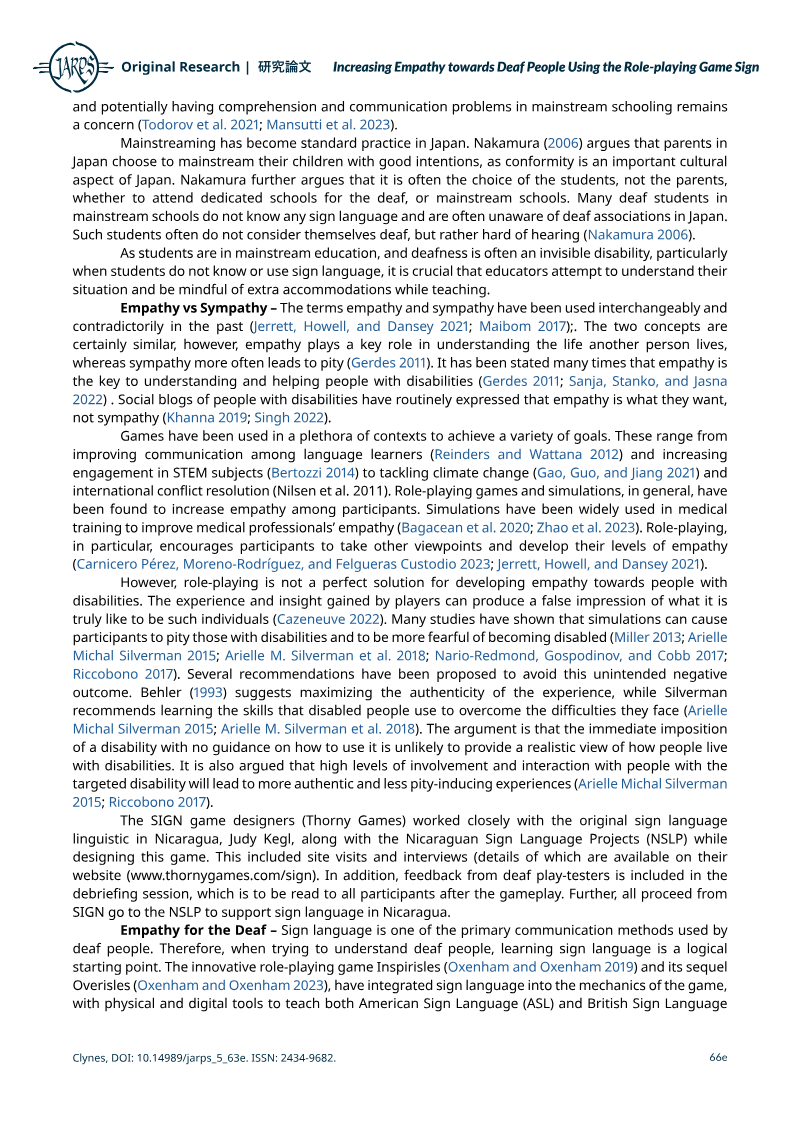
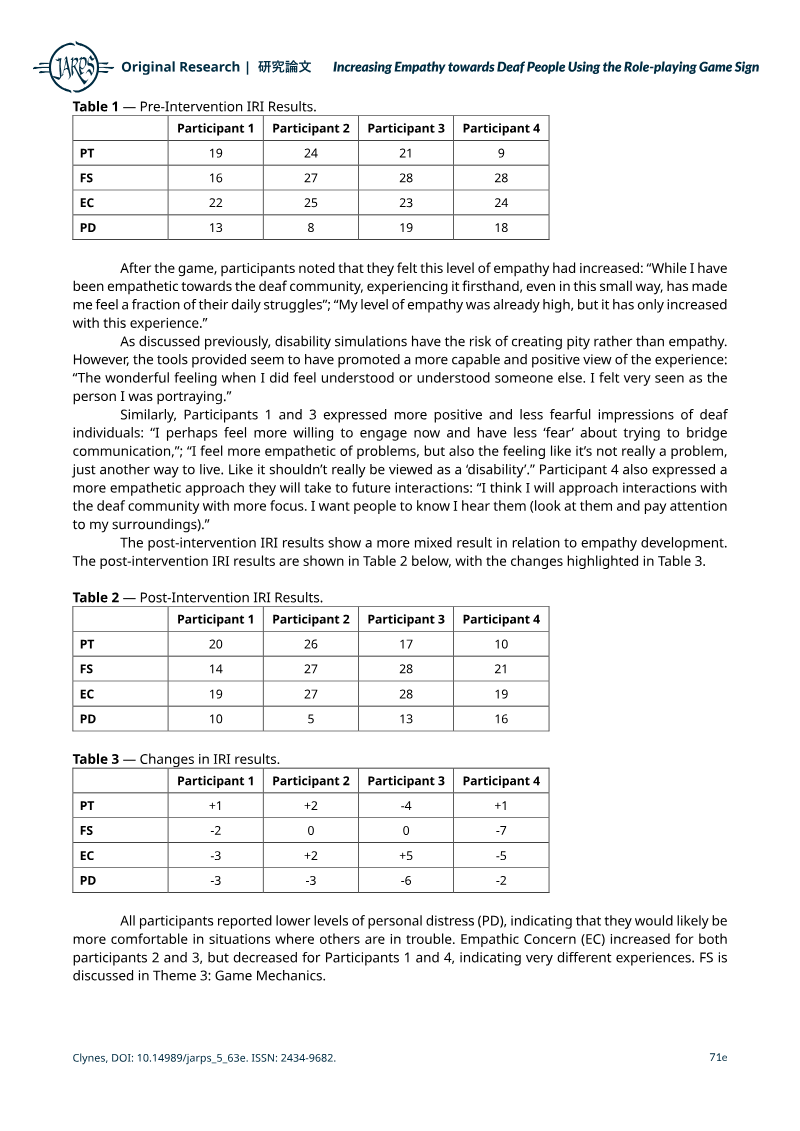
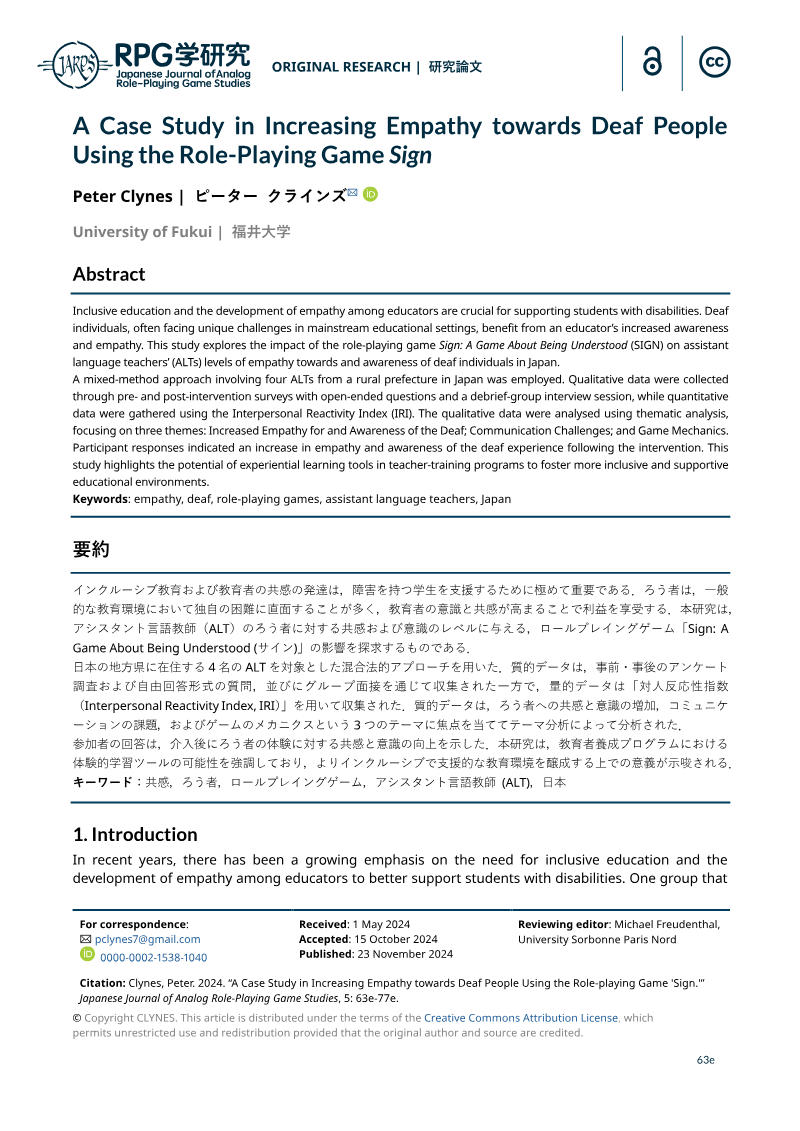
A Case Study in Increasing Empathy towards Deaf People Using the Role-Playing Game Sign: Japan
Japanese Association for Role-Playing Game Studies (JARPS) · 2024

Whitepaper
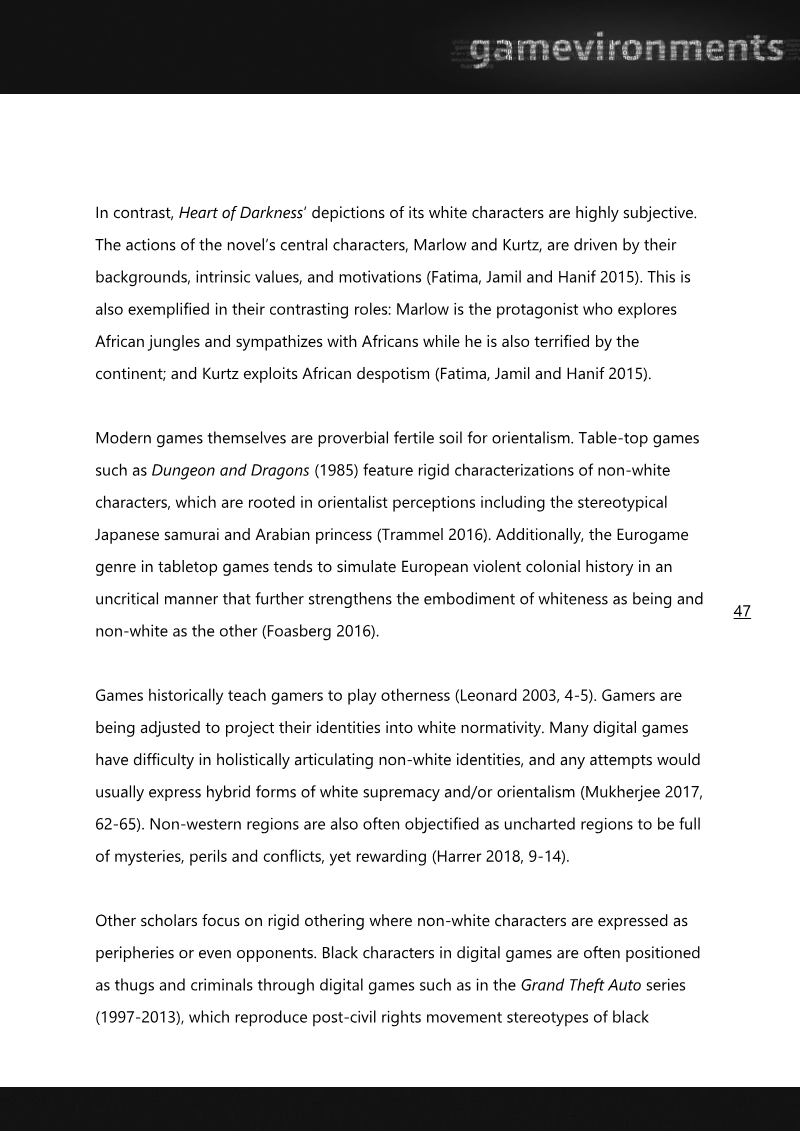
The White Peril: Colonial Expressions in Digital Games
gamevironments · 2023

Whitepaper
Social Acceptability of Location-Based Games in Cemeteries
DiGRA · 2023
Whitepaper
Body Horror as Body Shaming: Fatness and Monstrosity in Video Games
DiGRA · 2018
Whitepaper
Indie Game: The Movie: The Paper - Documentary Films and the Subfield of Independent Games
DiGRA · 2018
Whitepaper
Delicate Subjects: Vulnerability and Validation in Action Adventure Games
DiGRA · 2016
Whitepaper
Hackers and Cyborgs: Binary Domain and Two Formative Videogame Technicities
DiGRA · 2015
Whitepaper
Theorizing Gender and Digital Gameplay: Oversights, Accidents and Surprises
Eludamos: Journal for Computer Game Culture · 2008