1 free read left. Create a free account for unlimited reading + AI research.
Create free account
Community Management - The Unsung Heroes of the Game Industry - Extra Credits
Key insights
6 takeaways- 01Community management has evolved from a peripheral support function into a central pillar of product success for modern, perpetual, and evolving game models.
- 02The profession currently suffers from systemic neglect, frequently ranking among the lowest-paid and lowest-status roles within game development studios.
- 03Industry hiring practices for community managers are often haphazard and lack rigorous vetting, largely due to a disregard for the specialized soft skills required for the role.
- 04Studios should implement standardized, scenario-based testing during the hiring process to evaluate candidate proficiency in conflict resolution, policy enforcement, and event planning.
- 05To protect long-term financial investments, studios must integrate community management into the production cycle well before the beta phase.
- 06Elevating the role requires treating community managers as essential contributors to the game’s value proposition, with institutional respect and training comparable to artists or designers.
Ask AI about this video
Transcript
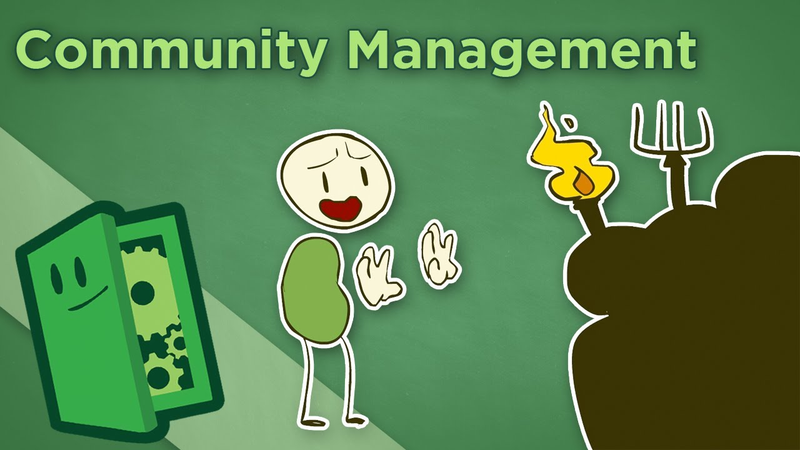
[Music] Community managers are heroes. They're the people who are on the front line making sure that our games are experiences we love rather than cess pits of misery and misdirected rage. They're the people who have to deal with all of our problems and our complaints. They're the people who have to take to the forums when something goes wrong and try to keep us calm while the devs are desperately trying to get servers back online. They don't get a lot of love or recognition in this industry, but in the end, they're out there dealing with the worst we as players have to offer and still spending every day trying to make our games a better experience for us. And their role is only going to get more important. You've heard us talk before about how as AAA budgets keep expanding and internet connectivity is becoming something that's starting to be assumed, more and more games are going to be moving to what I call the perpetual game model. These are games like Destiny where is it an MMO is a semantic point that we could debate all day, but you can be sure that it's a game that's not going to be done the day it's released.
It's a game that's intended to be an evolving experience, one that grows with the community and changes with them. And as we see more and more of these perpetual games, games that depend on an ongoing revenue model, the role of our community managers will become more and more important. So, we decided today to talk about how the industry approaches community management. Because unfortunately, while good community managers make games a joy to play, bad community management staff can let a great experience go to waste or simply fail to set up an environment everyone feels safe to play in. The first truth about community management in our industry is that it's one of the lowest paid positions we have. Second, in the social hierarchy of game companies, community management is often considered one of the lowest positions, frequently regarded as lower than QA. This is in my opinion because of something somewhat systemic to the games industry. Undervaluing of what we call soft skills. While programmers can program and artists can do their art magic and designers are filled with mystical systems arcana, community management doesn't have a clear and distinct skill set. It's just about working with people and understanding their needs, which obviously is a skill set, but it's not
one that our industry seems to really recognize. And this unfortunately leads to bad community management hires. There are a lot of great people working in this field, but so many companies tend to hire for these positions half-hazardly because they're not considered skilled positions. This leads to companies grabbing whoever they can to fill these roles, giving preference only to community management experience. And because of this, we too often end up with unqualified people taken on as community managers. And now with social and mobile markets grabbing up community management people even faster than the AAA world, we cannot afford this. In fact, in his years working in the industry, James has never seen a formal community management test. You don't even get to the first round of interviews for a position as an artist or a designer or a programmer at a major studio without being able to show you're qualified. So, why isn't this a common practice with the people who have to spend the most time with the people who actually play our games? A test wouldn't be hard to put together. It could just be scenarios that often come up in a community manager's job. For example, a player has deleted one of their items by accident and is asking for a refund. What do you do? You notice a player
using offensive language in a play session. How do you respond? You're looking at the forums and you notice a thread where several players are harassing another player and making sexual or racial comments. What action do you take? You find out that two of the harassing players are also some of the biggest spenders in the game and popular with a community. How do you proceed? On the flip side, we could also test the awesome part of being a community manager with just as little difficulty. You can have questions like, "You have the opportunity to run an in-game event. You don't get to add any new assets to the game or have any special coding done, but you are given two other junior community managers to help you with the event. The event lasts a single day and starts in 2 weeks. What do you do? So, creating the test isn't hard, and validating it wouldn't be either. You just calibrate it by trying it out on the community managers in your company who are already doing a fantastic job. If they fail the test, you're probably asking the wrong questions. If they pass it without thinking, then maybe it's not hard enough. Beyond that, we need more on the job training and exploration of community management issues earlier in the production cycle. Community management doesn't start when the beta
goes live. Most of all though, we have to understand that community managers add value to the game in the same way that an artist or a programmer does. Whether they're running events, standing on the front line when things go wrong, or just making the game community feel like a safe and welcoming place for everyone, it makes the game more enjoyable just as much as another gun or a fancy hat in the game would. And this isn't to say that we should all start paying our community management people more. It'd be great if we could, but tough times, I know. But even without much monetary investment, there are ways that we can be more careful about how we address this role. Both in hiring and giving the people we entrust with our communities the tools they need to do their jobs. It'll create better game experiences and safer spaces. If you're going to spend $100 million on a project, we should respect the people who buy it enough to at least do that. See you next week. Heat. Heat. [Music]
Summary
Community management serves as a critical, yet frequently undervalued, pillar of the modern game industry. As the market shifts toward perpetual, evolving game models that require ongoing player engagement, the role of the community manager has transitioned from a peripheral support function to a central component of product success. These professionals act as the primary interface between developers and players, mitigating conflict, maintaining server-side stability communication, and fostering safe, welcoming environments. Despite this importance, the profession suffers from systemic neglect, often ranking among the lowest-paid and lowest-status positions within game studios.
The industry’s failure to properly integrate community management stems largely from a disregard for soft skills. Unlike technical roles such as programming or art, which rely on demonstrable, specialized skill sets, community management is often treated as an unskilled position. This leads to haphazard hiring practices where candidates are selected without rigorous vetting. Notably, there is a lack of standardized testing for these roles, even though such assessments could easily be developed to evaluate a candidate’s ability to handle complex scenarios, such as conflict resolution, policy enforcement, and community event planning.
To elevate the standard of community management, studios must treat these professionals as essential contributors to the game’s value proposition, comparable to artists or designers. Implementing formal, scenario-based testing during the hiring process and integrating community management into the production cycle long before a game reaches beta are vital steps toward professionalization. By providing better training and institutional respect, developers can ensure that their communities remain healthy and sustainable, ultimately protecting the significant financial investments made in modern, long-term gaming projects.


















Comments