1 free read left. Create a free account for unlimited reading + AI research.
Create free accountWhitepaper DiGRA
1 free read left. Create a free account for unlimited reading + AI research.
Create free accountWhitepaperDiGRA
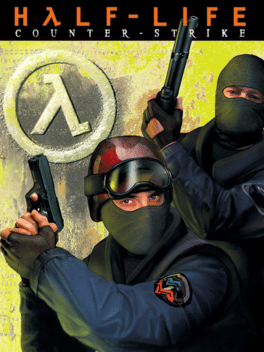
Paul Kearney of Unitec New Zealand tested whether playing Counter-Strike improves cognitive abilities, particularly multitasking.
This study, a 2005 DiGRA conference paper by Paul Kearney of Unitec New Zealand, investigates whether playing the first-person shooter Counter-Strike can enhance cognitive abilities, particularly multitasking. Participants completed a five-minute synthetic work-environment assessment using the SynWin software, which simulates watchstanding tasks such as target location, auditory tone reaction, calculation, and memory, producing a composite multitasking score. The study used a quasi-experimental pre-test/post-test control-group design, with a control group of eight largely non-gaming participants tested three times without intervention, and an experimental group of fourteen participants tested before and after two hours of multiplayer Counter-Strike play in a laboratory setting.
The control group showed modest score gains across repeated testing, a pattern consistent with practice effects reported in earlier studies, and these increases were not statistically significant (P > 0.3). The experimental group's mean composite score rose by 110.2 points after gameplay, a difference the author reports as statistically significant (P < 0.05), with improvements observed across the monitoring tasks, though the visual monitoring gain was minimal. Subgroup analyses by age and weekly hours of play were also reported, with all groups except those playing 13 to 16 hours weekly showing significant increases.
The author concludes that Counter-Strike appears to improve multitasking and suggests that immersion, collaborative play, and realism may be the characteristics driving such gains. The paper acknowledges substantial limitations, including a very small sample, the absence of random assignment, no control condition in which participants played a non-game activity, a flawed math task that required manual data correction, and known ceiling effects in the visual task. The study also notes that the duration of any benefit remains unknown, and it calls for further research to test other cognitive domains and to compare games with differing characteristics.
Each row is a game or company this document names, each column a document, oldest first. A mark means that document names it. Select a row to see those documents.
DiGRA · 2016
DiGRA · 2016
DiGRA · 2016
DiGRA · 2016
DiGRA · 2016
DiGRA · 2016
DiGRA · 2016
DiGRA · 2016
DiGRA · 2016
DiGRA · 2016
DiGRA · 2016
DiGRA · 2016
Extra Credits · 2026