1 free read left. Create a free account for unlimited reading + AI research.
Create free accountFinancial report Coffee Stain Group AB
1 free read left. Create a free account for unlimited reading + AI research.
Create free accountFinancial reportCoffee Stain Group AB
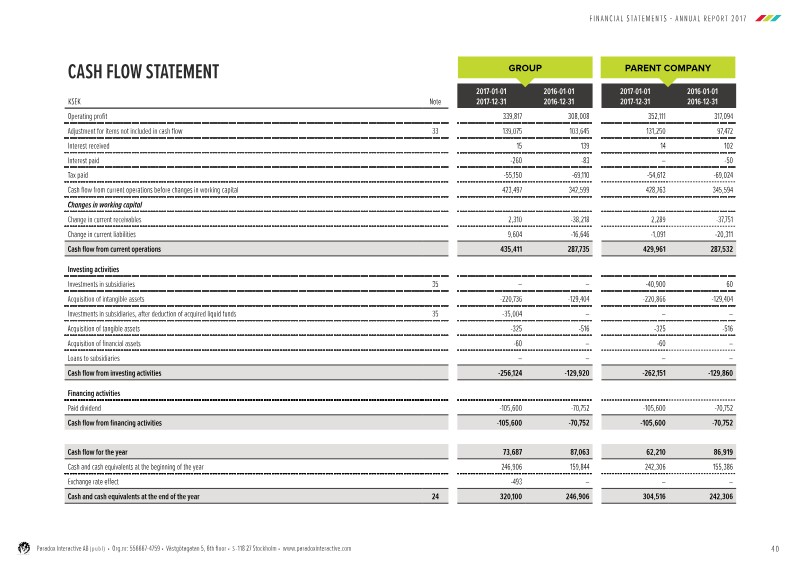
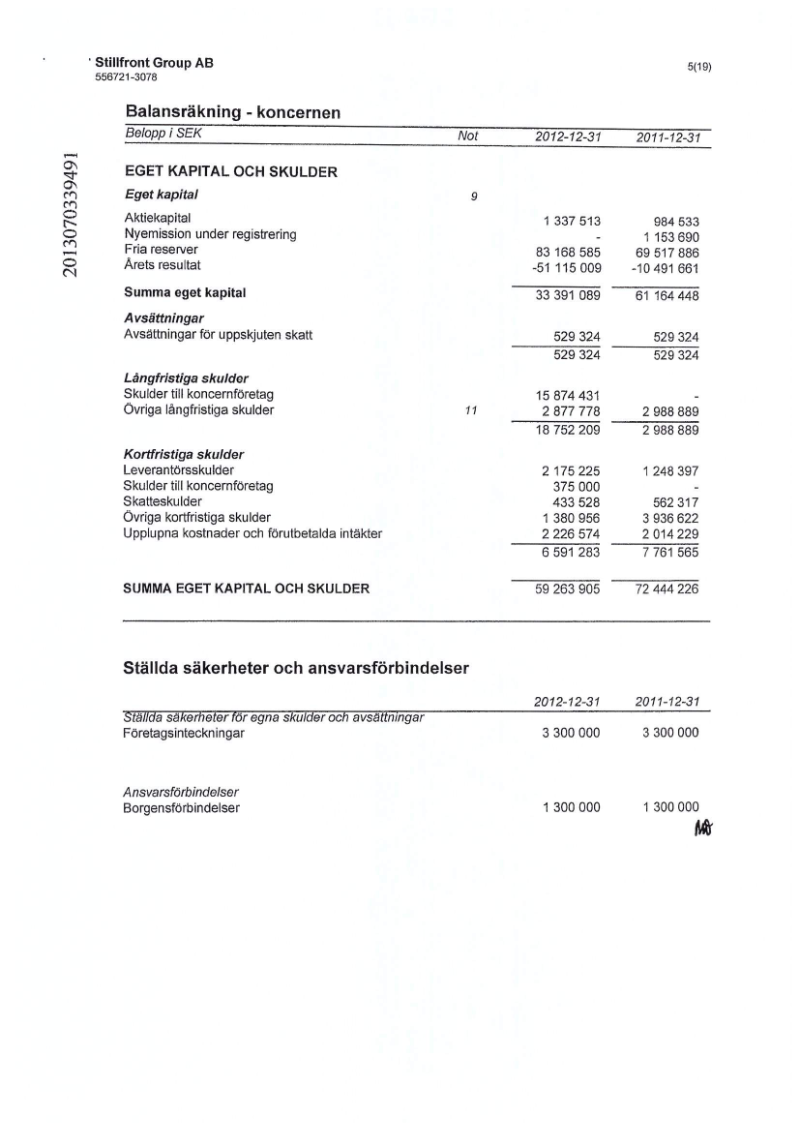
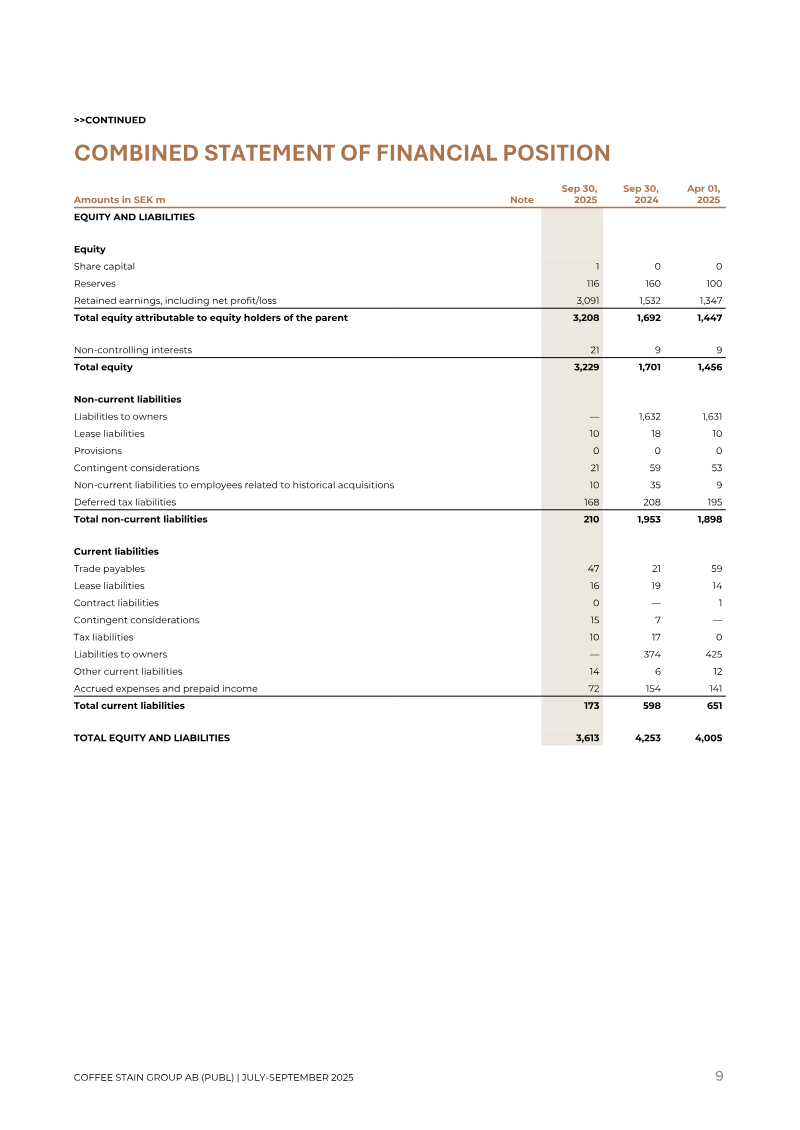
The 2024/25 financial statements of the Coffee Stain Group reveal a modest contraction in operating performance, with EBIT falling from SEK 404 million to SEK 322 million and net profit declining from SEK 319 million to SEK 192 million. The downturn is largely attributable to higher depreciation and operating expenses, while total assets slipped slightly to SEK 4 005 million and equity dropped to SEK 1 456 million due to group contributions and tax effects. Cash balances increased to SEK 472 million, yet cash flow from operations remained only marginally positive at SEK 161 million after substantial investing and financing outflows.
Revenue is primarily derived from sales-based royalties on digital storefronts and mobile platforms, recognized when licenses are transferred or content delivered. Variable consideration such as royalties and ad-network clicks drives most income, with significant estimates surrounding contingent consideration, deferred tax assets linked to loss carry-forwards, and annual goodwill impairment testing. Goodwill is tested annually using discounted cash-flow models with conservative growth rates of 2.5% and an after-tax discount rate of 14.1%. Sensitivity analysis indicates that modest changes in the discount rate or operating margin would not trigger impairment, confirming goodwill’s recoverability under current assumptions.
Risk management focuses on fair-value liabilities, notably contingent considerations that decreased from SEK 66 million in 2024 to SEK 53 million in 2025, and trade receivables of SEK 188 million with a minimal credit-loss provision. Currency exposure is dominated by USD (≈95%) but benefits from a natural hedge through multi-currency sales. Liquidity risk is mitigated by equity financing and cross-currency cash pooling, with current liabilities at SEK 321 million versus SEK 277 million in 2024. A 10% adverse swing in the Swedish krona would reduce profit by SEK 9 million (EUR) and SEK 102 million (USD), yet equity remains unaffected. The translation reserve stands at SEK 100 million as of 31 March 2025, reflecting accumulated foreign-currency translation differences. Auditors emphasize risk assessment for material misstatements and fraud, evaluating internal controls, accounting policies, and going-concern assumptions to ensure accurate presentation of the annual accounts.

Coffee Stain Group AB

Coffee Stain Group AB


Coffee Stain Group AB

Coffee Stain Group AB
THQ Nordic · 2017