Loading the document
Key insights
4 slides
Foundational Moment
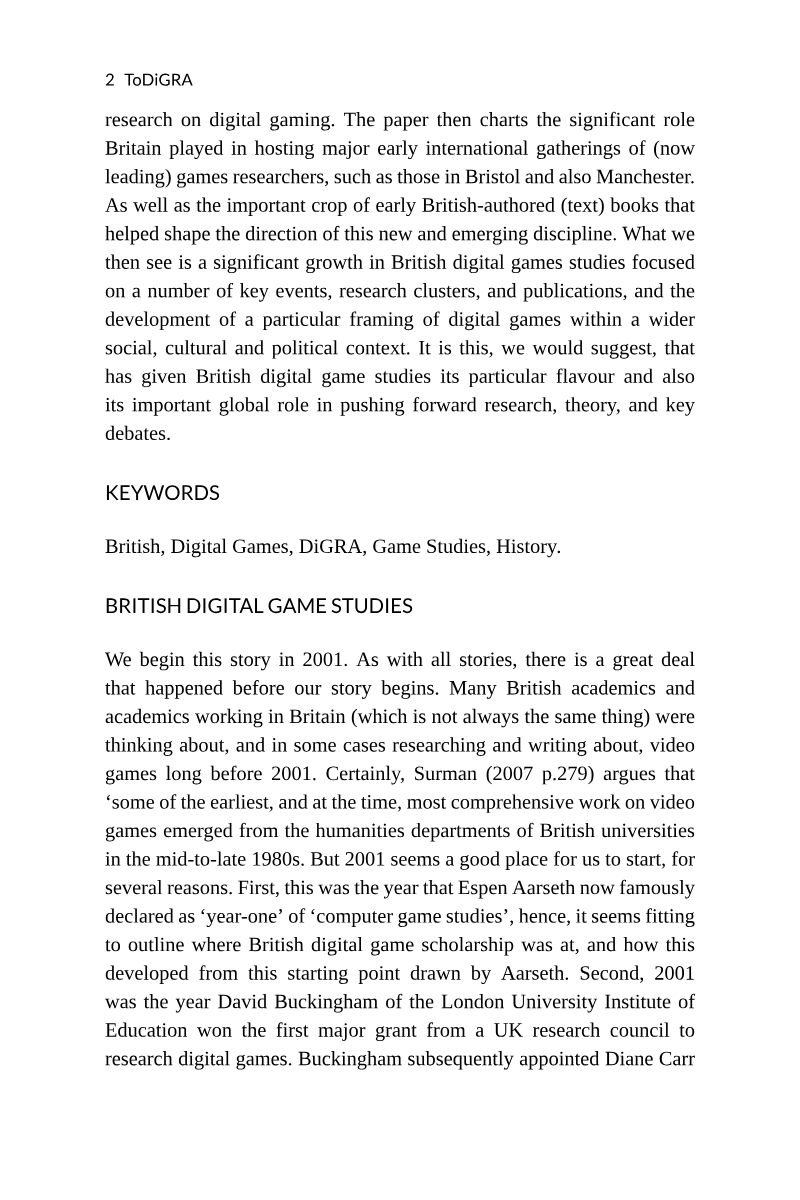
British digital game studies formalized as an academic discipline between 2001 and 2018.
This emergence was catalyzed by the first major UK government research grant and the inaugural Game Cultures Conference in Bristol in 2001.
Key Catalyst. The first major UK government research grant and the Game Cultures Conference in 2001 were pivotal for the field's formalization.
1 / 4
- 01British digital game studies emerged as a formal academic discipline between 2001 and 2018, catalyzed by the first major UK government research grant and the inaugural Game Cultures Conference in Bristol in 2001.See it on page 2
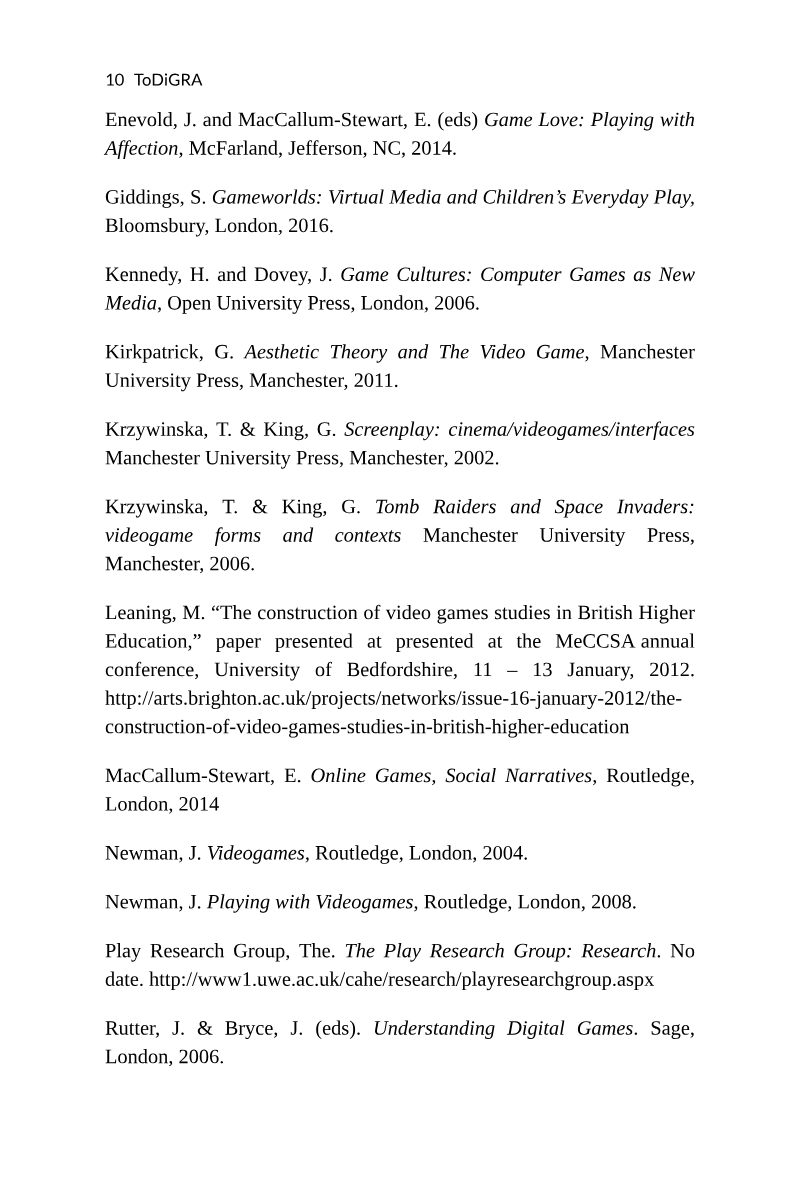
- 02The field is defined by an interdisciplinary methodology that integrates film theory, sociology, and educational psychology to analyze the social, cultural, and political dimensions of gaming.See it on page 10
- 03British scholarship distinguished itself from early global debates on ludology and narratology by prioritizing the wider societal context of digital games.See it on page 5
- 04The institutionalization of the field was driven by the formation of the British chapter of the Digital Games Research Association (DiGRA) and a series of influential international symposiums.See it on page 2
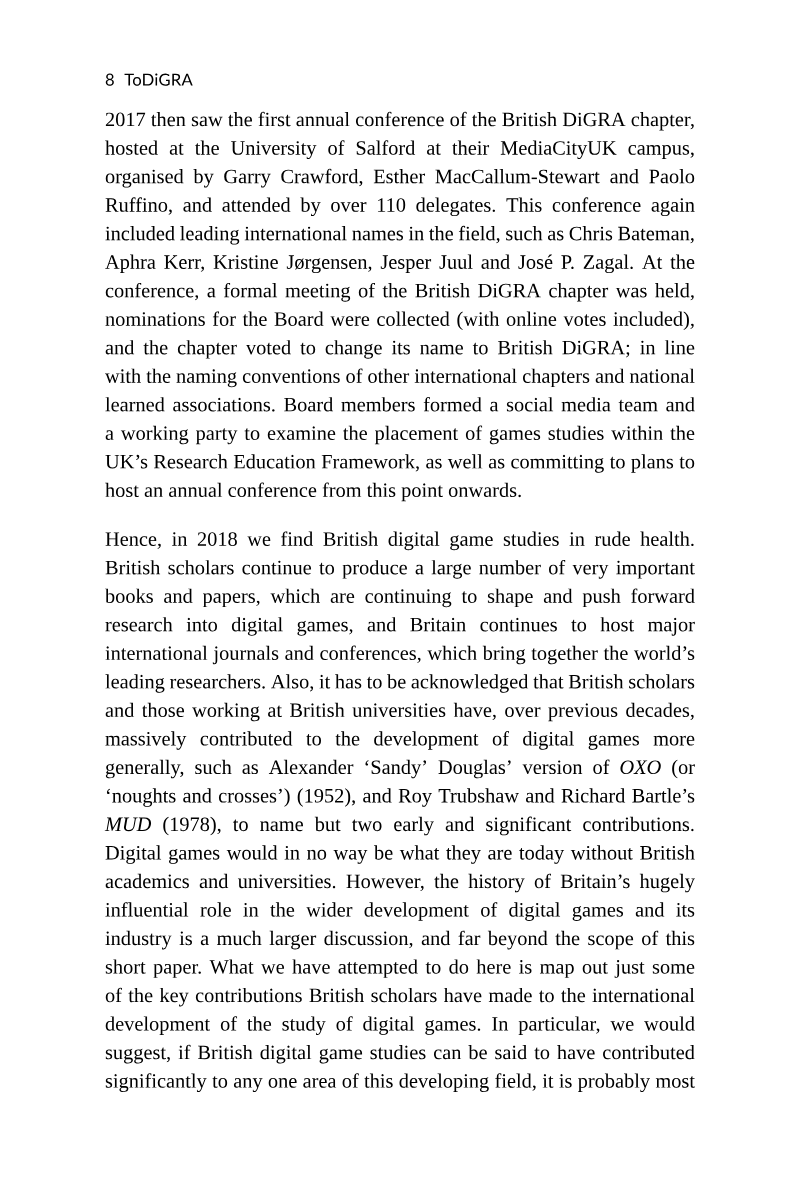
- 05British academic contributions have maintained a significant global role by fostering a broad, inclusive research framework that continues to influence international academic discourse.See it on page 8
Ask AI about this report
Summary
This historical overview examines the evolution of digital game studies in Great Britain from 2001 to 2018. The primary objective is to map the development of the discipline, highlighting how British scholars and institutions have influenced global research, theory, and academic debate. By focusing on key events, research clusters, and foundational publications, the analysis illustrates how the field transitioned from an emerging area of inquiry into a robust, internationally recognized academic discipline.
The narrative identifies 2001 as a pivotal starting point, marked by the first major UK government grant for game research and the inaugural Game Cultures Conference in Bristol. These events catalyzed a series of influential symposiums and the publication of seminal texts that defined the field’s early trajectory. Key findings suggest that while British scholarship initially engaged with traditional ludology and narratology debates, it increasingly distinguished itself by emphasizing the social, cultural, and political dimensions of gaming. This interdisciplinary approach, which integrates film theory, sociology, and educational psychology, remains a defining characteristic of the British academic contribution.
Methodologically, the analysis relies on a retrospective synthesis of academic milestones, including the formation of the British chapter of the Digital Games Research Association (DiGRA), the hosting of international conferences, and the output of influential research groups. The study acknowledges that this history is not exhaustive but rather a curated account intended to stimulate further discussion. Ultimately, the findings conclude that British digital game studies maintains a significant global role, characterized by a broad, inclusive approach that continues to push the boundaries of how digital games are analyzed within their wider societal contexts.