1 free read left. Create a free account for unlimited reading + AI research.
Create free accountArticle International Journal of Esports
1 free read left. Create a free account for unlimited reading + AI research.
Create free accountArticleInternational Journal of Esports
The authors examined commercially available video games played in a non-professional capacity. The screened articles were drawn from Google Scholar and published between 1986 and 2020.
A literature review examines the positive and negative effects of recreational gaming, focusing on commercially available video games played in a non-professional capacity. The authors, Steven Dekker and Chris Slotboom of Dutch universities, screened 18,100 initial articles from Google Scholar published between 1986 and 2020, ultimately synthesizing 46 English-language studies. They conclude that recreational gaming can improve real-life skills such as learning, reading, creativity, and problem solving, provided it is played in moderation. Excessive gaming, which the review associates with more than about 10 hours per week, may instead contribute to emotional, physical, and social problems.
The review organizes its findings into emotional, social and civic, cognitive, and visual categories. Emotionally, games can foster positive affect, flow, and adaptive emotion-regulation strategies, while cooperative and prosocial gaming is linked to reduced hostility and greater helpfulness. Cognitive and visual benefits cited include faster reaction times, sustained attention, improved spatial thinking, and enhanced contrast sensitivity, with action games showing particularly strong effects. Reflective problem solving and creativity are associated mainly with strategy, role-playing, and open-ended games, and the authors suggest these skills may transfer to academic and professional settings such as STEM fields.
The authors summarize these effects in the Dekker Gaming Skill Overview, a framework that maps effects across cognitive, visual, emotional, social, and somatic categories. They acknowledge limitations, including the restriction to English-language articles and a generalist treatment of the evidence. They also call for further research on problematic gaming, esports athletes, and game-based skill training. The review declares no conflicts of interest or funding sources.
Each row is a game or company this document names, each column a document, oldest first. A mark means that document names it. Select a row to see those documents.
International Journal of Esports · 2026
International Journal of Esports · 2026
International Journal of Esports · 2026
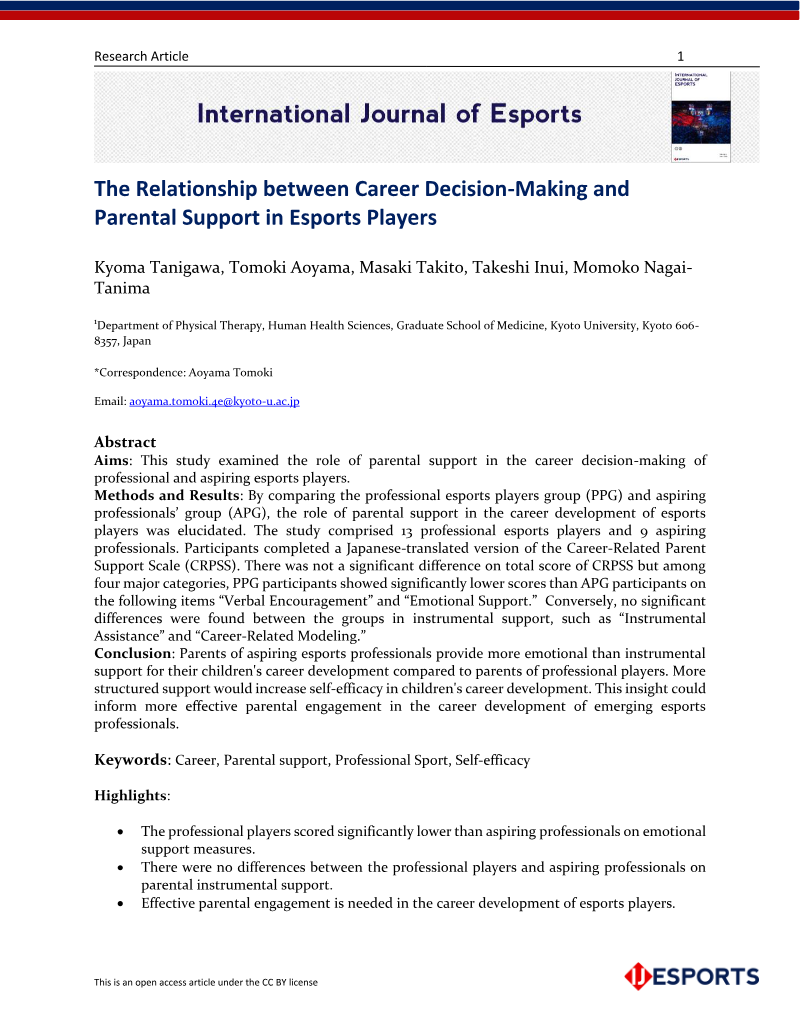
International Journal of Esports · 2026
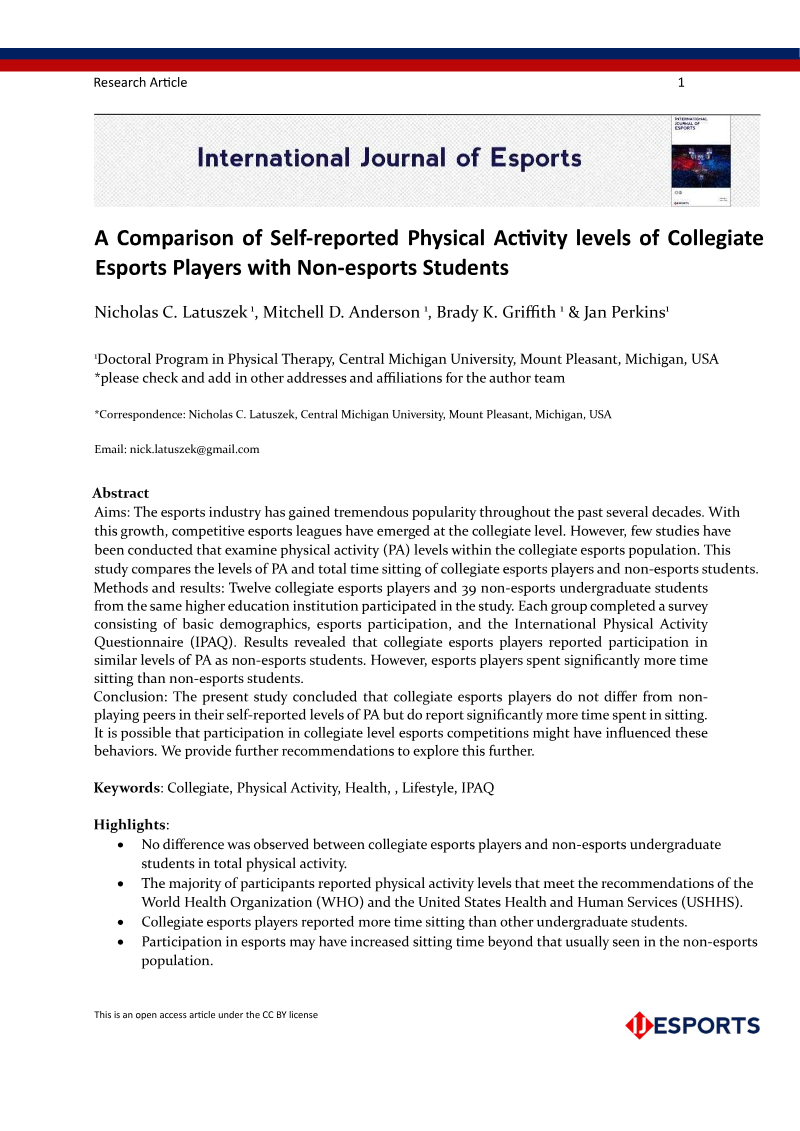
International Journal of Esports · 2026
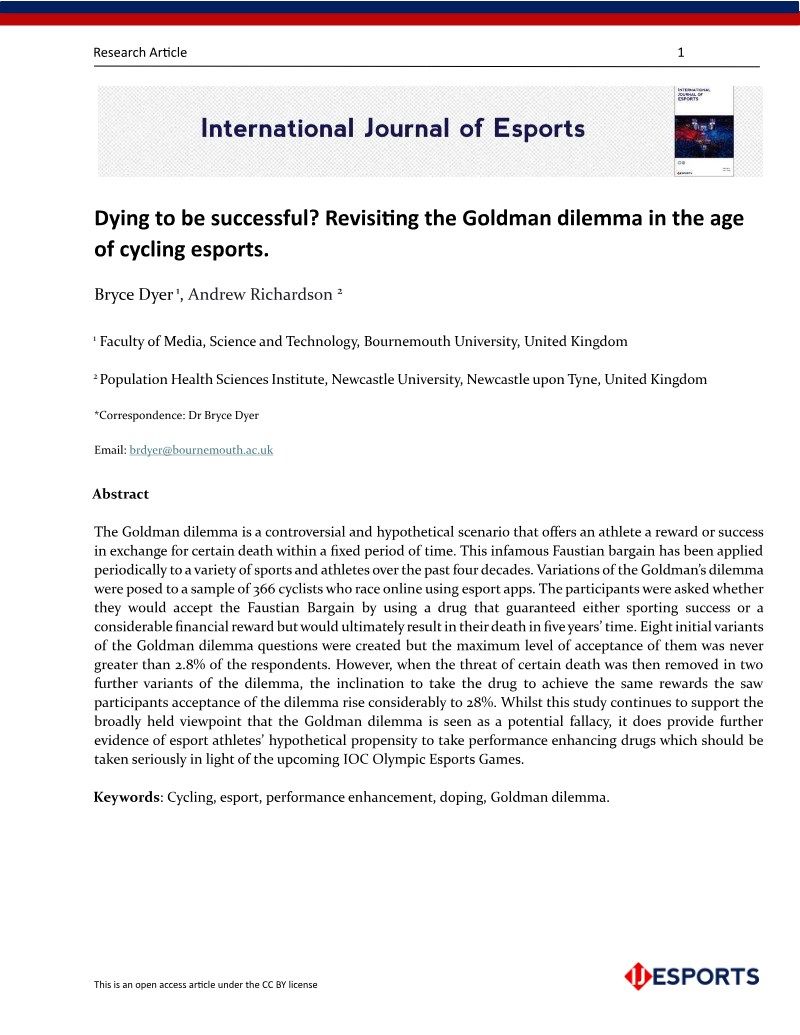
International Journal of Esports · 2026
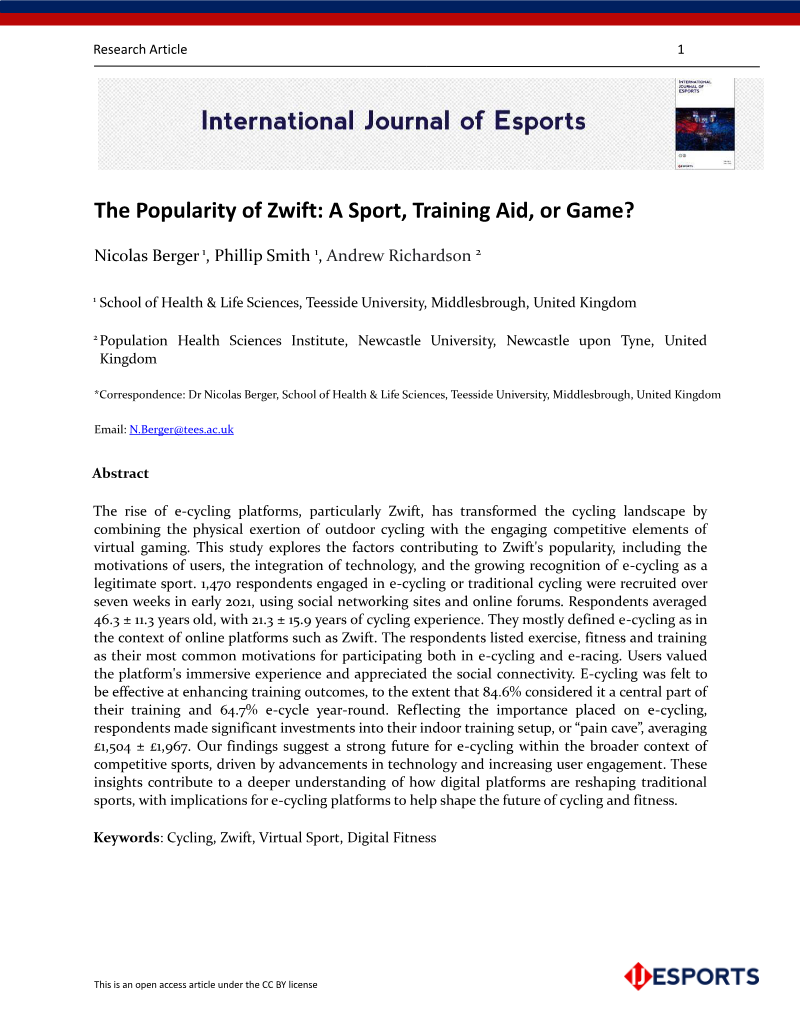
International Journal of Esports · 2025
International Journal of Esports · 2025
International Journal of Esports · 2025
International Journal of Esports · 2025
International Journal of Esports · 2025
International Journal of Esports · 2025
Niko Partners · 2026