1 free read left. Create a free account for unlimited reading + AI research.
Create free account
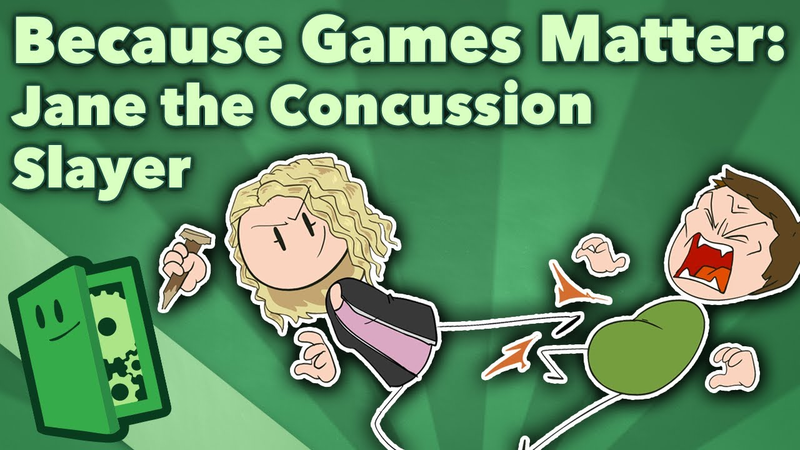
Because Games Matter - A Teachable Moment: Kingdom Hearts in the Classroom - Extra Credits
Key insights
5 takeaways- 01Educators who actively engage with the media that resonates with their students can improve teacher-student rapport and foster a more inclusive learning environment.
- 02Using cultural touchstones like the narrative structure of Kingdom Hearts can help students grasp complex literary concepts, such as the hero's journey found in the Odyssey.
- 03Integrating video games into the curriculum validates students' personal interests, bridging the gap between traditional academic subjects and their lived experiences.
- 04Validating a student's interests through familiar media can act as a catalyst for significant improvements in academic performance, classroom participation, and self-confidence.
- 05The pedagogical shift of incorporating gaming narratives can empower students to pursue extracurricular interests, such as theater and stagecraft, beyond the immediate classroom assignment.
Ask AI about this video
Transcript
We all know that games don't always get the best rap, especially when it comes to educators who might not have grown up with them. But today, we want to share the story of our teacher friend Patrick, who used this medium to encourage inclusion in his classroom. My name is Patrick, and I'm a high school English teacher. I'm humbled by how often I hear the phrase "teachers can change lives." Education does have a transformative power that can set young minds on a path unforeseen by unlocking skills or talents that kids didn't even know were there. But, can video games change lives? The perennial time waster, the notorious brain rotter, the scourge of parents and teachers everywhere. Well, after what happened in my classroom, I can without a doubt say yes, they can. Two years ago, I taught a group of freshmen first thing in the morning. Normally, period one is a little rough, since most of the kids are still waking up. But this group was different. As soon as that bell rang on the first day,
I could clearly see this was a spirited bunch. They were chatty but respectful and full of character and energy. To start things off, we played an icebreaker game to learn everyone's names and to share something interesting about ourselves. One kid was the goalie for our hockey team, one kid loved Bob Marley, one kid was training to be a professional ice skater, and one kid, well, she didn't have much to say. I had to ask her for her name twice because I couldn't hear her the first time. To be honest, I think she felt overwhelmed by all of the big personalities in the room, so I didn't push too hard. I thought to myself, "No problem. It's only the first day. I'm sure she just needs a little time to settle in, and she'll come out of her shell when she feels ready." So, the first few weeks of school go by, and period one continued to be the brightest and loudest part of my day. One kid had a meme of the day for the entire year. Another kid had an impressive collection of bow ties. And one kid still didn't have much to say. By now, it was the middle of October, and I still knew next to nothing about this young woman. Every day, I tried to
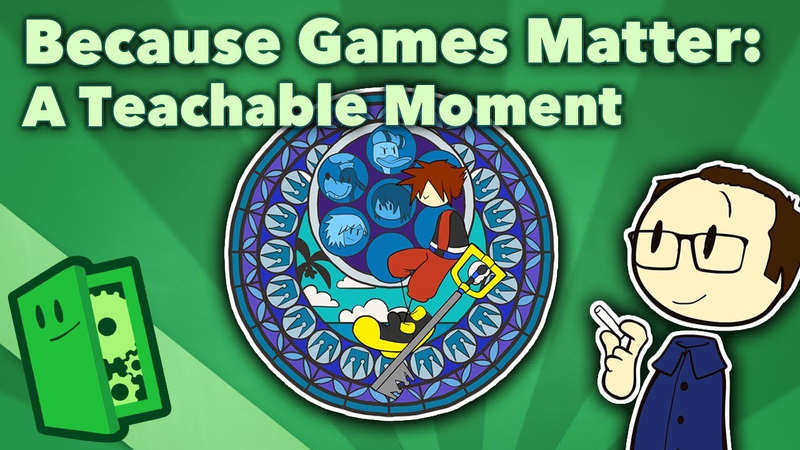
make a connection with her, and every day, I could barely get a word out. I watched helplessly as her grade in my class began to drop. I knew she was struggling with the reading, but she wouldn't respond to my offers for extra help. I was beginning to lose hope, when at last, the answer came to me on the first cold day of the school year. The bell rang as it always did at 7:41, and the kids came into the room as they always do. Some kids clutched Styrofoam coffee cups. Some kids chatted about the football game from the night before. And one kid was wearing a very special hoodie. It was a swirl of dark blues and purples. There was some lettering I couldn't quite make out, and was that stained glass on the back? And then, I saw the spiky hair, big yellow shoes, and of course, the Keyblade. I knew just what to do. At the time, we were studying the Odyssey, and I was teaching the traits of the epic hero. We were nearing the end of Odysseus's tale, and their assignment was to compare a modern character with Odysseus and the stages
of the hero's journey. As the class began brainstorming and pre-writing, my shy student flipped through her notes absently. I pulled up a chair and asked her if she had any characters in mind. She reluctantly shook her head. I then asked if she knew of a character who had to travel far from home and became separated from his loved ones. A character who had to face a series of difficult trials in order to get back to them. She hesitated and shrugged her shoulders again. I could sense that she did have a character in mind, but was too embarrassed to admit it. Then, I leaned in and said quietly, just so she could hear, "Are you sure? What if that character possessed a very special weapon? Maybe, I don't know, in the shape of a key?" I will never forget the look of surprise, recognition, and relief in her face when she realized what I was doing. She looked up from her notes and actually made eye contact with me for the first time. "Kingdom Hearts." When she said the title, she was confirming that I was indeed hinting at her favorite video game. But also, she was asking if video games could actually
have a place in the classroom and her writing. And my answer was this, "You know, I once wrote a paper in college comparing Jason and the Argonauts to Commander Shepard and his crew in Mass Effect." Her jaw hit the floor. I believe this was truly a revelation for her, that she could use video games as a way to make connections in the classroom. And to not only that, her teacher was encouraging it. She began writing faster than I had ever seen before. It was as if a floodgate had opened and her mind and her hands had been unshackled. And from then on, she was one of my most active students in my class. And her grades improved significantly. She was noticeably more comfortable around others. She shared her world with us and she felt vindicated. A video game changed this girl's life. Not because her grades got better, but because through it, she learned to become much more confident overall. And by the time she was a senior, she was heavily involved in our theater program and is now pursuing a degree in stagecraft. As a teacher, it's always my goal to help change my
students' lives for the better. But in this case, it was actually Sora and the Keyblade that unlocked her true potential. Thanks Patrick for sharing your story with us. We think educators like you, who know how positive a force games can be, and who take the time to engage in individual students' interests, are pretty darn heroic in their own right. Even sans Keyblade.
Summary
The integration of video games into educational settings serves as a powerful tool for fostering student engagement, inclusion, and academic success. By validating students' personal interests, educators can bridge the gap between traditional curriculum and the lived experiences of their pupils, effectively transforming the classroom into a space where diverse passions are recognized as legitimate academic subjects.
The core of this approach lies in the ability of teachers to identify and leverage specific cultural touchstones—such as the narrative structures found in popular gaming franchises—to help students grasp complex literary concepts. In a high school English classroom, a student who was initially withdrawn and struggling academically experienced a significant breakthrough when her teacher connected the classic hero’s journey of the Odyssey to the narrative arc of the video game Kingdom Hearts. This interaction served as a catalyst, signaling to the student that her interests were not only accepted but also intellectually valuable.
The results of this pedagogical shift were profound. Following this connection, the student demonstrated a marked increase in academic performance, classroom participation, and overall self-confidence. This transformation extended beyond the immediate assignment, as the student eventually pursued extracurricular activities like theater and stagecraft. Ultimately, the experience underscores that when educators actively engage with the media that resonates with their students, they can unlock latent potential, improve student-teacher rapport, and create a more inclusive learning environment that empowers students to share their perspectives and succeed in their academic and personal pursuits.


















Comments